The nomination unveiled Tuesday night in a prime-time announcement from the East Room is the reason so many Republicans who believe in free trade supported an openly protectionist candidate, why so many evangelicals who advocate Biblical morality backed a thrice-married candidate who spoke openly of womanizing, and why so many Republicans who normally demand total fealty to conservative orthodoxy tolerated so many sharp breaks with their beliefs.
If the 1992 campaign was “about the economy, stupid,” then the 2016 contest, for millions of conservatives, was all about the Supreme Court. It is why, in hindsight, it is clear that Wednesday, May 18, and Friday, Sept. 23, were two of the most important days in the 2016 presidential campaign. On May 18, Trump released the names of 11 possible nominees for the high court; on Sept. 23, he added 10 more names to the list. He promised that any person he put forward to fill his first Supreme Court vacancy would come from that list.
It was what conservatives wanted to hear and it eliminated, in their minds, their biggest qualm about voting for a first-time candidate who had been a Democrat and openly boasted of being in favor of abortion rights.
“The list of judges was really a stroke of political genius,” said Carrie Severino, policy director of the Judicial Crisis Network and a former clerk for Justice Clarence Thomas. “There were so many people frightened by the prospect of Hillary Clinton nominating the next justice. But they didn’t know what to expect from Donald Trump.”
At the time, the list was just one more unorthodox campaign gambit from a most unorthodox candidate. He first promised it during a rough meeting with Republicans on Capitol Hill, winning some converts when he solicited names from the lawmakers. Then he received names from the staunchly conservative Heritage Foundation and the Federalist Society.
“That,” Severino told National Journal on Tuesday, “was a turning point in the campaign.”
Thomas Rath, a veteran New Hampshire Republican who supported Ohio Gov. John Kasich in the primary there, said the Supreme Court ended up providing “justification for many Republicans voting for Trump although they disagreed on a lot of other points.”
Trump understood more instinctively than Hillary Clinton did that the Supreme Court would matter more in 2016 than in any previous campaign. No election in the 20th century and no election in the current century before 2016 played out with a vacancy on the Court and the ideological balance at stake. While Clinton infrequently mentioned the Court, Trump turned to it repeatedly in his stump speech. Over and over again, he warned that Clinton “could make, three, four, five appointments.”
When he ran into trouble, it was almost always the Court that he turned to. He did that in a particularly candid way when his numbers were cratering in late July. “If you really like Donald Trump, that’s great. But if you don’t, you have to vote for me anyway,” he told a rally in Iowa. “You know why? Supreme Court judges, Supreme Court judges. Have no choice … sorry, sorry, sorry.”
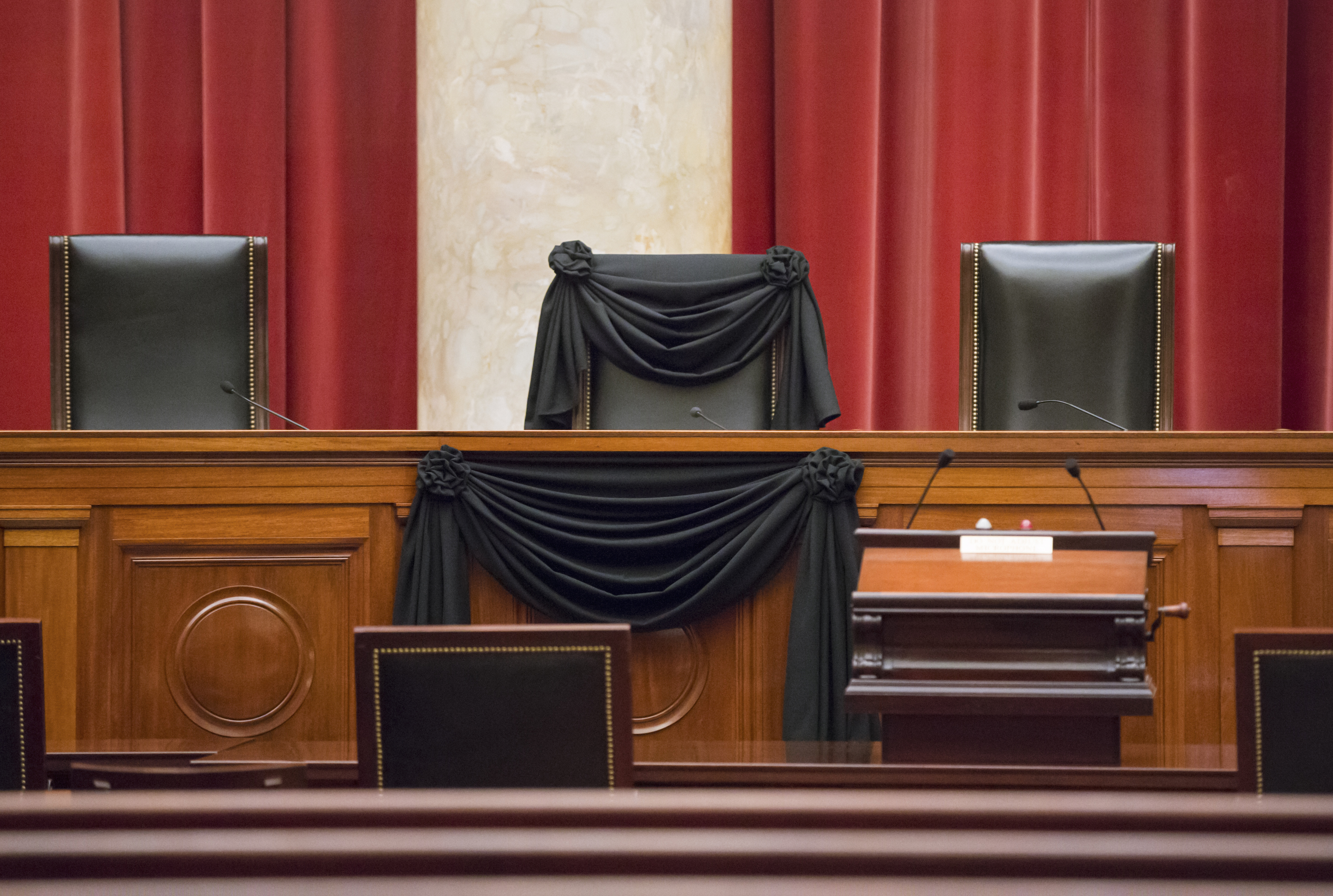
It turns out, he was right. Many conservatives, indeed, felt they had no choice. They looked at the vacancy created by the death of conservative icon Justice Antonin Scalia in February. And they looked at the actuarial tables and saw that three of the current justices will be in their 80s by the middle of the next presidential term in office. “The prospect of Hillary Clinton packing the Court with a fifth solid liberal vote was truly horrifying for many, many people,” said Severino.
That 2016 was an unusual election in this regard was supported by the exit polls. In 2008, NBC News found that only 7 percent of voters called the Supreme Court the most important factor for them. In 2016, that grew threefold to 22 percent. It motivated Trump voters more than Clinton voters, with 27 percent of Trump voters saying it was the most important factor for them, compared to only 19 percent for Clinton. Another 48 percent of Trump voters said it was an important factor, meaning that 75 percent of Trump voters thought the Court was either “an important” or the “most important” factor in their vote.
During the campaign, the Pew Research Center found that the Court was a particularly motivating force for Trump’s strongest group of voters—the oldest. While only 45 percent of voters aged 18-29 saw appointments as “very important,” 74 percent of voters 50 and older saw the Court that way.
Original Article
Source: nationaljournal.com/
Author: George E. Condon Jr.
No comments:
Post a Comment