Democracy Gone Astray

Democracy, being a human construct, needs to be thought of as directionality rather than an object. As such, to understand it requires not so much a description of existing structures and/or other related phenomena but a declaration of intentionality.
This blog aims at creating labeled lists of published infringements of such intentionality, of points in time where democracy strays from its intended directionality. In addition to outright infringements, this blog also collects important contemporary information and/or discussions that impact our socio-political landscape.

All the posts here were published in the electronic media – main-stream as well as fringe, and maintain links to the original texts.

[NOTE: Due to changes I haven't caught on time in the blogging software, all of the 'Original Article' links were nullified between September 11, 2012 and December 11, 2012. My apologies.]

Showing posts with label Anti-Privacy. Show all posts

Tuesday, June 20, 2017

Republicans Just Voted to Let Internet Service Providers Sell Your Browsing History

The Republican-controlled US House of Representatives on Tuesday repealed privacy rules that would have required internet service providers such as Comcast and Time Warner Cable to get consumers’ consent before selling or sharing their web browsing data with advertisers and other companies.

“Consumers should be in control of their own information,” Rep. Jared Polis, (D-Colo.) said in testifying against the bill. “They shouldn’t be forced to sell and give that information to who-knows-who simply for the price of admission for access to the internet.”

House Republicans Vote To Let Your Internet Service Provider Share Your Web History

WASHINGTON ― House Republicans jammed through a measure on Tuesday overturning the Obama administration’s rules that would have banned telecom and cable companies from sharing customers’ personal information, including web browsing history, without their consent.

The House resolution passed 215-205, mostly on party lines. Its companion passed the Senate last week on a 50-48 vote. If President Donald Trump signs the measure into law, internet service providers will win a regulatory victory. But advocates say consumers can kiss network privacy goodbye.

Wednesday, June 29, 2016

The FBI Wants to Exempt Massive Biometric Database From the Privacy Act

A broad coalition of 45 signatories, including civil liberties, racial justice, human rights, and privacy organizations, published a letter Tuesday strongly condemning a proposal by the FBI to exempt its massive biometric database from certain provisions of the Privacy Act. Known as the Next Generation Identification system, or NGI, the FBI database houses the world’s largest collection of fingerprints, DNA profiles, palm prints, face images, and other biometric identifiers. The letter, signed by groups such as La Raza, Color of Change, Amnesty International, National LGBTQ Task Force, as well as the companies Uber and Lyft, criticized the agency’s May 5 proposal on the grounds that the “system uses some of the most advanced surveillance technologies known to humankind, including facial recognition, iris scans, and fingerprint recognition.”

Thursday, April 28, 2016

Notorious Louisiana Prison Accuses Inmate Of ‘Defiance’ For Speaking With Reporters

Officials at one of the United States’ most notorious prisons have reportedly punished an outspoken inmate for daring to correspond with reporters about conditions inside the Louisiana State Penitentiary at Angola.

William Kissinger was abruptly relocated from Angola to the Elayn Hunt Correctional Center some 70 miles south in early February, after emailing with a reporter from the New Orleans Advocate for some weeks. Prison officials say he was moved as a disciplinary action because he was guilty of “defiance” and “general prohibited behavior,” the Advocate reports — two broad and vague rules of prisoner conduct that allow officials to punish inmates for anything they decide insults staff or impedes the prison’s function.

Tuesday, April 19, 2016

Reporting of government privacy breaches varies widely

Federal government departments breached the privacy of more than 45,000 Canadians last year but only a small fraction of those breaches were ever reported to Canada’s Privacy Commissioner.

Moreover, the proportion of breaches reported to the Privacy Commissioner’s office varied widely from one department to another. For example, while the Justice Department reported 80 per cent of the breaches it discovered, the agency with the largest number of breaches – the Canada Revenue Agency – only revealed less than one per cent of its 3,868 breaches to Privacy Commissioner Daniel Therrien’s office.

Tuesday, March 15, 2016

Obama Says ‘Impenetrable’ Encryption Could Prevent The Government From Doing Its Job

Speaking at the South By Southwest (SXSW) conference, President Barack Obama said that allowing Americans to have impenetrable encryption on their smartphones could impede the government’s ability to go after criminals and even tax evaders.

“If technologically it is possible to make an impenetrable device or system, where the encryption is so strong there is no key or no door, then how do we apprehend the child pornographer?” Obama said during his inaugural speech at the conference in Austin, Texas on Friday.

The Seven Most Vitriolic Passages in DOJ’s Response to Apple

In case there was ever any doubt, the Justice Department declared war on Apple on Thursday.

Prosecutors demanded that a federal judge force Apple to unlock San Bernardino killer Syed Rizwan Farook’s iPhone in a brief that bristled with so much venom that Apple’s top lawyer, Bruce Sewell, said it “reads like an indictment.”

Obama Wants Nonexistent Middle Ground on Encryption, Warns Against “Fetishizing Our Phones”

President Barack Obama says he wants strong encryption, but not so strong that the government can’t get in.

“The question we now have to ask technologically is if it is possible to make an impenetrable device or system where the encryption is so strong that there is no key, there is no door at all?” he asked, speaking at the South By Southwest (SXSW) festival in Austin on Friday.

Monday, March 14, 2016

Government Accuses Apple Of 'Deliberately' Boosting Security To Keep Feds Out

(Reuters) - The U.S. Justice Department on Thursday said Apple Inc's rhetoric was "false" in a high-profile fight over the government's bid to unlock an encrypted iPhone belonging to one of the San Bernardino shooters.

Last month, the Federal Bureau of Investigation obtained a court order requiring Apple to write new software and take other measures to disable passcode protection and allow access to shooter Rizwan Farook's iPhone.

Friday, March 11, 2016

Comey’s FBI makes waves

The aggressive posture of the FBI under Director James Comey is becoming a political problem for the White House.

The FBI’s demand that Apple help unlock an iPhone used by one of the San Bernardino killers has outraged Silicon Valley, a significant source of political support for President Obama and Democrats.

Snowden: FBI's claim it can't unlock the San Bernardino iPhone is 'bullshit'

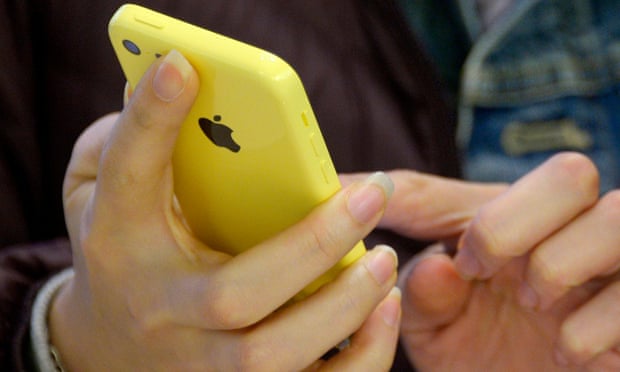
Edward Snowden, the whistleblower whose NSA revelations sparked a debate on mass surveillance, has waded into the arguments over the FBI’s attempt to force Apple to help it unlock the iPhone 5C of one of the San Bernardino shooters.

The FBI says that only Apple can deactivate certain passcode protections on the iPhone, which will allow law enforcement to guess the passcode by using brute-force.

FBI quietly changes its privacy rules for accessing NSA data on Americans

The FBI has quietly revised its privacy rules for searching data involving Americans’ international communications that was collected by the National Security Agency, US officials have confirmed to the Guardian.

The classified revisions were accepted by the secret US court that governs surveillance, during its annual recertification of the agencies’ broad surveillance powers. The new rules affect a set of powers colloquially known as Section 702, the portion of the law that authorizes the NSA’s sweeping “Prism” program to collect internet data. Section 702 falls under the Foreign Intelligence Surveillance Act (Fisa), and is a provision set to expire later this year.

Apple vs. FBI Is Not About Privacy vs. Security -- It's About How to Achieve Both

In the aftermath of the tragic attacks in San Bernardino, an iPhone belonging to Syed Rizwan Farook, one of the assailants, propelled the previously cloistered debate on encryption into the mainstream.

The current legal clash between Silicon Valley and American law enforcement over encryption is hardly a new one. Apple and other American technology companies have been arguing these cases in the courts for several years. In most cases, Silicon Valley willingly complies with law enforcement's requests. But from Apple's perspective, this case is not like most cases.

Apple Must Clear Another Hurdle In NY Encryption Case

WASHINGTON (Reuters) - The U.S. Justice Department on Monday resubmitted its case for Apple to unlock an encrypted iPhone belonging to a drug offender to a higher judge in the Eastern District of New York.

The move was in line with what the department said it would do after a magistrate judge previously sided with Apple, ruling that the Justice Department could not use a 1789 law known as the All Writs Act to compel the tech giant to unlock the phone.

Tuesday, March 08, 2016

How the FBI Polices Dissent and Why It Matters in the Encryption Debate

With the Federal Bureau of Investigation (FBI) attempting to gain access to the San Bernardino shooter's phone, and in the process create a backdoor into encrypted devices across the world - many in the media have framed the issue as being one of privacy versus security. While there is undoubtedly a compelling privacy issue at stake, many advocates have also pointed to another fundamental right at stake - the right of free expression. The Supreme Court has long noted that privacy is fundamental to free expression. More recently, the UN Special Rapporteur on Freedom of Opinion and Expression released a report concluding that strong encryption was essential to protect free expression.

Sunday, March 06, 2016

Google, Facebook And Microsoft Will Officially Support Apple In Battle Against FBI

(March 3 (Reuters) - Tech industry leaders including Alphabet Inc's Google, Facebook Inc, Microsoft Corp , AT&T and more than two dozen other Internet and technology companies were filing legal briefs on Thursday asking a judge to support Apple Inc in its encryption battle with the U.S. government, court documents and sources familiar with the companies' plans said.

The rare display of unity and support from Apple's sometime-rivals showed the breadth of Silicon Valley's opposition to the government's anti-encryption effort.

Why the ACLU Is Defending Apple

The stakes of the fight between Apple and the FBI could not be higher for digital security and privacy. If the government has its way, then it will have won the authority to turn American tech companies against their customers and, in the process, undercut decades of advances in our security and privacy.

Wednesday, March 02, 2016

Apple vs. the FBI: Picking the lock of private data

If you're feeling confused about the Apple vs. the FBI saga, relax. That's perfectly normal. Over the past couple of weeks it's been a dizzying and challenging saga, even for tech observers. And, it's been a hard one to write about because every day it seems like there's a new twist.

So, perhaps, the way to cut through all that is to think about what is at stake, rather than what has taken place. In short, for me the case comes down to this question: should citizens be able to know something that the government cannot get access to?

FBI Director Admits He Could Unlock Everyone's Phones if the Feds Win Their Fight With Apple

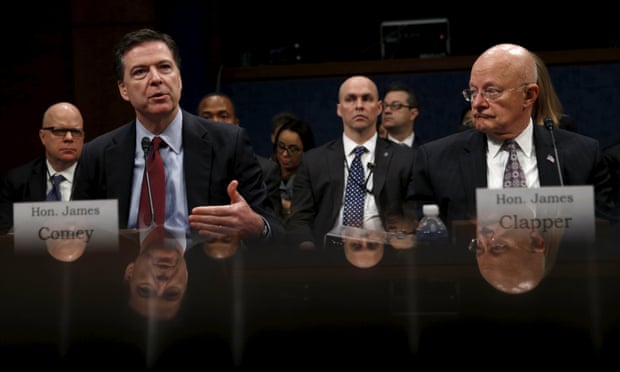
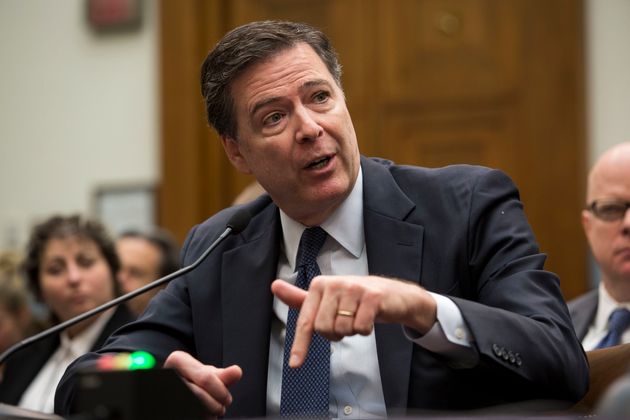
FBI Director James Comey has answered congressional questions about his fight with tech companies over access to encrypted devices and messages in the past. But rarely has he endured the kind of inquisition he faced on Tuesday afternoon before the House Judiciary Committee.

Tuesday, March 01, 2016

Reminder: The FBI Doesn't Just Want To Get Inside One Single iPhone

WASHINGTON (Reuters) - U.S. Federal Bureau of Investigation Director James Comey told Congress on Tuesday that he understands the outcome of the San Bernardino iPhone encryption case will set a precedent for other cases.

Apple Inc has said complying with a court order to grant the FBI access to data on an iPhone used by one of the San Bernardino shooters would set a dangerous precedent that would require it to weaken security in other phones.