Democracy Gone Astray

Democracy, being a human construct, needs to be thought of as directionality rather than an object. As such, to understand it requires not so much a description of existing structures and/or other related phenomena but a declaration of intentionality.
This blog aims at creating labeled lists of published infringements of such intentionality, of points in time where democracy strays from its intended directionality. In addition to outright infringements, this blog also collects important contemporary information and/or discussions that impact our socio-political landscape.

All the posts here were published in the electronic media – main-stream as well as fringe, and maintain links to the original texts.

[NOTE: Due to changes I haven't caught on time in the blogging software, all of the 'Original Article' links were nullified between September 11, 2012 and December 11, 2012. My apologies.]

Showing posts with label Anti-Environment. Show all posts

Thursday, October 05, 2023

Trump’s border wall caused ‘significant’ cultural, environmental damage, watchdog finds

The border wall championed by President Donald Trump harmed the environment and trampled on Native American cultural sites, according to a report released on Thursday by the Government Accountability Office.

The 450 miles of barrier constructed during Trump’s time in office — one of his highest-profile actions — proceeded by waiving or disregarding environmental and historic preservation laws. But it’s now clear the wall interfered with endangered species, diverted water sources and caused other environmental damage, the federal watchdog said.

Wednesday, September 27, 2023

Alberta Stumbles onto the World Stage

Whether or not Premier Danielle Smith and her enabler and office manager Rob Anderson carefully planned their freeze on renewable electricity generation last week or just came up with it on a whim, it’s now turning into a three-alarm international dumpster fire. 

On Wednesday the U.K.-based Guardian published a major story on the seven-month moratorium, which caught the markets and commentariat by surprise when Alberta Utilities Minister Nathan Neudorf announced it last week.

The Guardian’s story was not a friendly update of the sort typically filed by local media in Alberta. “Fury as Alberta cuts renewables during Canada’s worst fire season ever,” the headline shouted, pointing to an obvious irony.

Wednesday, March 01, 2017

Why Trump just killed a rule restricting coal companies from dumping waste in streams

With everything that Republicans want to do — repeal Obamacare, overhaul the tax code — it might seem odd that one of Congress’ very first acts would be to kill an obscure Obama-era regulation that restricts coal companies from dumping mining waste into streams and waterways.

But that is indeed what’s going on. In early February, the House and Senate voted to repeal the so-called “stream protection rule” — using a regulation-killing tool known as the Congressional Review Act. On Thursday, President Trump signed the bill, which means the stream protection rule is now dead. Coal companies will have a freer hand in dumping mining debris in streams.

Tuesday, February 28, 2017

Congress is set to overturn the Stream Protection Rule

In one of his last acts as president, Barack Obama finalized a rule protecting streams from surface mining operations. It is likely that, in one of his first acts as president, Donald Trump will overturn it.

The Stream Protection Rule is an update to existing mining regulations. It compels companies to restore the “physical form, hydrologic function, and ecological function” of streams after mining operations are complete. And, it calls for monitoring pollution levels in streams near surfaces mines.

Wednesday, June 29, 2016

Hydropower Dams Are Creating Wildlife Wastelands

Hydropower generates carbon-free electricity for millions of people around the world. But growing evidence indicates that hydropower dams can also cause dramatic drop-offs in the number and variety of wild plant and animal species around them.

Two new studies, published in the July issue of the journal Biological Conservation, have looked at the islands created after hydroelectric dams blocked rivers and flooded the areas behind them to create huge reservoirs. Dam developers consider these islands—previously the tops of tall hills—to be potential wildlife refuges where species can thrive despite the reduction in their original habitat.

Friday, April 08, 2016

Almost Half Of World Heritage Sites Are Threatened, Report Finds

Nearly half of the planet’s world heritage sites are threatened by development, despite international protections, according to a report released Wednesday by the World Wildlife Fund.

The 229 heritage sites in 96 countries include Egypt’s pyramids, Florida’s Everglades National Park and Australia’s Great Barrier Reef. The WWF report found that 114 of these sites are under threat from oil and gas development, illegal logging, overfishing or other industrial activities.

Tuesday, March 29, 2016

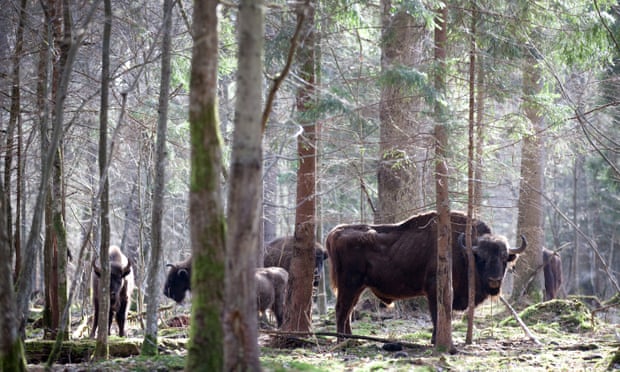
Poland approves large-scale logging in Europe's last primeval forest

Poland has approved large-scale logging in Europe’s last primeval woodland in a bid to combat a beetle infestation despite protests from scientists, ecologists and the European Union.

The action in the Białowieża forest is intended to fight the spread of the spruce bark beetle.

“We’re acting to curb the degradation of important habitats, to curb the disappearance and migration of important species from this site,” the environment minister, Jan Szyszko, said.

Friday, March 11, 2016

Environmental Advocates To Congress: Reject The TPP

It’s something that all the major presidential candidates — on both sides of the aisle — can agree on: The United States should not ratify the TransPacific Partnership trade agreement. Even Hillary Clinton, who was Secretary of State during the bulk of the agreement’s confidential negotiations, doesn’t think the TPP is a good idea anymore.

Now, a group of environmental advocates is pressuring Congress to reject ratification of the 12-nation agreement, which they say would allow 9,000 companies operating on U.S. soil to sue the government for imposing environmental regulations.

Sunday, February 28, 2016

Florida Officials Drain Lake Full Of ‘Toilet’ Water To Coast

With tourist season just around the corner, Florida’s beach communities would normally be preparing for a happy, healthy summer. Instead, they’re reeling from polluted water that is likely to inflict severe damage to the local economy and environment.

Lake Okeechobee, a large inland lake in southern Florida, is experiencing its highest water levels in nearly a century due to heavy rains that fell during the month of January. This should not be suprising, because heavy rainfall events are increasing as the planet warms. But after water levels reached a foot above normal, public officials began to worry that the excess water was putting too much stress on the lake’s aging dike. Officials then made the decision to drain the lake out toward Florida’s coasts. There was one problem: Lake Okeechobee’s waters are toxic.

Tuesday, October 27, 2015

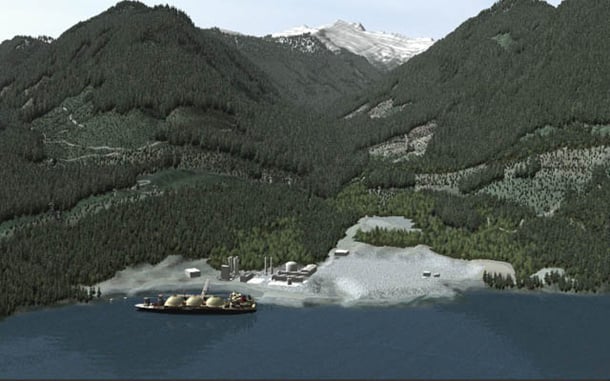
BC Gov't Gives Green Light to Woodfibre LNG

Woodfibre LNG has the go-ahead from the BC Liberal government, but the environmental assessment of a necessary natural gas pipeline continues.

B.C.'s environmental assessment office issued the certificate Monday, backed up by a joint ruling from Environment Minister Mary Polak and Natural Gas Minister Rich Coleman.

The six-page letter from Polak and Coleman said the certificate includes "enforceable conditions" and "project design parameters" that ensure "the project will be constructed, operated and decommissioned in a way that no significant adverse effects are likely to occur."

Monday, October 26, 2015

Leaked Map Reveals Big Gas Is Setting Its Sights on the Most Biodiverse Place on Earth

A leaked map shows that a private energy corporation based in Argentina is eyeing Manú National Park in Peru’s Amazon, one of the most biodiverse places on earth.

In a detailed article in The Guardian, environment writer David Hill, who researches forest governance in Peru from his location in the Amazon, traces the back-and-forth of Pluspetrol’s apparent quest for the hydrocarbons beneath the protected land:
The map vaguely and ignorantly - or hopefully? Disdainfully? - calls Manu a “reserve”, where gas operations are permitted. Not so in national parks. Peru’s 1997 Law of Protected Natural Areas states “the extraction of natural resources is not permitted” in parks, while the 2001 regulations for “protected natural areas” states the “settlement of new human groups and the exploitation of natural resources is prohibited.” In addition, the 1993 Constitution “obliges” the government “to promote the conservation of biological diversity and protected natural areas.”

Sunday, October 11, 2015

Here's Evidence That Something Very Bad Is Happening In Our Oceans

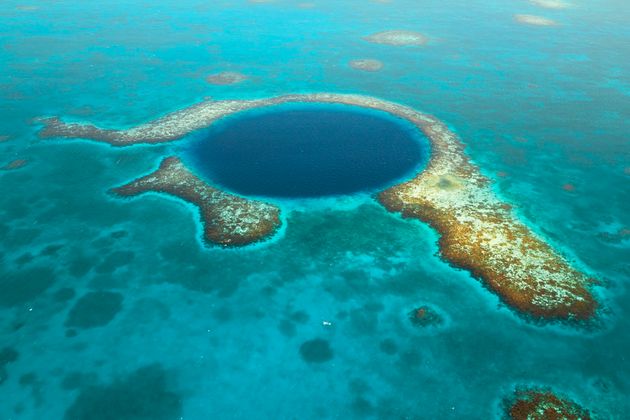
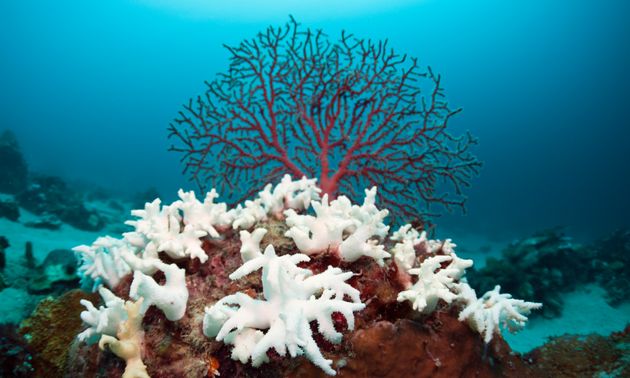
The planet's coral reefs are experiencing a mass global bleaching, the National Oceanic and Atmospheric Administration announced on Thursday. The bleaching, only the third event of its type in recorded history, is another troubling sign of the damaging effects of climate change on the planet's health.

Bleaching happens when usually vibrantly colored corals lose their hues and turn bright white due to warmer oceans or other environmental factors. The colorful algae that live in and feed coral polyps leave in stressful times, turning the otherwise breathtaking formations into ghostly shells.

Wednesday, September 09, 2015

Fact-checking Stephen Harper's environmental record

The claim: "The Government of Prime Minister Stephen Harper has made the conservation of Canada's natural environment a top priority."
On Friday, Sept. 4, Stephen Harper unveiled his government's plans to protect the natural environment. The plan focuses on improvements to policies for hunting, fishing and snowmobiling.

Friday, September 04, 2015

Amazon's Environmental Record May Be As Bad As Its Work Culture

Amazon's quasi-dystopian workplace culture is far from its only moral failure in a corporate world that increasingly expects big companies to do the right thing.

Its environmental record is badly smudged.

Unlike some of its biggest rivals, the e-commerce giant refuses to release information about energy consumption at its data centers. Only last November did it start using renewable energy to power some of these electricity-guzzling facilities. In addition, the company offers to recycle customers' old devices, but the program is far from comprehensive.

Monday, August 31, 2015

Nexen Ordered To Suspend Operations On 95 Pipelines By Alberta Energy Regulator

CALGARY — Alberta's energy regulator has ordered Nexen Energy to immediately cease operations of 95 pipelines in northeastern Alberta.

It issued the order late Friday due to what it calls non-compliance surrounding pipeline maintenance and monitoring in its Long Lake oilsands project.

Alberta Energy Regulator spokesman Bob Curran says every oil and gas company is required to monitor, inspect and maintain records for all of their pipelines.

Friday, August 28, 2015

Canada surpasses Brazil as global leader in deforestation

Read this Sept. 3 story from the Washington Post on a new report suggesting wild fires and industrial activity are giving Canada the dubious distinction of being the new global leader on deforestation.

Thursday, August 27, 2015

No Keystone, No Problem: The Oil Industry Is Making Other Pipeline Plans

Environmentalists have been waiting since 2008 for President Barack Obama's decision on whether to approve the Keystone XL pipeline. That decision may come any day now. But Canada’s tar sands industry hasn't been waiting around.

Publicly, TransCanada, the company behind the embattled pipeline, insists it is still optimistic it will win the long-running standoff—not just over Keystone, but another pipeline project that has faced environmental opposition as well, Energy East. “We’re optimistic for both of our projects,” TransCanada spokesman Mark Cooper told the New Republic.

CSIS surveillance of pipeline protesters faces federal review

A federal committee is holding a hearing Wednesday into a complaint that the Canadian Security Intelligence Service illegally spied on peaceful anti-pipeline protesters in B.C., but the public may never know what has occurred behind the hearing's closed doors.

The security intelligence review committee hearing will not be open to the public.

New UN report finds almost no industry profitable if environmental costs were included

pollution2If you haven’t been paying attention, I don’t blame you for at first not believing this. After all, companies go to great lengths to greenwash their image and present themselves as progressive and environmentally responsible, even while they turn your land to deserts and your oceans into dead zones. Unfortunately, as Mark Twain once famously said: “It’s easier to fool people than to convince them that they have been fooled.”

Wednesday, August 26, 2015

This Is the Real Cost of Coal

This story was originally published by the Atlantic and is reproduced here as part of the Climate Desk collaboration.

In Anthony Doerr's All the Light We Cannot See, a radio broadcaster marvels at the wonder of coals:

Consider a single piece glowing in your family's stove. See it, children? That chunk of coal was once a green plant, a fern or reed that lived one million years ago, or maybe two million, or maybe one hundred million. Can you imagine one hundred million years? Every summer for the whole life of that plant, its leaves caught what light they could and transformed the sun's energy into itself. Into bark, twigs, stems. Because plants eat light, in much the way we eat food. But then the plant died and fell, probably into water, and decayed into peat, and the peat was folded inside the earth for years upon years—eons in which something like a month or decade or even your whole life was just a puff of air, a snap of two fingers. And eventually the peat dried and became like stone, and someone dug it up, and the coal man brought it to your house, and maybe you yourself carried it to the stove, and now that sunlight—sunlight 100 million years old—is heating your home tonight.