Democracy Gone Astray

Democracy, being a human construct, needs to be thought of as directionality rather than an object. As such, to understand it requires not so much a description of existing structures and/or other related phenomena but a declaration of intentionality.
This blog aims at creating labeled lists of published infringements of such intentionality, of points in time where democracy strays from its intended directionality. In addition to outright infringements, this blog also collects important contemporary information and/or discussions that impact our socio-political landscape.

All the posts here were published in the electronic media – main-stream as well as fringe, and maintain links to the original texts.

[NOTE: Due to changes I haven't caught on time in the blogging software, all of the 'Original Article' links were nullified between September 11, 2012 and December 11, 2012. My apologies.]

Tuesday, February 07, 2012

SOPA on a Rope - Has the internet actually saved democracy?

The internet has saved democracy! Or at least that’s how it felt recently. When SOPA, the U.S. Congress' Stop Online Piracy Act, was postponed after a very public outcry, the whole episode seemed to display the best of the web. The mass outpouring of dissent and the blackout of sites like Reddit and Wikipedia forced American lawmakers to retreat on what was inarguably a terrible bill. Score one for the democratic potential of the internet.

But with news of terrible working conditions in Apple’s supply chain and Twitter's new realpolitik policy on censorship, the techno-utopian triumphalism was short-lived. Beneath the high-tech sheen was some dark, complicated stuff. What’s more, given that the roots of Apple and Twitter's controversies lie in complex global issues, the very conspicuous activism behind SOPA suddenly started to look more like self-interest and Western insularity than a shining example of online democracy. It was, if not quite “evil,” then at least a little unsettling. And the eerie symmetry between the interests of web users and those of large corporations demands the question: is the web the beacon of democracy we keep saying it is?

In one sense, the answer to that question is a clear “yes,” and in a way the widespread mobilization against SOPA was democracy at its amoral purest. A populace had particular interests and it used the platform the web provides to express them. Those concerns got magnified in turn and taken up by larger entities like Google, Wikipedia et al, and together it raised enough clamour to catch the attention of those with real power. What more could a democracy-loving citizen of the 21st century ask for? It may not be an ideal solution for issues like global poverty, but at least it lives up to certain ideals of how change should be enacted.

The myth of Tory economic performance

The extent to which the Conservatives’ propaganda machine will go was illustrated last week by the news, courtesy of The Canadian Press, of the staging of a Potemkin-village-style citizenship reaffirmation ceremony.

Only three bona fide new Canadians could be found for last October’s event, so at least six federal bureaucrats suited up as imposters for the PR show broadcast by Sun TV. In a control-freak kingdom, this one – “a full North Korean,” as one wag put it – is hard to top.

News of the charade came on the heels of Stephen Harper’s proclamations in Davos on the wonders of the Canadian economy as piloted by a Finance Minister who, he said, is the greatest on Earth. The Prime Minister’s musings on the need for pension reform were reasonable enough. But his ever-soaring estimations of his economic record are starting to be challenged by many observers, as well they might be.

From 2007 to 2011, Canada’s economic performance put us in the middle of the pack in GDP growth among 34 industrialized countries. Our unemployment rate is currently rising and nearing the U.S. level. It’s true that, comparatively speaking, we’re doing well on a number of other economic indices. But given the advantages the Conservatives enjoyed when they took office – the big surplus, the well-regulated financial sector, the natural-resource-laden riches – how much of an accomplishment is it? When you start a race a lap ahead of the field, how hard is it to be among the leaders?

Ban spanking, researchers say

Spanking makes children more aggressive and should be made illegal, a newly released report suggests.

The Canadian Medical Association Journal released a report Monday detailing two decades of research pointing to that conclusion. Joan Durrant of the University of Manitoba and Ron Ensom of the Children's Hospital of Eastern Ontario in Ottawa, authors of the report, say the federal government should remove section 43 from the criminal code which allows physical punishment in certain circumstances. .

"No study has ever found physical punishment to have a long-term positive effect," Durrant and Ensom said.

Durrant and Ensom point to research, including a study designed to reduce difficult behaviour in children, in which researchers found that families that reduced their use of physical punishment saw a decline in aggression and anti-social behaviour in their children.

Images of children's brains gathered in another study suggested that physical punishment may change areas in the brain connected to performance on IQ tests and could increase a child's vulnerability to drug and alcohol dependence.

"The evidence is clear and compelling - physical punishment of children and youth plays no useful role in their upbringing," Durrant and Ensom said in The Joint Statement on Physical Punishment of Children and Youth, which was endorsed by more than 400 organizations.

Andrea Mrozek, manager of research at the Institute of Marriage and Family Canada, said she was concerned by Durrant and Ensom's conclusions.

"I'm concerned that the studies they examined correlate abuse and spanking and say that those are the same things," Mrozek said. "Those are not the same things.

"They are distinct. Because you have loving parents across this country who discipline their children with one on the bottom in the appropriate age range. .

"They are not abusing their kids..

Original Article
Source: ottawa citizen 
Author: Heather Yundt 

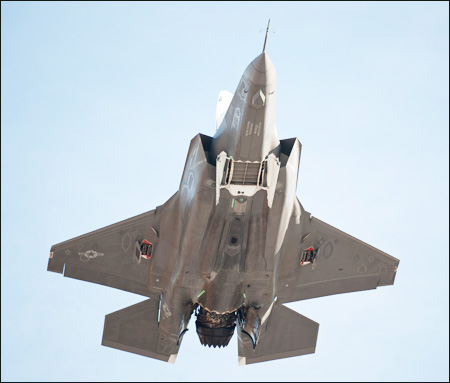
F-35 may fail to meet key requirements

The United States Air Force (USAF) variant of Lockheed Martin’s F-35 will likely fail to meet two of the Korean Air Force’s key requirements — the ability to carry weapons externally and fly at Mach 1.6 (1,930 kilometers per hour) or faster, an industry insider said Tuesday.

He pointed out that the Korean military has clearly outlined the two key features as compulsory requirements in its request for proposal (RFP) released Jan. 30.

“The maximum speed of the F-35 Lightning II, which is still under development, is Mach 1.6, the bare minimum the Air Force has stated as a mandatory requirement,” the insider familiar with the RFP said.

“The question is whether Lockheed Martin’s F-35 can prove itself to fly at such an ideal speed as advertised when a team of Air Force pilots test fly the aircraft later this year.”

The Air Force is scheduled to carry out testing and evaluations on the F-35 and its two rivals, Boeing’s F-15 Silent Eagle and EADS’s Typhoon, from June through September before announcing its selection in October.

Andrew Coyne: Caterpillar’s EMD facility never really was ‘our’ plant

By now, the nationalist version of last week’s closing of the Electro-Motive Diesel locomotive plant in London, Ont., has been firmly established in the public mind, told and retold in a thousand accounts, roughly two-thirds of them in the Toronto Star. As described by the squadron of columnists the paper apparently keeps on hand for such events, the “London massacre,” or in more polite terms, “industrial rape,” was not merely a business decision by the plant’s owners, Caterpillar Inc., or even an egregious assault on workers’ rights.

Rather, Caterpillar was absconding with a vast storehouse of intellectual property developed at “London’s 90-year-old EMD” — patents, technology, equipment, trade secrets, manufacturing processes, the works. Worse, it was doing so with the benefit of millions of dollars in taxpayer funds. Why, “only last year,” the paper’s business columnist, David Olive, fumed, EMD received “a $5-million federal subsidy hand-delivered by Stephen Harper during a factory visit.”

It was nothing less than “highway robbery,” political columnist Martin Regg Cohn raged. Caterpillar had bought the plant purely in order to “harvest the technological know-how subsidized with government incentives and writeoffs.” But never mind the industrial rape: there are bigger issues in play. “Why underwrite our companies,” Cohn wrote, “if we willingly sell off our embedded brainpower to foreign bidders who leave Canada cash-rich, patent poor and jobless?”

Ornge to revert to not-for-profit air ambulance co-ordinator

The Ontario government is pledging to turn the province’s embattled Ornge agency back into a not-for-profit air ambulance co-ordinator, but it will continue to operate its own fleet of helicopters and airplanes.

Opposition critics and aviation experts say the government is not going far enough, and are calling on it to unwind Ornge’s aviation operations and allow private companies to operate the air ambulance service. They say a lack of transparency surrounding Ornge’s acquisition of the aircraft that allowed it to compete against private sector players raises questions about whether taxpayers got the best possible deal.

Ornge operates the helicopters and airplanes through private, for-profit companies. Health Minister Deb Matthews said on Monday that she has asked the newly appointed board of Ornge to wind down the for-profit entities.

“We are absolutely committed to bringing the operations of Ornge back to a not-for-profit organization,” Ms. Matthews said in an interview. “It will take time.”

The province created Ornge as a not-for-profit entity in 2006 to co-ordinate all aspects of the province’s air ambulance services. Ornge then created for-profit entities to compete with the companies that were already providing air ambulance services.

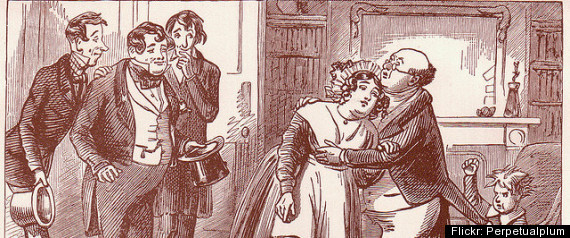
Charles Dickens Birthday: Robert Morrison, English Professor, Says Social Issues Still Resonate Today

KINGSTON, Ont. - For a 200-year-old literary figure, Charles Dickens has much to say about the issues of today.

So believes Queen's University English Prof. Robert Morrison, who says Dickens — born Feb. 7, 1812 — was both a man of his times and a forward-thinker.

In his many novels — including such classics as "A Christmas Carol," "David Copperfield" and "Oliver Twist" — Dickens wrote about issues that still resonate today.

Morrison says Dickens brought attention to child poverty, over-population, environmental degradation and greed.

The popular storyteller's 200th birthday is being celebrated Tuesday by admirers around the world.

Morrison says Dickens, who visited Canada briefly while on a reading tour, was the most popular author of his day and known world-wide.

"He is a man of his time but ... he does map in a lot of what still preoccupies us today."

Queen’s Diamond Jubilee poised to outdo Royal Wedding’s pomp

Queen Elizabeth II will likely begin the morning of Feb. 6 as she does every other day – with the racing news, the Daily Telegraph, her husband and dogs, and the box of official briefing papers that she reads diligently before work begins.

But this Monday will be different in one way: Normally the Queen spends Feb. 6 – the anniversary of her father’s death, which is known in royal circles as accession day – in private contemplation. This year, it marks the beginning of the 61st year of her reign, and so she will spend it in a glamorous fashion befitting her monarchy: That is, visiting toddlers in a nursery school and dignitaries in the Norfolk town of King’s Lynn.

There will be no rest this year for the 85-year-old monarch as she celebrates her Diamond Jubilee (she is now the second-longest-reigning British monarch, after Queen Victoria). The Royal Family, or “The Firm,” as it calls itself, is a brand that is seeking to build on the successes of last year, to capitalize on ever-increasing global interest in the monarchy through the use of both ancient pageantry and up-to-the-minute technology.

To that end, this year’s pomp will make last year’s royal wedding seem like an impromptu get-together in a community centre. The centrepiece of the festivities is a four-day weekend at the beginning of June – the date chosen because it’s statistically the driest few days in Britain – which will see street parties across the country, the lighting of 2,012 beacons across the Commonwealth, a river pageant of 1,000 boats on the Thames, and a giant concert in London.

Canada kicks off four months of celebrations for Queen's Diamond Jubilee today

TORONTO - Flag-raisings, speeches and medal ceremonies are hardly the trappings of a typical party, but the festivities surrounding the start of the Queen's Diamond Jubilee herald celebrations that royal watchers predict will be among the most enthusiastic in the world.<

Revived political interest in the monarchy, coupled with residual glow from last year’s blast of royal star power, has whet the country’s appetite for four months worth of activities honouring one of the longest reigns in the institution’s history.

The festivities got underway on Monday _ the anniversary of the Queen's ascension to the throne _ with cross-country ceremonies to distribute Diamond Jubilee medals to Canadians for their work in community service.

Recipients at a ceremony in Ottawa included Olympic freestyle ski gold medallist Alexandre Bilodeau, Terry Fox's brother, Darrell, Leslie Natynczyk, the wife of Canada's top soldier and celebrity entrepreneur Brett Wilson. Honourees at the Ontario legislature included singer-songwriter Gordon Lightfoot, journalists Peter Mansbridge and Lloyd Robertson, and ballet dancers Karen Kain and Rex Harrington.

Poisoned Politics of Keystone XL

On Monday, Stephen Harper, the prime minister of Canada, traveled to China for a week of high-level meetings.  He brought with him a handful of his cabinet ministers, including Joe Oliver, his tough-talking minister of natural resources who, until recently, had been withering in his scorn for the opponents of the Keystone XL oil pipeline, which President Obama rejected a few weeks ago.  The pipeline, of course, was intended to transport vast oil reserves in Alberta to the American refineries on the Gulf of Mexico.

Oliver no longer talks so freely about the environmental critics of the Keystone pipeline; all of Harper’s ministers have been instructed to stop making comments that might be construed as interfering in the American presidential election.  But there are other, more diplomatic, ways to send messages.  Like going to China with your cabinet members and cutting energy deals with a country that has, as The Globe and Mail in Toronto put it recently, a “thirst for Canadian oil.”  Oil, I might add, that may be a little dirtier than the crude that pours forth from the Saudi Arabian desert — that is one of the main reasons environmentalists say they oppose Keystone — but is hardly the environmental disaster many suppose.

I realize that President Obama rejected Keystone because, politically, he had no choice.  My guess is that, in his centrist heart of hearts, the president wanted to approve it.  But to give the go-ahead before the election was to risk losing the support of the environmentalists who make up an important part of his base. 

I also understand that the Republican decision to force Obama’s hand was a political stunt, allowing them to denounce his decision during the campaign.  As Jennifer Steinhauer put it in The Times recently, “Republicans are framing Keystone as an urgent jobs and energy project at a time of high unemployment and creeping gasoline prices.”