Democracy Gone Astray

Democracy, being a human construct, needs to be thought of as directionality rather than an object. As such, to understand it requires not so much a description of existing structures and/or other related phenomena but a declaration of intentionality.
This blog aims at creating labeled lists of published infringements of such intentionality, of points in time where democracy strays from its intended directionality. In addition to outright infringements, this blog also collects important contemporary information and/or discussions that impact our socio-political landscape.

All the posts here were published in the electronic media – main-stream as well as fringe, and maintain links to the original texts.

[NOTE: Due to changes I haven't caught on time in the blogging software, all of the 'Original Article' links were nullified between September 11, 2012 and December 11, 2012. My apologies.]

Thursday, September 04, 2014

Top 5 Reasons ‘Labor Day’ Isn’t for Laborers Anymore

Calling the bottom of a river a “bed” is a metaphor.  Imagine the river restlessly sleeping on its muddy mattress.  But when we’ve so internalized a metaphor that we forget it is a figure of speech, as with the phrase “river bed,” it is called a “dead metaphor.”

Labor Day is, alas, akin to a dead metaphor in contemporary America.  There was a time when, as in 1936, the unionized auto workers could make effective demands from their employers, for higher wages and better working conditions.  Workers no longer get better off in today’s U.S.A.  They are often summarily dismissed if they try to unionize.  They are badly paid.  Good jobs have been switched out for bad jobs.  Tax policy has been manipulated by the wealthy and corporations, who have bought Congress and state legislatures, so as to ensure that the rich get richer, and richer and richer. 

The True Story Of How One Man Shut Down American Commerce To Avoid Paying His Workers A Fair Wage

In 1894, Chicago was the Midwest’s gateway to the rest of the United States. Twenty-four different railroad lines centered or terminated in Chicago, covering the nation in over forty thousand miles of rail. Farmers, merchants, craftsmen and factories hoping to bring their goods to the rest of the nation — and potentially, to the rest of the world — had to first bring those goods to Chicago to begin their journey down one of the city’s many rail lines. Without Chicago’s railroads, much of the country lost its access to the nation’s commerce and was essentially plunged back into a pre-industrial economy.

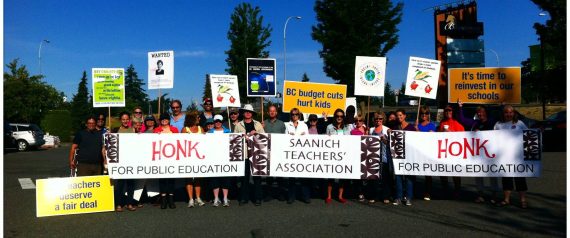
B.C. Teachers' Strike: The Feud Dates Back Decades

VANCOUVER - All summer long, there's been one overriding conversation amongst the hundred-plus employees at a Vancouver financial firm who have school-age children: British Columbia's acrimonious teachers' strike.

Project analyst Robert Ford, with Credential Financial, has a 12-year-old daughter and six-year-old son who won't be starting their school year this Tuesday, and he said the parents at his company all feel the same.

National inquiry wouldn’t impact investigations: RCMP

The director of the RCMP’s aboriginal policing unit says a national inquiry is “immaterial to the prevention efforts that we are implementing” and wouldn’t impact the force’s investigations.

Facing renewed calls for a national public inquiry into Canada’s missing and murdered aboriginal women, the Conservative government remains steadfast in its position that action is needed to solve the crimes rather than an inquiry.

Canadians expose foreign worker 'mess' in oilsands

Canadian tradesmen from a huge oilsands construction project are waving a red flag about safety hazards and near misses, which they blame on the use of foreign workers who aren't qualified and can't speak English.

"When you bring in a bunch of workers who are unqualified to do this job it's only a matter of time before you kill someone," said Les Jennings, who was an ironworker supervisor at the Husky Sunrise plant until a few weeks ago, when he quit in frustration.

Three Reasons Teachers Must Keep Picketing to Keep Pressure on BC Gov't

Education Minister Peter Fassbender has publicly suggested the BCTF take down teachers' picket lines for a 2-week "cooling off period" while veteran mediator Vince Ready works with the government and BCTF negotiating teams to reach a collective agreement.

Don't do it, is my strong advice to teachers -- it's a trap.

I am sure many teachers are running out of cash or into deeper debt without a pay cheque and the thought of some cash in hand is tempting, as well as the enormous pressure from media, parents and students to get school started on time.

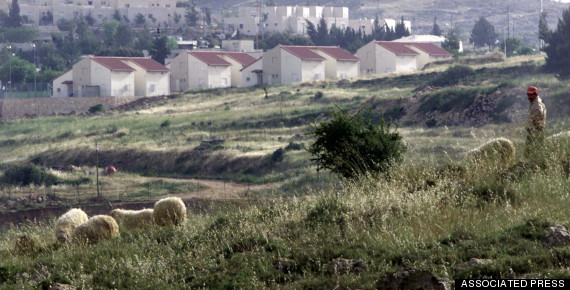
Israel Announces Massive West Bank Land Grab

JERUSALEM, Aug 31 (Reuters) - Israel announced on Sunday a land appropriation in the occupied West Bank that an anti-settlement group termed the biggest in 30 years, drawing Palestinian condemnation and a U.S. rebuke.

Some 400 hectares (988 acres) in the Etzion Jewish settlement bloc near Bethlehem were declared "state land, on the instructions of the political echelon" by the military-run Civil Administration.

Canada's Refugee Policy Risks Tearing Parents From Their Children, Activists Say

MONTREAL - For the past month, Sheila Sedinger woke up every morning fraught with worry over the prospect of being deported to Mexico without her two young children.

But Sedinger, who came to Canada in 2005, was recently granted a stay, guaranteeing her at least two more years in Montreal with her eight- and six-year-old daughters while a custody battle with their father plays out.

Other families haven't been so lucky.

Israel Appropriates 1000 Acres Of West Bank Land For Possible Settlement Expansion

Israel has appropriated 1000 acres of land in the occupied West Bank in a move described as 'the biggest in 30 years'.

The area in the Etzion settlement bloc near Bethlehem where currently around 10 Israeli families live, will most likely be used to build a permanent settlement.

In Search of a Strategy

At the end of the eighth century, Harun al-Rashid, a caliph of the Abbasid dynasty, built a palace in Raqqa, on the Euphrates River, in what is now Syria. His empire stretched from modern Tunisia to Pakistan. It was an age of Islamic discovery in science, music, and art; Rashid’s court of viziers inspired stories in “One Thousand and One Nights.”

In June, the Islamic State in Iraq and al-Sham (ISIS) declared Raqqa the seat of a new caliphate, presided over by Abu Bakr al-Baghdadi, a fierce preacher who was once an American prisoner in Iraq, and is now in hiding. The city has lost its splendor. Public executions are “a common spectacle” on Fridays in El Naim Square or at the Al Sa’a roundabout, a United Nations human-rights commission reported last month. ISIS fighters mount the dead on crucifixes, “as a warning to local residents.”