Democracy Gone Astray

Democracy, being a human construct, needs to be thought of as directionality rather than an object. As such, to understand it requires not so much a description of existing structures and/or other related phenomena but a declaration of intentionality.
This blog aims at creating labeled lists of published infringements of such intentionality, of points in time where democracy strays from its intended directionality. In addition to outright infringements, this blog also collects important contemporary information and/or discussions that impact our socio-political landscape.

All the posts here were published in the electronic media – main-stream as well as fringe, and maintain links to the original texts.

[NOTE: Due to changes I haven't caught on time in the blogging software, all of the 'Original Article' links were nullified between September 11, 2012 and December 11, 2012. My apologies.]

Monday, December 12, 2011

An Open Letter from America’s Port Truck Drivers on Occupy the Ports

We are the front-line workers who haul container rigs full of imported and exported goods to and from the docks and warehouses every day.

We have been elected by committees of our co-workers at the Ports of Los Angeles, Long Beach, Oakland, Seattle, Tacoma, New York and New Jersey to tell our collective story. We have accepted the honor to speak up for our brothers and sisters about our working conditions despite the risk of retaliation we face. One of us is a mother, the rest of us fathers. Between the five of us we have 11children and one more baby on the way. We have a combined 46 years of experience driving cargo from our shores for America’s stores.

We are inspired that a non-violent democratic movement that insists on basic economic fairness is capturing the hearts and minds of so many working people. Thank you “99 Percenters” for hearing our call for justice. We are humbled and overwhelmed by recent attention. Normally we are invisible.

Today’s demonstrations will impact us. While we cannot officially speak for every worker who shares our occupation, we can use this opportunity to reveal what it’s like to walk a day in our shoes for the 110,000 of us in America whose job it is to be a port truck driver. It may be tempting for media to ask questions about whether we support a shutdown, but there are no easy answers. Instead, we ask you, are you willing to listen and learn why a one-word response is impossible?

Canada withdrawing from Kyoto

OTTAWA—Canada is pulling out of the world’s only binding climate treaty.

Environment Minister Peter Kent says Canada is withdrawing from the Kyoto Protocol.

Canada signed Kyoto in the late 1990s, but neither the current Conservative government nor their Liberal predecessors met targets.

Kent’s announcement comes a day after marathon climate talks wrapped up in the South African port city of Durban.

Negotiators from nearly 200 countries agreed on a deal that sets the world on a path to sign a new climate treaty by 2015 to replace the Kyoto Protocol, which expires at the end of next year.

The new deal would kick in after 2020, which environmentalists and some scientists say is too long to wait for binding action on climate change.

“It’s now clear that Kyoto is not the path forward,” Kent said outside the House of Commons.

Origin
Source: Star 

Budget Officer And Flaherty Differ By $10B

There's a $10-billion difference between the government's estimates and those of Parliament's budget watchdog when it comes to Canada's structural budget balance, the budget officer, Kevin Page, reported Monday.

Since 2006, Finance Canada's estimates have been, on average, $10 billion higher than the Parliamentary Budget Officer's estimates. Structural budgets are defined as the budgetary balance that would be observed if the economy were operating at its full potential. Structural budgets can be important for policy planning.

Page's report says that between 1975 and 2005, estimates are closely aligned and within about $1 billion of each other. They begin diverging in 2006 and he says the discrepancy largely comes from differences in estimates of how well the economy is performing relative to its potential.

Finance Canada's estimate of the structural budget balance last year is $17 billion higher than the PBO's estimate, Page reported.

Colorado Education Underfunded By 'Unconscionable' Billions, Judge Rules

Supporters of an education lawsuit against the state of Colorado celebrated this weekend after a district judge ruled that the state severely underfunds public schools and provides inadequate resources to its disabled, poor and minority students.

In a 183-page ruling in favor of the plaintiffs Friday, Denver District Judge Sheila Rappaport concluded that Colorado's education funding is "irrational and inadequate" and violates the state constitution's pledge to provide a "thorough and uniform" education system. (Read the full report)

"There is not one school district that is sufficiently funded," Rappaport writes in the report. "This is an obvious hallmark of an irrational system."

Rappaport's ruling concludes a five-week trial in one of the most provocative education lawsuits in Colorado's history. Lobato v. State of Colorado was filed in 2005, arguing that the state's education system is unconstitutional, by failing to comply with a clause in the state constution that calls for a "thorough and uniform system of free public schools throughout the state."

Immigrant Detention Centers In Illinois Cited In New Report For Human Rights Violations

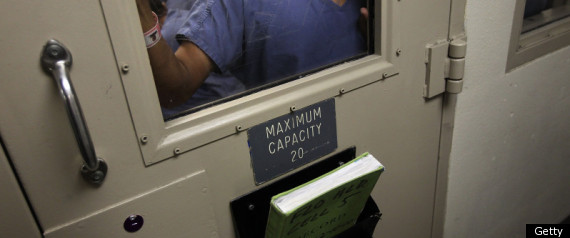
A report released Monday by two Chicago-based human rights groups calls for the Obama administration to close three immigrant detention facilities they accuse of having the most egregious violations, two of which are in Illinois.

Titled "Not Too Late For Reform," the report was authored jointly by Heartland Alliance's National Immigrant Justice Center (NIJC) and the Midwest Coalition for Human Rights (MCHR) and examines Midwestern county jails holding immigrants.

At a time when the administration is planning to open more large-scale detention facilities nationwide, the report spotlights three county jails currently housing immigrants they classify as the worst in the Midwest: Jefferson County Jail in Mt. Vernon, Ill., Tri-County Detention Center in Ullin, Ill. and Boone County Jail in Burlington, Ky. In the report, the agencies call for these and other detention centers with frequent observed violations to be shut down.

The NIJC and MCHR are also asking for changes in immigration policy prioritizing alternatives to detention, particularly for "low-risk" individuals without criminal histories.

Ex-Blackwater firm gets a name change, again

The private security contractor known as Blackwater renamed itself Xe Services nearly three years ago. Now, the firm is rebranding itself again.

On Monday, Xe announced that it was changing its name to Academi, part of a years-long effort by the company to shed a troubled legacy that critics said made the firm a symbol for mercenaries and impunity in Iraq and elsewhere.

In an interview, the company’s president and chief executive, Ted Wright, said the announcement was about more than a simple name change.

“We want to reflect the changes we made in the company,” he said, noting that the firm has new ownership, new leadership and a “refocused strategy on training and security services.”

The company also has unveiled a new Web site and logo. The tag on the Web site reads: “Elite Training. Trusted Protection.”

The federal government has dropped its case against United States Steel Corp. (X-N25.85-1.63-5.93%) over the company’s broken promises to Ottawa to maintain jobs after its 2007 takeover of Hamilton-based Stelco.

Industry Minister Christian Paradis announced the move in the House of Commons Monday, saying that the company had agreed to “significant new and enhanced undertakings” in return for the government’s move, after what the minister described as “extensive negotiations.”

Under the deal, Mr. Paradis said, U.S. Steel pledges to keep producing steel in Canada, operate its Lake Erie and Hamilton plants until 2015 and invest at least $50-million in its Canadian facilities by December, 2015, over and above its original pledge of $200-million by October, 2012.

The company also pledged to give $3-million to “community and educational programs” in Hamilton and Nanticoke, with $1-million due by February, 2012.

“U.S. Steel’s new commitments, many of which run to 2015, will provide benefits that in all likelihood would not have been obtained through the court process,” Mr. Paradis said.

A lawyer for U.S. Steel declined to comment.

Origin
Source:

Surgery Wait Times Longest In 18 Years

Wait times to receive medical treatment in Canada are the highest they’ve been in 18 years, according to a new report.

The median wait time is 19 weeks between the referral from a general practitioner and the start of elective treatment, finds the report, released by the Fraser Institute Monday.

“At 104 per cent longer than it was in 1993, this is the longest total wait time recorded since the Fraser Institute began measuring wait times in Canada,” reads the report.

Wait times for a referral to a specialist rose to 9.5 weeks in 2011 from 8.9 weeks in 2010. And the wait time between a visit to a specialist and actual medical treatment increased to 9.5 weeks from 9.3 weeks, according to the report.

Even among the provinces with the shortest wait times there have been declines. Though Ontario has the shortest total wait time for surgery among the provinces, with an average wait of 14.3 weeks between a visit to a GP and the receipt of treatment, that’s up from 14 weeks in 2010.

The Fracturing of Occupy Wall Street

The evening is rainy and quite warm, which is disconcerting since it is almost December. A hundred or so people gather on the east side of what we may safely call Zuccotti Park, for their General Assembly.

Nothing about the park feels like Liberty Plaza anymore. Every inch of the perimeter, for instance, is lined with metal barricades, just inside which stand private security guards, husky and rude, dressed in all black, apart from their yellow vests. A massive Christmas tree has been set up in the park and barricaded off. Besides the few protesters, that’s who’s here. The guards and their barricades.

There’s no kitchen, no library, no medical tent, no media center. There is no drum circle, no sign-painting station, no welcome table on Broadway, no altar around the meditation tree in the northwest corner. There are only about a hundred people, deliberating democratic minutiae, trying to get through a too-big agenda, packed with yesterday’s unattended business.

This would be hard enough to do without the people who keep loudly interrupting the meeting. But every meeting I’ve recently attended—and from what I gather, every recent meeting I have not—has been brought to a grinding halt, the basic ability to debate and consent to proposals crippled by a determined few who will not to let things proceed until their issues are addressed. This is the reason for the backed-up business. The people shouting about their needs over the debate.

The Civil Archipelago - How far can the resistance to Vladimir Putin go?

On the night of November 20th, two weeks before elections for the State Duma, Vladimir Putin set aside the cares of the Kremlin and went to the Olympic SportComplex for an ultimate-fighting match—a “no rules” heavyweight bout between a Cyclopean Russian named Feodor (the Last Emperor) Yemelianenko and a self-described anarchist from Olympia, Washington, named Jeff (the Snowman) Monson. The bout was broadcast nationally on Rossiya-2, one of the main state television channels. Putin, wearing a blue suit and no tie, was at ringside. He has always been eager to project the macho posture of a muzhik, a real man. He has had himself photographed riding horses bare-chested, tracking tigers, shooting a whale with a crossbow, piloting a firefighting jet, swimming a Siberian river, steering a Formula One race car, befriending Jean-Claude Van Damme, and riding with a motorcycle gang. Once, on national television, he tried to bend a frying pan with his bare hands. He did not quite succeed, but the effort was appreciated. And now ultimate fighting: the beery crowd of twenty thousand—some prosperous, some less so—were his own, Putin’s people.

Yemelianenko and Monson were of a rough equivalence: heads shaved, two enormous sacks of rocks, though the Russian was distinguished by his unstained skin; Monson had tattoos from ankle to neck, including two in crowd-friendly Cyrillic—svoboda and solidarnost’. The gesture got him nowhere. Almost from the start, the Russian dominated the fight. Yemelianenko, with a deft and powerful kick, snapped a bone in Monson’s leg, causing the American to limp pitifully. But, even as Yemelianenko took command, steadily reducing Monson to a swollen, bloody pulp—a source of pleasure to the crowd—it was hard to tell if Putin was enjoying himself. The camera flashed to him now and then. He barely betrayed a smile. His face, now smoothed with Botox and filler (it is said), is more enigmatic than ever. What was more, he had larger concerns. He knew that, no matter how hard his operatives tried to get out the vote in the provinces and massage the results, the Kremlin party, United Russia, was going to lose ground.