Democracy Gone Astray

Democracy, being a human construct, needs to be thought of as directionality rather than an object. As such, to understand it requires not so much a description of existing structures and/or other related phenomena but a declaration of intentionality.
This blog aims at creating labeled lists of published infringements of such intentionality, of points in time where democracy strays from its intended directionality. In addition to outright infringements, this blog also collects important contemporary information and/or discussions that impact our socio-political landscape.

All the posts here were published in the electronic media – main-stream as well as fringe, and maintain links to the original texts.

[NOTE: Due to changes I haven't caught on time in the blogging software, all of the 'Original Article' links were nullified between September 11, 2012 and December 11, 2012. My apologies.]

Showing posts with label AP. Show all posts

Tuesday, December 17, 2013

Liz Sidoti, Associated Press Political Editor, Joins BP

Associated Press national political editor Liz Sidoti is leaving the news organization to become US head of communications for BP, according to a memo obtained by The Huffington Post.

Given that the AP covers BP, Sidoti will no longer be involved in an reporting, editing or news management, the memo stated.

"I am grateful for all of the opportunities the AP has generously given me over nearly 15 years," Sidoti said in a statement to HuffPost. "The AP has not just been my employer, but it's also been a home. And my colleagues, a family. I will always look back fondly -- and with pride -- at my time with the AP, and will always be thankful for having been able to be a part of this extraordinary, necessary institution filled with the industry's most dedicated journalists."

Friday, December 13, 2013

Associated Press Held CIA Scoop For 3 Years At The Government's Request

NEW YORK -- The Associated Press revealed Thursday that retired FBI agent Robert Levinson was working with the CIA at the time he went missing in Iran in 2007. The AP's explosive report on Levinson's CIA ties contradicted the U.S. government’s long-running contention that he was visiting Iran as a private citizen when he disappeared.

The AP acknowledged learning about Levinson’s ties to the CIA in 2010, but held the story at the government’s request while reporting details.

Thursday, May 30, 2013

New York Times, AP Won't Attend Off-The-Record Eric Holder Meeting

NEW YORK -- The New York Times and Associated Press said Wednesday that they will not attend a meeting this week between Attorney General Eric Holder and the Washington bureau chiefs of several media outlets to discuss guidelines for journalists in leak investigations.

Times executive editor Jill Abramson cited the Justice Department's request that the discussion be kept off the record as a reason for not attending.

Monday, May 27, 2013

The AP's Privacy, and Ours

On a Friday afternoon in May, a lawyer for the Associated Press received a letter from the Justice Department informing the news agency that, unbeknownst to it, the DoJ had obtained two months’ worth of phone records for twenty AP phone lines—including the personal and office lines of five reporters and an editor—at several AP bureaus. The records were obtained without the approval of a court, and without advance notice to the AP or the affected journalists.

Wednesday, May 22, 2013

Costs of Spying on the AP That the Establishment Ignores

Three former Justice Department officials have published a New York Times op-ed that takes the government's side in the controversy surrounding its snooping into Associated Press phone records. It adeptly lays out the establishment position. I hope to juxtapose a very different perspective.

Says the op-ed:

    FOLLOWING the disclosure that the Justice Department obtained the telephone records of Associated Press journalists, The A.P. and other news organizations have sharply criticized the action as investigative overreaching and unwarranted interference with the ability of journalists to report on government operations.

Tuesday, May 21, 2013

AP Scandal: Plurality Disapprove Of DOJ's Actions, Poll Finds

The Justice Department's secret investigation of the Associated Press horrified the journalism world and received intensive news coverage. Yet, according to a new study, Americans aren't very interested, though most of them disapprove of the Justice Department's actions.

Monday, May 20, 2013

Associated Press CEO Gary Pruitt: DOJ's Seizure Of Phone Records Was 'Unconstitutional'

WASHINGTON — The president and chief executive officer of The Associated Press on Sunday called the government's secret seizure of two months of reporters' phone records "unconstitutional" and said the news cooperative had not ruled out legal action against the Justice Department.

Gary Pruitt, in his first television interviews since it was revealed the Justice Department subpoenaed phone records of AP reporters and editors, said the move already has had a chilling effect on journalism. Pruitt said the seizure has made sources less willing to talk to AP journalists and, in the long term, could limit Americans' information from all news outlets.

Saturday, May 18, 2013

What's at Stake When the Department of Justice Seizes AP Phone Records

This week, it was revealed that the Department of Justice secretly seized two months' worth of private phone records from Associated Press reporters and editors. As this decision comes under increasing scrutiny, press freedom advocates say it's just part of a larger battle for control of information – one that they've been trying to sound an alarm on for a long time.

"I've been saying for years that this is a backdoor way to go after journalists," says Jesselyn Radack, a former DOJ employee and whistleblower who is now director of national security and human rights at the Government Accountability Project.

Friday, May 17, 2013

Obama vs. the Press

When I was a teen-ager and studying journalism in an after-school program, I had an instructor named Bill Farr. Bill was an L.A. Times reporter who had gone to jail for forty-six days in the early seventies for refusing to reveal his sources in a story about the Manson trial. He was a cheerful, easygoing guy, and even when he’d occasionally refer to himself as a jailbird, it was hard for me to imagine him going through something so extreme. Bill was also modest, in the way of certain old-school reporters. He hadn’t, he’s said, done anything that any decent reporter wouldn’t do. He hoped we wouldn’t have to, but he said he knew we’d be willing to do the same, because unless sources could trust us to keep them confidential, they wouldn’t tell us important things that the public had a right to know.

Don't Get Sucked Into Obama Scandal–mania

Benghazi, the IRS targeting Tea Party groups, the Department of Justice secretly seizing AP phone records: It’s a “trifecta” of scandals, Chuck Todd said. A “perfect storm,” Ron Fournier of National Journal wrote. “Obama’s Watergate?” Larry Kudlow’s CNBC show asked. And indeed Republicans, the mainstream media and all too many liberals have been getting emotionally swept up in the belief that no matter the merit of any one of these “scandals” (some more deserving of scare quotes than others), together they prove the Obama administration to be fatally scandal-prone, if not Nixonian, and predict flat-out second-term doom.

Should President Obama Fire Eric Holder?

Michael Tomasky wants Eric Holder's head on a platter:

    Did I, as a liberal columnist who called immediately on President Obama to seek Eric Holder’s resignation over the Associated Press scandal, provide aid and comfort to the enemy? First of all, I don’t care—what happened struck me as a serious abuse of power....And second, no, I don’t think I provided them aid and comfort anyway. In fact I think recent history shows beyond a doubt that foot-dragging and avoidance are the true aid-and-comforters; they always, always, always make these things worse.

Thursday, May 16, 2013

Obama Speaks About AP Scandal

WASHINGTON -- President Barack Obama said Thursday a "balance" should be struck between national security interests and freedom of the press, in response to a question about the Justice Department's decision to subpoena the phone records of the Associated Press.

"Leaks related to national security can put people at risk, they can put men and women in uniform that I've sent into the battlefield at risk," Obama said, while declining to comment on the pending case.

"The Other IRS Scandal": David Cay Johnston on Dark Money Political Groups Seeking Tax Exemption

The acting commissioner of the Internal Revenue Service, Steven Miller, has been forced to resign days after the IRS apologized to tea party and other right-wing groups for putting extra scrutiny on their bids to become tax-exempt organizations. While the IRS targeting of tea party groups has made headlines for days, far less attention has been paid to the roots of the crisis. After the 2010 landmark Supreme Court decision Citizens United, there was a spike in new political organizations seeking tax-exempt status under tax code Section 501(c)(4). The court ruled these groups could raise unlimited corporate money without disclosing donor information. Several groups have claimed to be social welfare organizations while spending tens of millions of dollars on political operations. We speak to David Cay Johnston, a Pulitzer Prize-winning journalist who writes about taxes issues. "One of the questions that needs to be examined in the real scandal here is: How did MoveOn, how did Karl Rove’s Crossroads GPS, how did Bill Burton’s progressive Democratic group get approved as exclusively social welfare organizations?" Johnston says. "There are a bunch of folks out there arguing that, well, 'primarily,' that phrase that pops up in IRS regulations, can mean 49.9 percent of your activity. I’m sorry, is there an adult in America who’s been in a romantic relationship who thinks that 'exclusively' is 49 percent of the time?"

Video
Source: democracynow.org
Author: --

Eric Holder: Subpoenas For Hundreds Of Journalist Phone Records May Be Okay

WASHINGTON -- Attorney General Eric Holder told the House Judiciary Committee on Wednesday that he may be comfortable with subpoenaing the phone records of hundreds of journalists if warranted by the facts of a hypothetical case.

“In a hypothetical situation, we’re gonna go after and subpoena hundreds of phone lines, phone records for journalists. Does that offend you as an American?” Rep. Blake Farenthold (R-Texas) asked Holder.

Wednesday, May 15, 2013

Chris Hedges: Monitoring of AP Phones a "Terrifying" Step in State Assault on Press Freedom

The Pulitzer Prize-winning journalist Chris Hedges joins us to discuss what could mark the most significant government intrusion on freedom of the press in decades. The Justice Department has acknowledged seizing the work, home and cellphone records used by almost 100 reporters and editors at the Associated Press. The phones targeted included the general AP office numbers in New York City, Washington, D.C., and Hartford, Connecticut, and the main number for the AP in the House of Representatives press gallery. The action likely came as part of a probe into the leaks behind an AP story on the U.S. intelligence operation that stopped a Yemen-based al-Qaeda bombing plot on a U.S.-bound airplane. Hedges, a senior fellow at The Nation Institute and former New York Times reporter, calls the monitoring "one more assault in a long series of assault against freedom of information and freedom of the press." Highlighting the Obama administration’s targeting of government whistleblowers, Hedges adds: "Talk to any investigative journalist who must investigate the government, and they will tell you that there is a deep freeze. People are terrified of speaking, because they’re terrified of going to jail."

Video
Source: democracynow.org
Author: --

What the A.P. and Benghazi Scandals Have in Common

What does the A.P. scandal, in which the Justice Department grabbed A.P. journalists’ phone records with the indiscriminate eagerness of someone stuffing packets of Saltines in his pockets, have in common with the questions raised about Benghazi? In the next days and months, a number of answers will be offered, and measured in different balances: abuse of power, debased Republican scandalizing, the muddles of a second term. (The I.R.S. is also in the mix.) One story concerns twenty different phone lines, among them home numbers whose records would include personal calls that the government has no business knowing about; the other is about four diplomats, whose obituaries we shouldn’t have had to read for many years. But both have to do with transparency and, even more so, with how the Administration’s alternating evasions and manipulations of the legal requirements surrounding war and security have distorted its actions.

Tuesday, May 14, 2013

Jay Carney On DOJ's AP Records Scandal: 'Wholly Inappropriate' To Comment

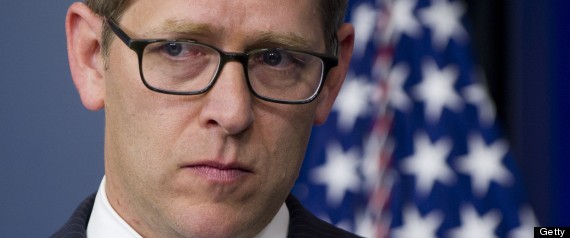
Jay Carney endured an unrelenting grilling on Tuesday about what media watchdogs have called unprecedented actions by the Department of Justice to secretly obtain months of Associated Press phone records.

Journalists have been outraged since the AP revealed that it had been subjected to the secret probe, which saw the DOJ look at the records for at least 20 of its phone lines and at least six of its individual journalists over a period of at least two months. Carney was asked right away about the White House's view of the situation.

Outrage Grows Over the DOJ Seizure of AP Phone Records

When the news broke yesterday afternoon it was at first hard to believe, yet, when one thought about it for a bit, it seemed all too part of a pattern. The Associated Press itself broke the news that the US Department of Justice had notified AP last Friday that it had secretly obtained telephone records for more than twenty separate telephone lines assigned to AP journalists and offices (both cell and home phone lines).

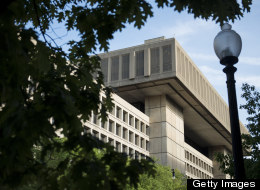
FBI Exigent Letters Memo Should Be Kept Secret, Justice Department Argues

NEW YORK -- The legal basis for the FBI's past use of emergency requests to obtain telephone records should be kept secret, the Justice Department said in a court filing last week.

The Justice Department has admitted that the issuing of those "exigent letters" was a mistake. But now it is fighting to keep the reasoning by which its Office of Legal Counsel approved such use under wraps. Critics argue that continues a degree of increased secrecy begun in the George W. Bush administration around the influential OLC memos, which in practice often set government policy on matters like drone killings.

Former Attorney General Ramsey Clark Decries Government’s "Big Brother" Seizure of AP Phone Records

The Associated Press says the U.S. Department of Justice has secretly obtained a trove of journalists’ phone records in what its chief executive called a "massive and unprecedented intrusion." The Obama administration seized records for the work and personal phone numbers of individual reporters, for general AP office numbers in New York City, Washington, D.C., and Hartford, Connecticut, and for the main number for the AP in the House of Representatives press gallery. More than 100 reporters work in the offices. The records were from April and May of 2012. Among those whose records were obtained were Matt Apuzzo, Adam Goldman, three other reporters and an editor, all of whom worked on a May 7, 2012, story that revealed details about a CIA operation in Yemen which stopped an alleged terror plot. AP had delayed publication of the story at the government’s request. "It seems to be terrible intrusion on the freedom of the press," says Ramsey Clark, the U.S. attorney general from 1967 to 1969. "I don’t see how the press can operate effectively if the public and the people who talk to the press have to assume that big brother is listening in and sees the conversations they engage in."

Video
Source: democracynow.org
Author: --