
Showing posts with label Bill C-45. Show all posts
Showing posts with label Bill C-45. Show all posts
Monday, December 30, 2013
Idle No More Deserves Our Thanks
Thursday, January 31, 2013
Dispossessing democracy: Colonialism, capitalism and the consequences of Bill C-45

Sunday, January 27, 2013
The high stakes of Indigenous resistance
 The blossoming of the Idle No More movement signals the return of Indigenous resistance to the political and social landscape of Canada and Quebec.
With its origins in Saskatchewan in October 2012, this mass movement has taken on the federal government and more specifically the adoption of Bill C-45.[1] Its origins lay not in the work of established organizations such as the Assembly of First Nations (although the AFN supports the initiative), but in a grassroots mobilization that has arisen in several parts of the country. This process echoes other recent citizen mobilizations such as the student carrés rouges in Quebec and the worldwide Occupy movement.
There’s lots of confusion about Bill C-45 and the Idle No More movement
Holed up inside for the last few weeks with a chest infection, I’ve spent my time examining the coverage of the Idle No More movement.
I’ve read countless articles. Reviewed comments on social media sites (including reading a staggering 1,021 comments for one article alone on the CBC website). And what I have concluded so far is there is a lot of interest in this issue, but a lot of confusion about what exactly the “issue” is.
I’ve read countless articles. Reviewed comments on social media sites (including reading a staggering 1,021 comments for one article alone on the CBC website). And what I have concluded so far is there is a lot of interest in this issue, but a lot of confusion about what exactly the “issue” is.
Tuesday, November 06, 2012
Navigable Waters Act at committee one last time 130-year-old law gets two hours, four witnesses at Transport Committee

The Act is to be replaced by the Navigation Protection Act, a piece of legislation included in bill C-45, the government's second omnibus Budget Implementation Act.
Wednesday, October 31, 2012
Canadian majority opposes omnibus legislation: Forum Research poll

The Forum Research poll, conducted last weekend after Finance Minister Jim Flaherty (Whitby-Oshawa, Ont.) tabled a second massive budget implementation bill, found 64 per cent of respondents opposed the tactic, which also failed to get support from a majority who ranked the Conservative Party as their current voter preference.
Monday, October 29, 2012
The big picture of Harper's assault on the Constitution

The issue is far more fundamental than erasing the word "environment" from the NWPA website. Like the Fisheries Act in C-38, dismantling the Navigable Waters Protection Act takes a hatchet to federal constitutional powers that have been foundational in environmental law for generations. And in both cases, the Conservative talking points are the same. "This act was never about the environment, it was about fisheries -- not fish; it was about navigation -- not waters."
Saturday, October 27, 2012
22 changes in the budget bill fine print

It's true that Flaherty's media event on the day the bill was tabled did feature the extension of a small business-friendly hiring tax credit that was heavily marketed around last spring's budget. A dozen or more other tax changes are also featured in the first section of C-45.
Harper again rejects debate on China investment treaty, but public pressure is having an impact
The Conservative majority on trade committee defeated a motion yesterday from NDP trade critic Don Davies which would have forced the committee to study the Canada-China investment treaty (FIPA) before it’s allowed to become law, as early as November 1. In typical fashion, the committee went in-camera for the vote so that Harper’s abuse of democracy went unrecorded. They do this quite often.
“It boggles my mind that the government would want to move forward with that [treaty] without a debate, without a vote and without a study,” said Davies Thursday afternoon. Davies also complained about receiving “thousands upon thousands of emails” against the China treaty forwarded to him from the office of Conservative MP Bev Shipley, who is also on the trade committee.
“It boggles my mind that the government would want to move forward with that [treaty] without a debate, without a vote and without a study,” said Davies Thursday afternoon. Davies also complained about receiving “thousands upon thousands of emails” against the China treaty forwarded to him from the office of Conservative MP Bev Shipley, who is also on the trade committee.
Thursday, October 25, 2012
Omnnibus Budget Bill C-45 Fastrack: Government Limits Debate To Speed Passage
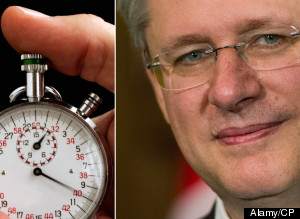
The House of Commons passed a motion Thursday to impose time allocation on Bill C-45, essentially limiting how long it can be debated by MPs.
"They've introduced a law and then right away they introduce time allocation," interim Liberal leader Bob Rae said after the motion passed.
Stephen Harper’s government deletes ‘environment’ from Transport Canada website

The environmental issues were highlighted in a background web page explaining the role of the Navigable Waters Protection Act and the government’s commitment to consulting Canadians to review its effectiveness.
The page previously explained how the legislation, first adopted in 1882, triggered federal environmental reviews of projects that threatened to disrupt bodies of water.
Navigable Waters Protection Act: 'Environment' Disappears Overnight From Web Description Of Federal Bill

The Navigable Waters Protection Act is being altered as part of the government's latest omnibus budget bill.
The proposed changes would make the Act apply to fewer bodies of water than before, in a bid to make the system more efficient.
Monday, October 22, 2012
Getting run over by the omnibus

Over several months of omnibus bills, amendments, regulations and tinkering with longstanding conventions, Ottawa has undertaken a series of adjustments that add up to undeniably profound changes in both environmental and aboriginal policy.
Sunday, October 21, 2012
Omnibus Budget: Bill C-45 To Deliver Profound Changes For Environment, Natives
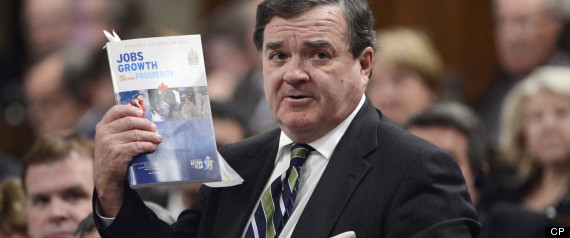
Over several months of omnibus bills, amendments, regulations and tinkering with longstanding conventions, Ottawa has undertaken a series of adjustments that add up to undeniably profound changes in both environmental and aboriginal policy.
Subscribe to:
Posts (Atom)