Democracy Gone Astray

Democracy, being a human construct, needs to be thought of as directionality rather than an object. As such, to understand it requires not so much a description of existing structures and/or other related phenomena but a declaration of intentionality.
This blog aims at creating labeled lists of published infringements of such intentionality, of points in time where democracy strays from its intended directionality. In addition to outright infringements, this blog also collects important contemporary information and/or discussions that impact our socio-political landscape.

All the posts here were published in the electronic media – main-stream as well as fringe, and maintain links to the original texts.

[NOTE: Due to changes I haven't caught on time in the blogging software, all of the 'Original Article' links were nullified between September 11, 2012 and December 11, 2012. My apologies.]

Showing posts with label CFPB. Show all posts

Wednesday, October 11, 2023

The Supreme Court May Soon Eviscerate The Consumer Financial Protection Bureau

The conservative Supreme Court could soon eviscerate a key part of Congress’ response to the 2008 global financial crisis, with payday lenders challenging the constitutionality of the Consumer Financial Protection Bureau in one of the first hearings of the court’s new term.

In its challenge to the CFPB, the Community Financial Services Association of America, a trade association for the payday lending industry, argues that the agency’s funding through the Federal Reserve is unconstitutional under the Constitution’s appropriations clause. It is the latest attack on the CFPB by the financial industry following a 5-4 decision in the 2020 case of Seila Law v. CFPB, which allowed the president to fire the CFPB director at will instead of giving them a defined six-year term.

Thursday, September 26, 2013

CFPB Takes Aim At Sallie Mae For Student Loan Servicing

A federal consumer regulator has taken aim at the Department of Education’s preferred companies for servicing the agency’s $1 trillion in student loans, highlighting potentially poor customer service and raising the specter of increased government scrutiny.

The move, in the form of a Monday blog post by the Consumer Financial Protection Bureau’s top student loan official, relied on Education Department surveys, which grade the four preferred companies -- SLM Corp., or Sallie Mae; Nelnet; FedLoan Servicing, or the Pennsylvania Higher Education Assistance Agency; and Great Lakes Higher Education Corporation & Affiliates -- and determine how many new loans each will receive in the coming year to service as a new crop of students enter college and graduate.

Monday, September 16, 2013

Companies Can't Force Employees To Get Pay Via Debit Cards: CFPB

WASHINGTON -- Federal regulators say companies cannot require employees to receive their pay on debit cards, citing complaints from workers of high and unexpected fees on the cards.

The Consumer Financial Protection Bureau issued a bulletin warning employers against using only so-called payroll cards to pay workers. The agency said that by law workers must be able to choose how they receive their wages. If they choose to be paid with payroll cards, they are entitled to protections such as disclosure of fees, it said.

Thursday, August 08, 2013

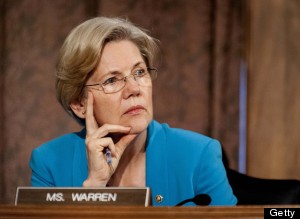
Larry Summers Helped Torpedo Elizabeth Warren CFPB Nomination

Former Obama administration economic adviser Larry Summers helped torpedo a bid from current Sen. Elizabeth Warren (D-Mass.) to head the Consumer Financial Protection Bureau in the summer of 2010.

The Summers-Warren conflict was reported by The Boston Globe and confirmed to The Huffington Post by two former Obama administration officials.

Wednesday, April 25, 2012

CFPB to Take on Shadow Corporate Justice System

The Consumer Financial Protection Bureau announced Tuesday morning a “public inquiry” into how the financial services industry uses arbitration clauses to protect itself from consumer lawsuits. These clauses are often hidden from consumers, deep in contractual fine print, and strip away basic rights to judicial review.

Banks, credit cards, cell phone companies or even employers routinely offer contracts that, in the event of a dispute, mandate an arbitration procedure in which there is not a judge or jury—but rather, a private arbitrator often chosen by the corporation being sued.

Naturally, this creates a pseudo-judicial system heavily weighted towards corporations—in California, for example, a study found that corporations won 94 percent of the arbitration proceedings. In one of the more infamous cases of an arbitrator simply rubber-stamping a corporation’s case, a Minnesota arbitrator ruled in 2006 that woman owed a credit card collection agency $7,800 for a defaulted account—except the card was taken out by an entirely different woman who happened to have the same name.

Thursday, January 19, 2012

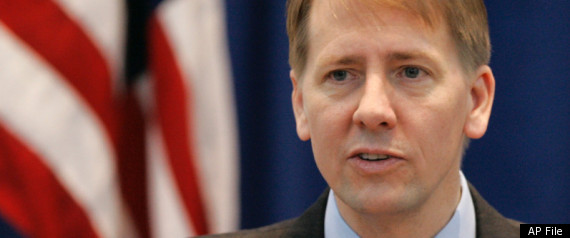
Richard Cordray, CFPB Chief, Promises New Scrutiny Of Banks That Make Payday Loans

Picking his first public fight with the banking industry, Washington's top consumer cop, Richard Cordray, promised on Thursday that his examiners will scrutinize a handful of big banks that make high-cost loans. Inspection of major financial institutions will be part of a broader review of payday lenders, he said at a public hearing organized by the Consumer Financial Protection Bureau in Birmingham, Ala.

The move is significant in that Cordray made no distinction between established financial institutions, including Wells Fargo and U.S. Bank, and less-respectable storefront and online payday lenders with names like EZ Money and AmeriCash Advance, widely criticized for making high-cost, short-term loans to the most desperate borrowers.

Although he was careful not to strike a directly confrontational tone, by specifically mentioning banks' high-cost loans in his first major speech as the new CFPB chief, Cordray suggested that his agency doesn't buy the bank industry line that its loans are not traditional payday products because they are structured differently.

Cordray did not single out any bank. But the listing of specific names of such payday lending programs in an examination guide released at the hearing -- such as Fifth Third Bank's "early access advance" -- is likely to chill the blood of bank executives, whose companies make big profits off payday loans.

"We recognize the need for emergency credit," Cordray said in a transcript of his opening remarks, provided in advance. "At the same time, it is important that these products actually help consumers, rather than harm them."

Wednesday, January 04, 2012

Scott Brown Backs Obama Recess Appointment Of Consumer Finance Watchdog Richard Cordray

WASHINGTON -- Bucking his party's leadership, Sen. Scott Brown (R-Mass.) Wednesday expressed his support for President Obama's decision to name Richard Cordray head of the Consumer Financial Protection Bureau in a recess appointment that evaded a Republican blockade of the nomination.

Senate Republicans had vowed to stop Cordray's appointment until Obama agreed to water down the authority of the new watchdog agency. To stop him from using the constitutional option of a recess appointment while the Senate was adjourned, they've been holding "pro forma" sessions where no business is done, but the chamber is technically working.

GOP leaders bitterly accused the president of arrogance and overreach. But Brown, facing a tough election challenge from the architect of the CFPB, Elizabeth Warren, decided that their actions were the bigger problem.

"I support President Obama's appointment today of Richard Cordray to head the CFPB," Brown said in a statement. "I believe he is the right person to lead the agency and help protect consumers from fraud and scams."

Sunday, December 11, 2011

Lindsey Graham: Consumer Protection Bureau 'Is Something Out Of The Stalinist Era'

WASHINGTON -- Sen. Lindsey Graham (R-S.C.) said on Sunday that an agency established to protect consumers from financial fraud "is something out of the Stalinist era."

Graham, speaking on NBC's "Meet The Press," was asked why Senate Republicans had filibustered President Obama's nominee to head the Consumer Financial Protection Bureau, which was created as part of 2010's Wall Street reform.

Graham spoke as if the bureau had yet to be created and debate was over how to shape it, rather than discussing the nominee, Richard Cordray, the former attorney general in Ohio.

"This consumer bureau that they want to propose is under the Federal Reserve, no appropriation oversight, no board. It is something out of the Stalinist era," Graham said.

Thursday, December 08, 2011

Richard Cordray Nomination Blocked By Senate Republicans, Obama Hints At Recess Appointment

WASHINGTON -- Senate Republicans on Thursday blocked an effort to put someone in charge at the Consumer Financial Protection Bureau, a move that prevents the newly formed agency from supervising some of the same nonbank entities that triggered the financial crisis.

The Senate voted 53 to 45 to reject a procedural motion to begin debate on confirming Richard Cordray as the CFPB director. The motion required 60 votes to pass. Sen. Scott Brown (R-Mass.) was the lone Republican to side with Democrats in seeking to begin debate.

Update: 12:20 p.m. -- Moments later, President Barack Obama responded with a veiled threat to install his nominee by recess appointment. Speaking to the press after the vote, he said it makes "absolutely no sense" for Republicans to block Cordray given his credentials and the fact that many of them actually would support him if not for their opposition to the structure of the agency itself.

Asked directly if he would consider a recess appointment of Cordray once the Senate adjourns, Obama said only, "I will not take any options off the table."

Wednesday, July 20, 2011

Elizabeth Warren Makes It Personal

Elizabeth Warren is ready to name and shame. After 10 long months spent crafting a brand-new federal agency in her image and likeness, years before that willing the institution into statutory existence, only to be passed over on Sunday in favor of Richard Cordray just as the new Consumer Financial Protection Bureau is moving out of beta, Warren, on a press call late yesterday afternoon, was eager to share her clarity on who's to blame for the especially precarious position the new federal-friend-to-the-American-consumer now finds itself in.

Those enemies of Warren, of the CFPB? Republicans, first and foremost, namely Senate Banking ranking member Richard Shelby (R-AL) and the forty three other Republican senators who signed a letter to Obama in May raising heck over the "unfettered authority" the CFPB had supposedly been granted by the Dodd-Frank Act, passed in the wake of the mortgage meltdown. That's no surprise. But Warren's also annoyed with the press for buying the GOP's story that it's simply a more efficient consumer advocate they're eager for, when really what Republicans want is for the CFPB to die an early death. She also blames her own political naiveté. She's been "too busy busting [her] tail" in starting an agency, she says, and didn't pay all that much attention to those inside the Beltway sharpening their knives. Some heard those noises over at 1600 Pennsylvania. Perhaps she's heard the chatter that Obama was more sold in public than in private on her eventual appointment as CFPB's first-ever director. But Warren gives Obama and fellow Democrats a pass.

Sunday, July 17, 2011

Richard Cordray To Lead Consumer Financial Protection Bureau

President Barack Obama will nominate former Ohio Attorney General Richard Cordray to head the Consumer Financial Protection Bureau, the White House announced Sunday.

"American families and consumers bore the brunt of the financial crisis and are still struggling in its aftermath to find jobs, stay in their homes, and make ends meet," Obama said in a statement. "That is why I fought so hard to pass reforms to fix the financial system and put in place the strongest consumer protections in our nation’s history. Richard Cordray has spent his career advocating for middle class families ... and looking out for ordinary people in our financial system.”