Former Parliamentary Budget Officer Kevin Page and the former nuclear safety watchdog Linda Keen agree the public service needs major, quick reform.
Democracy Gone Astray
Democracy, being a human construct, needs to be thought of as directionality rather than an object. As such, to understand it requires not so much a description of existing structures and/or other related phenomena but a declaration of intentionality.
This blog aims at creating labeled lists of published infringements of such intentionality, of points in time where democracy strays from its intended directionality. In addition to outright infringements, this blog also collects important contemporary information and/or discussions that impact our socio-political landscape.
All the posts here were published in the electronic media – main-stream as well as fringe, and maintain links to the original texts.
[NOTE: Due to changes I haven't caught on time in the blogging software, all of the 'Original Article' links were nullified between September 11, 2012 and December 11, 2012. My apologies.]
Showing posts with label Civil Servants. Show all posts
Saturday, October 17, 2015
Civil Service Infected by Culture of Intimidation, Say Former Top Bureaucrats
Former Parliamentary Budget Officer Kevin Page and the former nuclear safety watchdog Linda Keen agree the public service needs major, quick reform.
Friday, December 20, 2013
Shining you on: Alison Redford calls for a little selective sunshine on civil service salaries
Have the calls Alberta's Progressive Conservative MLAs are getting from modestly paid unionized civil servants, furious about having their salaries frozen by unconstitutional legislation and their pensions diminished, rattled the Redford Government?
PC MLAs should be rattled -- seeing as a lot of those modestly paid low- and mid-level public employees live in ridings that Redford's PC Party hung onto by extremely narrow margins in the face of the Wildrose Party tide in the April 2012 general election.
So the announcement yesterday by Don Scott, Alberta's "associate minister of accountability, transparency and transformation," that the Redford Government has plans to shine a little highly selective sunshine on senior public service salaries suggests they may indeed be worried.
Monday, January 21, 2013
Over last 30 years, public service has been ‘turned on its head’ by private-sector style management, loss of front-line workers: Savoie
The federal public service has been “transformed by stealth” over the past 30 years to make it more like the private sector, but these reforms have increased the overhead cost of government, decreased the number of front-line workers and have turned the traditional role of public servants advising governments on policy “on its head,” says Donald Savoie, a former mandarin and a leading expert on public administration and governance, in his upcoming book, Whatever Happened to The Music Teacher? How Government Decides and Why.
Wednesday, October 17, 2012
‘Disturbing’ level of harassment in the federal public service
Nearly one in three federal public servants report they have been harassed at work over the past two years and in at least one government agency that level stands at more than 50 per cent, an analysis by iPolitics reveals.
The analysis of the latest Public Service Employee Survey, conducted in 2011, found that 51 per cent of employees at Indian Oil and Gas Canada said they had experienced harassment on the job — 53 per cent of women and 40 per cent of men. That was a sharp increase from the already high level of 44 per cent reported in the last survey in 2008.
Friday, August 31, 2012
Civil servants next on wage freeze list, says Dalton McGuinty
WATERLOO—Premier Dalton McGuinty says his wage freeze crusade is setting civil servants as its next target.
“We’re coming,” he told reporters Friday while campaigning in next Thursday’s by-election.
Once the minority Liberal government passes its controversial legislation to impose contracts on teachers and ban strikes for two years and gets doctors “back to the table” for negotiations, efforts will centre on the Ontario Public Service Employees Union and a federation representing managers and professionals in the civil service, McGuinty said.
Tuesday, May 15, 2012
B.C. civil servants vote to strike after failed contract talks
Public servants represented by British Columbia’s largest public sector union have voted in favour of strike action.
The B.C. Government and Service Employees’ Union announced the vote in late March after failed contract talks with the government.
“The strength of the turnout was 80 per cent -- that’s eight in 10 workers -- and the strength of the return was over 82 per cent,” said BCGEU president Darryl Walker. “I think that sends a message. I hope that the employer and the government [are] listening to that message.”
The BCGEU had asked for a 1 per cent wage increase in each of two years plus a cost of living allowance, totalling 8 per cent over two years at the current rate of inflation.
Monday, February 13, 2012
Canada’s unofficial (and unelected) opposition
Former high-ranking civil servants are outspoken critics of the Harper government
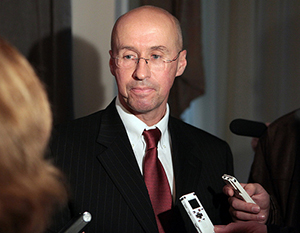
For a particular set of policy wonks—generally identifiable by the telltale pallor and redness around the eyes that come from too many hours scouring spreadsheets—the recent news that Philip Cross is leaving Statistics Canada was big. The 36-year stalwart of the federal number-crunching agency, most recently its chief economist, has long been a prized source of analysis on questions from the depth of recessions to the problems of productivity. But Cross’s exit, prompted in part by his frustration with the Conservative government’s controversial 2010 decision to cancel the long version of the Canadian census, fits a pattern that has political implications beyond arcane economic debates. He is only the latest in a string of top former public servants to join what amounts to an extra-parliamentary unofficial opposition.
In policy disputes over deficit financing or defence procurement, the government’s stance on the Middle East, or its response to an aging population, the most cogent criticism increasingly comes from independent-minded lapsed bureaucrats. Unlike university professors or think-tank researchers, former mandarins bring insider intelligence on how federal policy is really made. The civil servant colleagues they leave behind keep them up to speed on new developments. All of that can make their critiques more intriguing to the media and, for beleaguered politicians, harder to dismiss. In past eras, retirement often cut them off from timely information sources and avenues for disseminating their views. No longer. “We now have the Internet and blogging and tweeting,” says Scott Clark, a former deputy minister of finance. “All that stuff allows people to do it so easily.”
For a particular set of policy wonks—generally identifiable by the telltale pallor and redness around the eyes that come from too many hours scouring spreadsheets—the recent news that Philip Cross is leaving Statistics Canada was big. The 36-year stalwart of the federal number-crunching agency, most recently its chief economist, has long been a prized source of analysis on questions from the depth of recessions to the problems of productivity. But Cross’s exit, prompted in part by his frustration with the Conservative government’s controversial 2010 decision to cancel the long version of the Canadian census, fits a pattern that has political implications beyond arcane economic debates. He is only the latest in a string of top former public servants to join what amounts to an extra-parliamentary unofficial opposition.
In policy disputes over deficit financing or defence procurement, the government’s stance on the Middle East, or its response to an aging population, the most cogent criticism increasingly comes from independent-minded lapsed bureaucrats. Unlike university professors or think-tank researchers, former mandarins bring insider intelligence on how federal policy is really made. The civil servant colleagues they leave behind keep them up to speed on new developments. All of that can make their critiques more intriguing to the media and, for beleaguered politicians, harder to dismiss. In past eras, retirement often cut them off from timely information sources and avenues for disseminating their views. No longer. “We now have the Internet and blogging and tweeting,” says Scott Clark, a former deputy minister of finance. “All that stuff allows people to do it so easily.”
Subscribe to:
Posts (Atom)