Democracy Gone Astray

Democracy, being a human construct, needs to be thought of as directionality rather than an object. As such, to understand it requires not so much a description of existing structures and/or other related phenomena but a declaration of intentionality.
This blog aims at creating labeled lists of published infringements of such intentionality, of points in time where democracy strays from its intended directionality. In addition to outright infringements, this blog also collects important contemporary information and/or discussions that impact our socio-political landscape.

All the posts here were published in the electronic media – main-stream as well as fringe, and maintain links to the original texts.

[NOTE: Due to changes I haven't caught on time in the blogging software, all of the 'Original Article' links were nullified between September 11, 2012 and December 11, 2012. My apologies.]

Showing posts with label Cover Crops. Show all posts

Monday, September 16, 2013

One Weird Trick to Fix Farms Forever

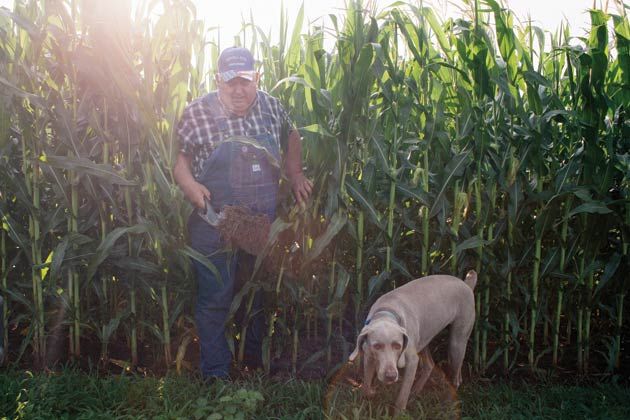
Chatting with David Brandt outside his barn on a sunny June morning, I wonder if he doesn't look too much like a farmer—what a casting director might call "too on the nose." He's a beefy man in bib overalls, a plaid shirt, and well-worn boots, with short, gray-streaked hair peeking out from a trucker hat over a round, unlined face ruddy from the sun.

Brandt farms 1,200 acres in the central Ohio village of Carroll, pop. 524. This is the domain of industrial-scale agriculture—a vast expanse of corn and soybean fields broken up only by the sprawl creeping in from Columbus. Brandt, 66, raised his kids on this farm after taking it over from his grandfather. Yet he sounds not so much like a subject of King Corn as, say, one of the organics geeks I work with on my own farm in North Carolina. In his g-droppin' Midwestern monotone, he's telling me about his cover crops—fall plantings that blanket the ground in winter and are allowed to rot in place come spring, a practice as eyebrow-raising in corn country as holding a naked yoga class in the pasture. The plot I can see looks just about identical to the carpet of corn that stretches from eastern Ohio to western Nebraska. But last winter it would have looked very different: While the neighbors' fields lay fallow, Brandt's teemed with a mix of as many as 14 different plant species.