Democracy Gone Astray

Democracy, being a human construct, needs to be thought of as directionality rather than an object. As such, to understand it requires not so much a description of existing structures and/or other related phenomena but a declaration of intentionality.
This blog aims at creating labeled lists of published infringements of such intentionality, of points in time where democracy strays from its intended directionality. In addition to outright infringements, this blog also collects important contemporary information and/or discussions that impact our socio-political landscape.

All the posts here were published in the electronic media – main-stream as well as fringe, and maintain links to the original texts.

[NOTE: Due to changes I haven't caught on time in the blogging software, all of the 'Original Article' links were nullified between September 11, 2012 and December 11, 2012. My apologies.]

Showing posts with label Cyberbullying Bill. Show all posts

Thursday, November 27, 2014

Cyberbullying bill raises alarm for privacy commissioner

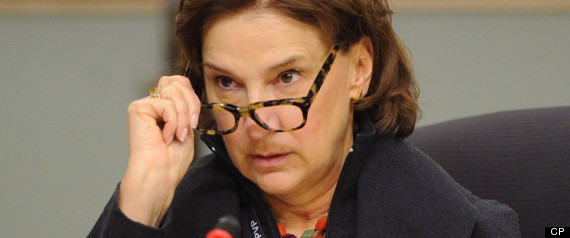
Privacy Commissioner Daniel Therrien warned senators today that the increased police powers proposed in the government's cyberbullying and internet surveillance bill need to be matched with ways of tracking their use.

Therrien also warned against the lower standard of proof provided for in the bill, C-13, and said he disagrees with the government's assertion that the information intended to be sought isn't sensitive.

Tuesday, December 03, 2013

Cyberbullying Bill Meant To Fight Terrorism, Child Porn: Dechert

Ever since the Tories introduced their anti-cyberbullying bill last month, critics have been asking why it deals with numerous issues not directly related to cyberbullying, such as a clause that protects telecoms from liability if they hand over your private information to police without a warrant.

Another such question is what a clause making it illegal to steal your neighbour’s Wi-Fi signal is doing in the proposed law, known as Bill C-13.

Monday, December 02, 2013

Opposition MPs say feds’ anti-cyber-bullying bill ‘ghost of Vic Toews’ e-snooping bill’

Opposition MPs are accusing the government of reviving controversial lawful access measures found in Bill C-30 through the backdoor of a legislation meant to address cyber-bullying and are calling on the Conservatives to split the bill, but Justice Minister Peter MacKay says the opposition’s claims are “misleading” and the reforms are necessary.

“The Conservatives have a tendency to always push forward, even if they are hitting a brick wall. They do not often make a strategic retreat to show that they heard what the public had to say. However, that is what happened in the case of Bill C-30. The Conservatives backtracked because Canadians felt that Bill C-30 violated their privacy and gave some people unrestricted tools. Those people may have good intentions, but once again, the devil is in the details,” said NDP MP Françoise Boivin (Gatineau, Que.).

Friday, November 29, 2013

Cyberbullying Bill Accountability Needs Improvement: Privacy Czar

OTTAWA - The federal privacy commissioner says she has questions about the government's cyberbullying bill — including the lack of accountability and reporting mechanisms to shed light on new investigative powers.

Jennifer Stoddart issued a statement following an outpouring of concern from civil libertarians that the bill tabled last week goes too far in expanding police powers to probe online behaviour.

Wednesday, November 27, 2013

Cyberbullying Bill Won't Stop Online Taunts, Critics Say

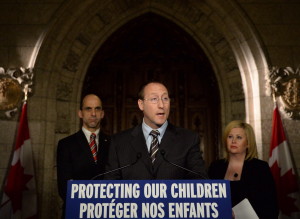
Justice Minister Peter MacKay has called Bill C-13, the anti-cyberbullying legislation he introduced last week, a key tool in "ensuring that our children are safe from online predators and from online exploitation.”
Although child psychologists and youth activists support increased attention to this issue, they say C-13 is unlikely to stop cyberbullying.

They feel the bill follows a narrow definition of cyberbullying and doesn’t address the underlying misogyny and homophobia that inspires so much online teasing.

Tuesday, November 26, 2013

Web Snooping Laws Return Under the Cover of Cyber-Bullying

In Feb. 2012, then-minister of public safety Vic Toews introduced Internet surveillance legislation that sparked widespread criticism from across the political spectrum. The overwhelming negative publicity pressured the government to quickly backtrack by placing Bill C-30 on hold. Earlier this year, then-minister of justice Rob Nicholson announced that the bill was dead, confirming "we will not be proceeding with Bill C-30 and any attempts that we will continue to have to modernize the Criminal Code will not contain the measures contained in C-30."

The Cyberbullying Bill Is A Virtual Big Brother in Disguise

In February 2012, then Public Safety Minister Vic Toews introduced Bill C-30, the "Protecting Children From Internet Predators Act." While the government marketed the bill as an attempt to protect children from Internet predators (and infamously accused opponents of siding with child pornographers), it soon became readily apparent that the bill was really about adopting a wide range of measures that increased police powers, stripped away privacy rights, and increased Internet surveillance. The overwhelming negative publicity led the government to put the bill on hold. Earlier this year, then-Justice Minister Rob Nicholson announced that Bill C-30 was dead:

New cyberbullying law has 'larger agenda,' expands police powers

When Justice Minister Peter MacKay unveiled the federal government's proposed cyberbullying law on Wednesday, he touted it as a necessary tool to combat the often hurtful spread of intimate images. To emphasize the underlying point, he made the announcement during national Bullying Awareness Week.

But legal experts were left wondering why a piece of legislation that is meant to rein in online tormentors is also taking on terror suspects and people who steal cable TV signals.

Tory Cyberbullying Bill To Prohibit Sending 'Intimate Images' Without Consent

OTTAWA - The Conservative government has introduced a wide-ranging bill designed to make it illegal to distribute "intimate images" without consent and easier to get such images scrubbed off the Internet.

The proposed law includes tentacles that touch on everything from terrorism and organized crime to stealing cable TV — measures Justice Minister Peter MacKay said are necessary due to the digital nature of the crimes.

"This is the type of crime that really knows no borders," MacKay said Wednesday as he and Public Safety Minister Steven Blaney announced the legislation.