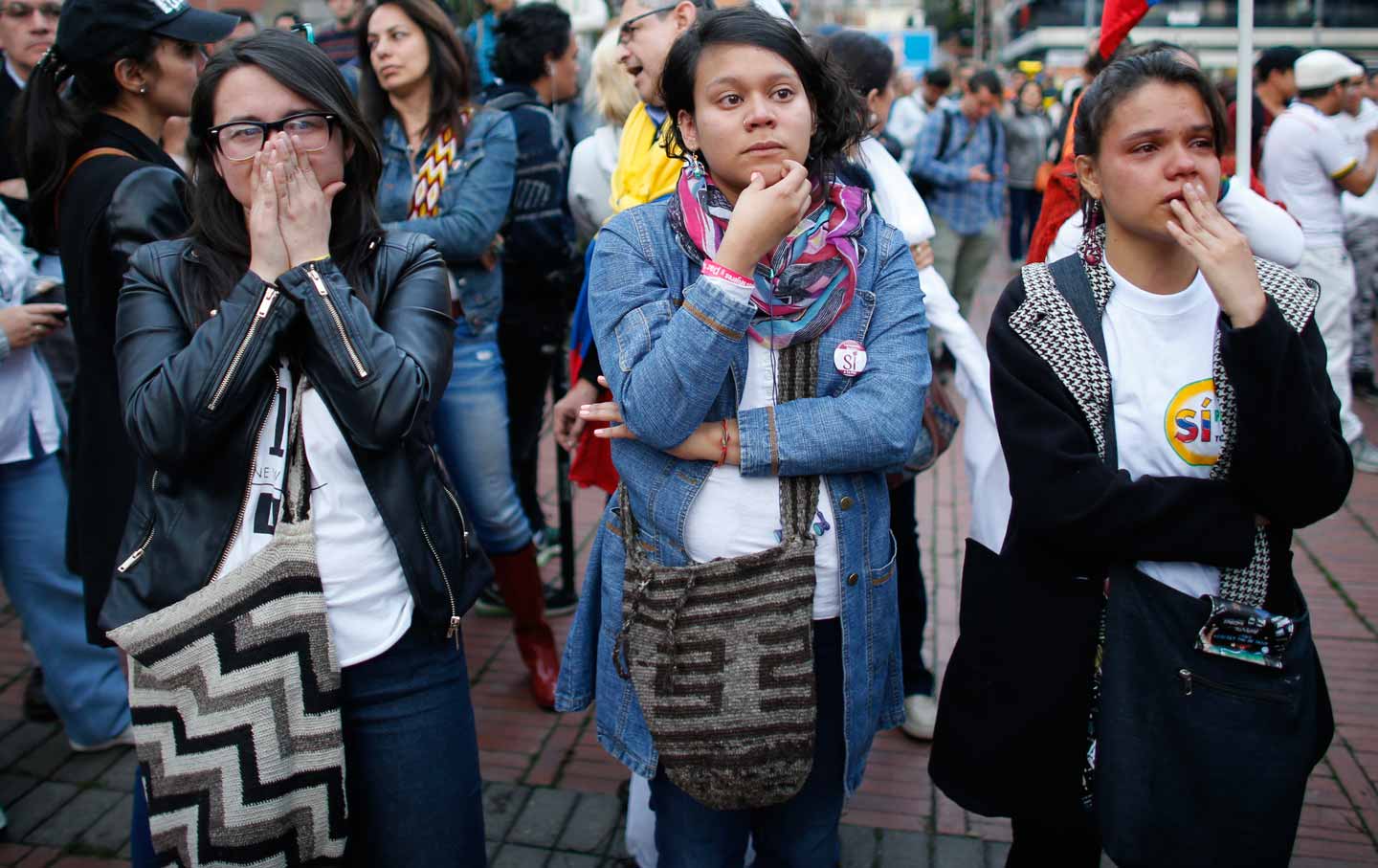
On Sunday, Colombian voters rejected the peace agreement that the government, led by President Juan Manuel Santos, worked out with the FARC guerrillas by the slenderest margin possible: 50.21 percent to 49.78, a difference of 53,894 votes. The turnout was 37 percent, out of 34 million eligible voters.
It’s a heartbreaking disaster for the long, intricate peace process, which sought to put an end to Colombia’s more than five-decade-long civil war. That war has claimed hundreds and hundreds of thousands of lives and has displaced millions upon millions of people. The peace deal, which was worked out during years of negotiations, mostly in Havana, was more aspirational than binding, offering hope that one of the world’s longest-running conflicts would come to an end. Now, that deal is in “tatters.” But keep in mind that “no” won with a sliver of a voting majority (less than 1 percent) of a minority (of eligible voters), with turnout low due to, in many precincts, extreme tropical rain, mostly in coastal departments where “yes” won handily.
