Democracy Gone Astray

Democracy, being a human construct, needs to be thought of as directionality rather than an object. As such, to understand it requires not so much a description of existing structures and/or other related phenomena but a declaration of intentionality.
This blog aims at creating labeled lists of published infringements of such intentionality, of points in time where democracy strays from its intended directionality. In addition to outright infringements, this blog also collects important contemporary information and/or discussions that impact our socio-political landscape.

All the posts here were published in the electronic media – main-stream as well as fringe, and maintain links to the original texts.

[NOTE: Due to changes I haven't caught on time in the blogging software, all of the 'Original Article' links were nullified between September 11, 2012 and December 11, 2012. My apologies.]

Showing posts with label Facial Recognition. Show all posts

Friday, September 22, 2023

AI Responsible For Wrongful Arrest In First Known U.S. Case

OAKLAND, Calif. (Reuters) - An incorrect facial recognition match led to the first known wrongful arrest in the United States based on the increasingly used technology, civil liberties activists alleged in a complaint to Detroit police on Wednesday.

Robert Williams spent over a day in custody in January after face recognition software matched his driver’s license photo to surveillance video of someone shoplifting, the American Civil Liberties Union of Michigan (ACLU) said in the complaint. In a video shared by ACLU, Williams says officers released him after acknowledging “the computer” must have been wrong.

Sunday, July 23, 2017

Is it possible to beat facial recognition software? One company says it is.

Facial recognition software is virtually inescapable.

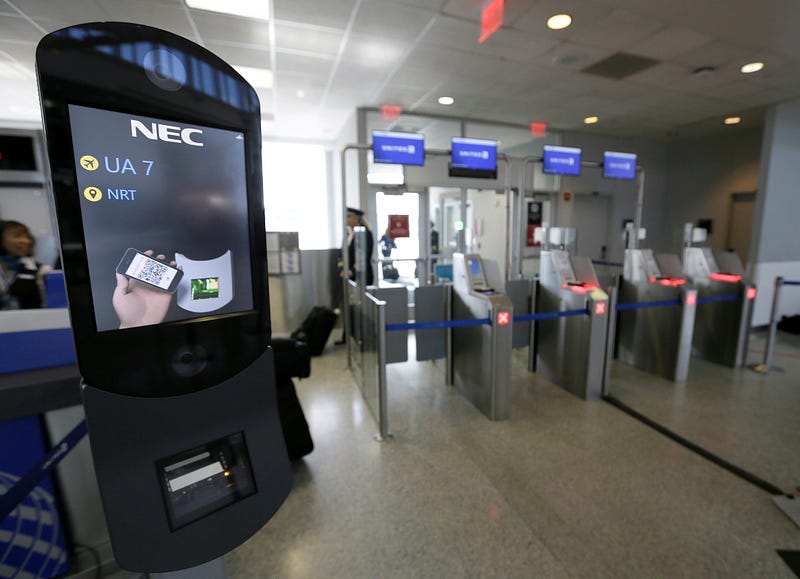
The technology has become a critical tool for government agencies and law enforcement. The Trump administration recently announced an expansion of the technology’s use in airports for international travelers and along the border using drones. Some local police departments already use facial recognition technology, and the feature is expected to be added to body cameras. Even consumer electronics companies are building facial recognition into everything from smartphones to video games.

Saturday, June 27, 2015

Facial Recognition Technology Is Secretly Tracking You, Everywhere

Facial recognition technology is becoming more and more widely used by social media platforms, advertisers and tech companies. But many of us don't know that our biological data is being collected, much less what it's being used for -- and there aren't a lot of guidelines to make sure these companies respect our privacy.

Advocacy groups including the American Civil Liberties Union have recently tried -- and failed -- to reach an agreement with trade groups about the use of technology that can recognize your facial features, identify you and sell you products. At stake is consumer privacy: You may unwittingly be marketed to (or tracked by law enforcement) without ever explicitly consenting to having your face used.

Saturday, November 09, 2013

Tesco's Facial Recognition Scanners Raise Privacy Concerns

A major British retail chain is raising concerns among privacy activists after announcing it will start using facial recognition technology to serve up customized ads to shoppers.

The news has immediately raised parallels to the movie Minority Report, in which ads in stores and on public transit address commuters by name after an eye scan.

Tesco, the world’s third-largest retailer after Walmart and France’s Carrefour, says its technology won’t be quite that invasive. The facial scanners will identify a person’s gender and age, but won’t identify them by name.

Monday, July 25, 2011

Facial-recognition technology needs limits, privacy advocates warn

Consider, for a moment, the amount of information that’s contained in your face. It’s a gold mine, a collection of identifiers unique to you, from its proportions to its features to the way it moves. A quick look tells your life story, indicating your sex, racial background and age, and, in the moment, your attentiveness and mood. Humans come hard-wired to intuit this information. But now, computers are catching up and learning to make sense of all manner of facial information gleaned from photos and videos.

Before long, we’ll be living in a world in which store signs know what kind of customer is looking at them, where home-security cameras know who’s coming through the door and when Facebook will be able to tell if you’re in a photo the moment it’s uploaded. The distant future? Try next month. Your face is about to become big business and that has some players excited and others worried that citizens’ control over their own privacy will be gravely eroded.