§ The preceding 40-year Cold War witnessed many instances of high-level attempts to sabotage détente policies of US and Soviet leaders. Considering that US warplanes knew the area very well and that the Department of Defense, headed by Ashton Carter, had openly expressed opposition to the Obama-Putin plan for a US-Russian alliance against terrorist forces in Syria, the American attack on Syrian Army forces, which blatantly violated preconditions of the agreement, may not have been “accidental,” as DOD claims and as US media similarly reports. If the attack was intentional, we are reminded of the power of the American war party, which is based not only in DOD but in segments of the State Department, in Congress, and in the mainstream media, notably The Washington Post. Judging by Ambassador Samantha Power’s tirade against Russia at the UN, not even Obama’s own team fully supports his overtures to Moscow, undertaken, no doubt, to enhance his desultory foreign policy legacy.
Showing posts with label Foreign Policy. Show all posts
Showing posts with label Foreign Policy. Show all posts
Thursday, September 22, 2016
Wednesday, May 11, 2016
We can’t vote for either one: On world stage, Clinton and Trump present different, but serious, dangers
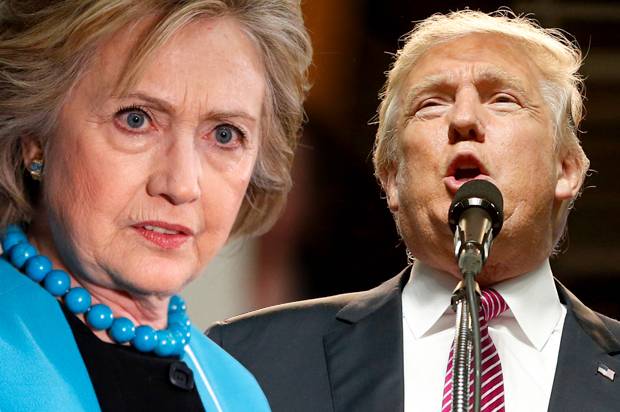
In my read, the race between Donald Trump and Hillary Clinton as it now shapes up does not present voters with anything like an obvious choice. Neither does it seem certain at this moment which of two candidates unworthy of election—let us speak honestly—will triumph. Nor can one say which of the two would be worse, and this, pathetically, is the metric now establishing itself in many voters’ minds.
Monday, May 02, 2016
U.S. Foreign Policy Got In The Way Of Helping Greece, Greek Ex-Official Says

Yanis Varoufakis, the ex-cabinet official who became famous as the face of Greek defiance in the first half of 2015, said the United States, like the International Monetary Fund, believed Greece’s European creditors must provide the country with debt relief if it was ever to regain financial independence. High-ranking officials in Germany, which is Greece’s largest sovereign lender, remain reluctant to reduce the Mediterranean nation’s debts.
Sunday, March 06, 2016
GOP Foreign Policy Experts Warn A Trump Presidency Would Endanger America

The experts, who represent vastly divergent GOP ideologies, describe Trump's vision of American influence as “wildly inconsistent and unmoored in principle.” They warned that a Trump presidency would “make America less safe” and “diminish our standing in the world.”
Thursday, February 11, 2016
Bernie Sanders' foreign policy judgment is better than Clinton's experience
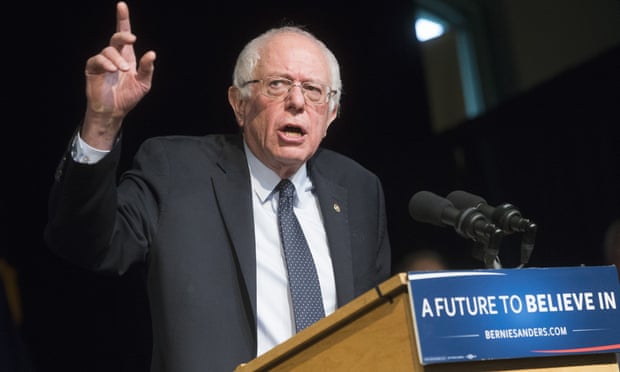
Instead of just questioning Sanders’ choice, we should really be questioning why any of the candidates of either party are employing the same old foreign policy advisers – many of whom not only supported the Iraq war but every disastrous military intervention since. These are the same people who now think that yet another regional war will somehow fix the chaos in the Middle East.
Monday, October 19, 2015
Harper's Revolutionary Foreign Policy
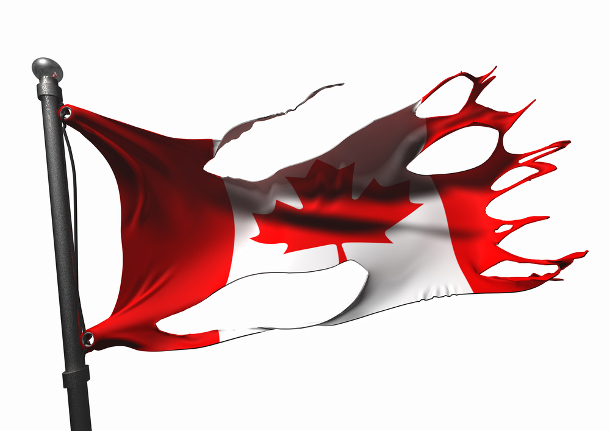
Canada used to play the role of a noble and sometimes self-serving Boy Scout abroad. The nation brokered peace deals, elevated the status of women, fought international poverty, championed arms control, and shared critical science.
Tuesday, September 29, 2015
Harper’s dollarama foreign policy on trial at Munk Debate

But will the opposition lay a glove on the man who has single-handedly gutted foreign aid, erased peacekeeping as part of the Canadian vocabulary, and turned Canada’s foreign policy into Wrestlemania with real blood? If the debate on the economy is anything to go by, the answer is almost certainly no.
Leaked internal report warns of Canada's declining world influence

The presentation, obtained by The Globe and Mail, is stamped “Secret” and was prepared by senior Foreign Affairs officials for a deputy-minister-level meeting Sept. 9. Departmental officials do not lay blame at the feet of the Conservative government, which has run foreign policy for the past nine years, but their analysis echoes criticism of Prime Minister Stephen Harper levelled by ex-diplomats, foreign observers and his political opponents.
Saturday, September 12, 2015
Hillary Clinton Promises A More Muscular Foreign Policy As President

Friday, August 21, 2015
That Conservative foreign policy election plank: Shaky, incoherent and quite possibly dangerous

Like the economy, Harper has made foreign policy a key plank in his Conservative Party's reelection strategy. And that stalwart support for certain groups and countries is a showpiece part of the prime minister's vote-winning effort.
Thursday, April 30, 2015
Harper's 'principled' foreign policy is empty rhetoric for profit

Both Swedish and Canadian foreign policy approaches were recently criticized for their stance on selling arms to Saudi Arabia, with the Canadian government defending its decision to supply Light Armored Vehicles (LAVs) to a country with one of the worsthuman rights records in the world, at the same time as Sweden decided to cancel its arms deal with the gulf state.
Prime Minister Stephen Harper describes Canada's foreign policy as 'principled', though he is less clear about what these principles are. In contrast, Sweden -- a country often compared to Canada as reflecting similar social and political values -- defines its foreign policy as explicitly feminist.
Wednesday, April 08, 2015
Iran, Cuba And China: Obama Steadily Builds Diplomatic Legacy
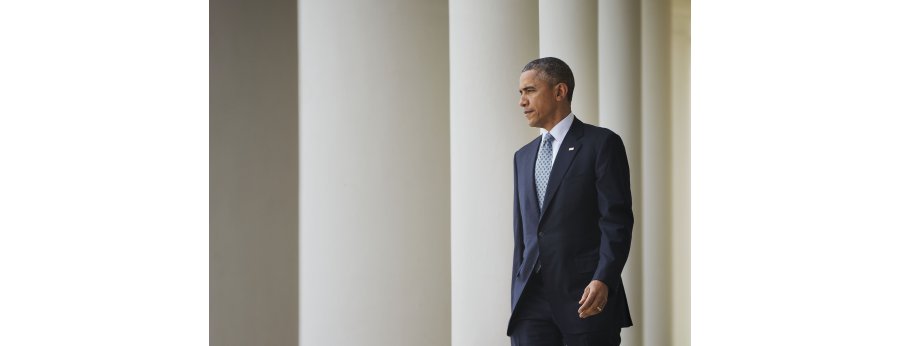
During the campaign, he used Iran to further drive home the contrast. In a debate in July 2007, Obama said he'd meet with then-Iran President Mahmoud Ahmadinejad "without precondition." It was an extension of Obama's diplomacy-first foreign policy, and he came under withering attack not just from the GOP, but also from Clinton.
Monday, March 30, 2015
Ted Cruz’s Foreign Policy Advisor: End Nuclear Negotiations, Start War With Iran
 John Bolton, the former U.N. ambassador and informal foreign policy advisor to presidential candidate Ted Cruz, is advocating for the bombing of Iran.
In an op-ed published in Thursday’s New York Times, Bolton slams the Obama administration’s ongoing negotiations to contain Iran’s nuclear program as unrealistic, and argues that “only military action like Israel’s 1981 attack on Saddam Hussein’s Osirak reactor in Iraq or its 2007 destruction of a Syrian reactor, designed and built by North Korea, can accomplish what is required.”
Friday, March 06, 2015
Jeb Bush Is Taking Foreign Policy Advice From These Influence Peddlers
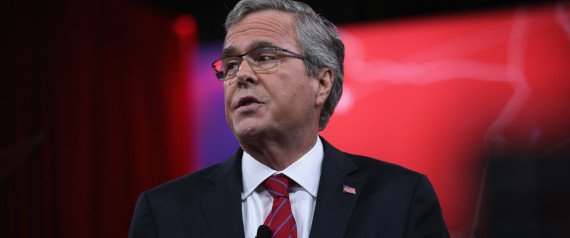
Airport security is not the only area in which Chertoff might offer advice that aids his bottom line -- and, more importantly, CNN is not his only listener.
Monday, February 16, 2015
Canada opposes 15 Palestinian attempts to join United Nations treaties

Canada is objecting in writing to the UN because it maintains Palestine is not a legal state. The Palestinians have formally replied to Canada's objections in writing, issuing a pointed reminder that they won non-member observer status in November 2012 at the UN General Assembly.
The dispute has sparked the most scathing Palestinian criticism to date of the Harper government's unwavering support of Israel.
Brother of Mohamed Fahmy lashes out at John Baird and Canada's handling of his case

But today, Fahmy -- who was working as the bureau chief for Al Jazeera English when he was arrested more than 400 days ago -- remains behind bars in Cairo. And instead of making plans for his freedom, he is just hours away from an uncertain retrial that has the potential to prolong his imprisonment indefinitely.
Sunday, February 15, 2015
John Baird made a mess of foreign policy

The office will elevate Nicholson, but will Nicholson elevate the office? Will he bring to it less certainty and more humility? After Baird, the mogul of the megaphone, it won’t be that hard.
To his chorus of admirers, Baird was “principled.” He was “a rare beacon of light” and “a pillar of strength.” He was “a great foreign minister.”
That superlative comes from Jason Kenney, the new defence minister. Ironically, Kenney should be foreign minister; more than anyone in cabinet, Kenney has the intelligence and sophistication for serious diplomacy.
Democrats Need an Elizabeth Warren for Foreign Policy

Private meetings that she’s held with various foreign-policy experts offer some hints as to how she might part ways with President Barack Obama when it comes to crises in Ukraine, Syria and other global trouble spots. The major takeaway from these private talks is that she wants a strategy more suited to shaping conditions overseas, as opposed to reacting to events as they arise, people familiar with the meetings said.…“She’s much less risk-averse” than Mr. Obama, said Aaron David Miller, vice president of the Woodrow Wilson Center for Scholars who has taken part in Mrs. Clinton’s foreign-policy briefings. [Emphasis added.]
Tuesday, December 30, 2014
How Our 1989 Invasion of Panama Explains the Current US Foreign Policy Mess

Twenty-five years ago this month, early on the morning of December 20, 1989, President George H.W. Bush launched Operation Just Cause, sending tens of thousands of troops and hundreds of aircraft into Panama to execute a warrant of arrest against its leader, Manuel Noriega, on charges of drug trafficking. Those troops quickly secured all important strategic installations, including the main airport in Panama City, various military bases, and ports. Noriega went into hiding before surrendering on January 3rd and was then officially extradited to the United States to stand trial. Soon after, most of the US invaders withdrew from the country.
Thursday, December 11, 2014
President Vladimir Putin Defends Russia's Aggressive Foreign Policy
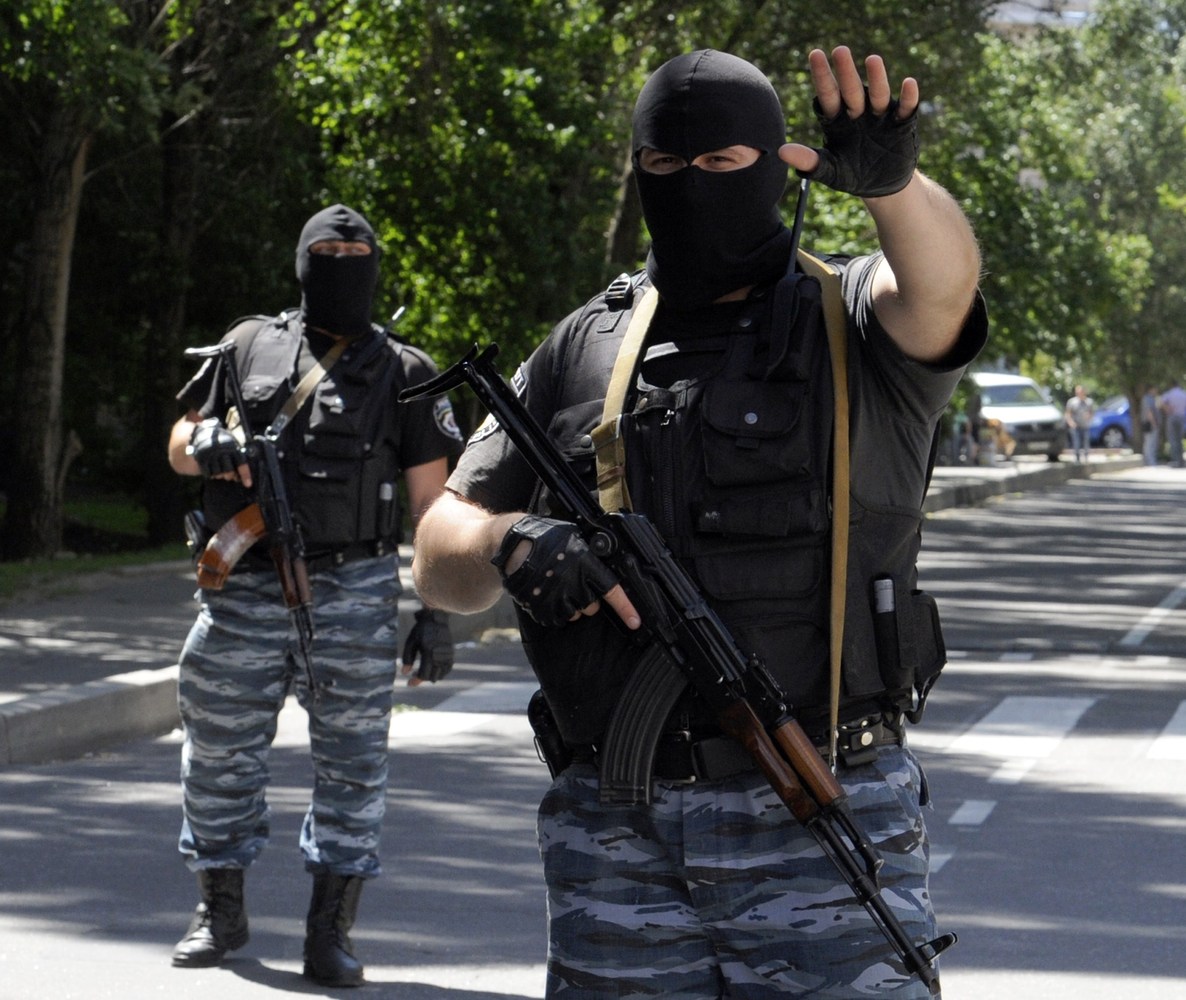
In his annual state-of-the-nation address at the Grand Kremlin Palace, Putin announced measures to spur the country's flagging economy, which is set to enter recession in 2015 for the first time in six years.
Subscribe to:
Posts (Atom)