Democracy Gone Astray

Democracy, being a human construct, needs to be thought of as directionality rather than an object. As such, to understand it requires not so much a description of existing structures and/or other related phenomena but a declaration of intentionality.
This blog aims at creating labeled lists of published infringements of such intentionality, of points in time where democracy strays from its intended directionality. In addition to outright infringements, this blog also collects important contemporary information and/or discussions that impact our socio-political landscape.

All the posts here were published in the electronic media – main-stream as well as fringe, and maintain links to the original texts.

[NOTE: Due to changes I haven't caught on time in the blogging software, all of the 'Original Article' links were nullified between September 11, 2012 and December 11, 2012. My apologies.]

Showing posts with label Free Press. Show all posts

Thursday, September 28, 2023

Russia bans dozens of UK journalists, media figures and politicians

Russia has banned dozens of British journalists, media representatives and senior UK politicians from entering the country, including five Guardian journalists and executives, the foreign ministry said on Friday.

In a statement published on the foreign ministry’s website, Moscow said the sweeping action was a response to UK sanctions and the “spreading of false information about Russia”, as well as “London’s unrelenting military support for the Kyiv neo-Nazi regime”.

Wednesday, August 08, 2018

Will an Independent Press Survive in Russia?

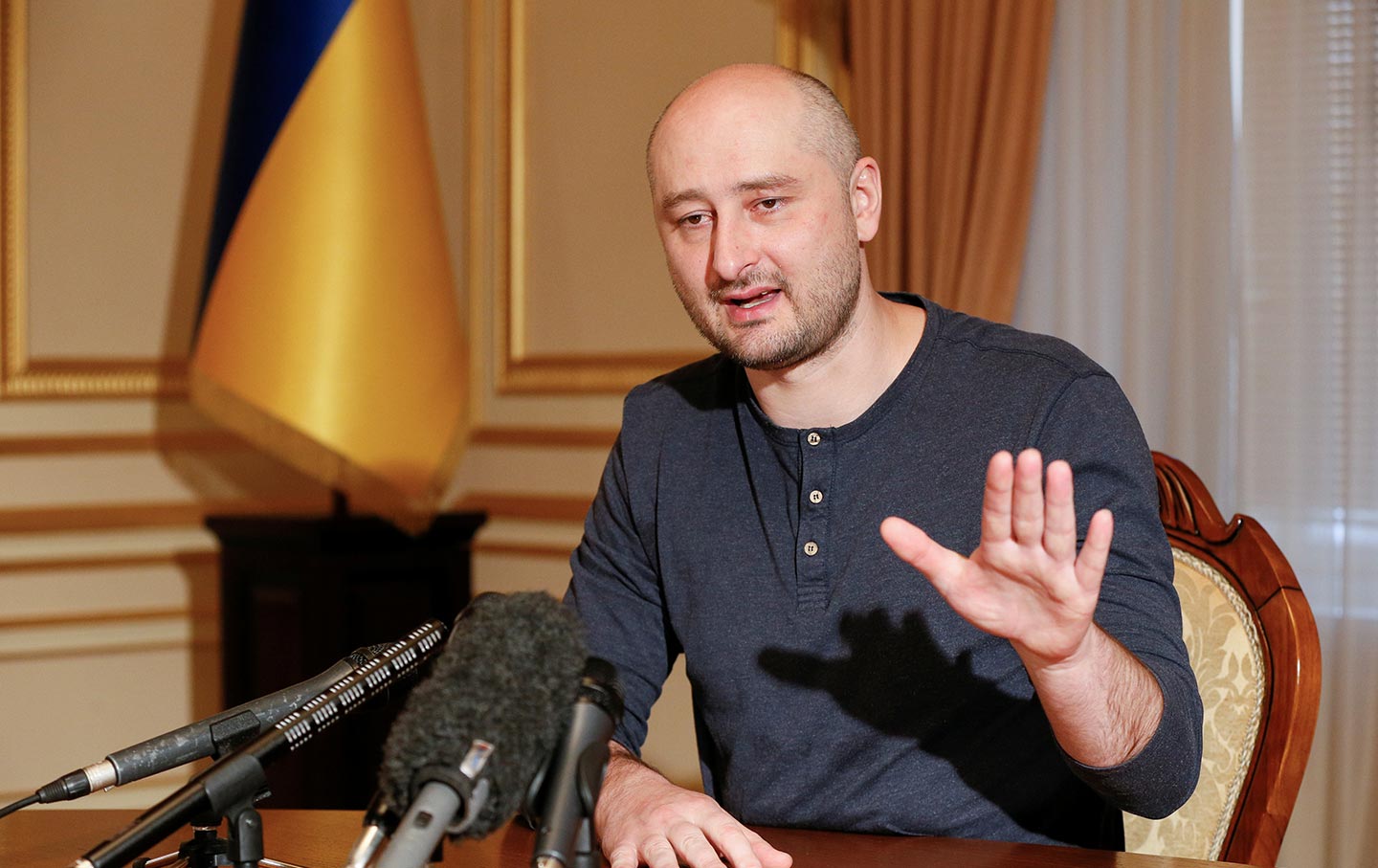
Commenting on the fake news that Russian journalist Arkady Babchenko had been killed in Kiev, many Russian colleagues maintained that what had died, instead of Babchenko, was traditional journalism. Recent history and new media trends suggest that is not so.

The Babchenko case is a live illustration of an obvious crisis in the media. On the evening of May 29, reports came from Kiev that Babchenko, a Russian opposition journalist, had been killed by three shots as he stood in the doorway of his apartment. His wife found the bleeding reporter and he died in the ambulance en route to the hospital, police said. Photographs of his body flew around the world. His colleagues saw in the details of his murder a similarity to the murders of journalist Anna Politkovskaya and opposition politician Boris Nemtsov. Many of his colleagues wrote powerful statements about the victim, forgetting and forgiving former slights and disputes. Reporters, opinion makers, Internet users, all called for justice and an end to the unpunished violence toward journalists.

Wednesday, July 19, 2017

Turkey’s free press on trial

In a small courtroom at the city’s gargantuan Palace of Justice, Canan Coşkun took the stand with her hands clasped nervously behind her back.

As a journalist covering the courts for Cumhuriyet — the Turkish newspaper that has been most outspokenly critical of the government — Coşkun is no stranger to judicial proceedings. But on this Tuesday morning in June, she wasn’t there to cover a case. She was on trial herself, for the fourth time this year.

Friday, July 31, 2015

Caught Between Egypt, Qatar and the Struggle for Free Press

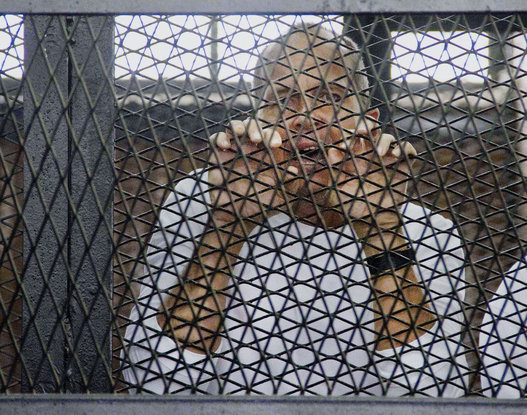
Judgment comes in just a matter of days -- July 30 -- in the trial of us Al Jazeera journalists, after 19 months of a tormenting experience that has changed me and the lives of my loved ones forever.

Understandably, the world is preoccupied with news about nuclear deals, thugs who kill their own people under the perverted justification of jihad and the banner of Islam and the war on terror that has left many journalists -- myself included -- under constant threat by governments who consider us just collateral damage.

Tuesday, December 24, 2013

China To Media: Don't Report 'Wrong Points Of View'

BEIJING, Dec 23 (Reuters) - China's ruling Communist Party told the already tightly monitored state media on Monday that they should not be reporting on "wrong points of view" and instead cover positive stories that promote "socialist values".

Traditionally, Chinese state media has been the key vehicle for party propaganda. But reforms over the past decade that have allowed greater media commercialisation and some increase in editorial independence, combined with the rise of social media, have weakened government control, according to academics.

Monday, February 18, 2013

White House Press Corps: 'Extreme Frustration' With Lack Of Obama Access

The White House press corps expressed "extreme frustration" at the Obama administration Sunday after it was barred from being able to report on President Obama's golf outing with Tiger Woods.

The reporters who cover Obama every day were kept well away from the president as he hit the links. However, Tim Rosaforte, a writer for Golf Digest and Golf World, did get some access to the golfer-in-chief, and happily tweeted the event exclusively for hours.

Thursday, March 15, 2012

Why Is President Obama Keeping a Journalist in Prison in Yemen?

On February 2, 2011, President Obama called Yemeni President Ali Abdullah Saleh. The two discussed counterterrorism cooperation and the battle against Al Qaeda in the Arabian Peninsula. At the end of the call, according to a White House read-out, Obama “expressed concern” over the release of a man named Abdulelah Haider Shaye, whom Obama said “had been sentenced to five years in prison for his association with AQAP.” It turned out that Shaye had not yet been released at the time of the call, but Saleh did have a pardon for him prepared and was ready to sign it. It would not have been unusual for the White House to express concern about Yemen’s allowing AQAP suspects to go free. Suspicious prison breaks of Islamist militants in Yemen had been a regular occurrence over the past decade, and Saleh has been known to exploit the threat of terrorism to leverage counterterrorism dollars from the United States. But this case was different. Abdulelah Haider Shaye is not an Islamist militant or an Al Qaeda operative. He is a journalist.

Wednesday, January 25, 2012

Press Freedom Index: Occupy Wall Street Journalist Arrests Cost U.S. Dearly In Latest Survey

The targeting of journalists covering the Occupy Wall Street movement has caused the United States to drop precipitously in a leading survey of press freedom.

Reporters Without Borders' latest Press Freedom Index was released on Wednesday, and the list reflected some of the tumult that took place in the world in 2011, as well as the impact that those events had on journalists across the globe. Reporters became targets over and over again throughout the year, both in the Middle East and on the streets of New York.

Some examples of the change wrought by the Arab Spring could be found in Tunisia, which the compilers moved up 30 places on the list in the wake of that country's democratic revolution. Not so lucky were Bahrain and Egypt, both of which cracked down on journalists and on the popular movements pressing for further change in their countries. They fell 29 and 39 places, respectively, on the scale.

But the U.S. tumbled almost as far as Bahrain did in the wake of the repeated crackdowns on journalists covering Occupy movements. Reporters Without Borders was explicit in its summary of its report, saying that "the United States (47th) also owed its fall of 27 places to the many arrests of journalist covering Occupy Wall Street protests."

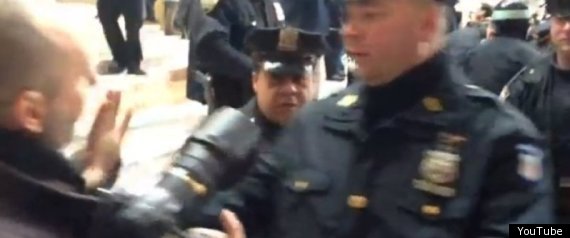
The treatment of journalists by police was well documented throughout 2011. Reporters were beaten, arrested and prevented from covering police action against Occupy protesters. Tensions heightened so much that the New York Police Department had to meet with journalists and remind its officers not to mistreat them.

Original Article
Source: Huff 
Author: Jack Mirkinson 

Tuesday, May 31, 2011

Has the fourth estate lost its tenacity

Harrison Salisbury’s old book on The New York Times, Without Fear or Favor, is worth reading these days, especially for the members of the fourth estate.

The book focuses on the Pentagon Papers and Watergate and legendary newspapermen like Ben Bradlee of the Washington Post and Abe Rosenthal of the Times. It tells of how they and their reporters dug in.

The Post was initially criticized for making too big a deal out of a story about a break-in at Democratic Party headquarters. But the paper kept working the story and kept finding more rot within and we all know how it turned out. In the case of the Times and the Pentagon Papers, there was no cowering to White House warnings of publishing state secrets or compromising national security. It was in the public interest to publish. They published.

The late James Thomson, who was a curator for Neiman media fellowships at Harvard, issued a warning in the Salisbury book about journalists who, by contrast, become too much a part of the establishment. To use an old 1970s word, they get co-opted. They just move along, responding to what the government puts out. They “seldom stay long enough with one central story or issue.”

Full Article