Democracy Gone Astray

Democracy, being a human construct, needs to be thought of as directionality rather than an object. As such, to understand it requires not so much a description of existing structures and/or other related phenomena but a declaration of intentionality.
This blog aims at creating labeled lists of published infringements of such intentionality, of points in time where democracy strays from its intended directionality. In addition to outright infringements, this blog also collects important contemporary information and/or discussions that impact our socio-political landscape.

All the posts here were published in the electronic media – main-stream as well as fringe, and maintain links to the original texts.

[NOTE: Due to changes I haven't caught on time in the blogging software, all of the 'Original Article' links were nullified between September 11, 2012 and December 11, 2012. My apologies.]

Showing posts with label Guardian. Show all posts

Wednesday, December 04, 2013

Guardian Threatened With Terrorism Charges for Reporting NSA Story

British police are investigating the staff of The Guardian newspaper to determine whether acts of journalism can be prosecuted as acts of terrorism.

Assistant Commissioner Cressida Dick said, “It appears possible once we look at the material that some people may have committed offenses. ... We need to establish whether they have or they haven’t.”

Tuesday, November 12, 2013

Guardian faces fresh criticism over Edward Snowden revelations

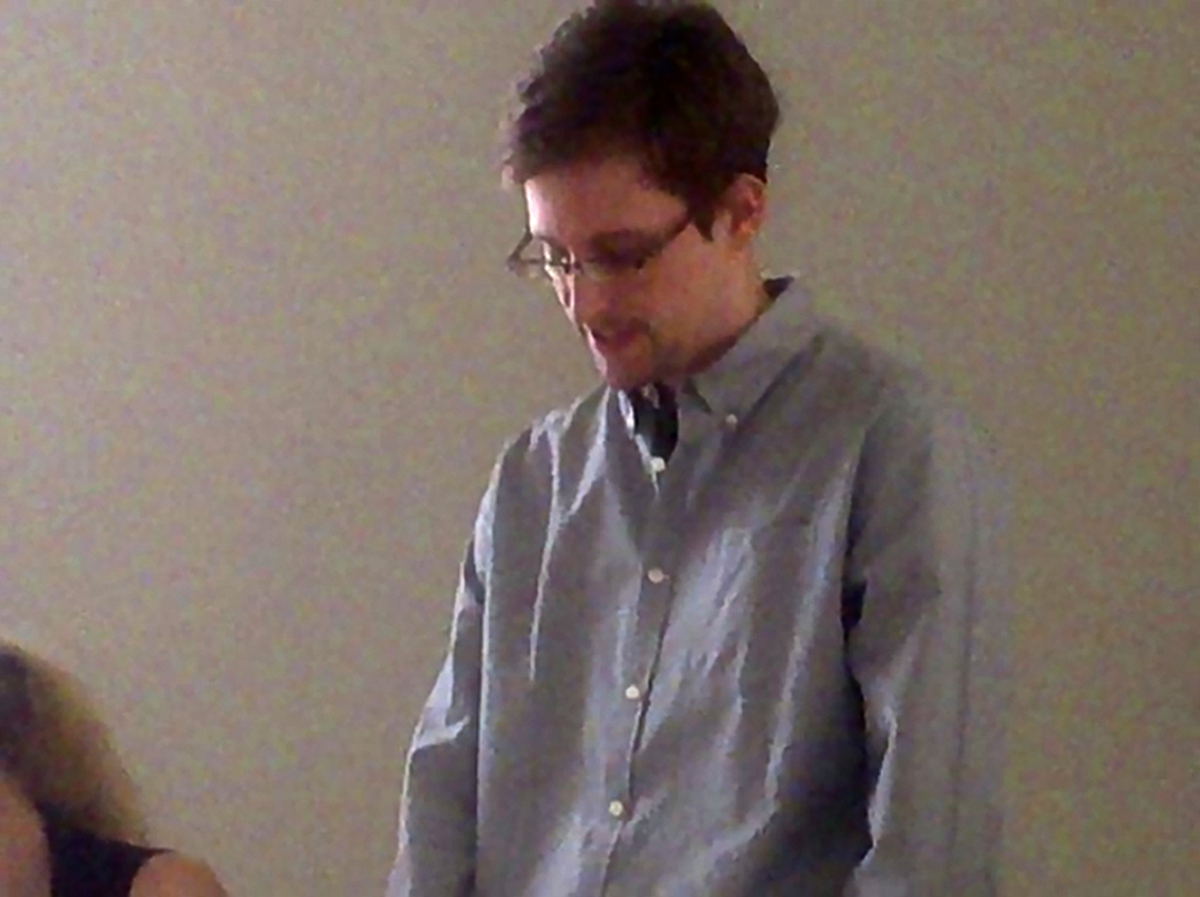
The Guardian faced fresh criticism from the government over its handling of leaks from former NSA analyst Edward Snowden as two cabinet ministers said its revelations had endangered national security.

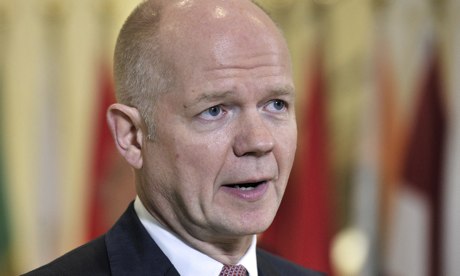
William Hague, the foreign secretary, and Philip Hammond, the defence secretary, endorsed comments made at the recent intelligence and security committee hearing at which Sir John Sawers, the head of MI6, said Britain's enemies were "rubbing their hands with glee" over the disclosures.

Saturday, November 09, 2013

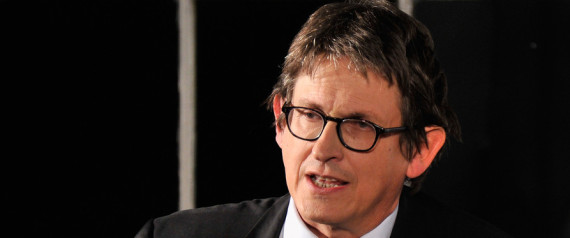
Alan Rusbridger, Guardian Editor, Summoned To Parliament Over Snowden

LONDON, Nov 9 (Reuters) - British lawmakers will question the editor of the Guardian newspaper next month over publishing intelligence files from U.S. spy agency contractor Edward Snowden after warnings from security chiefs that the leaks damaged UK national security.

Alan Rusbridger will appear before the House of Commons home affairs select committee, the Guardian said. "Alan has been invited to give evidence to the ... committee and looks forward to appearing next month," a spokeswoman said.

Tuesday, September 24, 2013

Spilling the NSA’s Secrets: Guardian Editor Alan Rusbridger on the Inside Story of Snowden Leaks

Three-and-a-half months after National Security Agency leaker Edward Snowden came public on the the U.S. government’s massive spying operations at home and abroad, we spend the hour with Alan Rusbridger, editor-in-chief of The Guardian, the British newspaper that first reported on Snowden’s leaked documents. The Guardian has continued releasing a series of exposés based on Snowden’s leaks coloring in the details on how the NSA has managed to collect telephone records in bulk and information on nearly everything a user does on the Internet. The articles have ignited widespread debate about security agencies’ covert activities, digital data protection and the nature of investigative journalism. The newspaper has been directly targeted as a result — over the summer the British government forced the paper to destroy computer hard drives containing copies of Snowden’s secret files, and later detained David Miranda, the partner of Guardian journalist Glenn Greenwald. Rusbridger, editor of The Guardian for nearly two decades, joins us to tell the inside story of The Guardian’s publication of the NSA leaks and the crackdown it has faced from its own government as a result.

Video
Source: democracynow.org
Author: --

Sunday, August 25, 2013

The Guardian's Computer Smash-Up Story Grows Increasingly Bizarre

Every publication makes mistakes. Every major publication has, at some point, botched a story. But the way things are going with The Guardian as it publishes this series of Edward Snowden "bombshells," we're well beyond isolated glitches. The publication has botched nearly every story on this beat -- arguably one of the biggest stories of the Summer. The ongoing trend of highly suspect coverage of various trespasses orchestrated by the U.S. or U.K. governments continues unabated, and even a cursory degree of scrutiny has revealed vague reporting or self-debunking details, then, after reader outrage has been sufficiently peaked, a slow drip of mitigating information emerges.

New York Times Partnering With Guardian On Snowden Reporting

The Guardian has decided to partner with the New York Times for some of its reporting on global intelligence and national security, BuzzFeed revealed on Friday.

The paper has been the subject of a very aggressive attack from the British government over its reporting on both American and British intelligence activities. The prime minister, David Cameron, ordered his top civil servant to demand the return of the documents provided to the Guardian by NSA leaker Edward Snowden. When the paper refused, it was forced to destroy several hard drives in the presence of security officials.

Tuesday, August 20, 2013

Guardian Editor: U.K. 'Security Experts' Entered Offices And Destroyed Hard Drives

Alan Rusbridger, editor of The Guardian, wrote on Monday about an unsettling encounter with "security experts" from the U.K.'s GCHQ intelligence agency.

According to Rusbridger, "a very senior government official" contacted him about two months ago demanding the surrender or destruction of all materials in the publication's possession relating to the surveillance operations uncovered by Edward Snowden.

Friday, June 28, 2013

The Guardian Blocked By The Army After NSA Stories

The Guardian's recent stories about NSA surveillance have been blocked across the entire US Army , the Monterey Herald reported on Thursday night.

The paper has made huge waves, of course, with its series of explosive stories about the NSA's highly classified surveillance programs. Though it has always maintained an American presence, its visibility has skyrocketed in the wake of the scoops.

The Herald talked to an Army spokesman, who confirmed that the Guardian's website had been blocked since the stories first emerged.

The Army, the spokesman said, was weeding out "some access to press coverage and online content about the NSA leaks" so that employees would not be able to see any classified information.

Original Article
Source: huffingtonpost.com
Author: Jack Mirkinson

Wednesday, July 13, 2011

How Britain's Guardian is Making Journalism History

Britain's Guardian newspaper, founded in 1821 as the Manchester Guardian, is making journalism history. The newspaper, owned and subsidized by the Scott Trust, has been instrumental this past year in two major episodes that are defining the ethics and practice of contemporary journalism. A year ago, the Guardian sought out Julian Assange who was then just starting to attract attention as the founder of an organization called WikiLeaks. The full and fascinating story of how the Guardian handled the WikiLeaks material is captured in the book WikiLeaks: Inside Julian Assange's War on Secrecy by David Leigh and Luke Harding, two of the newspaper's lead investigative reporters (and published in the United States by PublicAffairs in February).

Now the Guardian is again at the center of a news story of enormous importance, both in substance and in how journalism functions. The newspaper has taken the lead in breaking open the phone- and data-hacking scandal that poses probably the most serious threat to the future of Rupert Murdoch's News International in its decades of ascendancy as Britain's most powerful news enterprise (aside from the BBC) and, it is becoming increasingly clear, a source of criminal corruption. Murdoch already has been forced to close the 168-year-old Sunday tabloid newspaper, the News of the World, running the risk that the paper's sacked journalists may sue News International; the British prime minister has said he would have accepted the resignation of the CEO of News International and one-time editor of the News of the World, Rebekah Brooks; the deputy prime minister has recommended that News International "do the decent thing" and drop their attempt to take over complete control of the satellite broadcaster BSkyB. There are daily revelations as to whose phone records might have been hacked or stolen: Gordon Brown's doctors, Prince Charles and his wife, Prince William, and a raft of celebrities and sports stars.

The two crucial names in the investigation are, however, not as well known. The first is Gordon Taylor. He is the chief executive of the English soccer players' trades union, the Professional Footballers Association, whose cell phone was hacked by a private investigator hired by News International. In 2009, James Murdoch approved a settlement said to be worth around £1 million to Taylor in court costs and damages, but it was conditional on Taylor agreeing to the court records being sealed and that he would make no public statement about the content of the trial. Murdoch had bought his silence. Nick Davies, an investigative reporter at the Guardian, pursued the attempted cover-up through his contacts in the legal world. Initially, Davies and the Guardian were greeted by what investigations editor David Leigh described in an interview as a "fusillade of lies" from News International and the police, some of whose officers had illegally sold material to reporters. Even Britain's Press Complaints Commission accused the Guardian of "exaggerating." For two years, Davies kept going, amid considerable hostility. The Trinity Mirror papers, Associated Newspapers (publishers of the Daily Mail), and News International, which includes the London Times, were all but silent about the hacking story. When the story might have flagged, the Guardian finally got support not from the British press but from the New York Times, which sent three journalists to write a long piece for the New York Times Magazine in September 2010, adding new details and fresh life to the investigation. The papers were also cooperating on the WikiLeaks revelations.

The second name, which transformed the power of the story, was that of an English schoolgirl. Millie Dowler was 13 years old in 2002 when she was murdered by Levi Bellfield. For six months, her body lay undiscovered and her disappearance was the subject of national attention. The Sun, the News of the World's daily sister paper, offered a reward of £100,000. That was not all. Journalists at News International, it was later revealed, had hacked Millie's phone records, hindering the police investigation and causing enormous distress for the family of the missing girl. The British public, which had not been unduly angered about the invasion of privacy of stars and politicians, was outraged. The lack of respect shown to a dead schoolgirl and her distraught, grieving family brought the News of the World to its knees because, among the public, it "touched a huge emotional button," according to Leigh.

Suddenly, as the Guardian's story resonated across the U.K., the two-year investigation blew wide open, finding its way into the media around the world. The public was made starkly aware that nearly anyone could be the victim of a grotesque invasion of their privacy. Almost overnight, News International acquired pariah status, the share price of BSkyB fell as the takeover seemed in jeopardy, and the News of the World was shuttered. Leigh compares Nick Davies to Woodward and Bernstein: he was one dogged reporter who broke the story in the face of widespread institutional denial. But Davies needed a strong editor and paper at his back. Alan Rusbridger, editor in chief of the Guardian, gave the story his staunch support partly because he had for years been arguing that the U.K. press inadequately policed its own standards and would eventually be punished. He broke the unwritten gentlemen's agreement that newspapers don't criticize the behavior of rival newspapers, that you don't "piss on your own," as one journalist put it. The fact that the Guardian is owned by a trust, and therefore is not beholden to owners or shareholders who might in such situations be put under pressure, allowed the paper to keep going when the denials were at their fiercest. As Leigh put it, "we have pretty clean hands" and, in Alan Rusbridger, "the only guy willing to take on Rupert Murdoch."

Origin
Source: The Atlantic