Democracy Gone Astray

Democracy, being a human construct, needs to be thought of as directionality rather than an object. As such, to understand it requires not so much a description of existing structures and/or other related phenomena but a declaration of intentionality.
This blog aims at creating labeled lists of published infringements of such intentionality, of points in time where democracy strays from its intended directionality. In addition to outright infringements, this blog also collects important contemporary information and/or discussions that impact our socio-political landscape.

All the posts here were published in the electronic media – main-stream as well as fringe, and maintain links to the original texts.

[NOTE: Due to changes I haven't caught on time in the blogging software, all of the 'Original Article' links were nullified between September 11, 2012 and December 11, 2012. My apologies.]

Showing posts with label Holocaust. Show all posts

Thursday, September 12, 2024

Masha Gessen Kicks the Hornet’s Nest on Israel and the Holocaust

Masha Gessen was heading to Germany to receive a prominent cultural prize when they heard that the ceremony wasn’t going forward. That’s because an essay they had published in The New Yorker had apparently tripped alarms in Germany for its references to ghettos in Europe and Gaza.

Gessen was not entirely surprised by the controversy. When they had reviewed with fact-checkers the passage that appeared to cause offense, they had predicted that this would be “when the reader is going to throw their laptop across the room,” they said in an interview with POLITICO Magazine.

Tuesday, February 28, 2017

Holocaust Memorial Day: Why Denouncing Deniers Is More Important Than Ever

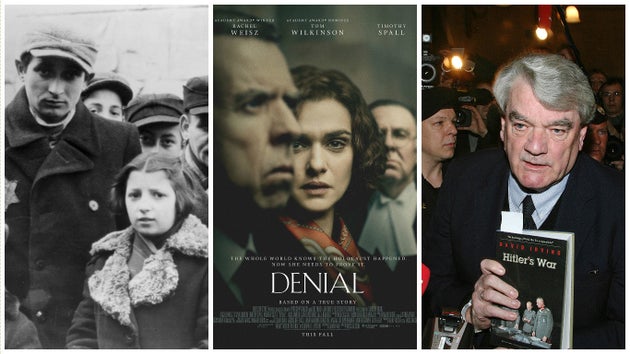
“Today, we have people in the highest, most powerful offices of the world who say ‘facts don’t matter’,” says Professor Deborah Lipstadt, noting the parallel with the Holocaust deniers she has fought for decades.

This year, Holocaust Memorial Day (HMD) marked the release of Denial, the big-screen adaption of a landmark 1996 legal case that put racism, anti-Semitism and questions of free speech on trial.

Holocaust Memorial Day: Rise In Hate Crime Parallels The ‘Darkest Days Of The 1930s’, Warns EJC’s Moshe Kantor

The recent rise in hate crime has “parallels with the darkest days of the 1930s”, the head of a body representing Europe’s Jews has warned.

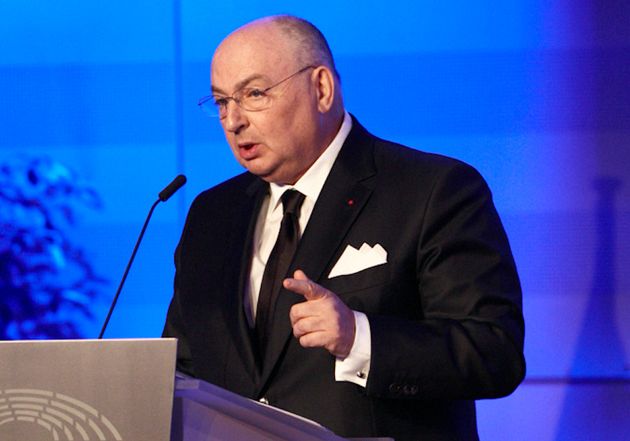
Dr Moshe Kantor, head of the European Jewish Congress, said that the rise of Far Right and neo-Nazi parties is exceptionally worrying.

As commemorations take place around the world for Holocaust Memorial Day, he said that there were dangers “lurking in our own back yard” and called for improvements in security, education and legislation to deal with them.

Sunday, October 25, 2015

Netanyahu’s Blood Libel Against Palestinians

Israeli Prime Minister Benjamin Netanyahu, in remarks in Jerusalem at the World Zionist Conference, blamed the former mufti of Jerusalem, Haj Amin al-Husseini, for putting Hitler up to the Holocaust. Netanyahu is, of course, wrong on the history. But the real intent of his outrageous assertion is to create a blood libel that all Palestinians bear responsibility for the killing of 6 million Jews by the National Socialist state. He asserted that al-Husseini’s animus was rooted simply in irrational Jew-hatred, which he alleged characterized the Palestinian masses then and now, without regard to the issues of the Jewish ethnic cleansing of the Palestinians or of occupation.

Thursday, January 29, 2015

The Holocaust's Forgotten Victims: The 5 Million Non-Jewish People Killed By The Nazis

On the 70th anniversary of the liberation of Auschwitz-Birkenau, the Huffington Post UK is running a series of pieces looking at how we remember the Holocaust: The victims and perpetrators and the untold stories, on what's likely to be one of the last major commemorations with living survivors.
holocaust

Monday, June 03, 2013

Holocaust memorial site set near War Museum in Ottawa

The federal government has unveiled its chosen site for Canada's new National Holocaust Monument.

The monument will be located near downtown Ottawa, just down the road from Parliament Hill and across the street from the National War Museum, where the announcement was made.

Tuesday, March 05, 2013

Nazi labour camps more widespread than thought, new research shows

In the Polish countryside, and in the centre of Paris. Hidden from view, and in plain sight. Hundreds of thousands of prisoners, or just a few dozen. All different, and deadly, and scattered across wartime Europe.

And all part of the Nazi killing machine.

New research has revealed there were more than 42,000 individual sites — ranging from massive concentration camps to small ghettoes — established by the Nazis between 1933 and 1945. The number far exceeds the fewer than 10,000 sites researchers at the United States Holocaust Memorial Museum expected they’d uncover when the project began 13 years ago.

Monday, March 04, 2013

The Holocaust Just Got More Shocking

THIRTEEN years ago, researchers at the United States Holocaust Memorial Museum began the grim task of documenting all the ghettos, slave labor sites, concentration camps and killing factories that the Nazis set up throughout Europe.

 What they have found so far has shocked even scholars steeped in the history of the Holocaust.

The researchers have cataloged some 42,500 Nazi ghettos and camps throughout Europe, spanning German-controlled areas from France to Russia and Germany itself, during Hitler’s reign of brutality from 1933 to 1945.

Sunday, January 27, 2013

Berlusconi Defends Mussolini For Supporting Hitler At Holocaust Memorial

ROME — Former Italian Premier Silvio Berlusconi praised Benito Mussolini for "having done good" despite the Fascist dictator's anti-Jewish laws, immediately sparking expressions of outrage as Europe on Sunday held Holocaust remembrances.

Berlusconi also defended Mussolini for allying himself with Hitler, saying he likely reasoned that it would be better to be on the winning side.

The media mogul, whose conservative forces are polling second in voter surveys ahead of next month's election, spoke to reporters on the sidelines of a ceremony in Milan to commemorate the Holocaust.

Thursday, April 19, 2012

Israel must remember the Holocaust's refugees, forever changed

Dr. Heinz Loewy was not your classic Holocaust survivor. He did not go through any of the camps, and so did not have a number tattooed on his arm. He was a refugee, and he was my father. It seems to me that he lived most of his life as a refugee, even though he would have vehemently denied it. He lived in Israel for 60 years, but never arrived here, not really.

It's true that on Independence Day he made sure to take out the folded flag and hang it on the balcony. It's true that he had a good life here. But looking back, it seems to me that he never really found his place here. It wasn't that he was trying to relive the Europe he had left behind but it's doubtful that he found a replacement for it here. He stored his suits and ties in the closet, his Bermuda shorts replacing them in the hot summer. He also left behind the Latin he had learned, save for one proverb that he would repeat to us. Even his doctorate in law from the University of Prague was unused here.

When he arrived here, alone, after being flung about at sea for a couple of long months on an illegal immigrant ship and being jailed in Beirut, he was forced to become a door-to-door salesman, going by bicycle from house to house in Herzliya, offering the Central European pastries that he made in the bakery he owned with his sister. He looked good, baked well, and had a doctorate to boot, but surely that life was not the life he'd dreamed of as a youth.

Today, as we remember the Holocaust, we must also remember those who may not have experienced all its horrors but still had their lives changed beyond recognition, or even destroyed. The Holocaust led to the establishment of the State of Israel and the ingathering of a great many survivors to it, but not all of them felt at home. They were doomed to a life of exile in their new homeland. My father was one of them.