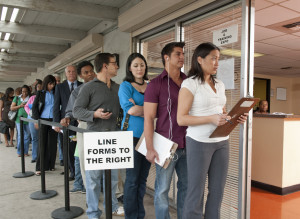
BENNETTSVILLE, S.C. -- It's been more than two years since Frederick Parker had a decent full-time job.
Standing outside the state workforce office as he waits for a ride, the 40-year-old South Carolina native opens up a backpack filled with evidence of his long struggle with unemployment: a stack of updated résumés, some fruitless job leads and certificates from continuing-education courses he's completed at the local tech college. A construction worker by trade, Parker has racked up certificates to run a backhoe, a bulldozer, a front-end loader and an excavator.
Even so, all he managed to land was a part-time stint at a local McDonald's.
"I have everything I should need, and I'm still applying," says Parker, who's wearing a pressed burgundy button-down shirt, his chest-length dreadlocks pulled back neatly in a ponytail, so any potential employer would "know I mean business."
"I work hard," he goes on. "My paperwork's clean. I have a high school diploma, a résumé. I've got no criminal record."
Parker may be a victim of geography more than anything else. He lives in South Carolina's Marlboro County, a mostly rural region surrounding the town of Bennettsville and hugging the North Carolina border. The county is battling a wince-inducing
unemployment rate of roughly 16 percent, or nearly double the national rate. During the worst days of the Great Recession, it climbed to an eye-popping 21 percent.
In short, this part of South Carolina isn't anything like Iowa or New Hampshire, the two previous presidential nomination stops, both of which have been
far more insulated from the jobs crisis. Globalization has not been kind to the
I-95 corridor in South Carolina, and jobs can be hard to find even in a healthy economy. Although few of the candidates are likely to do more than drive through or fly over Democratic-leaning, mostly African-American Marlboro County, it is in many ways an actualized vision of the GOP platform, a free-market fever dream of low taxes, cheap and abundant labor, little union presence and even less regulatory burden.