Democracy Gone Astray

Democracy, being a human construct, needs to be thought of as directionality rather than an object. As such, to understand it requires not so much a description of existing structures and/or other related phenomena but a declaration of intentionality.
This blog aims at creating labeled lists of published infringements of such intentionality, of points in time where democracy strays from its intended directionality. In addition to outright infringements, this blog also collects important contemporary information and/or discussions that impact our socio-political landscape.

All the posts here were published in the electronic media – main-stream as well as fringe, and maintain links to the original texts.

[NOTE: Due to changes I haven't caught on time in the blogging software, all of the 'Original Article' links were nullified between September 11, 2012 and December 11, 2012. My apologies.]

Showing posts with label Lebanon. Show all posts

Thursday, August 02, 2018

Saudi Arabia Pressured Lebanese Prime Minister To Resign: Report

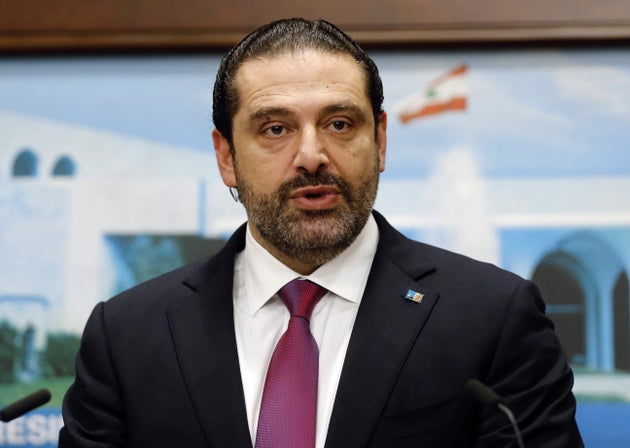
Lebanese Prime Minister Saad Hariri announced his short-lived resignation in early November under heavy duress from the Saudi Arabian government, according to a New York Times report based on the accounts of Lebanese, Western and regional officials, as well as other figures close to Hariri.

Veteran Middle East watchers immediately suspected that Saudi Arabian pressure was at play when Hariri suddenly resigned on Nov. 4 during a visit to Riyadh, Saudi Arabia. The Times’ report confirms those suspicions and adds new details about what occurred.

Sunday, July 29, 2018

The Prime Minister of Lebanon's Unnerving Interview

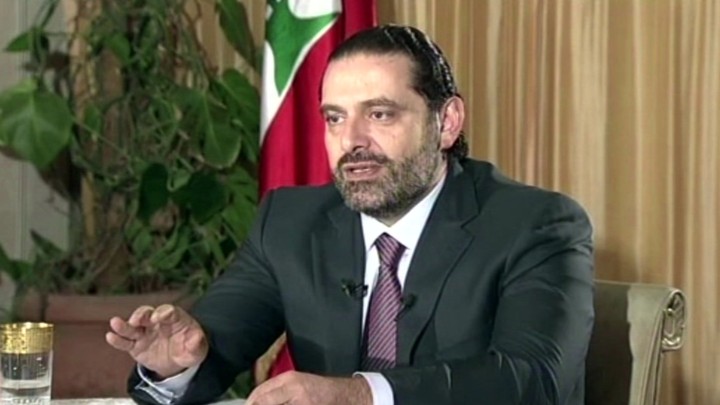
In the Middle East, the parlor game of the moment is guessing whether Saad Hariri, Lebanon’s prime minister—or is it ex-prime minister?—is literally, or only figuratively, a prisoner of his Saudi patrons. In a stiff interview from an undisclosed location in Riyadh on Sunday, Hariri did little to allay concerns that he’s being held hostage by a foreign power that is now writing his speeches and seeking to use him to ignite a regional war. He insisted he was “free,” and would soon return to Lebanon. He said he wanted calm to prevail in any dispute with Hezbollah, the most influential party serving in his country’s government.

Friday, June 23, 2017

Israel-Lebanon maritime dispute explained

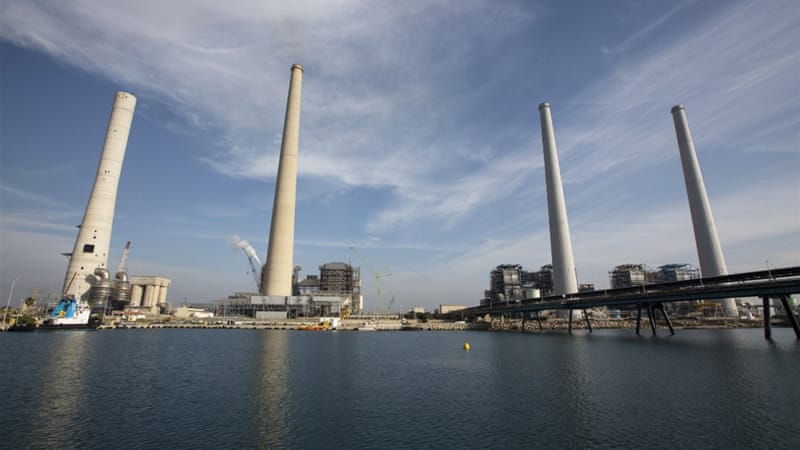
Beirut, Lebanon - Earlier this month, the new Lebanese government, led by President Michel Aoun, published a tender to explore untapped gas and oil reserves that lie in the eastern Mediterranean.

Lebanese Minister of Energy and Water Cesar Abou Khalil has said that the offshore resources could be a major economic boost for the country at a time when its financial lifelines, namely tourism, have taken a major hit due to the ongoing war in neighbouring Syria.

Thursday, October 30, 2014

Lebanese Troops Fight Street Battles With Militants In Nation's North

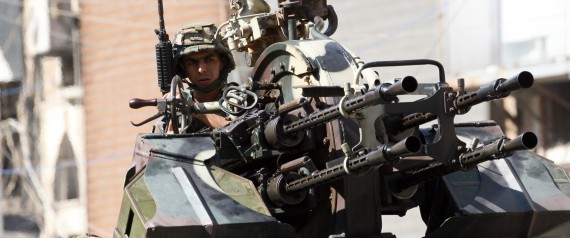
TRIPOLI, Lebanon (AP) — Lebanese army tanks pounded Muslim militants' positions in the narrow streets of a poor neighborhood in this northern city Sunday, where fighting has intensified and spread to nearby areas where gunmen killed four soldiers.

Several tanks, armored personnel carriers and Humvees carrying commandos arrived earlier in the day on the edge of the Bab Tabbaneh neighborhood, where clashes were heaviest. Intense gunfire exchanges and sporadic explosions rang out across the neighborhood, the worst fighting Lebanon's second largest city has seen for months.

Tuesday, October 07, 2014

Pan-Mideast War Escalates as IS and al-Qaida Attack Hezbollah Outposts Near the Lebanese Border

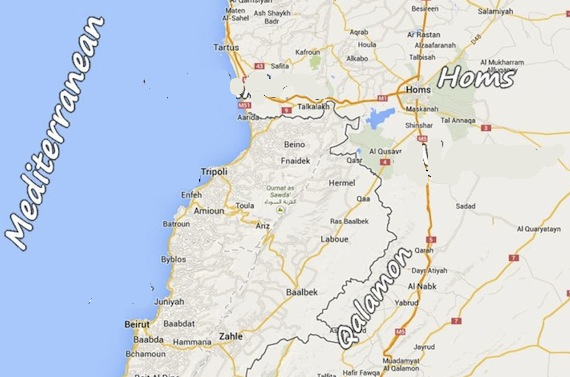
qalamoun-mapISIL and al-Qaeda have, according to Hizbullah, launched attacks in Syria’s Qalamoun district (abutting the Lebanese border near Baalbek) on Hizbullah military outposts on the Syrian side. 


Hizbullah is acting in Syria as an adjunct to the Syrian Baath Army and helped reduce Qusayr and Homs last spring.  The Syrian rebels were exploring for weaknesses in the Shiite party-militia’s positions in the mountainous area.

Wednesday, January 29, 2014

Noam Chomsky: Sabra & Shatila Massacre That Forced Sharon’s Ouster Recalls Worst of Jewish Pogroms

We look at one of the most shocking incidents in the career of the late former Israeli Prime Minister Ariel Sharon: the Sabra and Shatila massacre. Up to 2,000 Palestinians died on Sept. 16-17, 1982, when the Israeli military allowed a Christian militia to attack the camp. Then-Defense Minister Ariel Sharon was forced to resign after a special Israeli investigative panel declared him to be "personally responsible" for the massacre. We air a description of the killings by Ellen Siegel, a Jewish-American nurse who was working at Gaza Hospital at the Sabra camp at the time of the attacks, and speak with Rashid Khalidi, Edward Said Professor of Arab Studies at Columbia University, and Noam Chomsky, world-renowned political dissident, linguist, author and Institute Professor Emeritus at Massachusetts Institute of Technology.

Video
Source: democracynow.org
Author: --

Monday, December 16, 2013

Israel retaliates after soldier killed by Lebanese sniper

Israeli forces reportedly shot two Lebanese soldiers on Monday, just hours after a Lebanese army sniper killed an Israeli soldier as he drove along the border between the two countries.

The first shooting took place near the Rosh Hanikra border crossing which has been mostly calm since a month-long war between Hezbollah and Israel in the summer of 2006. The soldier killed was identified as Shlomi Cohen, 31, from the northern Israeli city of Afula.

Sunday, December 08, 2013

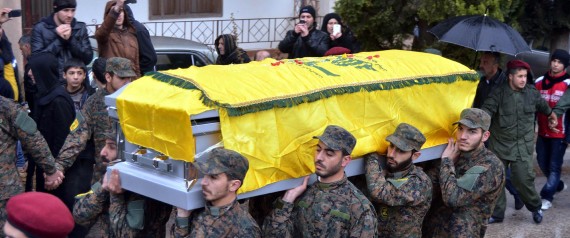
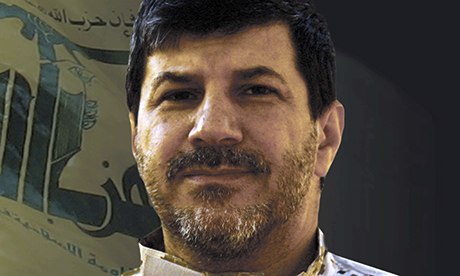
Killing Of Hezbollah Commander Leaves Group Without Military Mastermind

The assassination of Hezbollah leader Hassan al-Laqis by a small Sunni group this week has eliminated an effective and high-ranking operative who helped supply some of the most advanced military needs for the Shiite militia.

Matt Levitt, a senior fellow at the Washington Institute for Near East Policy, said in an email that al-Laqis was part of an "elite club" in Hezbollah, deeply tied to top officials including Hassan Nasrallah, the group's chief. Those personal connections and al-Laqis' links to Iran helped Hezbollah maintain covert supply lines and obtain gear like night-vision goggles and even drones. That role, Levitt said, suggests that al-Laqis "could be difficult to replace."

Wednesday, December 04, 2013

Hezbollah accuses 'Israeli enemy' of killing commander in Beirut

The Lebanese militant group Hezbollah on Wednesday accused Israel of "assassinating" one of its commanders outside his home in southern Beirut.

A statement issued by the group said Hussein al-Laqis was killed as he returned home from work around midnight. It did not say how he died.

Sunday, June 03, 2012

Troops deployed to Tripoli after Syrian groups clash; 15 killed

Lebanese troops deployed in the city of Tripoli on Sunday after 15 people were killed in clashes between supporters and opponents of Syrian President Bashar al-Assad, local medics said, the deadliest fighting in Lebanon since Syria’s uprising began.

Residents said relative calm had returned to the Mediterranean city since the soldiers took up positions around the city at around 7 a.m. (0400 GMT), after gunmen exchanged heavy machinegun fire and rocket-propelled grenades.

Two people wounded in the fighting died on Sunday, adding to the 13 killed on Saturday. Occasional gunfire could still be heard but was less intense than earlier exchanges.