
Showing posts with label Leon Panetta. Show all posts
Showing posts with label Leon Panetta. Show all posts
Wednesday, January 23, 2013
Leon Panetta: Drones To Be 'Continuing Tool' Of U.S. National Security
Friday, January 11, 2013
Leon Panetta On Afghanistan War Withdrawal: 'We're Not Gonna Walk Backward'
 WASHINGTON -- Starting Sunday, tens of thousands of troops from the 10th Mountain, 101st Airborne and the 1st Armored Divisions will begin boarding aircraft bound for yet another combat tour in Afghanistan. At least some of the troopers will have been in grade school when the war started in 2001, and some will be on their second or third rotation.
But now, after a U.S. investment of $641 billion sunk into the war and a casualty toll of 2,162 dead and 18,188 wounded, the Pentagon reports that the Taliban insurgency that was supposed to have been beaten is still active and resilient, that the Afghan government is still corrupt and that Afghan security forces are still unable to fight the war on their own.
Wednesday, June 06, 2012
Panetta Defends Drones In Pakistan

Speaking in India – on Pakistan's doorstep – Panetta unapologetically dismissed suggestions that the strikes could violate Pakistan's sovereignty.
"This is about our sovereignty as well," he said when answering questions from the audience after a speech at an Indian think tank.
Tuesday, January 03, 2012
Panetta's Sacred Hippopotamus
It’s too much to expect that, before the 2012 election, there will big cuts to the Department of Defense. The Pentagon’s bloated budget, which has roughly doubled since the late 1990s, not counting the vast sums spent on wars in Iraq, Afghanistan, Pakistan and elsewhere, is still a sacred, well, hippopotamus.
But, on the other hand, as I reported in The Nation early last year (“Taking Aim at the Pentagon Budget”), the United States is an empire in decline, and it can no longer afford a military budget equal to the rest of the world combined. As that piece showed, even some traditional conservatives and Tea Party rebels have begun to side with liberal Democrats such as Representative Barney Frank (D-MA) to propose much larger cuts in defense spending than either the Obama administration or Congress as a whole is likely to consider this year.
This week, Secretary of Defense Leon Panetta will announce his plans for military spending going forward to 2020 or so. It won’t be dramatic, but think of it as an opening bid. What the United States spends on defense is heading south, and will continue to do so for a decade or more. Anti-military organizers, peace groups and anyone concerned about reorienting our country’s priorities away from militarism and war ought to be girding for a decade-long battle to maximize cuts. In the 1990s, at the end of the cold war, Pentagon spending fell by about one-third. Of the roughly $6 trillion that the United States is currently projected to spend over the next ten years on war, the Obama administration has already conceded that about $450 billion can be eliminated, and the absurdly named supercommittee’s failure to agree on spending last year supposedly imposes another $500 billion in defense cuts, for a total of nearly a trillion bucks, or one-sixth of future spending. Of course, that’s not enough, though it’s outraged hawks, including some Republican candidates for president, the so-called Iron Triangle in Congress, and a right-wing coalition called Defending Defense, made up of the American Enterprise Institute, the Heritage Foundation and Bill Kristol’s Foreign Policy Initiative.
But, on the other hand, as I reported in The Nation early last year (“Taking Aim at the Pentagon Budget”), the United States is an empire in decline, and it can no longer afford a military budget equal to the rest of the world combined. As that piece showed, even some traditional conservatives and Tea Party rebels have begun to side with liberal Democrats such as Representative Barney Frank (D-MA) to propose much larger cuts in defense spending than either the Obama administration or Congress as a whole is likely to consider this year.
This week, Secretary of Defense Leon Panetta will announce his plans for military spending going forward to 2020 or so. It won’t be dramatic, but think of it as an opening bid. What the United States spends on defense is heading south, and will continue to do so for a decade or more. Anti-military organizers, peace groups and anyone concerned about reorienting our country’s priorities away from militarism and war ought to be girding for a decade-long battle to maximize cuts. In the 1990s, at the end of the cold war, Pentagon spending fell by about one-third. Of the roughly $6 trillion that the United States is currently projected to spend over the next ten years on war, the Obama administration has already conceded that about $450 billion can be eliminated, and the absurdly named supercommittee’s failure to agree on spending last year supposedly imposes another $500 billion in defense cuts, for a total of nearly a trillion bucks, or one-sixth of future spending. Of course, that’s not enough, though it’s outraged hawks, including some Republican candidates for president, the so-called Iron Triangle in Congress, and a right-wing coalition called Defending Defense, made up of the American Enterprise Institute, the Heritage Foundation and Bill Kristol’s Foreign Policy Initiative.
Sunday, November 20, 2011
‘Chatter and noise’ on the F-35s: There’s no turning back, leaders insist
There is no plan to backtrack on the F-35, so far as North America’s heads of defence are concerned.
At a press conference Friday, Defence Minister Peter MacKay and U.S. Secretary of Defense Leon Panetta held firm on the line that there is no turning back. Negative reports on the fighter program are “just chatter and noise,” MacKay told reporters in Halifax at the annual International Security Forum.
Earlier this week, reports surfaced that Panetta had warned Congress about the possibility of scrapping the jet program if a congressional super committee does not come to an agreement on the budget by the middle of next week. The committee has been deadlocked and this week U.S. president Barack Obama urged congressional leaders to “bite the bullet.”
Except, according to the Washington Post, despite the rhetoric, if the committee fails to reach an agreement, nothing will happen right away. “The automatic spending cuts that were supposed to force the panel to deliver more palatable options would not take effect until January 2013,” notes the Post. “That leaves lawmakers a full year to devise alternatives.”
At Friday’s press conference, Panetta told reporters he was “very confident” the funding would come.
At a press conference Friday, Defence Minister Peter MacKay and U.S. Secretary of Defense Leon Panetta held firm on the line that there is no turning back. Negative reports on the fighter program are “just chatter and noise,” MacKay told reporters in Halifax at the annual International Security Forum.
Earlier this week, reports surfaced that Panetta had warned Congress about the possibility of scrapping the jet program if a congressional super committee does not come to an agreement on the budget by the middle of next week. The committee has been deadlocked and this week U.S. president Barack Obama urged congressional leaders to “bite the bullet.”
Except, according to the Washington Post, despite the rhetoric, if the committee fails to reach an agreement, nothing will happen right away. “The automatic spending cuts that were supposed to force the panel to deliver more palatable options would not take effect until January 2013,” notes the Post. “That leaves lawmakers a full year to devise alternatives.”
At Friday’s press conference, Panetta told reporters he was “very confident” the funding would come.
Tuesday, November 15, 2011
Washington could scrap its F-35 jet purchase
 The U.S. government is threatening to cancel its F-35 Joint Strike Fighter program unless Congress approves a credible deficit reduction plan, a move that would risk derailing Canada’s plans to purchase 65 of the next-generation stealth jets.
 U.S. Defence Secretary Leon Panetta includes the F-35 program in a detailed list of items that could be on the chopping block should a so-called “super committee” fail to deliver on a plan to find $1.2-trillion-in savings over the next 10 years.
The bi-partisan committee – officially called the Joint Select Committee on Deficit Reduction (JSCDR) – must reach a deal by next Wednesday. Should they fail, across the board cuts to government spending, described as “sequestration,” would kick in almost immediately.
In letters to Senators John McCain and Lindsey Graham, Mr. Panetta outlines what these cuts could look like.
“If the JSCDR fails to meet its targets and sequestration is triggered, [Department of Defence] would face huge cuts in its budgets,” Mr. Panetta writes in a letter dated Nov. 14.
Wednesday, June 15, 2011
CIA Chief Leon Panetta: Cyberattack Could Be 'Next Pearl Harbor'
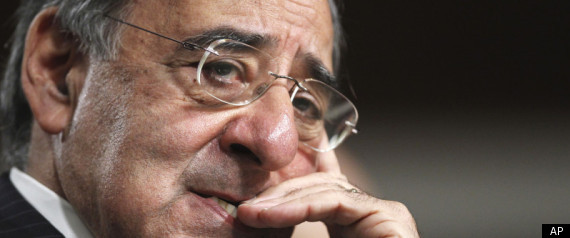 Appearing before the Senate Armed Services Committee for a confirmation hearing for his appointment as the secretary of defense, Leon Panetta warned that the U.S. could face cyberwarfare in battles to come.
 “The next Pearl Harbor we confront could very well be a cyber attack that cripples our power systems, our grid, our security systems, our financial systems, our governmental systems,” Panetta said.
Though he talked on subjects ranging from Libya to withdrawing troops from Afghanistan to the war on terrorism, Panetta highlighted his concerns regarding the U.S.'s preparedness for cyberattacks.
Full Article
Source: Huffington
Subscribe to:
Posts (Atom)