Democracy Gone Astray

Democracy, being a human construct, needs to be thought of as directionality rather than an object. As such, to understand it requires not so much a description of existing structures and/or other related phenomena but a declaration of intentionality.
This blog aims at creating labeled lists of published infringements of such intentionality, of points in time where democracy strays from its intended directionality. In addition to outright infringements, this blog also collects important contemporary information and/or discussions that impact our socio-political landscape.

All the posts here were published in the electronic media – main-stream as well as fringe, and maintain links to the original texts.

[NOTE: Due to changes I haven't caught on time in the blogging software, all of the 'Original Article' links were nullified between September 11, 2012 and December 11, 2012. My apologies.]

Showing posts with label Margaret Thatcher. Show all posts

Tuesday, February 28, 2017

Tories Overseeing Biggest Rise In Inequality Since Days Of Margaret Thatcher

Britain is on course for a “major” slowdown in living standards, with families seeing almost no income growth before the next general election, a new report warns.

Research by the Resolution Foundation found poorer households will suffer a fall in their incomes, leading to the biggest rise in inequality since the days of Margaret Thatcher.

The think tank said a recent mini-boom in living standards has now ground to a halt because of rising inflation and “plateauing” of employment in recent months.

Saturday, January 31, 2015

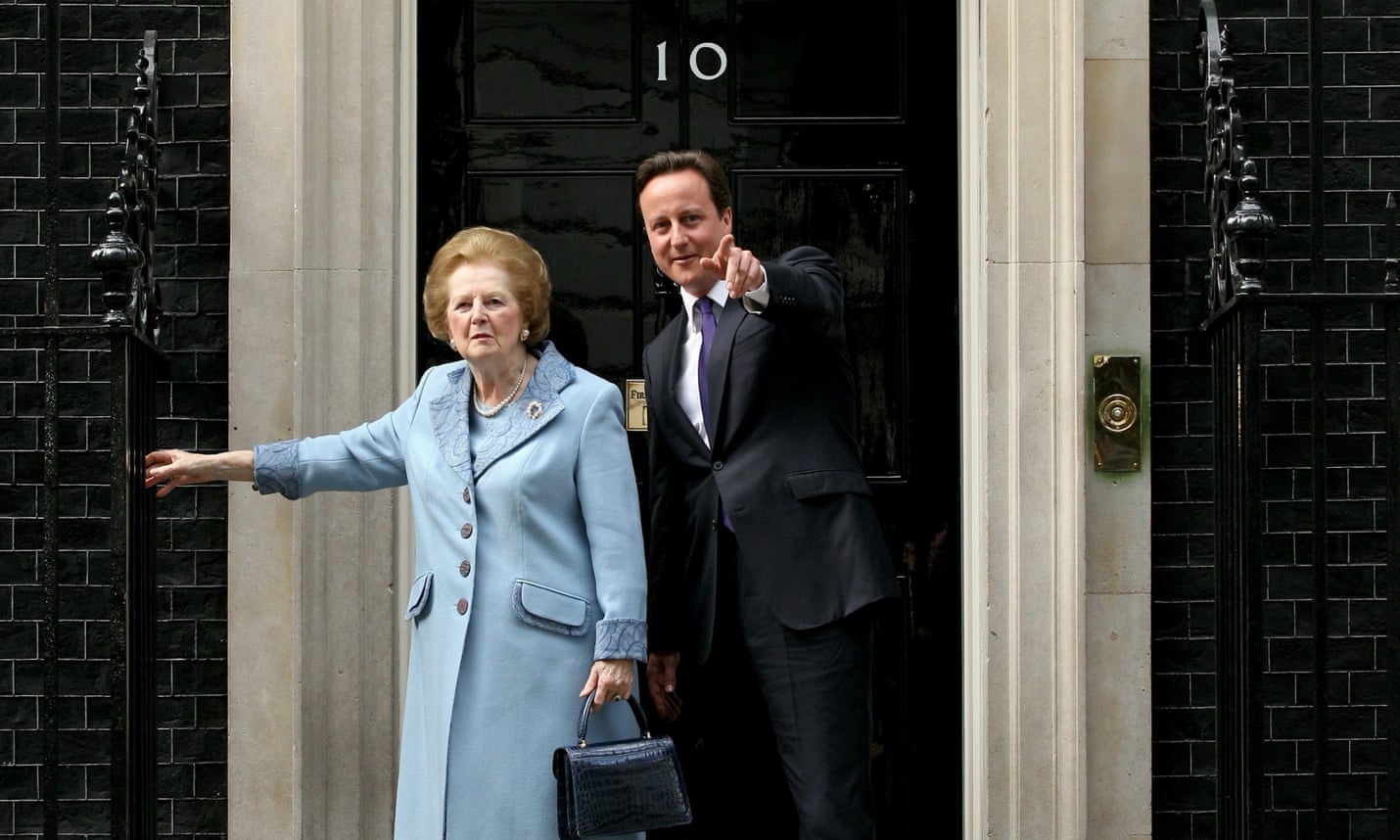
Cameron’s five-year legacy: has he finished what Thatcher started?

On 12 May 2010, in the sunlit rose garden of No 10, David Cameron and Nick Clegg announced the creation of Britain’s new coalition government. In a flawlessly stage-managed performance, Cameron proclaimed the birth of a “new politics”. His coalition government would, he said, be underpinned by the principles of “freedom, fairness and responsibility”.

This cosy launch, it turned out, was a bluff. Under Cameron’s leadership the country has become harder and meaner, more divided by class and region. Readers of thinktank reports and those acute enough to hear the behind-the-hand remarks, knew what to expect. But Cameron is dextrous, emotionally intelligent, like Tony Blair. In the runup to the 2010 election, he sprinkled speeches and photo-opportunities with new flavourings – green trees, social enterprise, the “big society”, free schools, hug-a-hoodie, vote-blue-go-green, the-NHS-is-safe-with-me. Such posturing irritated Conservative backbenchers, some of whom disliked his metrosexual manner and support for gay marriage. But Cameron’s style was no handicap: that easy, upper-class air dispelled any suggestion he was driven by zealotry.

Tuesday, March 11, 2014

The Verdict on Thatcherism Is Clear

Nothing says free market capitalism like Margaret Thatcher. The Iron Lady once proclaimed, "Socialist governments traditionally do make a financial mess. They always run out of other people's money."

Thirty-five years after she swept to power as British prime minister, it is ironic that socialist Norway now has $830 billion in the bank and enjoys fully funded social programs that most of us can only dream of. Meanwhile the U.K. is enduring another round of wrenching austerity and owes over £1.3 trillion -- about US$2.2 trillion. That massive debt grows by about $3.8 billion each week, while every seven days Norway adds another billion dollars to their bank account.

What happened? Both countries were in dire economic straights in early 1970s. Both countries came into the financial windfall of North Sea oil around the same time, exploiting the same resource -- sometimes from the same drill rig. How could they have ended up in such vastly different places?

Thursday, November 28, 2013

Boris Johnson invokes Thatcher spirit with greed is good speech

Boris Johnson has launched a bold bid to claim the mantle of Margaret Thatcher by declaring that inequality is essential to fostering "the spirit of envy" and hailed greed as a "valuable spur to economic activity".

In an attempt to shore up his support on the Tory right, as he positions himself as the natural successor to David Cameron, the London mayor called for the "Gordon Gekkos of London" to display their greed to promote economic growth.

Delivering the annual Margaret Thatcher lecture, Johnson also called for the return of a form of grammar schools.

Tuesday, April 23, 2013

Margaret Thatcher Plotted Showdown With Miners From Day She Became Prime Minister

Margaret Thatcher began plotting to defeat the coal miners from the day she took office, according to her official biography.

The new prime minister put her deputy, Willie Whitelaw, in charge of the preparations for a showdown with the National Union of Mineworkers (NUM).

However she was forced to postpone the confrontation until her second term of office after warnings that she was not in a strong enough position to win.

Wednesday, April 17, 2013

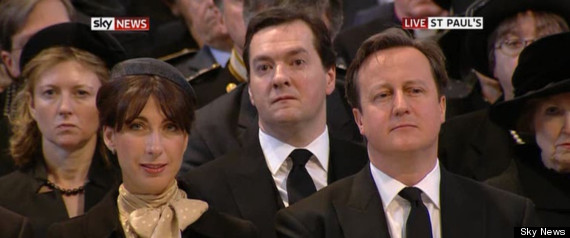
Margaret Thatcher Funeral: Five Other Things Which Should Bring A Tear To Osborne's Eye

The big story of the day is that George Osborne has working tear ducts. The chancellor of the exchequer was caught on camera, at Margaret Thatcher's funeral on Wednesday morning, crying. He was clearly moved by the service at St Paul's and a great fan of the Iron Lady's.

Here are five other things that might make our lachrymose chancellor want to shed a few more tears.

Death of Margaret Thatcher reopens the debate over her legacy

The death of former Prime Minister Margaret Thatcher on April 8 has renewed an intense political debate in Britain and internationally over her legacy. For her ruling class sycophants, Thatcher was a heroine, “one of the greatest” prime ministers Britain ever had. While she is falsely credited with lifting Britain out of a lasting economic slump during the 1970s, she did succeed in imposing a drastic and lasting shift in the balance of social and economic wealth between rich and poor, very much to the detriment of the latter. She was prime minister from 1979 to 1990.

Margaret Thatcher—the mother of Canadian Conservatives

What will be on Stephen Harper’s mind as he flies to London for Margaret Thatcher’s funeral? What will the champion of feints and defts, a man who edits his speeches to take out the memorable bits, be thinking as he approaches the valediction of an Iron Lady?

The Canadian conservative movement has more than a few household gods, as befits a large and diverse group. The summer before he became prime minister, Stephen Harper told me the most exciting item on his vacation agenda was a meeting with Australian prime minister John Howard. When Kory Teneycke was Harper’s communications director he had a 1984 Ronald Reagan “Morning in America” campaign poster decorating his office. Jason Kenney actually helped chase Preston Manning out of politics, but you should see the look of affection on his face when he watches the Reform party founder speak today.

The Iron Lady: More nightmare than politics

Both as a movie buff and a veteran leftie, I've been waiting to see The Iron Lady so I could write about it. I even re-read Thatcher's memoirs The Downing Street Years to refresh my memory.

Having now seen the movie, I have to admit that I'm perplexed as to what to say and advise, other than that you should definitely see it and make up your own mind.

Margaret Thatcher's destructive economic legacy

Admirers and detractors of Margaret Thatcher can agree that she will be remembered as one of the key political architects of our times. Along with her soulmate, U.S. President Ronald Reagan, she broke decisively with the post-war Keynesian welfare state and ushered in the still-enduring age of neo-liberalism.

Lady Thatcher and her key advisers, such as Keith Joseph, were intellectually grounded in the work of the most prominent foe of John Maynard Keynes, Friedrich Hayek, and his American disciple, Milton Friedman. Her government explicitly set out to reverse the post-war growth in the economic and social role of democratic government, and to thereby restore business profitability and "confidence."

Tuesday, April 16, 2013

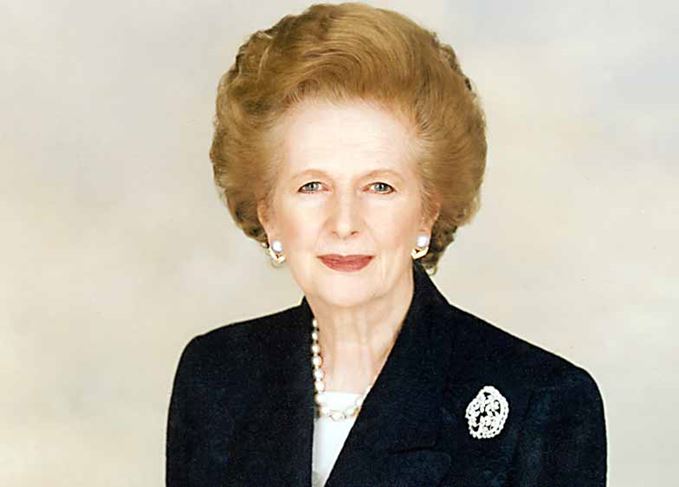
The Thatcherist

By the dismal end of the nineteen-seventies, a series of oil shocks had sent the economies of most of the world’s developed democracies into a tailspin. Their publics were not pleased. In country after country, voters voted out the ins and voted in the outs. Ideology didn’t seem to matter. In France, Spain, Sweden, and Greece, governing parties of the right and the center right were shown the door. In West Germany (as it still was), the Netherlands, Portugal, and, of course, the United States, it was incumbents of the left and the center left who got the hook.

An early beneficiary of this political turbulence was Margaret Thatcher, the leader of Britain’s Conservative Party, who swept to power in the general election of May 3, 1979, following the so-called Winter of Discontent. Her rise was as improbable as it was inexorable. In a party of reflexive male chauvinists, she was a woman. In a party traditionally dominated by landed aristocrats, rich industrialists, and upper-class twits of every stripe, she was a product of the striving middle class. Her predecessor as party leader and Tory Prime Minister, Edward Heath, had been indelibly dubbed “the Grocer” by the satirical magazine Private Eye. Though cruelly aimed at Heath’s status anxieties, the Eye’s gibe was rooted in his stint negotiating food prices in Brussels. Margaret Thatcher, however, was the actual daughter of an actual grocer, and proud of it. Finally, in a party riddled with “wets” who had accommodated themselves to Labour’s postwar welfare state, she was a doctrinaire free-market fundamentalist, a radical believer in the individualism of the successful, a despiser of “society” (“there is no such thing”) and social solidarity—a visionary, even a kind of revolutionary, and in temperament anything but conservative.
Monday, April 15, 2013

Margaret Thatcher, Kathleen Wynne, Alison Redford and the politics of conviction

This week saw the passing of former British Prime Minister Margaret Thatcher, one of the most influential politicians of the 20th century and probably the greatest female political leader of modern times. It is a truism that Thatcher led a revolution in the U.K. and beyond, one of the hallmarks of which was the notion that cutting taxes should be a central goal of modern government. Thatcherism, as it came to be called, in conjunction with Reaganism, its brother doctrine in the U.S., held that tax cuts were the cure to most of the economic and social ills that afflicted western democracies in the 1970s and 1980s.

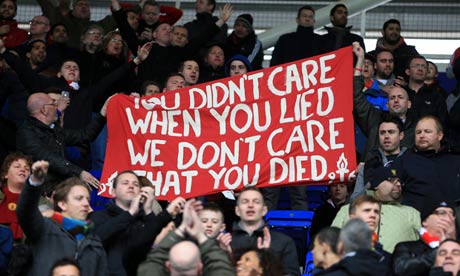
John Prescott, Bob Crow And Bishop Of Grantham Attack Thatcher's £10M Funeral

Labour's former deputy prime minister John Prescott has launched a blistering attack on the £10m cost of Margaret Thatcher's funeral.

Writing in his column in the Sunday Mirror, Lord Prescott said the ceremonial funeral at St Paul's Cathedral on Wednesday was simply a "political propaganda exercise" for the Tory Party.

"I despised everything she stood for. She may have been a woman, but in her policies she showed no compassion to the sick, needy and the desperate," he wrote.

Wicked Witch war of words: 'Has Thatcher bashing crossed a line?' Well, er… no!

Oh my -- quelle horreur! -- naughty Britons still appalled by the depredations visited upon their country by Margaret Thatcher's government have shocked and appalled the world by pushing "Ding Dong! The Witch is Dead!" to the top of the charts.

In case you missed it, the former British prime minister, who was in office from 1979 to 1990, died on Monday at 87. But it took until yesterday for the song from the Wizard of Oz -- an apt metaphor itself for the operational side of neocon governments everywhere -- to mischievously reach No. 1 on the British Broadcasting Corp.'s weekly music chart.

Don't upset Margaret Thatcher mourners, police warn protesters

Protesters could be arrested for "alarming or distressing" mourners at the funeral of Lady Thatcher, a police chief in charge of security at the event has warned.

Commander Christine Jones, who oversaw the wedding of Prince William to Kate Middleton, warned that officers had power under the controversial section 5 of the Public Order Act to step in if non-violent action was the cause of "harassment, alarm or distress" as Thatcher's coffin makes its way through London to St Paul's Cathedral.

Saturday, April 13, 2013

Margaret Thatcher Protest Planned For Trafalgar Square, Miners, Anarchists To Attend

A party celebrating Margaret Thatcher's death - first organised nine years ago - could see hundreds of ex-miners, activists and anarchists descend on Trafalgar Square this Saturday.

The party was first touted in 2004 by long-defunct anarchist organisation Class War, on the site IndyMedia, but has been spread around social networks since Thatcher's death on Monday.

It will take place at the scene of the 1990 Poll Tax riots, in central London.

Thursday, April 11, 2013

Glenda Jackson's attack on ex-Prime Minister's record during Parliament 'tribute' session

Veteran Labour MP Glenda Jackson ripped in to Margaret Thatcher’s record as Prime Minister during today's Commons debate.

She said the former Prime Minister had wrecked vast swathes of the country.

The Oscar-winning actress, loudly jeered by Tory MPs, said: “When I made my maiden speech a little over two decades ago, Margaret Thatcher had been elevated to the other place but Thatcherism was still wreaking, as it had wreaked for the previous decade - the most heinous, social, economic and spiritual damage upon this country, upon my constituency and my constituents.

Bob Crow Says Margaret Thatcher Can 'Rot In Hell'

Union leader Bob Crow has said Margaret Thatcher can "rot in hell" for what she did to the country during her time as prime minister.

Crow, the general secretary of the RMT union, told BBC Radio London on Wednesday evening that Thatcher
"created an ideological argument to attack working people" during her time in office and that there were "loads of loads of people who lost their houses, jobs and committed suicide because of what she did".

Brixton Riots 1981 Anniversary: Does Margaret Thatcher's Legacy Still Live On?

Thirty-two years ago today, protesters and police clashed violently on the streets of Brixton, South London, in a confrontation that injured 325 people and left 30 buildings gutted by flames.

To the largely Afro-Caribbean demonstrators it was a "show of strength" against police brutality, high unemployment and institutionalised racism.

To Margaret Thatcher this notion was ridiculous. The acts were simply "criminal".

Wednesday, April 10, 2013

Neruda, Pinochet, and the Iron Lady

It’s curious, historically speaking, that Margaret Thatcher died on the same day that forensic specialists, in Chile, exhumed the remains of the late, great Chilean poet Pablo Neruda. The author of the epic “Twenty Love Poems and a Song of Despair” and the winner of the 1971 Nobel Prize in Literature, Neruda died at the age of sixty-nine, supposedly of prostate cancer, just twelve days after the violent September 11, 1973, military coup launched by army chief Augusto Pinochet against the country’s elected Socialist President, Salvador Allende. Warplanes had strafed the Presidential palace, and Allende had bravely held out, but committed suicide with a rifle given to him by Cuba’s President Fidel Castro as Pinochet’s goons stormed into the Presidential palace. Neruda was a close friend and supporter of Allende’s; he was ill, but in the midst of planning to leave the country for Mexico, where he had been invited to go into exile. When he was on his deathbed in a clinic, his home had been broken into by soldiers and trashed.