Democracy Gone Astray

Democracy, being a human construct, needs to be thought of as directionality rather than an object. As such, to understand it requires not so much a description of existing structures and/or other related phenomena but a declaration of intentionality.
This blog aims at creating labeled lists of published infringements of such intentionality, of points in time where democracy strays from its intended directionality. In addition to outright infringements, this blog also collects important contemporary information and/or discussions that impact our socio-political landscape.

All the posts here were published in the electronic media – main-stream as well as fringe, and maintain links to the original texts.

[NOTE: Due to changes I haven't caught on time in the blogging software, all of the 'Original Article' links were nullified between September 11, 2012 and December 11, 2012. My apologies.]

Showing posts with label Mary Cassatt. Show all posts

Wednesday, June 12, 2013

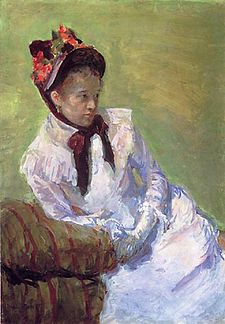
Transient States: On Mary Cassatt

Mary Cassatt could have been a character in a Henry James novel: the spirited young American woman who goes to Europe seeking her destiny. In 1979, Adelyn Dohme Breeskin, who compiled the catalogues raisonnĂ©s of Cassatt’s work, evoked the artist’s background in suitably Jamesian tones, conjuring for her readers “that legendary period when art had as yet no firm foothold in this country, when artists were set apart as strange eccentrics, and even the thought of a woman artist was considered preposterous.” That period may be more of a legend than Breeskin presumes: Cassatt was neither the only female student in her time at the Pennsylvania Academy of the Fine Arts, nor the sole woman among the thousands of aspiring American artists trooping to Paris in those days to pursue their studies. But still, her father’s first response to her plan to go abroad was one that would have required a far less artful novelist than James to imagine: “I would almost rather see you dead.”