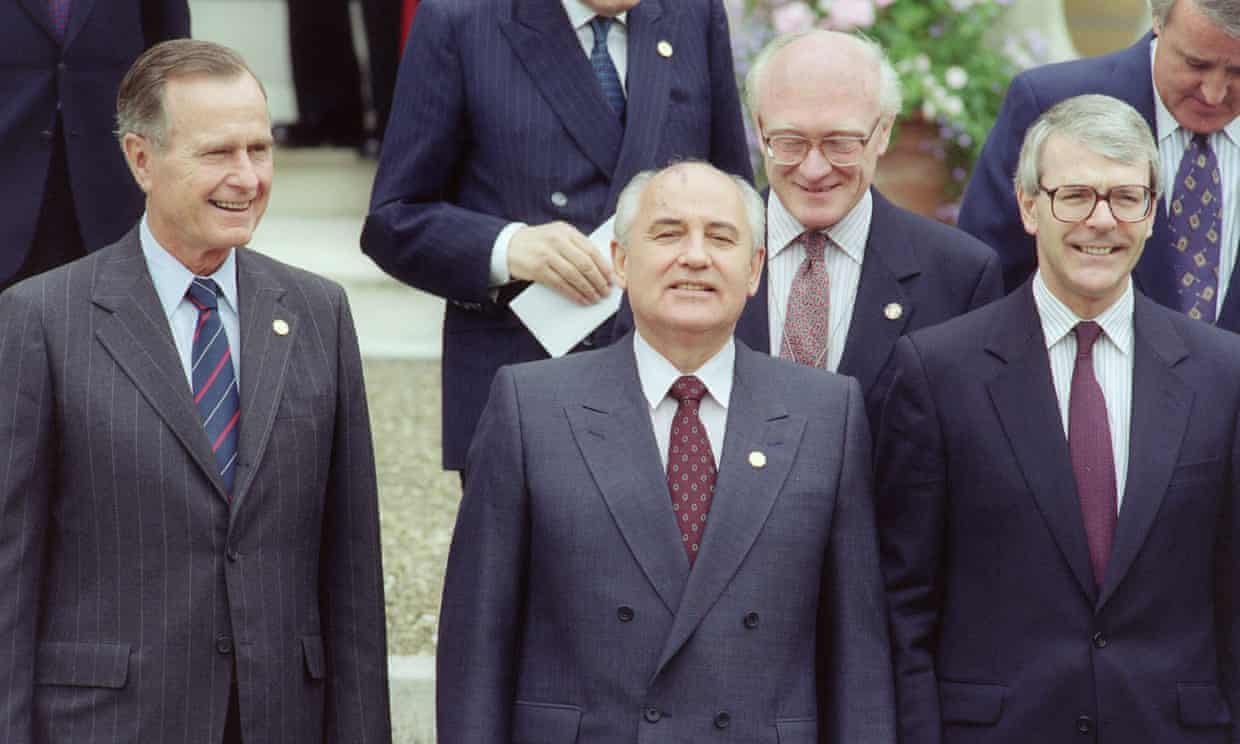
Long before Vladimir Putin came to power in 2000, the stage was set for Russia’s current confrontation with the west by the failure to achieve a transformed and inclusive peace order after the collapse of the Soviet Union.
Two incompatible narratives came into conflict after the Eastern Bloc began to crumble in 1989. For the west, nothing needed to change. The Atlantic community had effectively won the cold war, demonstrating the superiority of the western order, and thus all that was required was for Russia to join the expanded western community. The door was indeed opened, but the terms were not right. Boris Yeltsin made this clear, in an incoherent and contradictory manner. Putin ultimately made the same point, rather more forcefully. The west invited Russia to join an expanded Atlantic community, but Russia sought to join a transformed west and a reconfigured Europe, goals that remain active to this day.
