Democracy Gone Astray

Democracy, being a human construct, needs to be thought of as directionality rather than an object. As such, to understand it requires not so much a description of existing structures and/or other related phenomena but a declaration of intentionality.
This blog aims at creating labeled lists of published infringements of such intentionality, of points in time where democracy strays from its intended directionality. In addition to outright infringements, this blog also collects important contemporary information and/or discussions that impact our socio-political landscape.

All the posts here were published in the electronic media – main-stream as well as fringe, and maintain links to the original texts.

[NOTE: Due to changes I haven't caught on time in the blogging software, all of the 'Original Article' links were nullified between September 11, 2012 and December 11, 2012. My apologies.]

Showing posts with label Politics. Show all posts

Tuesday, July 31, 2018

Jacob Rees-Mogg met Steve Bannon to discuss US-UK politics

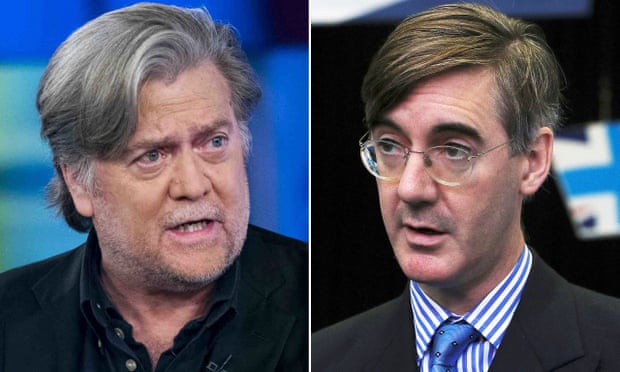
Jacob Rees-Mogg had a private meeting with former Donald Trump adviser Steve Bannon in London on Thursday to talk about how conservative movements can win in the US and UK, the Guardian has learned.

Rees-Mogg, a favourite among Conservative members to be the next party leader, spent more than an hour at the meeting in a Mayfair hotel with Bannon, who was at one point seen as Trump’s most influential adviser.

Thursday, March 17, 2016

What I learned from my foray into politics: McQuaig

The most memorable moment of the 2015 federal election may be the release of a surveillance video capturing a candidate urinating into a stranger’s coffee cup.

That episode comes to mind, oddly, as I think of what I learned during my recent two-year foray into electoral politics.

The coffee cup incident was part of what became a common theme in that campaign — the “outing” of candidates who said or did anything that deviated even slightly from the party’s image or messaging.

Tuesday, September 15, 2015

What's Powering The Revolving Door?

Is it our fault?

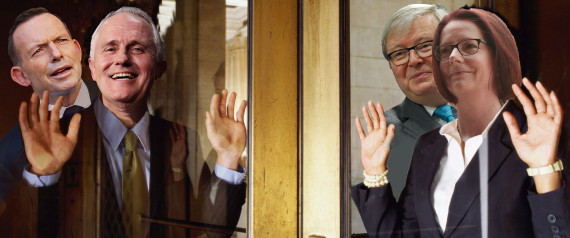
An understandably shattered Tony Abbott this afternoon served up his own analysis of the political climate which has landed us with our fifth Prime Minister in five years.

Sunday, September 13, 2015

9/11: What Didn't Change -- The attacks altered the world—but not our politics

It changed everything.

That's the mantra that emerged from the horrific attacks of September 11, 2001. In certain areas of our collective lives, it was an accurate description. Security concerns increased. The United States went to war in two far-away lands. It engaged in brutal practices that amounted to torture and opened secret prisons and the ever-controversial Guantanamo facility. Ugly barriers went up around public facilities. Navigating airports became a new kind of nightmare.

Wednesday, June 24, 2015

Libertarian? You Belong on the Left

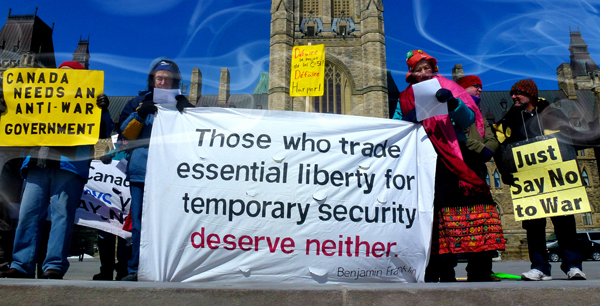
A few dozen freedom-loving libertarians expressed their ''principled'' opposition to Prime Minister Stephen Harper's Anti-Terrorism Act this week. As the Senate's final vote on Bill C-51 is delayed to Tuesday, many are sounding off on Harper's fractured right-wing base.

Historically, libertarians have found themselves lumped in with the far right, presumably because the far right says it doesn't like big government and neither do libertarians. Hey, libertarians just want to do their own thing and be left alone. Isn't that what the right wing wants too?

Monday, March 30, 2015

Toolkit for Change: How Messages Can Mobilize

In 1979, Margaret Thatcher swept to power in an election that gave her British Conservative Party the first of four consecutive majority governments, relegating rival Labour to 18 years in opposition.

Powering her campaign was a three-word slogan that one cabinet minister would credit for the landmark victory. Developed by the ad agency Saatchi & Saatchi, it appeared on a poster in bold, upper-case type above a long, snaking queue outside an unemployment office: "Labour isn't working."

Few key messages are as momentous, or fuelled by as much money and influence, as that slogan. (Thatcher's aggressive foreign policy reinforced Britain's special relationship with the United States and her legislation, trumpeting "law and order" and smaller government, tore down the edifice of the post-war welfare state -- inspiring right-leaning governments to this day, including ours.) But well-crafted messages of many kinds have the power to cut through the noise and mobilize target audiences -- as the most effective agents of social change (progressive and regressive) know.
Wednesday, November 26, 2014

Misconceptions of Political Islam

As soon as the Tunisian elections results were announced with Nidaa Tounes overtaking Ennahdha party, celebrations of the "Islamists'" defeat at the hands of the "secularists" got underway across the media in France and many other western capitals. The historical context of a country in the aftermath of a revolution, its socio-political circumstances and complex regional conditions was banished from the narrative. Between cliches of bad "Islamists" "defeated" by good "secularists" and jubilant resurrections of old prophesies of the "failure of political Islam," the contest was portrayed as a battle of ideologies and world views.

Tuesday, September 09, 2014

Driving American Politics Underground

Politics, if we take politics to mean the shaping and discussion of issues, concerns and laws that foster the common good, is no longer the business of our traditional political institutions. These institutions, including the two major political parties, the courts and the press, are not democratic. They are used to crush any vestiges of civic life that calls, as a traditional democracy does, on its citizens to share among all its members the benefits, sacrifices and risks of a nation. They offer only the facade of politics, along with elaborate, choreographed spectacles filled with skillfully manufactured emotion and devoid of real political content. We have devolved into what Alexis de Tocqueville feared—“democratic despotism.”

Thursday, August 21, 2014

Alberta's 'rogue politics' and 'rogue' politicians

Is Alison Redford a rogue politician or does she belong to a rogue party?
A rogue is a dishonest or unprincipled man (or woman), a scoundrel, villain, miscreant, reprobate, good-for-nothing, ne're-do-well, wretch, louse, crook.
The word "rogue" entered the lexicon of Alberta politics after Auditor General Merwan Saher reviewed Alison Redford's use of government aircraft and found that somebody booked "false passengers" onto government flights in order to block seats and then unbooked them so that Ms. Redford and her entourage could have the plane all to themselves. This is almost as spooky as that episode of Sherlock Holmes where the government packed a plane with dead people who would be blown up in order to avoid revealing that the government had cracked a terrorist code.

Wednesday, May 28, 2014

Stephen Harper’s siege mentality rooted in Alberta politics

Stephen Harper’s political style — combative, suspicious and isolated — has been compared to Richard Nixon’s way of doing politics or the U.S. Tea Party’s relentless anger about everything.
But if you have lived in Alberta for any length of time, there’s something about Harper’s style that is quite familiar and rooted much closer to home.

Friday, March 14, 2014

Apathy is Boring Engages the Rage

The first sound to crystallize over the crunching snow was the drums. Thrum, thrum, thrum -- just a hair faster than a heartbeat. As the crowd advanced, the singing began. A break opened in the line of heads held high -- two small boys at the front of the procession, proudly pounding their instruments. The banners brushed the bottom of the traffic lights and, standing shoulder-to-shoulder, the crowd stretched the width of the street. This was Dec. 15, 2012, in North Battleford, Sask. Here, as in so many other places around the country, Indigenous peoples had gathered to lend their voices to the Idle No More movement.

Tuesday, March 11, 2014

Why Does the US Still Have So Few Women in Office?

With Hillary Clinton the early front-runner in the 2016 Democratic primary, the United States may join the UK, Germany, Brazil and Argentina as democracies that have had a woman as their top leader. Yet the alarming reality is that American women are still vastly underrepresented in elected offices all across the nation. Remember the “Year of the Woman” in 1992? Two decades later women still hold less than 20 percent of congressional seats, despite composing a majority of the US population.

Friday, January 31, 2014

PC-Wildrose provincial feud ‘a big deal’ in federal Tory nomination races

As Rob Anders faces a new battle to carry the Tory flag in Calgary’s west end, the controversial Conservative MP says there’s an X factor in the race: provincial politics.

Anders — who has characterized himself as a true conservative beset by “Red Tories” — said his vocal support for the Wildrose party, along with his past jousting with Premier Alison Redford, has made him a target for provincial Progressive Conservatives.

Tuesday, December 17, 2013

Rob Ford emblematic of the dark place where our politics are headed

If there is one thing on which Rob Ford and his worst critics on the left agree, it is that the unrelenting opposition he has aroused, while nominally directed at the phenomenal string of missteps and misdeeds he has committed in office, is really about his conservatism.

The mayor of Toronto is fond of dismissing opponents as downtown snobs, well-heeled beneficiaries of the “gravy train” driven mainly by a desire to stop him from saving the taxpayer’s money. And his critics — some of them — reply with something of the same argument.

Saturday, December 14, 2013

There’s no shame in politics, and that’s the problem

The greatest threat confronting Canadian politics is not the concentration of power in the Prime Minister’s Office. Nor the suffocating clutch of party discipline around backbench MPs. These are consequences of a deeper rot. A crisis of character. A crisis that should be properly identified as the deliberate and gradual extinction of shame from our politics.

Shame, more than any other attribute, is vital to the proper functioning of the democratic process. Shame, to paraphrase Gordon Gekko, is right. It works. Shame is disciplining and correcting. It charts the boundaries of permissible discourse. It defines the limits of fit public conduct. Shame is the guarantor of honest, if not always polite, debate. And while to some shame may seem a quaint, even anachronistic notion, it remains of critical practical importance to contemporary politics. Because the absence of shame steadily corrodes confidence in our democratic leaders and institutions. In extreme circumstances it even leads to outright paralysis.

Our Greatest Political Novelist?

Sometime in the past couple of generations, capitalism’s victory over our hearts and minds seems to have become complete, in that hardly anyone even notices it anymore. It’s a monoculture, taken for granted, like monogamy, or monotheism, or having one sun. It’s hard to think of any “serious” literary writers in the United States under the age of fifty who engage the big political issues of our time as directly as Boomer authors like Paul Auster (“Leviathan”), Thomas Pynchon (“Vineland”), or Robert Stone (“A Flag for Sunrise”), let alone in the way that muckraker novelists like Upton Sinclair used to. When we call literary writers “political” today, we’re usually talking about identity politics. If historians or critics fifty years from now were to read most of our contemporary literary fiction, they might well infer that our main societal problems were issues with our parents, bad relationships, and death. If they were looking for any indication that we were even dimly aware of the burgeoning global conflict between democracy and capitalism, or of the abyssal catastrophe our civilization was just beginning to spill over the brink of, they might need to turn to books that have that embarrassing little Saturn-and-spaceship sticker on the spine. That is, to science fiction.

Tuesday, November 12, 2013

Moving Beyond Our Obsession with Stephen Harper

Remember Brian Mulroney, the PM so many people loved to hate?  We need to remember him so we can learn a lesson from that period in our political history: there is a real danger in demonizing prime ministers to the exclusion of other longer term political objectives. Mulroney's unctuous manner, his arrogance and his shameless toadying to the U.S. and to corporate CEOs made some people crazed with anger at the man.

In the end, however, the corporate interests that Mulroney served so loyally could hardly have asked for a better outcome. Progressives, in particular, were so bent out of shape about the man that they forgot that once he was gone (they all go eventually) there would be someone else whose job it was to serve the same corporate interests. Those progressives actually forgot two things:

Monday, October 07, 2013

The future of political comms: Less is seldom more

Over in the UK about a week ago, a small story appeared in a public relations trade magazine: Alex Aiken, executive director of UK government communications, told a crowd at the Public Relations Consultants Association that the days of the press release are done. “If you are writing more than 200 words on any subject, you’re probably in the wrong place,” PRWeek quoted him as saying.

By way of example, Aiken pointed to the Department for Environment, Food and Rural Affairs, which apparently sent out some 350 tweets during the UK’s annual badger cull, but only issued one press release. That, he said, pointed to the future of government communications. “This is the end of the big budget advertising and marketing campaigns,” Aiken reportedly told the crowd.

Tuesday, September 24, 2013

Women politicians and the search for trust in politics

It may not have occurred to you, but 85 per cent of Canadians now have a woman as premier. Only five smaller provinces -- the three Maritimes plus Manitoba and Saskatchewan -- don't.

I hadn't thought too much about why this would be until one night, while watching the news, Alberta's Alison Redford and Ontario's Kathleen Wynne came on one after the other. Instead of feeling prickly and grumpy regarding whatever the issue was, as would likely have been the case had it been their predecessors, Ed Stelmach and Dalton McGuinty, I found myself inexplicably relaxed and even charmed, and saying to myself: Why can't we have one of those here?

Wednesday, September 04, 2013

Failed Amendment Would Have Put War To National Vote, Forced Those Who Voted 'Yes' To Enlist

With congressional lawmakers and the rest of the nation buzzing about potential military intervention in Syria, a nearly century-old failed constitutional amendment resurfaced on Reddit Tuesday, sparking debate about a dramatic restructuring of the power to declare war.

In 1916, with World War I looming for the United States, a group of Nebraska residents gathered petition signatures and sent a constitutional amendment to Congress that would have enacted a national referendum before lawmakers could declare war. On top of the national vote, anyone who cast a ballot in favor of war would have been required to register as a volunteer for service in the United States Army.