Democracy Gone Astray

Democracy, being a human construct, needs to be thought of as directionality rather than an object. As such, to understand it requires not so much a description of existing structures and/or other related phenomena but a declaration of intentionality.
This blog aims at creating labeled lists of published infringements of such intentionality, of points in time where democracy strays from its intended directionality. In addition to outright infringements, this blog also collects important contemporary information and/or discussions that impact our socio-political landscape.

All the posts here were published in the electronic media – main-stream as well as fringe, and maintain links to the original texts.

[NOTE: Due to changes I haven't caught on time in the blogging software, all of the 'Original Article' links were nullified between September 11, 2012 and December 11, 2012. My apologies.]

Showing posts with label Prisons. Show all posts

Friday, September 22, 2023

Mass Surveillance System Flags Uighurs For Detention Camps

The watch towers, double-locked doors and video surveillance in the Chinese camps are there “to prevent escapes.” Uighurs and other minorities held inside are scored on how well they speak the dominant Mandarin language and follow strict rules on everything down to bathing and using the toilet, scores that determine if they can leave.

“Manner education” is mandatory, but “vocational skills improvement” is offered only after a year in the camps.

Voluntary job training is the reason the Chinese government has given for detaining more than a million ethnic minorities, most of them Muslims. But a classified blueprint leaked to a consortium of news organizations shows the camps are instead precisely what former detainees have described: Forced ideological and behavioral re-education centers run in secret.

'Allow no escapes': leak exposes reality of China's vast prison camp network

The internal workings of a vast chain of Chinese internment camps used to detain at least a million people from the nation’s Muslim minorities are laid out in leaked Communist Party documents published on Sunday.

The China Cables, a cache of classified government papers, appear to provide the first official glimpse into the structure, daily life and ideological framework behind centres in north-western Xinjiang region that have provoked international condemnation.

Friday, September 15, 2023

Incarcerated Workers Demand Better Conditions in Nationwide Strike


This past Labor Day gave us ample opportunity to consider workers' rights and what policies can be implemented to bridge the inequality between workers and their bosses and make working life better. Yet, there's a group of workers who are generally left out of this conversation: prisoners across the country, and they've been on strike the past three weeks to make their demands heard.

Prisoners in more than a dozen states have participated in the strike, which began August 21 and is set to end September 9. The most obvious

Thursday, September 14, 2023

US Prisoners’ Strike Is Reminder of How Commonplace Inmate Labor Is – And That It Might Be Illegal


Prisoners in 17 U.S. states went on strike on Aug. 21 by refusing to eat or work to call attention to a number of troubling issues, including dilapidated facilities, harsh sentences and other aspects of mass incarceration in America.

As we approach Labor Day, the strike places a spotlight on the questionable practice of putting prisoners to work for very low or no wages. Examples of what incarcerated people do or have done include answering customer service phone calls, fighting wildfires, packaging Starbucks coffee and producing consumer goods such as lingerie.

Sunday, August 05, 2018

Not Even the Supreme Court Can Get This 71-Year-Old Man Out of Prison

In January 2016, the Supreme Court ruled that Henry Montgomery’s life prison sentence was unconstitutional and that he had the right to seek release from Louisiana’s most notorious prison, Angola. But two years later, the 71-year-old Montgomery is still there.

A Baton Rouge jury convicted Montgomery of murder and sentenced him to life in prison for shooting a deputy sheriff, Charles Hurt, in 1963, when he had just turned 17. In 2012, the Supreme Court ruled in Miller v. Alabama that such mandatory life-without-parole sentences for juveniles were unconstitutional. Montgomery petitioned the court with the help of a jailhouse lawyer, asking it to apply the Miller decision retroactively to people who’d received such sentences before 2012. The court ruled in his favor.

Wednesday, July 12, 2017

What's Hidden Behind the Walls of US Prisons

Few Americans fully appreciate just how many of their fellow citizens are ensnared in the criminal justice system.

Some may have heard that there are about 2.3 million people behind bars, but that figure tells only part of the story. Yes, in a stunning array of 1,719 state prisons, 102 federal prisons, 901 juvenile correctional facilities, 3,163 local jails and 76 Indian Country jails, as well as in military prisons, immigration detention facilities, civil commitment centers and prisons in the US territories, we physically contain more human beings than any other country in the world. In addition to those actually locked up, there are another 840,000 Americans being supervised on parole and an additional 3.7 million people being monitored on probation.

Thursday, July 06, 2017

US accuses Syria of carrying out mass killings of thousands of prisoners

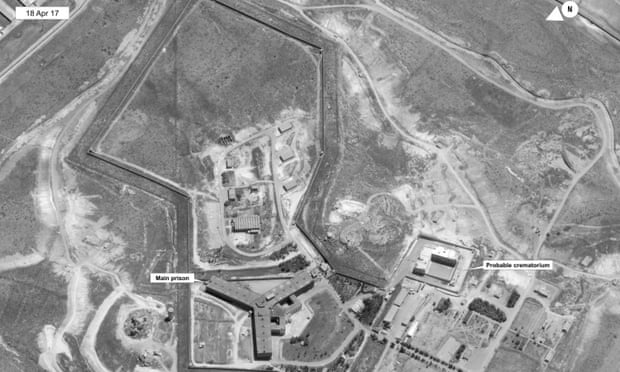
The US has accused the Syrian regime of building a crematorium to cover up the mass killings of detainees in a military prison outside Damascus.

The Department of State distributed photos on Monday of a large building it said had been adapted for the large-scale burning of bodies at Saydnaya military prison, 45 minutes’ drive from the Syrian capital, where it said that up to 50 detainees are hanged in mass executions on a daily basis.

Wednesday, December 28, 2016

The price we pay for punishment

Like so many topics in this age of information overload, crime and punishment have been reduced to entertainment. It ends with a familiar result: We are amused but not necessarily informed.

Huge audiences watch The Hunt on CNN with John Walsh, the successor to America’s Most Wanted, his previous show which ran for 24 years. Viewers avidly consume hits of the docudrama series Forensic Files, which has been on the air since 1996. The struggle it presents between the good guys and the very, very bad guys has been seen in 142 countries and has spawned popular series such as CSI, which itself ran for 15 years, from 2000 to 2015. The series Cops follows police officers on the beat in pursuit of felons and has also enjoyed strong audiences since 1989.

Tuesday, December 27, 2016

Prison reform gone wrong

It is getting to be a real crime.

All is not well in Canada’s prison system and Public Safety minister Ralph Goodale, charged with making it better, is working against the clock.

In fact, a fuse is hissing and smoking away in both our federal and provincial jails, unnoticed for the most part by Canadians. It is getting harder and harder to ignore.

Monday, January 25, 2016

Prison Watchdog Says More Than A Quarter Of Federal Inmates Are Aboriginal People

For the first time, more than a quarter of inmates in Canadian prisons are aboriginal people.

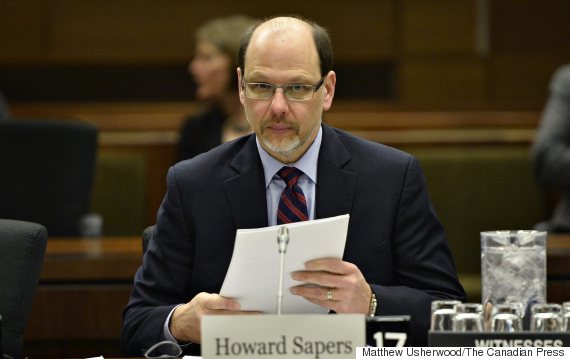
"The most current figure we have is quite shocking," said Correctional Investigator of Canada Howard Sapers, the country's prison ombudsman.

"In federal corrections, 25.4 per cent of the incarcerated population are now of aboriginal ancestry."

Saturday, October 31, 2015

What Happens When Old Prisons Are Given Back to Their Communities?

Sharon Richardson remembers looking out the window of Bayview Correctional Facility, the sole women’s prison within New York’s five boroughs. “I could see the ships coming in and I wondered, ‘When is my ship coming in?’”

Saturday, October 24, 2015

Prisoners' Families Organize to Resist Incarceration and Its Costs

For the past 27 years, Patricia Vickers has felt the cost of her son's life sentence. He spent six years incarcerated in Greene County, Pennsylvania, nearly 330 miles from Philadelphia where Vickers lives. She visited him every other month. Each visit cost her several hundred dollars.

"It was $20 or $25 for gas each way," she told Truthout. She often received speeding tickets as she raced to get to the prison before it began its 11:30 am count, in which staff members count every prisoner to ensure that no one is missing. If she arrived even two minutes late, she was forced to wait until 1 pm for her visit. So Vickers sped down the highways, reducing the 7.5-hour drive to six hours. Nearly every time, she was pulled over and issued a $110 speeding ticket.

Monday, October 05, 2015

How Global Warming Makes Overcrowded Prisons Even More Dangerous

There is no population more captive to the effects of global warming than the incarcerated. And given the huge concentration of black and Latino prisoners in America, this is a classic case of environmental injustice, as these consequences fall widely on prisoners of color. A new study from Daniel W. E. Holt of the Columbia Law School's Sabin Center for Climate Change Law explains over 144 pages what the climate-change toll truly is on the two-million-plus bodies caged in our prison system.

Sunday, September 13, 2015

Transphobia at the Intersection of the Military and Prison Industrial Complexes

My home - or, at least my place of residence for the time being - is the US Disciplinary Barracks, the United States' crown jewel military prison. Being both a military institution and a prison, it lies in a unique, though not necessarily uncommon, intersection of two of the world's largest institutional ecosystems: the military-industrial complex and the prison industrial complex.

My status as a trans woman in a military prison places me in the unique position in which the extraordinary administration, regulation, surveillance and policing of gender norms, expectations, vices and virtues clash with my most fundamental understanding of my identity and how I intend to express myself as a female. For instance, although I am now being allowed to wear female undergarments, use cosmetics and take hormones, I am not allowed to grow my hair beyond the two inches authorized by the military.

Thursday, August 27, 2015

Prison Education Reduces Recidivism by Over 40 Percent. Why Aren’t We Funding More of It?

Prison isn’t the most intellectually stimulating environment, but the dimmest corners of the criminal justice system may actually be a perfect place to liberate an otherwise wasted mind. A new initiative by the White House to issue Pell Grants to incarcerated students is about to test just how truly corrective our so-called corrections system can be.

The plan to extend Pell Grant access in prisons is described as a “limited pilot program” authorized through a federal financial aid waiver program under the Higher Education Act. Incarcerated adults could apply for grants of up to $5,775 for tuition and related expenses, at college-level programs offered in prison facilities nationwide. Designed to allow for studying long-term effects of education on recidivism, the program moves toward restoring access to Pell Grants for incarcerated people, which Congress removed in the mid-1990s.

Friday, August 21, 2015

Chicago police detained thousands of black Americans at interrogation facility

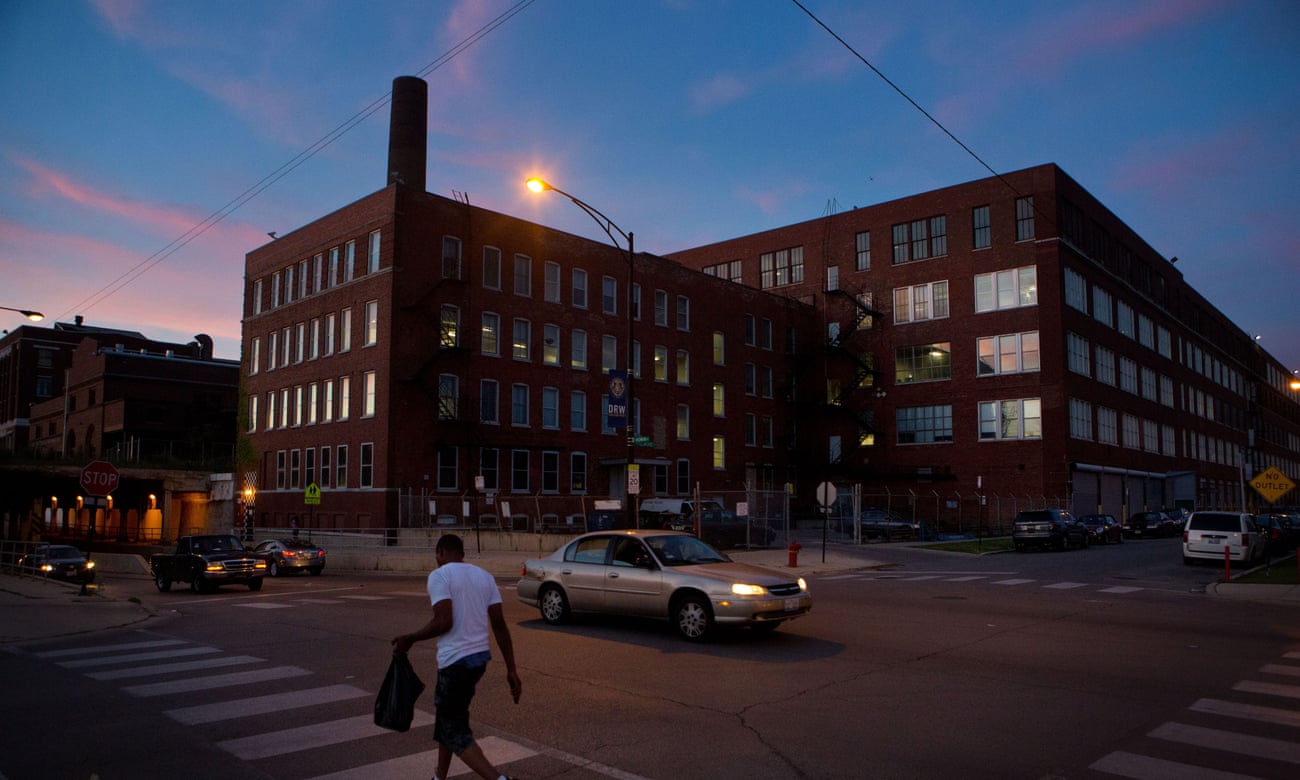
At least 3,500 Americans have been detained inside a Chicago police warehouse described by some of its arrestees as a secretive interrogation facility, newly uncovered records reveal.

Of the thousands held in the facility known as Homan Square over a decade, 82% were black. Only three received documented visits from an attorney, according to a cache of documents obtained when the Guardian sued the police.

Prison Dramatically Reduces Inmate Misconduct With Reward System

Michael McCall, a South Carolina Prison Warden, has transformed Lee Correctional Institution from the state's most dangerous corrections facility into a rehabilitation site. When violence at the prison was at all-time high, McCall decided to implement an incentive program to reward inmates for good behavior rather than cracking down with hard disciplinary measures.

McCall created the Better Living Incentive Community in 2012, a residence hall where inmates with a clean record can apply to live. The BLC living environment has more lenient security than the rest of the prison as well as other benefits, such as an education program -- residents can take music classes, art lessons, or study beekeeping or barbering. Inmates can even take part in "Healing Species," a compassion-education program in which prisoners work with rescue dogs. But the programs aren't just for recreation; rather, the purpose is to educate and enrich the lives of these incarcerated men.

Thursday, July 30, 2015

Anna Deavere Smith Gives a Crash Course in the School-to-Prison Pipeline

In her latest solo show, “Notes From the Field: Doing Time in Education, the California Chapter” at the Berkeley Repertory Theatre through Aug. 2, Anna Deavere Smith looks at the “school-to-prison pipeline.” The term refers to how kids—mostly poor and nonwhite—are being pushed out of school into the criminal justice system through such means as expulsions or suspensions for minor infractions, more police presence in schools, and school-based arrests.

Monday, July 27, 2015

Lockdowns soaring in Ontario jails due to staff shortages

There were 900 lockdowns in Ontario’s provincial jails due to staff shortages last year, a figure that has more than tripled since 2009.

The full and partial lockdowns, which can last a day or several days, were triggered by shortages of staff including correctional officers and managers.

There were 259 lockdowns in 2009.

Waiting to Die in Prison—for Selling a Couple of Bags of Pot

It's just after 9 p.m. near the corner of Fourth and Marshall, a poor part of Shreveport, Louisiana. A homeless man approaches a guy on the street and asks him what he's looking for. That guy, an undercover cop, says he wants "two dimes" and promises a $5 commission. And Fate Vincent Winslow, knowing that $5 buys a meal, if not a great one, agrees. Minutes after he returns carrying two crumpled bags of marijuana, worth $10 each, he's in the backseat of a squad car. Three months later, Winslow is found guilty of selling a Schedule I Controlled Dangerous Substance. Another three months and the sentence lands: life imprisonment at hard labor with no chance for parole.