Democracy Gone Astray

Democracy, being a human construct, needs to be thought of as directionality rather than an object. As such, to understand it requires not so much a description of existing structures and/or other related phenomena but a declaration of intentionality.
This blog aims at creating labeled lists of published infringements of such intentionality, of points in time where democracy strays from its intended directionality. In addition to outright infringements, this blog also collects important contemporary information and/or discussions that impact our socio-political landscape.

All the posts here were published in the electronic media – main-stream as well as fringe, and maintain links to the original texts.

[NOTE: Due to changes I haven't caught on time in the blogging software, all of the 'Original Article' links were nullified between September 11, 2012 and December 11, 2012. My apologies.]

Showing posts with label Spy Agencies. Show all posts

Saturday, August 11, 2018

This is not your grandfather’s KGB

Looking at Russia’s competing spy services, their overlapping operations against the United States and their sometimes careless tradecraft, some CIA veterans are wondering if the Russian spooks actually want to get caught.

The truth is, President Vladimir Putin probably doesn’t mind that his intelligence activities are so blatant that they’re a subject of daily public debate. His goal isn’t to steal secrets but to destabilize America’s political system. The more people obsess about the swarms of Russian spies, the better, from Putin’s perspective.

Tuesday, June 23, 2015

Eyes on the Spies: Canadians Deserve Accountability

For anyone involved in the privacy debate, it's been a busy couple of years. Barely a week goes by without new revelations about the activities of the Canadian spy agency known as Communications Security Establishment (CSE), and its Five Eyes partners in the U.S., U.K., Australia and New Zealand.

In just the past few weeks, for example, we learned that the CSE actively exploited security holes in a popular mobile web browser. We also learned that the U.K. government passed quiet legislation granting Government Communications Headquarters (Britain's version of CSE) immunity for hacking into our computers and mobile phones. And we've seen the U.S. National Security Agency implicated in extensive spying on European citizens and private companies, in ways that go far beyond national security.

Monday, April 13, 2015

LOBBYISTS FOR SPIES APPOINTED TO OVERSEE SPYING

Who’s keeping watch of the National Security Agency? In Congress, the answer in more and more cases is that the job is going to former lobbyists for NSA contractors and other intelligence community insiders.
A wave of recent appointments has placed intelligence industry insiders into key Congressional roles overseeing intelligence gathering. The influx of insiders is particularly alarming because lawmakers in Washington are set to take up a series of sensitive surveillance and intelligence issues this year, from reform of the Patriot Act to far-reaching “information sharing” legislation.

Thursday, March 14, 2013

US plans to allow spy agencies to monitor every citizen’s finances – report

Washington is reportedly considering opening all US financial records to national intelligence agencies in order to prevent future crimes. Only the FBI has had unlimited access to such databases; other agencies had to file case-by-case requests.

The Obama administration is preparing legislation to enable the country’s numerous security and intelligence agencies to spy on the accounts of US citizens, Reuters has revealed. The scheme’s stated aim is to help to identify and track terrorist cells, expose money-laundering schemes, trace criminal syndicates and curb corruption.

Monday, December 03, 2012

Bourrie accuses Press Gallery of taking ‘easy out,’ allows Chinese news agency to keep Hill membership; Xinhua accuses Bourrie of ‘Cold War’ ideology

The Parliamentary Press Gallery executive has chosen “an easy out” by dropping an investigation into whether Chinese news agency Xinhua on the Hill is improperly using its gallery membership, says a veteran Hill freelance journalist who brought the issue to the gallery’s attention.

“They’ve chosen what they thought was an easy out and I think it’s going to come back to haunt them,” said journalist and press gallery member Mark Bourrie, who had a contract with Xinhua, but quit because he said he was concerned the agency was taking advantage of his Parliamentary press pass to gain access to events and spy on Chinese dissidents in Canada. He made his experience public in an article in a September edition of Ottawa Magazine.

Sunday, December 02, 2012

DIA sending hundreds more spies overseas

The Pentagon will send hundreds of additional spies overseas as part of an ambitious plan to assemble an espionage network that rivals the CIA in size, U.S. officials said.

The project is aimed at transforming the Defense Intelligence Agency, which has been dominated for the past decade by the demands of two wars, into a spy service focused on emerging threats and more closely aligned with the CIA and elite military commando units.

Thursday, November 29, 2012

McCain Calls Canada's Navy Spy Scandal 'A Sad Story'

U.S. Senator John McCain says people who work in high security positions should give up some of their civilian rights in light of Canada's recent international espionage scandal.

At Halifax International Security Forum some of the delegates from 50 countries reacted to the trial of Sub-Lt. Jeffrey Paul Delisle, the Canadian who pleaded guilty to selling military secrets to Russia in October.

Monday, October 15, 2012

Chinese spying in Canada? This is just the start

So is China a military threat, an economic threat and a political one, all wrapped up in one? Or are we just scared about barbarians at the gates?

At the very least, we feel threatened by China. The Russians are spying on us, as proved by the Jeffrey Delisle spy case. And China’s arrival as a superpower means its influence and its intelligence agencies will reach into every corner of the world. Canada’s government is already feeling the squeeze.

Saturday, October 13, 2012

Is Canada flexing its muscles in the spying world?

This fall, the iconic British spy movie character James Bond, inspired by author Ian Fleming's past as an officer in the Navy Intelligence, will celebrate his fiftieth anniversary.

Of course, James Bond's movies, beyond their obvious commercial intent and Hollywodian glamour, fitted extremely well in a political context of a cold war era where the "good guys" were represented by the Western/American cops and the "bad guys" were represented by the Eastern/Russian spies. Britain, as an ex-empire, developed a thorough expertise in the spying game. Regardless of the legitimacy of their acts, the agents of the Military Intelligence MI5 and MI6, who worked for "Her Majesty," built a strong reputation.

Wednesday, August 22, 2012

China’s state-run news agency being used to monitor critics in Canada: reporter

Mark Bourrie had just finished listening to the Dalai Lama speak at the Ottawa Civic Centre with his wife and daughter when he says his cellphone rang: It was his boss — the Ottawa bureau chief for the Chinese state-run news agency, Xinhua — asking Mr. Bourrie to take notes at the spiritual leader’s press conference and pin down what happened at the Dalai Lama’s private meeting with Prime Minister Stephen Harper earlier that April day.

On its face, the request was not an odd one. Mr. Bourrie, an award-winning Canadian journalist and author, had for two years worked as a full-time freelancer for the news agency and had covered the Dalai Lama’s speech at a convention the day before.

Tuesday, April 24, 2012

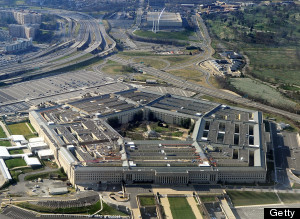
Pentagon sets up new spy agency to eavesdrop on a changing world

The Pentagon is to create a new spy service to focus on global strategic threats and the challenges posed by countries including Iran, North Korea and China. The move will bring to 17 the total number of intelligence organisations in the US.

The Defense Clandestine Service is supposed to work closely with its counterpart in the CIA, the National Clandestine Service, recruiting spies from the ranks of the Pentagon's Defense Intelligence Agency (DIA) and deploying them globally to boost the flow of intelligence on perceived long-term threats to US national interests.

US military news website Insidedefense said the defence department had asked Congress for authority for spies to work undercover posing as businessmen when conducting covert operations abroad.

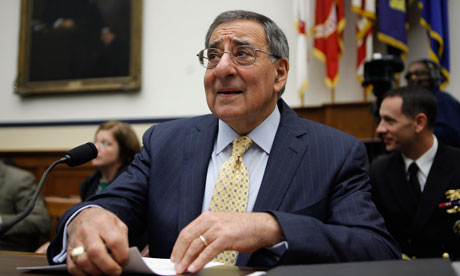
The move by the defence secretary, Leon Panetta, emerged in briefings to US journalists.

"You have to do global coverage," a senior defence official said, according to the Los Angeles Times. The new service would seek to "make sure officers are in the right locations to pursue those requirements", the Washington Post quoted the official as saying.

Wednesday, November 09, 2011

Canada’s spy watchdog’s questionable $200,000 deal

The head of Canada’s spy review board wired $200,000 in personal funds to a notorious international lobbyist in a questionable aid-for-infrastructure deal in Africa, the National Post has learned.

Arthur Porter, the federally appointed chairman of Canada’s Security and Intelligence Review Committee (SIRC), described in three interviews how he directed cash from a foreign bank account to Ari Ben-Menashe, a jet-setting, Montreal-based businessman who often acts as a middleman in negotiations between the Russian Federation and developing countries.

“This is a file that I’ve tried to put in the very back recesses of my mind,” Dr. Porter told the National Post, in response to his dealings with Mr. Ben-Menashe. “Maybe it was a hoax,” he added. “It was a little too skatey…. It was not traditional business as I understand it. It was a peculiar deal.”

And precarious business for a man in, as he says, “sensitive positions.” Dr. Porter was appointed to SIRC’s five-member committee by Canada’s Privy Council Office in 2008, on the recommendation of the Prime Minister’s Office. He was made its chairman last year. An oncologist and hospital administrator by profession, he is one of only two physicians ever to be appointed to SIRC’s committee, which historically has been dominated by former politicians.

Friday, October 28, 2011

CIA, Other Spy Agencies Spent $54.6 Billion In Secret For 2011

WASHINGTON -- Congress appropriated a whopping $54.6 billion for classified intelligence operations in 2011, an increase over the previous two years.

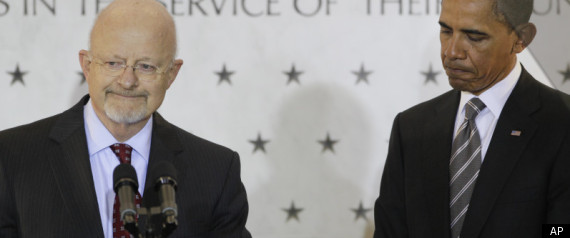
Director of National Intelligence James Clapper -- whose office was created after the 9/11 attacks to oversee the government's 16 intelligence agencies -- made the disclosure in a dry news release Friday. The top line number represents the aggregate amount of money lawmakers doled out for the National Intelligence Program's black budget last year.

"Any and all subsidiary information concerning the NIP budget, whether the information concerns particular intelligence agencies or particular intelligence programs, will not be disclosed," Clapper said, adding, "such disclosures could harm national security."

Congress appropriated $53.1 billion in 2010 to secret intelligence operations. That was a steep increase from 2009, when the intelligence community got $49.8 billion.

The Obama administration has requested $55 billion for civilian intelligence in the 2012 budget.

But that doesn't encompass all the spying carried out by the federal government. The Pentagon also spends billions on intelligence.

In fiscal year 2010 -- the first year the government released spending numbers -- civilian and military intelligence cost a record $80.1 billion.

Origin
Source: Huff