Democracy Gone Astray

Democracy, being a human construct, needs to be thought of as directionality rather than an object. As such, to understand it requires not so much a description of existing structures and/or other related phenomena but a declaration of intentionality.
This blog aims at creating labeled lists of published infringements of such intentionality, of points in time where democracy strays from its intended directionality. In addition to outright infringements, this blog also collects important contemporary information and/or discussions that impact our socio-political landscape.

All the posts here were published in the electronic media – main-stream as well as fringe, and maintain links to the original texts.

[NOTE: Due to changes I haven't caught on time in the blogging software, all of the 'Original Article' links were nullified between September 11, 2012 and December 11, 2012. My apologies.]

Showing posts with label Sri Lanka. Show all posts

Tuesday, November 19, 2013

Genocide, refugees and an inconvenient truth about Harper's boycott

"Canada will not tolerate the abuse of the Immigration system by terrorist elements escaping Sri Lanka." -- former Minister of Immigration Jason Kenney
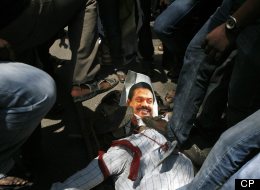
In 2009, I was amongst thousands of Toronto’s Tamil community that protested against the war in Sri Lanka. We braved the bitter cold and formed human chains across downtown to desperately turn people's attention to the carnage of chemical weapons unleashed on our families and communities.

While most Torontonians celebrated mother’s day, we occupied the Gardiner Expressway when over a thousand civilians were killed in 24 hours.

Friday, May 17, 2013

Dangerous game of ‘diaspora politics’ is here to stay

The Conservatives' foreign policy is too often based not on principle, but on pandering to diaspora communities in order to win votes.


Thestar.com columnist Natalie Brender recently argued that Prime Minister Stephen Harper’s decision to boycott the Commonwealth Heads of Government Meeting (CHOGM) in Sri Lanka this November is because of that country’s deteriorating human rights and governance record. Harper’s purpose, she claims, is “to convey principled condemnation of what’s happening to human rights and democracy in Sri Lanka” in a challenge to our claim that this is more obviously pandering to the Tamil diaspora in order to win votes.

Friday, May 03, 2013

Stephen Harper To Skip Commonwealth Meeting In Sri Lanka, Citing Human Rights Abuses

OTTAWA — Prime Minister Stephen Harper won’t be attending the Commonwealth Heads of Government Meeting (CHOGM) in Sri Lanka next November, The Huffington Post Canada has learned.

The decision may ostracize Harper as the only G8-level leader not attending the meeting with Britain, Australia and New Zealand all expected to send their prime ministers, but it is expected to be very popular with Tamils, a new community the Tories are going after.

Friday, December 02, 2011

The Plight of Sri Lanka's Internally Displaced

The Sri Lankan government is actively undermining efforts to address a growing humanitarian crisis.


Something rotten is going on in Sri Lanka. More than two years after comprehensively dispensing with the Liberation Tigers of Tamil Elaam (LTTE), the government is at risk of losing the peace. Rather than reducing the presence of the armed forces in occupied areas and promoting a stable transition, the government is militarizing the country. Far from realizing the promised peace dividend, the North and East now consist of a patchwork of military installations and high-security zones.

An index of just how putrid the situation has become can be discerned by the plight of so-called “internally displaced people.” This label is hardly new to the citizens of this island nation. Sri Lankans, and, in particular, Muslim and Tamil minorities (but also Sinhalese), have suffered successive waves of internal displacement since the early 20th century. Internationally financed development schemes in the interior of the country resulted in mass displacement during the 1950s and 1970s. Since the onset of war in the 1980s, the numbers have swelled again, with hundreds of thousands more relocating abroad as refugees.

Surprisingly few people actually know how many displaced people there are in the country today. The answer seems to depend on who is asked.

According to the United Nations High Commissioner for Refugees, there are well over 300,000 Sri Lankans still internally displaced after decades of war and more recent natural disasters, including the 2004 tsunami. Many of them languish in temporary “welfare centres” or with friends and relatives. Relief agencies claim that an additional 190,000 displaced people were voluntarily “relocated” either back to their place of origin or to a permanent settlement since the end of hostilities in 2009.

Thursday, June 30, 2011

Sri Lanka's Killing Fields shame exposed in major documentary

The camera pans across a host of hands thrust through a gate and focuses on a young girl. The deep sadness etched in her face shows the despair felt by thousands of Tamil civilians caught up in the tail end of the 30-year war fought between the government of Sri Lanka armed forces and the Liberation Tigers of Tamil Eelam. Filmed by United Nations staffer, Benjamin Dix, it showcases the anguish of civilians who congregated outside the UN compound in Northern Sri Lanka as UN officers left the area following a communiqué stating the Sri Lankan government could not guarantee their safety as its forces advanced into LTTE-held land.

The image is part of a documentary entitled Sri Lanka's Killing Fields (which can be seen here), aired by the British Channel 4 station. The 40-plus-minute documentary includes images of previously shown photos of captured LTTE cadres being put to death by government soldiers in the final days of the battle fought at the end of 2008 and the first five months of 2009.

The pull out is described in the documentary by former spokesman for the UN in Sri Lanka Gordon Weiss as a move to "remove independent witnesses to what was to come." The unfolding scenes are horrific; displaying man's inhumanity to man where both GoSL forces and the LTTE used unarmed civilians as pawns.

The Sri Lankan government and its apologists reject the documentary as a fabrication, and continue to claim that the final foray was carried out as a humanitarian operation with "zero civilian casualties." However, images and messages that came out of the war zone even as the last battles were fought tell a different story. The inaction of the UN, world powers and main stream media at the time baffled those who followed the events closely. Those images and reports lend credibility to this documentary and supports the findings of the Darusman Report, a UN expert panel appointed by Secretary General Ban Ki Moon last year. While the report holds both sides accountable, and calls for a war crimes investigation, Ban Ki Moon now claims he has no authority to follow up on the report without the consent of the Sri Lankan government.

The documentary showcases images filmed by Tamils, government footage and those captured by soldiers on mobile phones. Eye witness accounts include that of Vany Kumar a Tamil woman domiciled in England who was visiting relatives in Sri Lanka and was caught up in the war, and a Tamil doctor who until the end attempted to alleviate the suffering of the people. A man who lost his son during the shelling, a woman raped after surrendering to the government and a Sinhala critic are also interviewed.

Full Article
Source: Rabble.ca