Democracy Gone Astray

Democracy, being a human construct, needs to be thought of as directionality rather than an object. As such, to understand it requires not so much a description of existing structures and/or other related phenomena but a declaration of intentionality.
This blog aims at creating labeled lists of published infringements of such intentionality, of points in time where democracy strays from its intended directionality. In addition to outright infringements, this blog also collects important contemporary information and/or discussions that impact our socio-political landscape.

All the posts here were published in the electronic media – main-stream as well as fringe, and maintain links to the original texts.

[NOTE: Due to changes I haven't caught on time in the blogging software, all of the 'Original Article' links were nullified between September 11, 2012 and December 11, 2012. My apologies.]

Showing posts with label Toxic Waste. Show all posts

Friday, March 03, 2017

Toxic Liquid Nuclear Waste Headed for US Roadways

The Department of Energy, to the consternation of environmental groups, is preparing to transport 6,000 gallons of highly toxic liquid nuclear waste over American roadways.

The spent nuclear fuel is "target residue material" containing highly enriched uranyl nitrate—which after processing can be used as fuel. The DOE has spent years planning for the transfer of the waste from Canada's Chalk River Laboratories in Ontario to the Savannah River Site, a reprocessing facility in South Carolina. It will be transported in at least 100 to 150 separate truck shipments over a period of about three years, encased in cannisters normally used to transport solids that have been retrofitted to handle liquids. For security reasons, DOE won't reveal the exact timing or routes of the shipments. But elected officials in states it is likely to pass through are concerned about safety.
Wednesday, June 29, 2016

Toxic Landslides Raise Alarms about Fracking, Site C

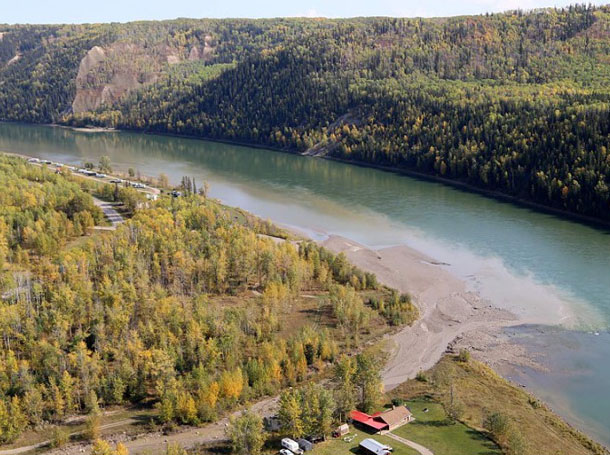
Toxic heavy metals including arsenic, barium, cadmium, lithium, and lead are flowing into the Peace River following a series of unusual landslides that may be linked to natural gas industry fracking operations.

The landslides began nearly two years ago and show no sign of stopping. So far, they have killed all fish along several kilometres of Brenot and Lynx creeks just downstream from the community of Hudson's Hope.

Saturday, October 31, 2015

TOXIC THREADS

While Canada's top fashion designers readied their collections for the start of Toronto Fashion Week, an altogether different gathering of fashion lovers convened at Evergreen Brick Works on October 19 and 20.

At the second annual World Ethical Apparel Roundtable (WEAR), conscious fashionistas mingled with members of non-profits, academics and reps from major brands and retailers, including Hudson's Bay and Joe Fresh, to talk about how to stitch together a more sustainable industry.

Thursday, February 26, 2015

Toxic waste facility would be "catastrophe" for Fraser River: Sto:lo advisor

It’s an innocuous bridge, not pretty to look at, but vital: the Vedder Bridge connects the cities of Abbotsford and Chilliwack over the Vedder Canal, which flows into the Fraser River. If a new recycling plant proposed by Ontario-based company Aevitas is approved by the province, the bridge will see a steady stream of truck-traffic carrying harmful pollutants.

West of the bridge and at the base of Sumas Mountain lies the Sema:th band village. Every year from spring to fall, the Sema:th cast nets out onto the nearby Fraser River, says Ernie Crey, fisheries adviser to the Sto:lo Nation.

Monday, December 23, 2013

Italian Mafia's Toxic Waste Dumping Poisons Farmlands

CAIVANO, Italy (AP) — On Ciro Fusco's farm in the shadow of Mount Vesuvius, police swooped down one recent day and planted a warning sign in his broccoli fields, prohibiting any one from harvesting or even setting foot on the plot. Dozens of other fields in the area were sequestered in the same way. Decades of toxic waste dumping by the Camorra crime syndicate that dominates the Naples area poisoned wells, authorities have found in recent months, tainting the water that irrigates crops with high levels of lead, arsenic and the industrial solvent tetrachloride.

The warning came too late: Fusco had already sold some of his broccoli at nearby markets.

BP, Chevron Accused Of Illegally Dumping Toxic Radioactive Drilling Waste Into Louisiana Water

The Louisiana parish of Plaquemines is taking on a group of oil and gas giants including BP and Chevron for allegedly dumping toxic waste — some of it radioactive — from their drilling operations into its coastal waters, according to a lawsuit removed to federal court on Thursday.

Plaquemines Parish is claiming the companies violated the Louisiana State and Local Coastal Resources Management Act of 1978 by discharging oil field waste directly into the water “without limitation.” Worse, the companies allegedly failed to clear, revegetate, detoxify or restore any of the areas they polluted, as required by state law. The oil and gas companies’ pollution, along with their alleged failure to adequately maintain their oilfields, has caused significant coastal erosion and contaminated groundwater, the lawsuit said.

Friday, May 24, 2013

Michigan state Senate says Ontario nuclear waste site ‘raises serious concerns’

State senators in Michigan say that a planned nuclear waste disposal site near Kincardine, Ont., “raises serious concerns.”

The concern is expressed in a resolution passed Tuesday by the Senate.

The senate also proposes that the public comment period on the proposal, which wraps up Friday, should be extended.

Monday, April 15, 2013

Nowhere to Run To: A Global Resistance to Toxic Extraction Industry?

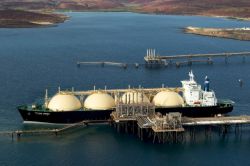
On April 12, 2013, the province of British Columbia announced four new proposals for LNG export terminals on the north coast. One of the four companies involved, Australian based Woodside Petroleum, announced on the very same day that they were shelving plans for a $47 billion LNG terminal in Australia.

The reason Woodside gave for canceling this project, which was the largest proposed construction project on the horizon for that country, was that the economics were no longer feasible. Nothing I've come across in the media references these two projects together, and so the company has not publicly stated whether the Canadian proposal had anything to do with this decision.

Monday, November 05, 2012

Federal testing backs study that found contaminants in oilsands region snow

OTTAWA – Environment Canada scientists have confirmed results published by researchers from the University of Alberta showing contaminants accumulating in the snow near oilsands operations, an internal federal document has revealed.

They also discovered contaminants in precipitation from testing in the region.

Wednesday, March 07, 2012

A toxic pipeline spill and communications chill in B.C.

So here's the little that we know about a pipeline break that occurred more than half a year ago and that British Columbia's Oil and Gas Commission (OGC) feels for whatever reasons the public is best kept in the dark about.

The incident occurred on August 19 of last year when a 35-year-old pipeline broke and spilled its poisonous contents onto a nearby property.

In three separate interviews with three different people who have knowledge of the incident and who spoke on an "information only" basis, it was confirmed that whatever was in the liquids that burst from the broken pipeline that day killed at least one cow and sickened other cattle.

The toxic spill occurred just outside the city limits of Fort St. John, near a liquids waste facility, which takes toxic liquids produced by the oil and gas industry and pressure pumps the untreated wastes deep underground for disposal.

Sunday, December 18, 2011

Waste yes, want yes


More than a dozen towns are thinking about letting Canada bury its high-level radioactive waste in their backyards. Why? Tom Spears investigates


Who would want a pile of used fuel from nuclear reactors that will be radioactive for millennia? William Elliott does. Badly enough to fight for it.

The boss at the economic development corporation serving the Elliot Lake region sees the upside of something that usually provokes gut reactions of not-in-my-backyard.

"There's the obvious economic impact of 700 to 1,000 permanent fulltime jobs (and) $16 billion to $24 billion of direct investment," he says. "It's going to be one of the biggest economic development projects in Canadian history."

Put that way, maybe it's not so hard to see why Elliot Lake and its neighbours are campaigning to become the place where Canada buries all our high-level radioactive waste.

The Nuclear Waste Management Organization is looking for a site to sink thousands of tonnes of used reactor fuel forever, replacing the temporary storage that Canada has used for 60 years. This concept, called deep geological disposal, offers major economic development, and people in Elliot Lake and nearby Blind River are listening.