In the recent congressional hearings about anti-Semitism on campus, Republican Representative Elise Stefanik of New York asked the presidents of Harvard, MIT, and the University of Pennsylvania whether calling for “the genocide of Jews” violates their university’s rules or code of conduct with respect to bullying and harassment. The underlying assumption that there have, in fact, been recent calls for genocide on these campuses struck many as resting on an overly broad interpretation. Indeed, Stefanik’s questioning revealed that she seemed to count any use of the Arabic word intifada or the slogan “from the river to the sea” as tantamount to a call for genocide. These are phrases deployed in the context of the Israeli-Palestinian conflict—a setting in which both sides have invoked the rhetoric of genocide, but where the meaning of such talk is highly contested.
Democracy Gone Astray
Democracy, being a human construct, needs to be thought of as directionality rather than an object. As such, to understand it requires not so much a description of existing structures and/or other related phenomena but a declaration of intentionality.
This blog aims at creating labeled lists of published infringements of such intentionality, of points in time where democracy strays from its intended directionality. In addition to outright infringements, this blog also collects important contemporary information and/or discussions that impact our socio-political landscape.
All the posts here were published in the electronic media – main-stream as well as fringe, and maintain links to the original texts.
[NOTE: Due to changes I haven't caught on time in the blogging software, all of the 'Original Article' links were nullified between September 11, 2012 and December 11, 2012. My apologies.]
Showing posts with label Universities. Show all posts
Monday, September 16, 2024
Tuesday, October 17, 2023
Queer Arizona State University Professor 'Bloodied' By College Republicans
Two members of a conservative group followed and harassed a queer Arizona State University professor who founded a drag story hour, starting an altercation that ended in the two people shoving the professor down and “bloodying his face,” the university president told faculty and staff on Saturday.
Security footage from the altercation last Wednesday shows two people — one with a camera — from the right-wing group Turning Point USA following and questioning professor David Boyles. After the professor appears to try to grab the camera or push it out of one of the men’s hands, the other knocks Boyles to the ground.
Friday, October 13, 2023
Layoffs at West Virginia University Expose Right-Wing Trends Sweeping Higher Ed
The current crisis at West Virginia University (WVU) is a case study demonstrating not only the telltale signs of manufactured neoliberal austerity, but also the underlying acceptance of right-wing extremist trends in higher education masquerading as “necessary” budget cuts for the financial survival of the university.
Friday, June 30, 2017
Why Colleges Have a Right to Reject Hateful Speakers Like Ann Coulter
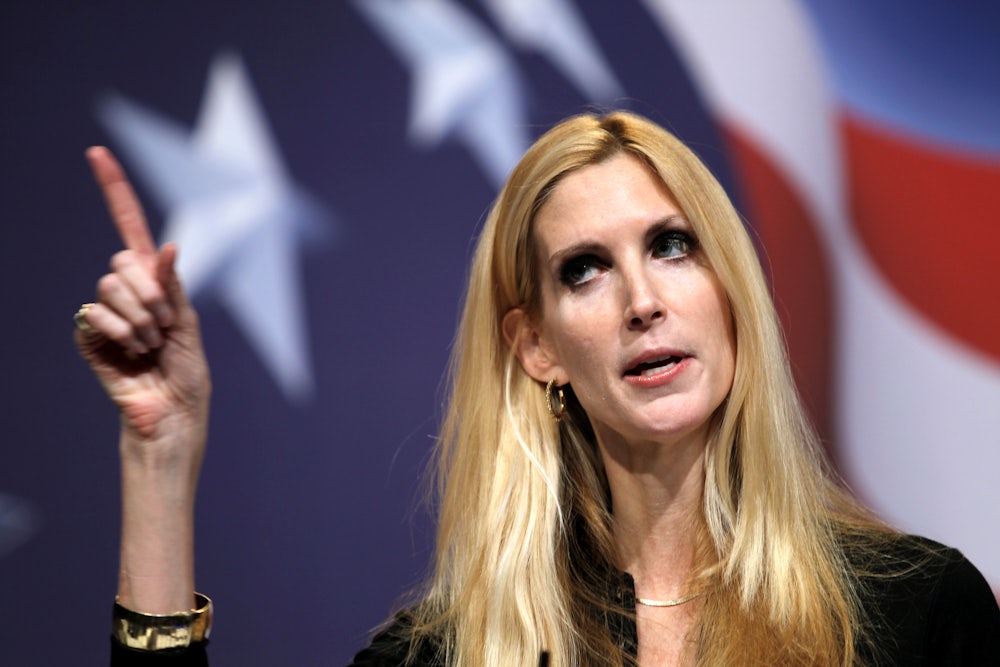
As graduation season approaches, colleges across the country are locking down commencement speakers to address the class of 2017. Harvard got Mark Zuckerberg (a Harvard dropout). Hillary Clinton is speaking at Wellesley, Bernie Sanders at Brooklyn College. Joe Biden will speak to my seniors at Colby. But if this year is anything like last, other invitees will prove more controversial, sparking another round of debates over “no-platforming”: the practice of opposing campus speakers.
Wednesday, December 28, 2016
These Professors Make More Than a Thousand Bucks an Hour Peddling Mega-Mergers
If the government ends up approving the $85 billion AT&T-Time Warner merger, credit won't necessarily belong to the executives, bankers, lawyers, and lobbyists pushing for the deal. More likely, it will be due to the professors.
A serial acquirer, AT&T must persuade the government to allow every major deal. Again and again, the company has relied on economists from America's top universities to make its case before the Justice Department or the Federal Trade Commission. Moonlighting for a consulting firm named Compass Lexecon, they represented AT&T when it bought Centennial, DirecTV, and Leap Wireless; and when it tried unsuccessfully to absorb T-Mobile. And now AT&T and Time Warner have hired three top Compass Lexecon economists to counter criticism that the giant deal would harm consumers and concentrate too much media power in one company.
Sunday, December 25, 2016
These Professors Make More Than a Thousand Bucks an Hour Peddling Mega-Mergers
IF THE GOVERNMENT ENDS UP approving the $85 billion AT&T-Time Warner merger, credit won’t necessarily belong to the executives, bankers, lawyers, and lobbyists pushing for the deal. More likely, it will be due to the professors.
A serial acquirer, AT&T must persuade the government to allow every major deal. Again and again, the company has relied on economists from America’s top universities to make its case before the Justice Department or the Federal Trade Commission. Moonlighting for a consulting firm named Compass Lexecon, they represented AT&T when it bought Centennial, DirecTV, and Leap Wireless; and when it tried unsuccessfully to absorb T-Mobile. And now AT&T and Time Warner have hired three top Compass Lexecon economists to counter criticism that the giant deal would harm consumers and concentrate too much media power in one company.
Wednesday, April 06, 2016
Christian Universities Increasingly Apply for Exemptions From Anti-Discrimination Rules
Six months after the US Supreme Court legalized same-sex marriage, Dr. Randall O'Brien, president of Carson-Newman University in Jefferson City, Tennessee, told the local CBS affiliate that "in a changing world, we want to reaffirm who we are, who we intend to be, and establish our identity as a religious school, a Christian school."
O'Brien was gleefully explaining that the 165-year-old college, established as Mossy Creek Missionary Baptist Seminary in 1851, had just been granted a US Department of Education (DOE) exemption from Title IX regulations, in effect allowing the university to continue to collect federal dollars for scholarships and sports programs despite banning unmarried, pregnant students; women who have had abortions; single mothers; and LGBTQ people from attending classes or working on campus.
Wednesday, March 30, 2016
What’s Behind America’s Widening College Graduation Gap?
Call it the stubborn gray cloud around a bright silver lining: At a time when the graduation rate of the nation’s public universities has improved significantly, according to a new report, the gap between white students who earn bachelor’s degrees and African Americans who don’t has failed to budge—and in some cases has gotten worse.
At more than half of those four-year colleges and universities, the graduation gains among black students didn’t match those of their white peers, according to a new report from Education Trust, a Washington, D.C.–based nonprofit that advocates for children. At a third of the colleges where overall graduation rates went up, the rates of black students who earned diplomas fell or remained stagnant.
Tuesday, March 08, 2016
Universities Run Into Problems When They Hire Presidents From The Business World
Mount St. Mary’s University, a private, liberal arts Catholic university in Maryland, has recently been plagued with controversy thanks to comments from the university president that made an alarming comparison between students and bunnies.
After a career in the financial industry, president Simon Newman vowed to make sweeping changes in both finances and academics at Mount St. Mary’s. But some faculty were taken aback by his communication style, one that may have gone unnoticed in private equity, especially when he talked about encouraging struggling students to leave the university earlier in the semester for a better federally reported retention rate.
Friday, February 12, 2016
University Under Fire After Terminating Professors Who Spoke Out Against Administration
Two Mount St. Mary’s University professors were terminated on Monday, without severance. The professors’ termination comes on the heels of their public criticism of the new university president’s controversial plan to reduce the student dropout rate. This news follows the recent removal of celebrated provost David Rehm, who had similarly voiced concerns about the plan.
Simon Newman, a former private equity CEO who earned his MBA from Stanford, has made increasing the first-year retention rate at the private, liberal arts, Catholic university in Maryland a personal goal of his, but has gone about executing it in a way that has drawn much criticism and complaint from the campus community. Two professors who disagreed with Newman’s approach are now without jobs.
Monday, February 08, 2016
Student Calls For LSE's Free Speech Speakeasy Society To Be Banned
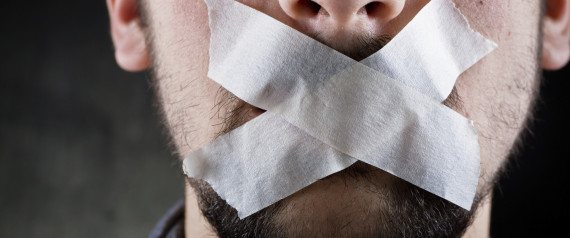
A free speech society, set up at a London university to challenge the growing trend of censorships and "safe spaces", is facing being banned.
The Speakeasy society, set up by LSE students Charlie Parker, Chiara Cappellini and Christian Benson, hopes to challenge the "problem" of student unions banning speakers and objects in case students are offended.
Saturday, January 23, 2016
Black Students Are Being Shut Out Of Top Public Colleges
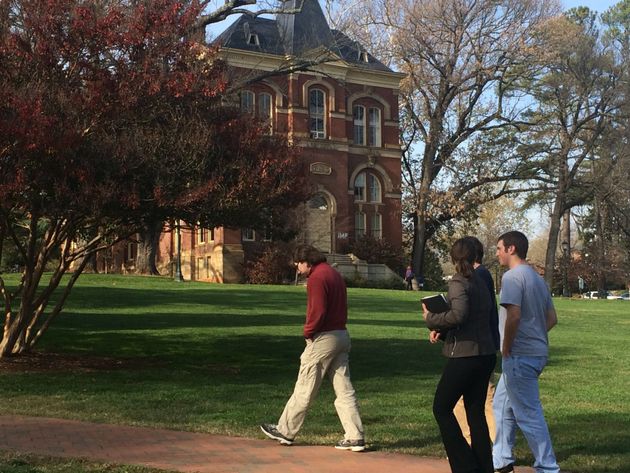
CHARLOTTESVILLE, Va. — As racial unrest sweeps across major college campuses, and African-American students demand more equitable treatment, college administrators need look no farther than their own admissions offices to find one root of the problem.
The nation’s flagship public universities — large, taxpayer-funded institutions whose declared mission is to educate residents of their states — enroll far smaller proportions of black students than other colleges, and the number appears to be declining, according to federal records and college enrollment data analyzed by The Hechinger Report and The Huffington Post.
Wednesday, November 04, 2015
Despite Low Grad Rates at For-Profit Colleges, One Accreditor Keeps Billions in Tax Dollars Flowing
For-profit universities have had another rough year, with big players facing federal scrutiny for everything from predatory loans to outright fraud.
Now attention is turning to the schools’ accreditors.
Accreditors are supposed to make sure that schools provide students with a quality education. They are not government agencies, but wield enormous power: Schools need accreditors’ stamps of approval to maintain access to the government’s annual $170 billion in federal student aid.
Now attention is turning to the schools’ accreditors.
Accreditors are supposed to make sure that schools provide students with a quality education. They are not government agencies, but wield enormous power: Schools need accreditors’ stamps of approval to maintain access to the government’s annual $170 billion in federal student aid.
Saturday, September 26, 2015
University Sexual Assault Study Sees Unwanted Contact For Almost 1 In 4 U.S. Female Undergrads
Almost one in four undergraduate women at 27 U.S. schools report non-consensual sexual contact in a survey released by the Association of American Universities (AAU) Monday.
Ivy League institutions such as Harvard and Yale partook in an extensive study that yielded responses from over 150,000 professional, graduate and undergraduate students.
It was called "one of the largest surveys on sexual assault and sexual misconduct to provide insight into students' perceptions of campus climate in terms of both number of schools and number of students."
Ivy League institutions such as Harvard and Yale partook in an extensive study that yielded responses from over 150,000 professional, graduate and undergraduate students.
It was called "one of the largest surveys on sexual assault and sexual misconduct to provide insight into students' perceptions of campus climate in terms of both number of schools and number of students."
Sunday, September 13, 2015
Colleges With Plenty of Cash Saddle Their Poorest Students With Heaps of Debt
New York University is among the country’s wealthiest schools. Backed by its $3.5 billion endowment, the school has built campuses in Abu Dhabi and Shanghai, invested billions in SoHo real estate, and given its star faculty loans to buy summer homes.
But the university does less than many other schools when it comes to one thing: helping its poor students.
A ProPublica analysis based on new data from the U.S. Department of Education shows that students from low-income families graduate from NYU saddled with huge federal loans. The school’s Pell Grant recipients – students from families that make less than $30,000 a year – owe an average of $23,250 in federal loans after graduation.
But the university does less than many other schools when it comes to one thing: helping its poor students.
A ProPublica analysis based on new data from the U.S. Department of Education shows that students from low-income families graduate from NYU saddled with huge federal loans. The school’s Pell Grant recipients – students from families that make less than $30,000 a year – owe an average of $23,250 in federal loans after graduation.
Friday, September 04, 2015
A Supergroup Of Academics Is Trying To Stop People Who Profit From Campus Rape
Jennifer Freyd, a longtime researcher and advocate against sexual violence, has been pleased to see so much focus in recent years on campus rape. But the University of Oregon psychology professor has also been worried.
As a record number of universities have come under federal investigations for allegations they mishandled rape and harassment cases, it seemed like every week a new app, consulting group, conference or educational program cropped up to help colleges improve their responses to sexual assault -- as long as the schools were willing to pay a price. In some cases, including at UO, Freyd said, schools would rather spend close to six figures on a product that promised to address the problem than engage with faculty to devise their own program.
Friday, May 29, 2015
This Is What Happens When You Slash Funding for Public Universities
On February 25, three University of Arizona graduate students—Kyle Blessinger, Zach Brooks, and Sarah Ann Meggison—had a meeting with Kelli Ward, a Republican state senator in Arizona. They were there to lobby against massive new cuts to state spending on higher education; the number being thrown around was $75 million. Under the state constitution, attending the university is supposed to be as “nearly free as possible,” but due to state budget cuts, tuition had increased more than 70 percent between 2008 and 2013 for in-state students—the severest hike in the country. Now it was poised to go up even more, while funds for graduate instructors were likely to be squeezed even further.
Wednesday, April 29, 2015
Elite Universities Are Turning Our Kids Into Corporate Stooges
Duke University, where I graduated in 2002, was as lenient about student infractions—underage drinking, excessive noise, hazing—as most private universities. But there was a limit to its paternal forgiveness: on-campus interviews with company representatives. Miss one, and you'd have to go through a humiliating rigmarole of apologies and counseling. Miss a second one, and you were barred for life from interviewing on campus.
Monday, April 27, 2015
The New Thought Police
In August 2014, Steven Salaita was scheduled to take up a position as a tenured associate professor in the American Indian and Indigenous Studies program at the University of Illinois at Urbana-Champaign. Salaita had resigned his job at Virginia Tech, where he had tenure, and ordered books and submitted syllabuses for his new courses at UIUC. He had every reason to believe his future was secure. Although his appointment was contingent on a final approval by the board of trustees, which would meet two weeks after the school year began, Salaita had been assured that this was merely a formality. It wasn’t: The board refused to ratify his appointment.
Subscribe to:
Posts (Atom)


