Democracy Gone Astray

Democracy, being a human construct, needs to be thought of as directionality rather than an object. As such, to understand it requires not so much a description of existing structures and/or other related phenomena but a declaration of intentionality.
This blog aims at creating labeled lists of published infringements of such intentionality, of points in time where democracy strays from its intended directionality. In addition to outright infringements, this blog also collects important contemporary information and/or discussions that impact our socio-political landscape.

All the posts here were published in the electronic media – main-stream as well as fringe, and maintain links to the original texts.

[NOTE: Due to changes I haven't caught on time in the blogging software, all of the 'Original Article' links were nullified between September 11, 2012 and December 11, 2012. My apologies.]

Showing posts with label Voting Rights Act. Show all posts

Monday, September 09, 2024

Federal Court Guts Enforcement of Voting Rights Act in “Catastrophic” Ruling

On Monday, a conservative three-judge panel on the United State’s most right-wing federal court struck down the primary enforcement mechanism of the Voting Rights Act in a ruling that experts are saying would be “catastrophic” for voting rights across the country if upheld.

In a 2-1 ruling, the 8th Circuit Court of Appeals ruled that private litigants, like voting and civil rights groups, are not allowed to bring lawsuits challenging discriminatory practices in redistricting and election administration under Section 2 of the law. “Private right of action,” as it’s known, is the main way that the Voting Rights Act is enforced; for decades, civil rights groups have filed lawsuits under the Voting Rights Act to challenge gerrymandering and racist voter suppression efforts, particularly in the South. The ruling, then, would leave only the Justice Department to bring lawsuits when electoral maps or changes to election administration rules have discriminatory effects on voters.

Conservative Appeals Court Decision Aims To Gut The Voting Rights Act

A panel of conservative judges on the 8th U.S. Circuit Court of Appeals ruled that private individuals or groups cannot bring suit under the Voting Rights Act on Monday.

The decision by a three-judge panel in the case, Arkansas State Conference NAACP v. Arkansas Board of Apportionment, would take away the main avenue used to enforce Section 2 of the landmark civil rights law by only allowing the government to bring lawsuits under it. Such a change would make enforcement rare and subject to political control of state and federal government. With Republicans firmly opposed to the Voting Rights Act, the law would be moribund when they controlled state governments or the Department of Justice.

Saturday, August 22, 2015

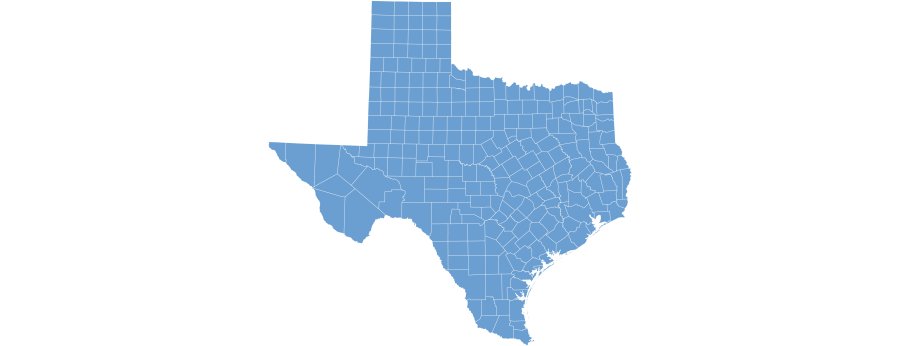
Why A Victory For The Voting Rights Act In Texas Feels More Like A Defeat

It was trumpeted as a victory for voting rights, but this week's ruling that Texas’ restrictive voter ID law violated the Voting Rights Act -- on the eve of the act’s 50th anniversary -- was actually something of a defeat. And Justice Ruth Bader Ginsburg saw it all coming.

Thursday, April 30, 2015

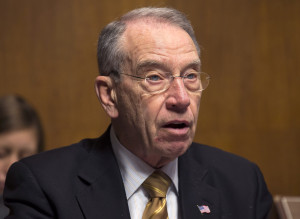
Sen. Grassley: No Need To Fix Voting Rights Act Since 'More Minorities Are Already Voting'

WASHINGTON -- Sen. Chuck Grassley (R-Iowa), chairman of the Judiciary Committee, said Monday he doesn't expect to bring up legislation to restore the Voting Rights Act, because lots of minority people are already voting.

During an event at the National Press Club, Grassley was asked about the committee considering a bill that would fix the landmark 1965 law. The Supreme Court struck down Section 4 of the law in 2013, ruling that it needed to be updated. The section determined which states and localities with a history of suppressing minority voters had to get permission from the Justice Department to change their voting laws. The justices instructed Congress to come up with a new formula for designating which regions of the country warrant special scrutiny.

Sunday, December 15, 2013

North Carolina Shows Why the Voting Rights Act Is Still Needed

A federal judge in Winston-Salem today set the schedule for a trial challenging North Carolina’s sweeping new voter restrictions. There will be a hearing on whether to grant a preliminary injunction in July 2014 and a full trial a year later, in July 2015.

This gives the plaintiffs challenging the law, which includes the Department of Justice, the ACLU and the North Carolina NAACP, a chance to block the bill’s worst provisions before the 2014 election. Earlier this year, in July 2013, the North Carolina legislature passed the country’s worst voter suppression law, which included strict voter ID to cast a ballot, cuts to early voting, the elimination of same-day voter registration, the repeal of public financing of judicial elections and many more harsh and unnecessary anti-voting measures.

Thursday, August 22, 2013

Texas Town Considers At-Large District Plan Accused Of Suppressing Latino Vote

The Mayor of the Houston suburb of Pasadena, Johnny Isbell, is proposing to swap two of the town’s single-member districts for at-large districts -- a voting system being challenged by Hispanics across the country who say the system makes it harder to elect Latino candidates.

The proposed change comes on the heels of the Supreme Court’s decision to eliminate the requirements that certain states pre-clear alterations to their voting systems with the Department of Justice, as the widely read Texan blog Burnt Orange Report notes.

Wednesday, August 14, 2013

North Carolina's Sweeping Voter Suppression Law Is Challenged in Court

Today, North Carolina Governor Pat McCrory signed the nation’s worst voter suppression law. The sweeping law requires strict government-issued photo ID to cast a ballot, cuts the number of early voting days by a week, eliminates same-day voter registration during the early voting period, makes it easier for vigilante poll watchers to challenge the validity of eligible voters and expands the influence of unregulated corporate money in state elections.

Two lawsuits were filed today challenging the voting restrictions as racially discriminatory in federal court under Section 2 of the Voting Rights Act. A third challenge, to the voter ID provision, will be filed in state court tomorrow morning.

Thursday, August 08, 2013

5 Terrible Acts of Voter Discrimination the Voting Rights Act Prevented—But Won't Anymore

President Lyndon Johnson signed the Voting Rights Act of 1965 into law 48 years ago today. But in June, the conservative justices on the Supreme Court struck down a major section of the law, freeing jurisdictions with a history of racial discrimination to change their voting laws without federal permission. For decades, Section 5 of the VRA required a number of jurisdictions, mostly in the South, to seek the feds' approval—called preclearance, in legal parlance—before modifying voting rules. The Supreme Court's decision gutted Section 5, paving the way for new discriminatory laws.

Tuesday, August 06, 2013

Voting Rights Act in Peril on 48th Anniversary

“Today is a triumph for freedom as huge as any victory that has ever been won on any battlefield,” President Lyndon Johnson said on August 6, 1965, when he signed the Voting Rights Act into law.

The VRA quickly became known as the most important piece of modern civil rights legislation and one of the most consequential laws ever passed by Congress. It led to the abolition of literacy tests and poll taxes; made possible the registration of millions of minority voters; forced states with a history of voting discrimination to clear electoral changes with the federal government to prevent future discrimination; and laid the foundation for generations of minority elected officials.

Monday, July 29, 2013

Time To Mess With Texas

The same day, last month, that the Supreme Court struck down a key section of the Voting Rights Act, Texas Attorney General Greg Abbott declared that Texas laws that had been stopped by the Act—because courts found them to be discriminatory—would immediately go into effect. On Friday, Attorney General Eric Holder struck back.

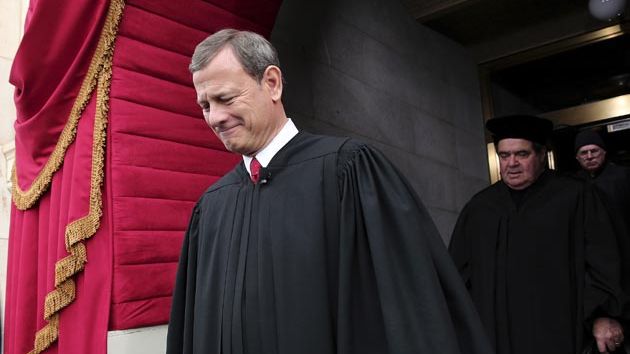
In the color-blind wish-world of Chief Justice Roberts and his four conservative colleagues on the Supreme Court, Jim Crow-era restrictions on minority voting represent a sad, historical curiosity, unrelated to modern reality. Surveying the landscape from their marble aerie, these five Justices decided in Shelby County v. Holder that requiring the pre-clearance of election-law changes in certain jurisdictions, a provision of Section 4 of the Voting Rights Act, was now unconstitutional. Congress had passed the Act in 1965 in response to the broad denial of the right to vote; as recently as 2006, an overwhelming majority of Congress found that it was still necessary. The Court simply disagreed: “Nearly 50 years later, things have changed dramatically.”

Friday, July 26, 2013

Supreme Court's Gutting of Voting Rights Act Unleashes GOP Feeding Frenzy

When the Supreme Court recently gutted Section 5 of the Voting Rights Act, it did so under the theory that there was little evidence of continuing racial discrimination in the states that were required to get preclearance before changing their voting laws. Congress had rather pointedly disagreed when it renewed the VRA in 2006, but no matter. The Supreme Court knew better.

Wednesday, July 17, 2013

Rep. John Lewis: 'The Voting Rights Act Is Needed Now Like Never Before'

The Senate Judiciary Committee held its first hearing today on the Voting Rights Act since the Supreme Court gutted the landmark civil rights law last month. The key witnesses were civil rights icon Representative John Lewis and Representative James Sensenbrenner, the former chair of the House Judiciary Committee who led the effort to overwhelmingly reauthorize the VRA in 2006.

Wednesday, July 03, 2013

A New Strategy for Voting Rights

Hank Sanders grew up in segregated, rural southern Alabama and in 1971 moved to Selma—the birthplace of the Voting Rights Act. Before the VRA, only 393 of the 15,000 black voting-age residents in Dallas County, where Selma is located, were registered to vote. Less than a year later, after federal registrars arrived in August 1965, more than 10,000 black voters had been added to the rolls. Sanders experienced firsthand how the VRA transformed Selma and the rest of the country. In 1983, he became the first African-American state senator from the Alabama Black Belt since Reconstruction, representing a new majority-black district created by the VRA.

Voting Rights Act Ruling Forces Justice Department Reassignments

WASHINGTON -- In striking down a key provision of the Voting Rights Act last week, members of the Supreme Court didn’t just neuter a major component of landmark civil rights law. The justices also eliminated the workload of several dozen federal employees.

Until the Supreme Court ruling in Shelby County v. Holder on June 25, a few dozen of the 100 or so employees of the Voting Section of the Justice Department’s Civil Rights Division had been assigned to review the 14,000 to 20,000 voting changes submitted each year by jurisdictions that needed DOJ permission before implementing new rules or, say, changing the location of a polling place.

Monday, July 01, 2013

The Color of Law

On February 18, 1965, a civil-rights worker named James Orange was arrested in Marion, Alabama, on charges of disorderly conduct and contributing to the delinquency of minors, and was thrown into the local jail. Orange had organized a march by young people (“minors”) in support of a voter-registration drive being run by several groups, including the one he worked for, the Southern Christian Leadership Conference, whose president was Martin Luther King, Jr.

That night, four hundred people gathered in Zion’s Chapel Methodist Church, in Marion, and prepared to walk to the jail, about a block away, and sing freedom songs. They left the church at nine-thirty and ran into a police blockade. Ordered to disperse, they were attacked by fifty or more state troopers and other law-enforcement officials wielding clubs. Street lights had been turned off or shot out; white vigilantes were on the scene; reporters were attacked and cameras were smashed. No photographic record of the night survives.

Friday, June 28, 2013

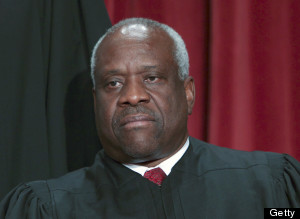
Hank Johnson: Clarence Thomas 'Worse' Than Edward Snowden For Gutting Voting Rights Act

WASHINGTON -- Rep. Hank Johnson (D-Ga.) said Wednesday that the fact that Supreme Court Justice Clarence Thomas voted this week to gut the Voting Rights Act -- the 1965 law aimed at protecting disenfranchised voters -- ranks him somewhere below the likes of Edward Snowden, the former National Security Agency contractor who leaked classified information about U.S. surveillance programs to the press.

"Comparing it to Snowden, I'd say the offense is worse," Johnson told The Huffington Post.

Thursday, June 27, 2013

The Voting Rights Act: An End to Racism by Judicial Order

Among the many things that can be gleaned from Tuesday’s Supreme Court decision eviscerating the Voting Rights Act is this: we live in an era of American history which is, if not actually post-racial, then officially post-racism. Race may still exist as a social reality—and so may racism—but no amalgamation of facts, studies, or disparities is sufficient to the cause of proving that there exists a system which produces inequality. In short: we have overcome whether the data agrees with us or not. As Chief Justice John Roberts wrote in the majority opinion:

    In 1965, the States could be divided into those with a recent history of voting tests and low voter registration and turnout and those without those characteristics. Congress based its coverage formula on that distinction. Today the Nation is no longer divided along those lines, yet the Voting Rights Act continues to treat it as if it were.

The Supreme Court's Constitutional Hypocrisy

In his dissent in the Defense of Marriage Act case today, Justice Scalia wrote: “We have no power to decide this case. And even if we did, we have no power under the Constitution to invalidate this democratically adopted legislation.”

Justice Roberts wrote in his concurrence: “I agree with Justice Scalia that this Court lacks jurisdiction to review the decisions of the courts below… I also agree with Justice Scalia that Congress acted constitutionally in passing the Defense of Marriage Act.”

Wednesday, June 26, 2013

The Court Rejects the Voting Rights Act—and History

“Hubris is a fit word for today’s demolition of the VRA,” Justice Ruth Bader Ginsburg wrote, in a scathing dissent to the Supreme Court’s decision to strike down significant parts of the Voting Rights Act. Perhaps she’s right; but it could also be said that the majority ruling was built more on resentment of a particularly petulant kind: grudging about the need to remember an unpleasant past and to be mindful of the marginalized; offended by the idea that anyone would consider certain parts of the country more racist than others, or, really, that anyone is particularly racist at all these days. The majority opinion, written by Chief Justice John Roberts, should also dispose of the idea that Roberts and the Court’s other conservatives are modest deferrers who recoil at judicial activism. The decision in this case, Shelby County v. Holder, is about as activist as judges can get.

Tuesday, June 25, 2013

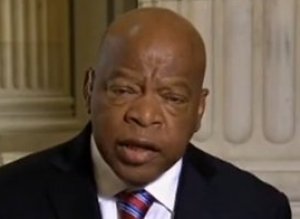
John Lewis On Voting Rights Act: Supreme Court 'Put A Dagger In The Heart' Of The Law

Civil rights hero and longtime congressman John Lewis (D-Ga.) reacted in dismay to the Supreme Court's ruling striking down Section 4 of the Voting Rights Act on Tuesday.

Discussing the decision with ABC's Jeff Zeleny after it was announced, Lewis said the Supreme Court had "put a dagger in the heart of the Voting Rights Act."

In a 5-4 ruling, the court struck down the provision of the civil rights law that designates which parts of the country must have changes to their voting laws precleared by the Justice Department or a special federal court.