Democracy Gone Astray

Democracy, being a human construct, needs to be thought of as directionality rather than an object. As such, to understand it requires not so much a description of existing structures and/or other related phenomena but a declaration of intentionality.
This blog aims at creating labeled lists of published infringements of such intentionality, of points in time where democracy strays from its intended directionality. In addition to outright infringements, this blog also collects important contemporary information and/or discussions that impact our socio-political landscape.

All the posts here were published in the electronic media – main-stream as well as fringe, and maintain links to the original texts.

[NOTE: Due to changes I haven't caught on time in the blogging software, all of the 'Original Article' links were nullified between September 11, 2012 and December 11, 2012. My apologies.]

Showing posts with label WHO. Show all posts

Tuesday, March 08, 2016

Children Are Dying From Pneumonia, but Greed Is the Real Killer

More than 920,000 children died of pneumonia in 2015, according to the World Health Organization. For 2015, Ian Read, the chairman and CEO of Pfizer who earned a salary of $23.3 million, reported that the pharmaceutical giant turned a $7.7 billion profit, driven in part by a 53 percent growth in revenue from the Global Vaccines division.

These figures are not unrelated.

Saturday, January 09, 2016

WHO director-general criticizes the Trans-Pacific Partnership

The World Health Organization director-general has criticized the Trans-Pacific Partnership for its impact on drug costs.
Margaret Chan said she has "some very serious concerns" about the TPP and that, "If these agreements open trade yet close the door to affordable medicines we have to ask the question: is this really progress at all." She added, "Can you bear the cost of $1,000 for a pill to treat Hepatitis C? Unless we get these prices down many millions of people will be left behind."
Transnational pharmaceutical corporations are highly profitable businesses that are seeking to increase those profits through extended patent protection provisions in so-called "free trade" agreements like the Trans-Pacific Partnership and the Canada-European Union Comprehensive Economic and Trade Agreement (CETA).

Wednesday, November 26, 2014

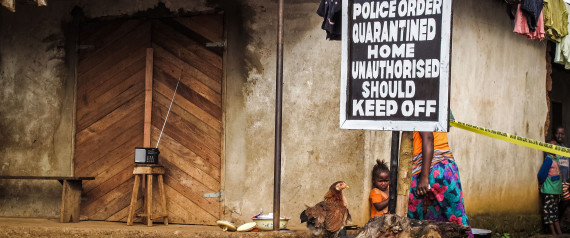
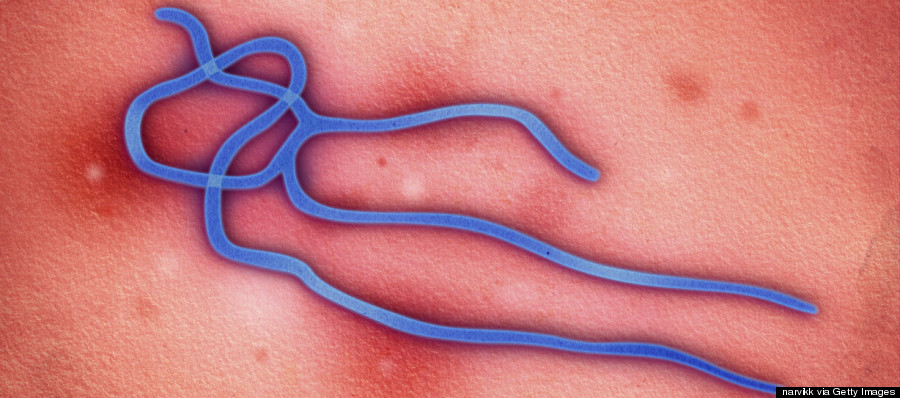
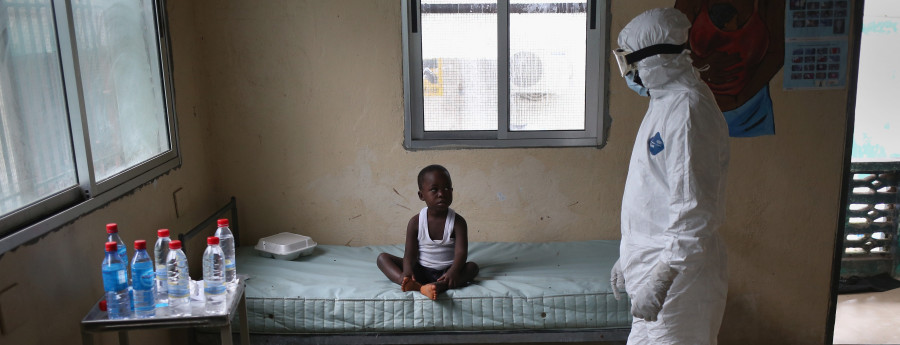
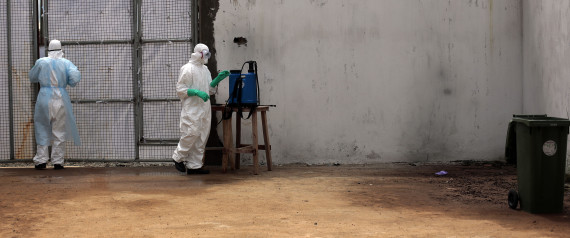
Ebola Spreading Intensely In Sierra Leone As Death Toll Rises: WHO

GENEVA, Nov 19 (Reuters) - The toll in the Ebola epidemic has risen to 5,420 deaths out of 15,145 cases in eight countries, the World Health Organization (WHO) said on Wednesday, with transmission of the deadly virus still "intense and widespread" in Sierra Leone.

The figures, through Nov. 16, represent a jump of 243 deaths and 732 cases since those issued last Friday, and cases continue to be under-reported, the WHO said in its latest update.

Wednesday, November 12, 2014

WHO Doesn't Approve Of Canada's Ebola Visa Ban, But Can't Change It

TORONTO - Canada appears to have used a loophole — a rather large one — to justify to the World Health Organization its decision to stop issuing visas to residents and nationals of Ebola-affected countries.

The global health agency says Canada's new policy contravenes the spirit if not the letter of the International Health Regulations, but there is nothing the WHO can do about it.

International health law experts have said Canada's policy, announced Oct. 31, is a violation of the International Health Regulations, known as the IHR.

Sunday, October 19, 2014

Ebola Outbreak In Senegal Over: WHO

GENEVA (AP) — The U.N. health agency officially declared an end Friday to the Ebola outbreak in Senegal, a rare bit of good news amid the public outcry and fear over the deadly disease that remains out of control in three West African countries.

The World Health Organization said it "commends the country on its diligence to end the transmission of the virus," citing Senegal's quick and thorough response.

Monday, October 06, 2014

Out of control -- How the world’s health organizations failed to stop the Ebola disaster

Tom Frieden remembers the young woman with the beautiful hair, dyed a rusty gold and braided meticulously, elaborately, perhaps by someone who loved her very much. She was lying facedown, half off the mattress. She had been dead for hours, and flies had found the bare flesh of her legs.

Two other bodies lay nearby. Bedridden patients who had not yet succumbed said of the dead, "Please, get them out of here."

Monday, September 29, 2014

Ebola Death Toll In West Africa Passes 3,000: WHO

DAKAR, Sept 26 (Reuters) - The death toll from an outbreak of Ebola in West Africa has risen to at least 3,091 out of 6,574 probable, suspected and confirmed cases, the World Health Organization said on Friday.

Liberia has recorded 1,830 deaths, around three times as many as in either Guinea or Sierra Leone, the two other most affected countries, according to WHO data received up to Sept. 23.

Wednesday, September 24, 2014

WHO: Ebola Outlook Is ‘Bleak’

The World Health Organization has issued a very frightening report that basically says as worried as we’ve all been about Ebola in West Africa, things are much, much worse.

The report, which was co-authored by one of the scientists who discovered the disease, says containment efforts are simply inadequate and nothing in the planning stages will be able to realistically tackle the virus, which has already infected and killed thousands of victims.

Wednesday, September 10, 2014

Why the World Health Organization Doesn't Have Enough Funds to Fight Ebola

With the Ebola virus continuing its spread throughout West Africa—and landing this week in a fifth country, Senegal—the custodians of global health are becoming more adamant that the world is not doing enough to stop the deadly pathogen. That is, the rich nations of the world are not providing sufficient resources for the fight against Ebola. World Health Organization leaders came to Washington last week to ask for $600 million to build and administer new treatment centers in Liberia, Guinea, and Sierra Leone—the three countries with the most infections—and provide safe burials for victims in those countries. This is essential, given that the killer virus spreads via bodily fluids, and many people have contracted the disease through contact with the bodies of dead Ebola victims.

Sunday, May 19, 2013

WHO concerned coronavirus spreading person to person

The World Health Organization has issued a blunt assessment of the coronavirus outbreak in Saudi Arabia, acknowledging for the first time that there are concerns the virus may be spreading from person to person, at least in a limited way.

The statement called for urgent investigations to find the source of the virus and how it is infecting people. And it reminded countries they have a duty to the international community to rapidly report cases and related information to the WHO.

Tuesday, December 20, 2011

H3N2 Flu Virus: WHO Warns About New Flu Variants

The World Health Organization is urging countries to be on the lookout for new flu viruses.

The WHO is stressing the importance of monitoring for new variants of flu and reporting any findings to the Geneva-based UN health agency.

The statement comes in the wake of a series of discoveries in the United States of human infections with a new swine-origin H3N2 virus.

There have been 10 infections with this virus in the U.S. since the new variant of swine H3N2 viruses was first seen in humans in July; some limited person-to-person spread is believed to have taken place.
The WHO says countries should remember they have an obligation under the International Health Regulations to notify the WHO of any human infections with a flu virus that is not one of the subtypes normally seen in people.

The International Health Regulations require countries to alert the global community to outbreaks of four diseases deemed to be an international threat: polio, smallpox, human influenza cases cause by novel flu viruses and severe acute respiratory syndrome or SARS.

The IHR, as the regulations are called, were devised after the 2003 SARS outbreak, which spread rapidly from China to a number of parts of the world — including Canada — before subsiding. An estimated 774 people died in the outbreak, 44 of them in Canada.