Here's some good news and bad news about the economy. The good news is, the median American household income is up, the highest it’s been since pre-recession 2007. The bad news? Not surprisingly, not all American households are created equal. Despite the growing trend of prosperity among family groups and a (somewhat disputed) wave of general economic growth since the end of the recession, the gains have not been distributed fairly to black Americans. In fact, the wage gap is growing between black and white Americans, and today, the gap is the widest it's been in 40 years.
Democracy Gone Astray
Democracy, being a human construct, needs to be thought of as directionality rather than an object. As such, to understand it requires not so much a description of existing structures and/or other related phenomena but a declaration of intentionality.
This blog aims at creating labeled lists of published infringements of such intentionality, of points in time where democracy strays from its intended directionality. In addition to outright infringements, this blog also collects important contemporary information and/or discussions that impact our socio-political landscape.
All the posts here were published in the electronic media – main-stream as well as fringe, and maintain links to the original texts.
[NOTE: Due to changes I haven't caught on time in the blogging software, all of the 'Original Article' links were nullified between September 11, 2012 and December 11, 2012. My apologies.]
Showing posts with label Wage Gap. Show all posts
Tuesday, July 24, 2018
Monday, August 21, 2017
Black Women Have to Work 7 Months Longer Than White Men to Receive the Same Pay
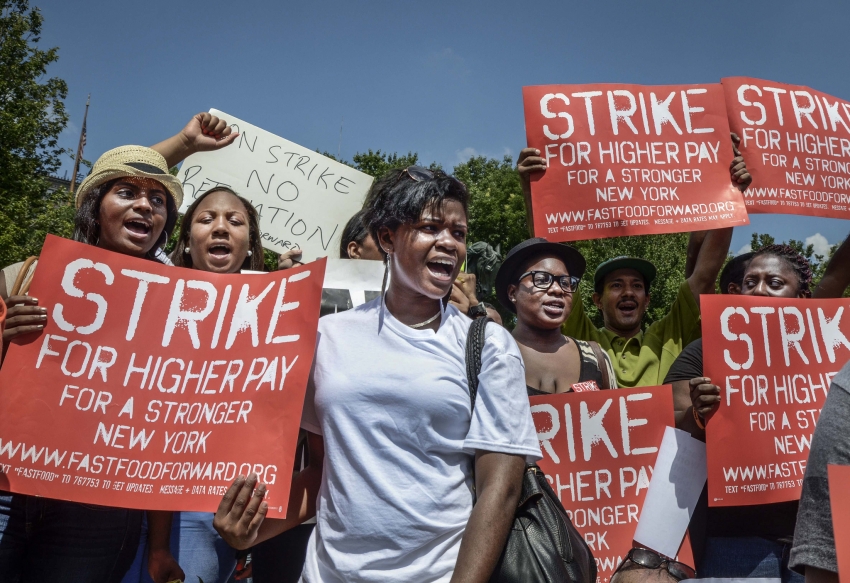
July 31st is Black Women’s Equal Pay Day, the day that marks how long into 2017 an African American woman would have to work in order to be paid the same wages as her white male counterpart was paid last year. Black women are uniquely positioned to be subjected to both a racial pay gap and a gender pay gap. In fact, on average, black women workers are paid only 67 cents on the dollar relative to white non-Hispanic men, even after controlling for education, years of experience, and location.
Why does this wage gap exist for black women?
Monday, June 26, 2017
Women make less than men in virtually any job they take
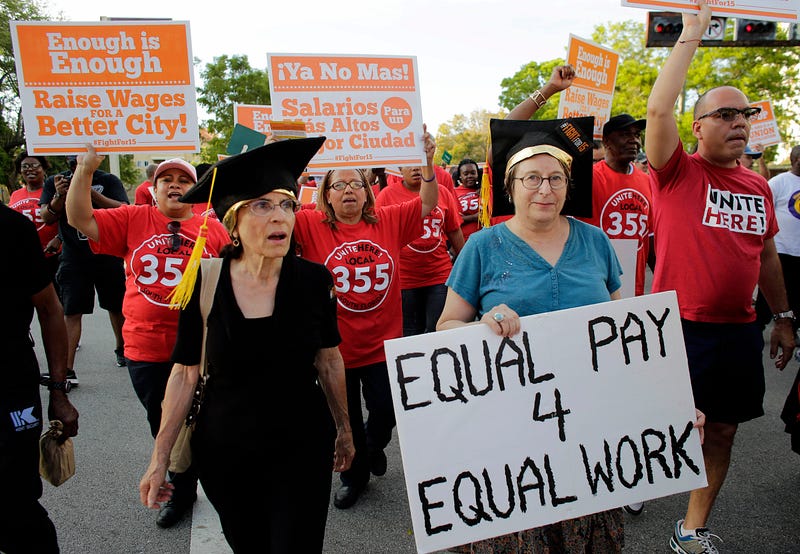
Tuesday marks the day by which, thanks to the gender wage gap, American women have worked long enough to match what men made in a single year last year. The gap still means that a woman who works full-time, year round will on average make just 80 percent of her male peers. There hasn’t been statistically significant progress in closing the gap in nine years.
Some women may hold out hope that they can find the right work that will pay them equally. But virtually anywhere they go they are at risk of being paid less.
Friday, March 11, 2016
Wednesday, February 24, 2016
Here’s How The Government Could Close The Staggering Racial Wealth Gap

Kaelyn Thompson lives paycheck to paycheck. She graduated at the top of her high school class and, despite the financial struggles of her parents, decided to attend college.
“Not only did my mother make it clear that I had no choice, I also realized that I would never be able to make a good enough living to do more than just survive without a college degree,” Thompson wrote in a blog for The Huffington Post. “Though my mother demanded I go to college, she and my stepfather really had no way of supporting me financially to help me get there. They had their hands full and were still living paycheck to paycheck so it was up to me to make it happen.”
Saturday, September 12, 2015
Target CEO's Golden Handshake Pretty Much Matches The One For All 17,600 Canadian Employees

An interesting talking point has seized the interwebs today: The amount of money Target has set aside to pay its Canadian staff is slightly less than the money it paid out to one former employee: Its CEO.
Gregg Steinhafel took a total of $61 million U.S. from Target when he left the company last spring, according to Fortune's calculations. Meanwhile, the fund Target set up to pay employees as it winds down operations over the next four months is set at $56 million U.S. (That’s $70 million Canadian, at current exchange rates.)
Gender Wage Gap Is Costing World Countless Billions, UN Says

MANILA, Philippines — A U.N. agency is mounting a worldwide campaign for equal pay for women, who get 24 per cent less than men on global average and around 30 per cent less for those in Asia.
Recent estimates by the International Labor Organization shows gender inequality in employment across Asia alone is costing $45 billion a year, with 45 per cent of working-age women outside the labour force compared to 19 per cent for men, the leader of the U.N. Women agency, Phumzile Mlambo-Ngcuka, told a forum at the Asian Development Bank headquarters.
Subscribe to:
Posts (Atom)