Democracy Gone Astray

Democracy, being a human construct, needs to be thought of as directionality rather than an object. As such, to understand it requires not so much a description of existing structures and/or other related phenomena but a declaration of intentionality.
This blog aims at creating labeled lists of published infringements of such intentionality, of points in time where democracy strays from its intended directionality. In addition to outright infringements, this blog also collects important contemporary information and/or discussions that impact our socio-political landscape.

All the posts here were published in the electronic media – main-stream as well as fringe, and maintain links to the original texts.

[NOTE: Due to changes I haven't caught on time in the blogging software, all of the 'Original Article' links were nullified between September 11, 2012 and December 11, 2012. My apologies.]

Wednesday, June 15, 2011

$720-million of programs and operations on chopping block this fiscal year

The cuts are buried in 519 pages of main spending estimates Treasury Board President Tony Clement tabled and are among a total of $10.4-billion in spending reductions, most of which are a reflection of recession-fighting infrastructure programs coming to an end. 'Where’s the plan?' asks NDP MP Peggy Nash.

PARLIAMENT HILL—The Harper government has targeted $720-million worth of program and operating cuts over the next year for a range of areas that include sensitive agencies such as the federal nuclear safety watchdog, the public health agency, another agency that tracks hazardous materials and an as yet unexplained 20 per-cent reduction in the budget for Environment Canada.

The cuts are buried in 519 pages of main spending estimates Treasury Board President Tony Clement (Muskoka-Parry Sound, Ont.) tabled along with the federal budget and are among a total of $10.4-billion in spending reductions, most of which are a reflection of recession-fighting infrastructure programs coming to an end.

The secretariat that supports the Treasury Board Cabinet Committee provided The Hill Times with a breakout summary of the total reduction in spending due to program cuts or reductions, separate from the spending reductions that will be due to the lapse of infrastructure programs.

The figure prompted opposition MPs on Tuesday to renew calls on the government to provide more detail on the spending cuts it has already set for the coming fiscal year—as well as $4-billion in annual cuts that were promised in the budget.

Full Article
Source: The Hill Times 
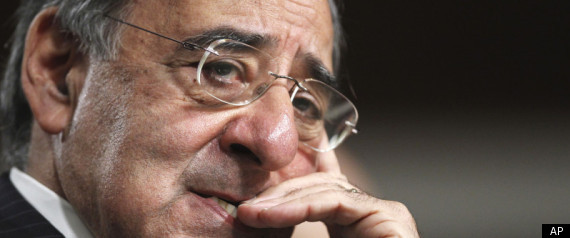
CIA Chief Leon Panetta: Cyberattack Could Be 'Next Pearl Harbor'

Appearing before the Senate Armed Services Committee for a confirmation hearing for his appointment as the secretary of defense, Leon Panetta warned that the U.S. could face cyberwarfare in battles to come.

“The next Pearl Harbor we confront could very well be a cyber attack that cripples our power systems, our grid, our security systems, our financial systems, our governmental systems,” Panetta said.

Though he talked on subjects ranging from Libya to withdrawing troops from Afghanistan to the war on terrorism, Panetta highlighted his concerns regarding the U.S.'s preparedness for cyberattacks.

Full Article
Source: Huffington 

What's Behind the Sun News-Bell Battle?

Two behemoths of Canadian media have gone to war. More such wars may be inevitable.


Since you’re reading The Mark, I’m assuming you already know how crazily fragmented the global news media business has become.

Despite that, Quebecor (which owns the Sun newspaper chain, the top French-language broadcaster (TVA), and the cable/wireless company Vidéotron) still chose to launch a new TV channel, Sun News, in April. The home of “hard news and straight talk” (a tag line built for risqué jokes if there ever was one) is unique in both its format and licensing. Built to ape Fox News’s style, where commentators and experts give their opinions on the day’s news (it costs less to riff than to report, after all), the channel is unapologetically opinionated and right-wing. Its format will win viewers and breathe some life into the staid business of Canadian news, as long as its journalists continue to push the envelope – and improve.

Sun News is unique in its licensing because, in southern Ontario, it is both an over-the-air broadcaster and a specialty channel. Because it is an over-the-air broadcaster (having replaced the former Sun TV station in Toronto), cable companies like Rogers Cable, Cogeco Cable, and Bell Canada’s Fibe TV must carry and deliver it to their customers for free, according to long-standing CRTC policy. However, for the rest of the country (including our satellite TV companies), the new Sun News is a digital specialty channel, which means carriers like Shaw Communications, EastLink, Telus’ Optik TV, and Bell Satellite can choose whether or not they carry it, and can pass a fee on to their customers if they wish to.

Full Article
Source: The Mark news 

No Mandatory Minimums for Common Sense

The Conservative plan to jail pot growers ignores history and science.


One of the most foolish and costly planks of the Conservatives’ so-called get-tough-on-crime agenda is target their plan to impose mandatory minimum terms of six months’ imprisonment on those who grow at least six marijuana plants.

All indications are that the government's plan is a huge overreaction. A 2005 study of seven years of marijuana cultivation arrests in British Columbia revealed that more than 80 per cent of growers did not have guns or traps at their sites, were not involved in organized crime, and were not involved in the theft of electricity. In other words, most marijuana cultivation takes place without imposing significant threats upon the surrounding community.

Further – and this apparently needs to be said repeatedly – the consumption of cannabis is much less likely to lead to significant harm and premature death than the consumption of the perfectly legal and socially acceptable drugs, alcohol and tobacco, even when rates of use are taken into account.

There is a very real sense that the Tories are operating without a shred of science on their side. Why are they doing this? The costs of jailing marijuana cultivators will soar into the hundreds of millions of dollars within a few years – and it will be the provinces, not the federal government, that will have to pay for the construction and operation of these new provincial facilities.

Why have the provinces been so silent? Are they looking to create prison industries in rural areas, shoring up long-standing unemployment and potentially converting these voters to their cause? Do they not care about the costs and the consequences of putting thousands of non-violent offenders in jail? Couldn’t this money be better spent on health care, or other more useful collective endeavours?

In the land of the growers – and the land of the users – the government’s plan will change very little. The consumption of cannabis in Canada increased dramatically between 1965 and 1979, and then fell off quite substantially until the early 1990s, rising again until a few years ago, but never quite hitting the rates of consumption of the late 1970s. These changing patterns of consumption appear, upon careful study and reflection, to have nothing to do with legislative or law-enforcement initiatives.
Full Article
Source: The Mark news 

Standing firm in Afghanistan

The staccato chattering sound of machine-gun fire drifts over Canada’s forward operating base at Masum Ghar in Afghanistan’s Panjwaii district shortly after dusk. The prolonged bursts are answered by other angry shots until, after a couple of minutes, the echoes fade away and silence returns. “That’s probably Wilson killing somebody,” says a soldier relaxing on a makeshift bench outside the metal shipping containers where many of them sleep on stacked bunks. Wilson is an American patrol base a few kilometres north of Masum Ghar, across the Arghandab River in Zhari district.

At dawn, from the same direction, the muffled crunch of a distant explosion sends a mushrooming plume of dust skyward above the green cultivated fields and rough mud compounds that spread from Masum Ghar beyond the river. It might have been an improvised explosive device, discovered and intentionally triggered, or perhaps something deadlier. No gunfire follows the blast, only birdsong and the puttering hum of a man coaxing a motorbike along a rutted dirt path.

“It’s the Americans at Wilson,” says another soldier. “They get more contact than we do. It’s closer to the highway, and now, with the prison break, there are 400 more Taliban there.”

A Canadian major who had arrived at Masum Ghar the previous day interjects. “They can’t clear it?”

“It’s like clearing water,” the first soldier replies. “You can push them aside”—he sweeps an open palm sideways in front of him—“but they flow back in.”

He describes a near-impossible task, and yet this is what NATO forces in Afghanistan, including Canada’s final combat battle group to deploy in the country, believe they are finally beginning to accomplish. The main reason, according to senior military officials in both Canada and allied nations, is the increased number of troops now on the ground.

For eight years following the 9/11 terrorist attacks and the subsequent overthrow of the Taliban, American and NATO soldiers in Afghanistan were too few and spread too thin to hold territory, deny insurgents freedom of movement, and convince the local population that they were stronger than the Taliban. Training of Afghanistan’s own security forces was fragmented and haphazard. Afghan soldiers and police were unable to effectively step in where outside forces were absent. “As they look back over this, they’ll probably figure that there were some opportunities early on that we didn’t take advantage of,” says American Lieut.-Gen. David Rodriguez, commander of the International Security Assistance Force Joint Command.

Full Article
Source: Macleans 

The Commons: Getting the words right

So the House is almost entirely agreed. Colonel Gadhafi of Libya is an undesirable despot, guilty, it would seem, of various abuses and disgraces, likely up to and including crimes against humanity and thus, through some combination of diplomacy, humanitarian aid and bombs, he must be prevented from doing any further harm to the people of Libya, they who should be allowed to proceed soon enough to freedom and democracy.

Now, if only the House could agree on how best to describe the process by which this general notion might be made real.

“Our strategy is clear,” John Baird proclaimed this morning. “By applying steady and unrelenting military and diplomatic pressure while also delivering humanitarian assistance we can protect the civilian population, degrade the capabilities of the regime and create the conditions for a genuine political opening. At the same time we can bolster the capacity of the Libyan opposition to meet the challenges of post-Gadhafi Libya and to lay the foundations of a state based on the sovereignty of the people.”

On this, the Foreign Affairs Minister asked the House of Commons to endorse a three-and-a-half-month extension of Canada’s involvement in the NATO mission over and around Libya. And it was on the occasion of this request that Jack Harris, the NDP’s shadow defence minister, stood a short while later to wonder if we might call this “regime change.”

Full Article
Source: Macleans 

Decriminalizing prostitution won’t make it safer, Crown argues

Up to 95 per cent of prostitutes are vulnerable women who would gladly leave their tawdry profession if they could, an Ontario prosecutor told a landmark prostitution appeal Tuesday.

“It is not a voluntary choice, but a highly constrained choice,” Crown counsel Christine Bartlett-Hughes told a five-judge Ontario Court of Appeal panel that will decide the fate of the prostitution laws.

“We recognize that there are certain individuals that choose this activity,” Ms. Bartlett-Hughes added. “But nevertheless, Parliament is entitled to legislate to protect those who are most vulnerable.”

Ms. Bartlett-Hughes conceded that the laws can make it more difficult for prostitutes to protect themselves from violent customers. However, she told the judges there is no proof that decriminalizing prostitution and moving prostitutes off the streets into brothels will make them substantially safer.

In fact, she said, it is far from clear that legalizing brothels will have any effect whatsoever on the number of street prostitutes in the country.

The federal and Ontario governments are appealing a decision by Ontario Superior Court Judge Susan Himel that struck down the prostitution law’s provisions prohibiting communicating and living off the avails, and another that makes it a crime to run a brothel.

The three prostitutes behind the challenge – Terri-Lynn Bedford, Valerie Scott and Amy Lebovitch – claim the provisions violate their constitutional right to security of the person by compelling them to work under unsafe conditions.

Full Article
Source: Globe & Mail 

Cop blames low blood sugar for threatening to Taser men in genitals

A Toronto police officer, who is diabetic, has profusely apologized for threatening to Taser two handcuffed suspects, an act he blames on a severe hypoglycemic episode.

“I wanted to take responsibility right from the beginning,” Christopher Hominuk, 38, testified Tuesday at his sentencing hearing in the Ontario Court of Justice. He pleaded guilty last winter to one count of threatening bodily harm.

Defence lawyer Peter Brauti is asking Justice Hugh Fraser to accept the opinion of Dr. Anne Kenshole, professor emeritus at the University of Toronto, who also testified Tuesday.

She concluded Hominuk's behaviour on May 24, 2010 was “very compatible” with a longtime type 1 diabetes patient, such as Hominuk, experiencing dangerously low blood sugar levels.

“His actions on May 24 did seem out of keeping with what I would assume this man's behaviour would normally be.”

Kenshole reviewed his medical records and the blood sugar level readings produced by the blood glucose monitor he was wearing that day. She also interviewed Hominuk about his history with diabetes, which he has had since he was 15. She also watched videotaped footage recorded on cameras that captured what happened inside the police cruisers.

Full Article
Source: Toronto Star 

Tory budget plans set askew by slow growth projections

New reports forecasting a cooling housing market and slower consumer spending tied to record household debt suggest the Conservative government can’t count on growth to give them an easy ride to a balanced budget.

Erasing Canada’s deficit by 2015 – as first promised by Prime Minister Stephen Harper during this year’s election campaign – will require a mix of spending cuts and economic growth.

But the Parliamentary Budget Officer released a report this week questioning whether promised spending cuts will materialize, and a new update from TD Economics warns that Canada’s growth spurt is about to cool.

The news led NDP Leader Jack Layton to urge more caution when it comes to government cuts for fear of hurting employment and economic growth.

“Here we have the government jumping very quickly to a program of restraint, but we have some indications that the economy could be stalling or in some difficulty,” Mr. Layton said.

TD Bank’s quarterly economic forecast said economic growth in Canada has peaked as households focus on debt reduction and governments phase out stimulus spending. Releasing its first growth projections for 2013, TD Economics forecasts real GDP growth of 2.1 per cent. That’s below the 2.7 per cent average forecast from private-sector economists produced in March that was used as the foundation of the numbers in this month’s federal budget.
Full Article
Source: Globe & Mail 

Rob Ford's missing expenses raise questions about day-to-day spending

As a conspicuously frugal Etobicoke councillor, Rob Ford made a very public point about spending almost none of his office budget and paying some of his office expenses using his own personal funds. A staunch critic of councillors’ spending habits, Mr. Ford used his own website to publicize embarrassing invoices submitted by other politicians, obtained through access to information requests.

In his current position, Mr. Ford has continued his crusade to slash discretionary spending by municipal politicians, and he claims to have spent just $1,718.46 for mayor’s office expenses for the first quarter of 2011.

But a Globe and Mail investigation of the mayor’s office budget indicates clear gaps in official expense disclosure documents that raise questions about how Mr. Ford pays for routine expenditures associated with a busy 17-person operation.

Notably absent is any evidence of how – and how much – Mr. Ford pays for mayor’s office supplies, such as letterhead, and his mobile phone, which he uses frequently to communicate with Toronto residents. Even the most frugal councillors routinely expense service packages for smartphones, which are obligatory equipment for busy politicians. Such subscriptions can run to thousands of dollars a year.

In an e-mail, the city’s integrity commissioner Janet Leiper pointed to Section 4.6 of council’s expense policy, which requires councillors to publicly disclose such expenses, even if they are paid for with private funds. The document, last updated in January, appears to make no distinction between councillor and mayor.

That particular policy, as it happens, traces back to a November, 2007, report by auditor-general Jeff Griffiths, who concluded that Mr. Ford had violated council’s expense policy by failing to declare “the extent of the personal funds expended in relation to the operation of his Council office.” Mr. Griffiths couldn’t determine how much Mr. Ford had spent personally on outlays such as postage, mileage, cellphone bills and stationery due to a lack of records. The seven-page report also states that Mr. Ford advised the auditor-general that no third-party funds had been used.

Mr. Ford’s officials responded to repeated questions about his current expenses by saying they were “unable to fulfill” the request for information.

Full Article
Source: Globe & Mail