Democracy Gone Astray

Democracy, being a human construct, needs to be thought of as directionality rather than an object. As such, to understand it requires not so much a description of existing structures and/or other related phenomena but a declaration of intentionality.
This blog aims at creating labeled lists of published infringements of such intentionality, of points in time where democracy strays from its intended directionality. In addition to outright infringements, this blog also collects important contemporary information and/or discussions that impact our socio-political landscape.

All the posts here were published in the electronic media – main-stream as well as fringe, and maintain links to the original texts.

[NOTE: Due to changes I haven't caught on time in the blogging software, all of the 'Original Article' links were nullified between September 11, 2012 and December 11, 2012. My apologies.]

Wednesday, September 14, 2011

BP Oil Spill: New Evidence Cites More Mistakes

A BP scientist identified a previously unreported deposit of flammable gas that could have played a role in the Gulf of Mexico oil spill, but the oil giant failed to divulge the finding to government investigators for as long as a year, according to interviews and documents obtained by The Associated Press.

While engineering experts differ on the extent to which the two-foot-wide swath of gas-bearing sands helped cause the disaster, the finding raises the specter of further legal and financial troubles for BP. It also could raise the stakes in the multibillion-dollar court battle between the companies involved.

A key federal report into what caused the worst offshore oil spill in U.S. history is set to be released as early as Wednesday.

"This is a critical factor, where the hydrocarbons are found," said Rice University engineering professor Satish Nagarajaiah. "I think further studies are needed to determine where this exactly was and what response was initiated by BP if they knew this fact."
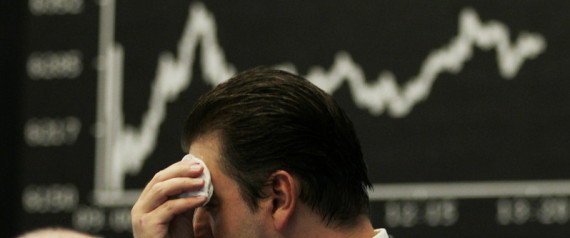
French Banks Credit Agricole SA And Societe Generale Downgraded By Moody's Amid Eurozone Fears

Two French banks have been downgraded by credit rating agency Moody's because of their exposure to Greek debt, amid fears the debt crisis gripping the eurozone is reaching a "climax".

Credit Agricole SA and Societe Generale were both cut one notch from Aa1 to Aa2 and Aa2 to Aa3 respectively.

The agency said it would also review BNP Paribas for a possible downgrade but for the moment believed the bank's profitability and capital base could support its exposure to Greek, Portuguese and Irish debt.

Christian Noyer, Governor of the Bank of France, was not put off by the downgrade, saying: "Moody's had a higher rating than the other agencies so it's just put them on the same level or slightly better than the others".

The true cost of 9/11

No one can deny that our lives as citizens of the Western world have been affected by the tragic events of 9/11, a day when close to 3,000 innocent civilians of different backgrounds have been murdered in cold blood.

What is rarely talked about is the fact that close to a million innocent civilians, including women and children, the majority of whom are Muslims, lost their lives during the illegal wars that were immediately launched in Iraq and Afghanistan. And what's worse is that the counter is still ticking.

There seems to be no agreement on the exact number of civilian causalities in both of these countries. Some studies put the number as low as 100,000 deaths and others put it as high as 2 million. One particular poll that I found worth mentioning was conducted by the British firm Opinion Research Business. The poll, conducted in 2008, asked 1,720 Iraqi adults if they had lost family members by violence since 2003. Sixteen per cent had lost one, and 5 per cent has lost two. Using the 2005 census total of 4,050,597 households in Iraq, this suggests 1,220,580 deaths since the invasion. When the margin of error is taken into account, the study finds that a minimum of 733,158 to a maximum of 1,446,063 Iraqis have died as a result of the war.

Dealing With Food Insecurity in Canada

Canada needs food policies that target the chief determinant of hunger: poverty.


As Prime Minister Stephen Harper finished up his Latin and Central American tour in August, he announced a series of comprehensive food-security projects for his last country stop, Honduras. The projects range from nutritional support for vulnerable groups to agricultural diversification and development projects – most aligned with the policy goals of the Food and Agriculture Organization and the World Food Programme.

On the domestic front, Canadians recognize that many people remain food insecure at home, too. Food insecurity means that people are worried about not having enough food, that they reduce the quality of their food because they cannot afford more expensive items, or that they often cut back on the amount they eat as a trade-off for meeting other basic needs.

Canadians seem to understand that food insecurity is bad for health, that it compromises nutritional intake, and that people are often eating “the wrong kinds of foods.” In other words, the way food insecurity is framed in Canada recognizes that it is a legitimate concern, that it is related to poverty, and that it has adverse effects on people.

This recognition should be sufficient to engender a thoughtful policy response from government. However, current food-insecurity policy in Canada is woefully confused with a vague, arguably indulgent policy framework based on what a food secure Canada should look like. That is, food-security policy in Canada is largely equated with agri-food policy, which is concerned with food sovereignty, a sustainable food supply, safe and healthy foods, and protection of domestic markets and producers. Consumer needs are expressed as a desire for local foods, organics, and value-added foods such as foodstuffs that are more nutritious than their unprocessed counterparts (e.g., calcium-enriched orange juice).

Useless User Fees Punish the Poor

Making patients pay won't make our health system more affordable or accessible.


Here it comes again – an idea that surfaces regularly in Canadian health-care debates and seems to hold sway with those who advocate common-sense principles: user fees.

Some people think that charging patients when they use the health system would help control health-care costs and ensure that people are getting the care they need and are not overusing the system. Others believe that user fees would bring in much-needed revenue.

Unfortunately, the evidence doesn’t support these aspirations. Research to date suggests two good reasons patient-financed health care doesn’t make sense.

First, user fees discourage patients from seeking both necessary and unnecessary care. This is often penny wise and pound foolish.

Some claim that user fees are benign because they discourage only frivolous use. But that assumes that most people have the expert knowledge required to know what care is needed. A host of studies have found the opposite to be true. One U.S. study published in the New England Journal of Medicine involving fairly healthy adults showed that user fees led to a 20-per-cent increase in risk of death for people with high blood pressure because people were less likely to see a doctor and get their blood pressure under control.

The same thing happened in Canada in 1996, when Quebec began requiring patients to pay part of the cost of all drugs purchased. According to a study in the Journal of the American Medical Association, patients reduced their use of less-essential drugs and essential drugs, often resulting in serious negative effects on their health and increased emergency-department visits.

Mayor Ford's office slams 'deliberate attack' by Waterfront CEO

The hostility between Rob Ford and Waterfront Toronto is real and escalating, judging by the frank language contained in a letter from the mayor’s office to the agency that was obtained by The Globe and Mail.

Penned by the mayor’s chief of staff, Amir Remtulla, the missive accuses Waterfront Toronto chief executive officer John Campbell of “a very serious breach” of responsibility for comments that appeared in The Globe last week. It also states that the issue has been taken up with federal Finance Minister Jim Flaherty, suggesting the mayor’s office may be building consensus to remove Mr. Campbell from his post.

The Globe story came out on Sept. 9, three days after Mr. Ford endorsed a vast overhaul of Waterfront Toronto’s plan for 180 hectares of land at the mouth of the Don River – a vision that was more than a decade in the making. Highlighted by a Ferris wheel and megamall, the Ford-backed plan was largely seen as a public flogging of Waterfront Toronto, the three-government agency charged with cleaning up and developing the area – also known as the Port Lands – and much of the rest of Toronto’s largely dormant lakeshore.

China to EU: Need help with your debts? Here's what we want

Chinese premier Wen Jiabao has delivered a message to world leaders looking hopefully to China to rescue them from a double-dip recession.

Get your financial affairs in order. And it might help if you moved a little faster on recognizing China as a market economy.

“Governments should fulfill their responsibilities and put their own house in order,” Mr. Wen told the opening of the summer session of the World Economic Forum, in the northeastern port city of Dalian, earlier today.

“The major developed economies should develop responsible and effective monetary policies, properly handle debt issues, ensure the stable operation of investment in the market and maintain confidence of investors around the world.”

China’s seemingly unquenchable demand for raw materials and its $3.2-trillion foreign currency reserves have turned the world’s second-largest economy into a beacon of hope for European nations struggling under heavy debt and worsening unemployment. Earlier this week, the Financial Times reported that Italy had sent a delegation to Beijing to encourage purchase of its sovereign debt. China already holds some Portuguese and Greek debt, though exact values are not known.

Perry served up at Tea Party debate

WASHINGTON—Is America ready to put another tough-talking Texan in the White House, so soon after the last one?

Or is the meteoric rise of Tea Party darling Gov. Rick Perry only a mirage — another here-today, gone-later-today example of a fast-and-fickle Republican leadership race that remains almost anyone’s to win?

That the answer to these questions has changed in barely 48 hours underscores the sheer volatility of the political agonies unfolding stateside.

On Monday, the camera-friendly Perry was on a seemingly unassailable roll, vaulting toward that night’s CNN/Tea Party debate polling head and shoulders above the pack.

And then the pack turned on him live on CNN, hammering away at every moderate chink in the ostensibly archconservative governor’s political armour.

Ford considering service cuts, says mayor’s press secretary

In a list of budget “talking points” she distributed this week to right-leaning councillors, Mayor Rob Ford’s press secretary acknowledged the obvious fact Ford will not: He is indeed considering service cuts.

Adrienne Batra’s “talking points” were intended to keep the utterances of Ford’s allies consistent with his own. But in her list, obtained by the Star, she abandoned a notable part of Ford’s personal messaging strategy.

Ford “guaranteed” during his mayoral campaign that he would not cut any services. He has steadfastly refused to utter the words “cuts” or “service reductions” in recent months, repeatedly insisting that he will find “efficiencies.”

The list nonetheless includes the following: “There are many ways to reduce our budget, before we decide to cut services. For example, better purchasing, reducing back office staffing, etc. However, some services that are not as important to the public may be reduced to maintain funding for services that are important.”

Ford support plummeting, poll suggests

Mayor Rob Ford’s handling of the 2012 budget has badly shaken Torontonians’ faith in him, according to a new opinion poll that finds his popular support dropping like a rock across the city.

The Forum Research survey of 1,046 Torontonians conducted Monday after the release of city manager Joe Pennachetti’s recommended budget cuts, pegs Ford’s support at 42 per cent — a big drop from 57 per cent on June 1, and 60 per cent in late February.

Lorne Bozinoff, the Forum president independently tracking Ford’s support each quarter, said the mayor’s “very low” numbers are only likely to sink.

“This drop in support has come without any cutbacks actually coming into effect, we’re only at the idea stage,” Bozinoff said. “This is a ceiling — I think it’s going to get a lot worse for him before it gets better.

“He campaigned on a gravy train, none was found and the reality of cuts to services that residents rely on, often daily, is setting in. That has shaken public confidence in his ability to handle the job of mayor.”

The poll also found no public appetite for the major KPMG-suggested cuts Pennachetti is forwarding to the executive committee Monday as part of Ford’s solution to fix Toronto’s finances.