Democracy Gone Astray

Democracy, being a human construct, needs to be thought of as directionality rather than an object. As such, to understand it requires not so much a description of existing structures and/or other related phenomena but a declaration of intentionality.
This blog aims at creating labeled lists of published infringements of such intentionality, of points in time where democracy strays from its intended directionality. In addition to outright infringements, this blog also collects important contemporary information and/or discussions that impact our socio-political landscape.

All the posts here were published in the electronic media – main-stream as well as fringe, and maintain links to the original texts.

[NOTE: Due to changes I haven't caught on time in the blogging software, all of the 'Original Article' links were nullified between September 11, 2012 and December 11, 2012. My apologies.]

Showing posts with label Gulf of Mexico. Show all posts

Monday, April 27, 2015

Secrecy Shrouds Decade-Old Oil Spill In Gulf Of Mexico

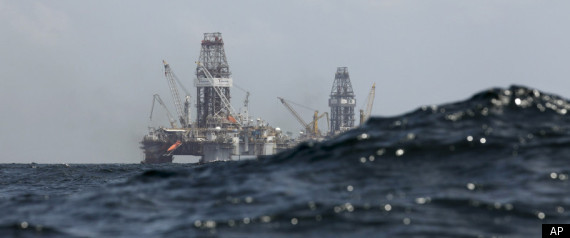
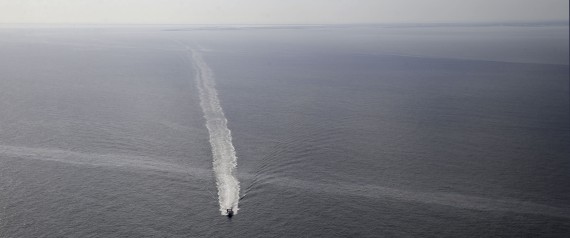
OVER THE GULF OF MEXICO (AP) — A blanket of fog lifts, exposing a band of rainbow sheen that stretches for miles off the coast of Louisiana. From the vantage point of an airplane, it's easy to see gas bubbles in the slick that mark the spot where an oil platform toppled during a 2004 hurricane, triggering what might be the longest-running commercial oil spill ever to pollute the Gulf of Mexico.

Yet more than a decade after crude started leaking at the site formerly operated by Taylor Energy Company, few people even know of its existence. The company has downplayed the leak's extent and environmental impact, likening it to scores of minor spills and natural seeps the Gulf routinely absorbs.

Monday, July 02, 2012

What is killing the dolphins in the Gulf of Mexico?

Strandings — when dolphins or other marine mammals wash up onshore, either dead or alive — are occurring at “unusual” rates in the Gulf of Mexico, worrying scientists.

From February 2010 to June 17 there have been 757 dolphin and whale strandings in the northern Gulf of Mexico, according to the U.S. National Oceanic and Atmospheric Administration (NOAA). Five per cent of the mammals stranded alive, while 95 per cent stranded dead, the federal agency reports.

Wednesday, September 14, 2011

Federal Report Released On BP Spill

A key federal report goes further than other investigations and puts ultimate responsibility on BP for the worst offshore oil spill in U.S. history and the deaths of 11 rig workers, especially regarding the cement seal that was put in place the day before the explosion that triggered the spill.

The report, released Wednesday, said in the days leading up to the disaster, BP made a series of decisions that complicated cementing operations, added risk, and may have contributed to the ultimate failure of the cement job.

Other companies also shared some of the blame, according to the report, which noted that Transocean, as owner of the Deepwater Horizon, was responsible for conducting safe operations and for protecting personnel onboard.

The report said BP, and in some cases its contractors, violated seven federal regulations at the time of the incident. They include the failure to take necessary precautions to keep the well under control at all times, to perform a cement job that kept the oil and gas down hole, and to maintain the blowout preventer – which is supposed to lock in place to prevent a spill in case of an explosion – in accordance with industry-accepted practice.
BP Oil Spill: New Evidence Cites More Mistakes

A BP scientist identified a previously unreported deposit of flammable gas that could have played a role in the Gulf of Mexico oil spill, but the oil giant failed to divulge the finding to government investigators for as long as a year, according to interviews and documents obtained by The Associated Press.

While engineering experts differ on the extent to which the two-foot-wide swath of gas-bearing sands helped cause the disaster, the finding raises the specter of further legal and financial troubles for BP. It also could raise the stakes in the multibillion-dollar court battle between the companies involved.

A key federal report into what caused the worst offshore oil spill in U.S. history is set to be released as early as Wednesday.

"This is a critical factor, where the hydrocarbons are found," said Rice University engineering professor Satish Nagarajaiah. "I think further studies are needed to determine where this exactly was and what response was initiated by BP if they knew this fact."

Thursday, August 18, 2011

BP Investigating New Sheen In The Gulf Of Mexico

LONDON - Oil giant BP said Thursday it was investigating a new sheen in the Gulf of Mexico but added there was no immediate indication it was the result of a new oil spill.

A catastrophic April 2010 explosion at BP's Macondo well in the Gulf killed 11 men and led to the worst offshore oil spill in U.S. history, although BP's description of the site of the new sheen and a statement from a U.S. official seemed to indicate that the discovery wasn't near where the Macondo well blew up.

A sheen is a shiny coating that floats on the surface of the water, and could come from leaked or spilled oil. BP did not make clear what the source of the sheen was, but told The Associated Press it was not found near "any existing BP operations."

Thursday, July 28, 2011

Your Chicken Nuggets Are Killing Your Crab Cakes

Every year in the Chesapeake Bay, an algae bloom spreads out, sucking oxygen out of the water and destroying fish habitat. This year's "dead zone" stretches from Baltimore Harbor to south of the Potomac River, the Washington Post reports. It's on track to become the bay’s largest ever. Already, fully a third of the bay—once one of the globe's most productive fisheries—is incapable of supporting sea life.

Meanwhile, down the Gulf of Mexico, the same thing is happening on an even grander scale. According to Texas A&M University researchers, this year's Gulf dead zone blots out 3,300 square miles of our nation's most important fishery—"roughly the size of Delaware and Rhode Island combined," they calculate. Before the year's out, it could as much as triple in size, the researchers fear, which would make it the Gulf's largest hypoxic (oxygen-depleted) area ever.