Democracy Gone Astray

Democracy, being a human construct, needs to be thought of as directionality rather than an object. As such, to understand it requires not so much a description of existing structures and/or other related phenomena but a declaration of intentionality.
This blog aims at creating labeled lists of published infringements of such intentionality, of points in time where democracy strays from its intended directionality. In addition to outright infringements, this blog also collects important contemporary information and/or discussions that impact our socio-political landscape.

All the posts here were published in the electronic media – main-stream as well as fringe, and maintain links to the original texts.

[NOTE: Due to changes I haven't caught on time in the blogging software, all of the 'Original Article' links were nullified between September 11, 2012 and December 11, 2012. My apologies.]

Monday, March 11, 2013

Harper isolated as Latin American leaders acknowledge Chavez's regional importance

Politicians and dignitaries from around the world attended today's funeral for Hugo Chavez in Venezuela. This article surveys the response of Latin American leaders to the news of Chavez's death, constrasting that with the nearly identical statements of the Canadian and U.S. governments.

Tuesday afternoon Venezuelan President Hugo Chávez passed away, after a long battle with cancer. The announcement by Vice President Nicolás Maduro came just minutes after Chávez’s death and elicited an immediate wave of obituary pieces by pundits who described Chávez as "divisive," "authoritarian," "antagonistic" and "anti-American," many of them eager to rush the "transition" in the hopes that Chávez's political project would soon fall apart.

British women slip down scale on job security and equal pay

Women in the UK have lower job security and greater pay inequality than those in other developed countries, research shows. They are also less likely to be in work than their counterparts in other OECD countries, according to the report by PriceWaterHouseCoopers (PwC).

The Women in Work Index ranked the UK 18th of 27 OECD (Organisation for Economic Co-operation and Development) countries in five areas of "female economic empowerment" such as pay equality, the female unemployment rate, and the proportion of women working full-time. The figures were from 2011, the latest year for which comparable data was available.

Four public officials admit selling information to Sun

Two former police officers, an ex-prison officer and another public official have admitted selling information to the Sun – the first people to plead guilty in relation to the investigation into alleged illegal payments by journalists.

Alan Tierney, an ex-Surrey police constable, and former prison officer Richard Trunkfield, both pleaded guilty to misconduct in a public office at the Old Bailey on Friday morning during plea and case management hearings.

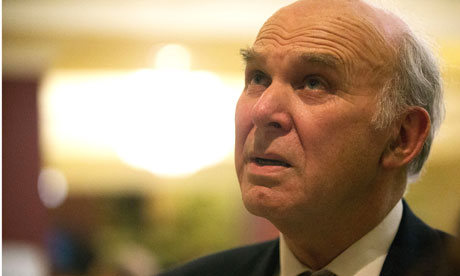
Vince Cable exposes coalition divisions over austerity

Political divisions over continuing austerity widened as the business secretary, Vince Cable, warned David Cameron that very serious damage will be done to British industry if the prime minister continues to insist only some departments will be subject to spending cuts .

In a fresh intervention, the Liberal Democrat also called for affluent pensioner perks such as winter fuel payments and free TV licences to be taxed, and proposes up to £15bn of capital spending on house building less than two weeks before the budget is due to be unveiled.

North Korea Ends Peace Pact With South As UN Sanctions Fuel Propaganda

SEOUL, South Korea — Seven years of U.N. sanctions against North Korea have done nothing to derail Pyongyang's drive for a nuclear weapon capable of hitting the United States. They may have even bolstered the Kim family by giving their propaganda maestros ammunition to whip up anti-U.S. sentiment and direct attention away from government failures.

In the wake of fresh U.N. sanctions leveled at North Korea on Thursday for its latest nuclear test, the question is: Will this time be different?

The Sequester Cuts' Impact Goes Deeper Than White House Tours

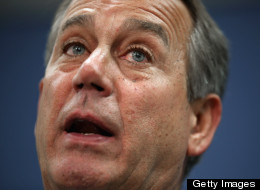
WASHINGTON -- The debate over sequestration this past week has come down to two questions: Was the administration exaggerating the impact of the spending cuts, and did they really need to shut down White House tours because of them?

It's been the predominant theme at the White House briefings, a constant subject of discussion on cable news and a topic of fascination on Capitol Hill. House Speaker John Boehner (R-Ohio) even took up the cause at a press briefing this week, saying: "I think it's silly that they have insisted on locking down the White House, which the American people actually own."

The Market Speaks

Four years ago, as a newly elected president began his efforts to rescue the economy and strengthen the social safety net, conservative economic pundits — people who claimed to understand markets and know how to satisfy them — warned of imminent financial disaster. Stocks, they declared, would plunge, while interest rates would soar.


 Even a casual trawl through the headlines of the time turns up one dire pronouncement after another. “Obama’s radicalism is killing the Dow,” warned an op-ed article by Michael Boskin, an economic adviser to both Presidents Bush. “The disciplinarians of U.S. policy makers return,” declared The Wall Street Journal, warning that the “bond vigilantes” would soon push Treasury yields to destructive heights.

February Jobs Report: U.S. Economy Adds 236,000 Jobs; Unemployment Rate Down To 7.7

Despite constant budget fights in Washington, the U.S. economy managed one of the best months for job gains in the past year in February, driving the unemployment rate to its lowest level in more than four years.

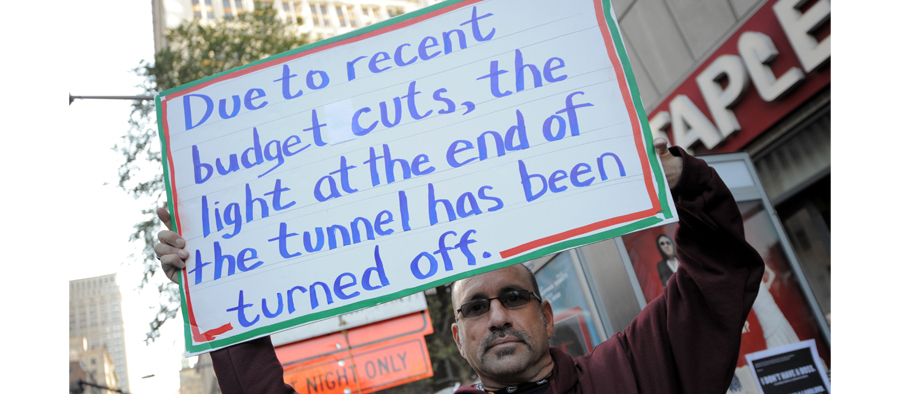
But the job market would be even better, and the unemployment rate even lower, had not the government spent most of the recovery cutting spending and jobs. And though Wall Street may cheer February's jobs report, the pain of government cutbacks looks to get worse as the year goes on.

With friends like these …

Former Alberta premier Ernest Manning had a saying: “A bright light attracts bugs.”

Mindful of his father’s warning, former Reform Party leader Preston Manning, head of the Manning Centre for Democracy and the driving force behind this week’s Manning Networking Conference, required all Reform candidates in the 1993 federal election to fill out a 40-page questionnaire detailing their private lives, beliefs, values — even relatives whose views and opinions might prove embarrassing to the new party.

Tom Flanagan’s defenders speak up

Slowly, but surely, Tom Flanagan’s supporters are emerging. It’s taken a few days. Just over a week ago, Flanagan made remarks at the University of Lethbridge related to child pornography. He questioned whether people should be locked up “because of their taste in pictures.” He apologized for the remarks, and repeated the apology in the National Post, but it was too late. He suffered a public avalanche of condemnation, and was unceremoniously dumped as a CBC commentator and dismissed as an adviser to Alberta’s Wildrose Party.