Democracy Gone Astray

Democracy, being a human construct, needs to be thought of as directionality rather than an object. As such, to understand it requires not so much a description of existing structures and/or other related phenomena but a declaration of intentionality.
This blog aims at creating labeled lists of published infringements of such intentionality, of points in time where democracy strays from its intended directionality. In addition to outright infringements, this blog also collects important contemporary information and/or discussions that impact our socio-political landscape.

All the posts here were published in the electronic media – main-stream as well as fringe, and maintain links to the original texts.

[NOTE: Due to changes I haven't caught on time in the blogging software, all of the 'Original Article' links were nullified between September 11, 2012 and December 11, 2012. My apologies.]

Monday, July 29, 2013

Canada's history awash with crimes against First Nations

The CBC National News began one evening last week with these words from anchor Paul Hunter: "It's the kind of revelation that makes you shudder, shake your head, wonder how it could ever happen in Canada." I was transfixed. What could possibly lead to such subjectivity, such raw emotion, from the always cool, detached, neutral public broadcaster? Had the Prime Minister added Prince George Alexander Louis to his enemies' list?

What an anti-climax. All it was was another scandalous injustice that Canada had perpetrated against its aboriginal people since Confederation, this time the cold-blooded deprivation of food and medicine to kids at residential schools in the name of nutritional experiments. Seriously, people, if the media were going to go ballistic every time a new atrocity against Native peoples was revealed, there'd never be anything else on the news.

Young Workers Face 'Crisis' of Scarce Good Jobs

Bonnie Hammond doesn't need statistics to understand the precarious job landscape B.C. offers young people today. Her first paid gig was a paper route at 12, and by the time she was 15 she was working in an ice-cream parlour. After leaving school at 16, she worked at "every crappy retail and office job in the province," moving so often from one temporary job to another that by 24, she could count up over 50 different employers.

Senate reform debate lacks creativity, ignores real problem

OTTAWA—If polls are correct, Canadians are looking for Senate reform following recent scandals that have rocked the upper chamber of Parliament and will continue to gain momentum as the RCMP pursues its investigation. But the reform debate thus far fails to address the real issue of under-representation facing Canada’s democracy and lacks creativity in finding solutions.

The two most prominent options under consideration include an elected or an abolished Senate. While both are certainly different than the current institution, neither option fundamentally improves Canada’s democracy. In fact, both options risk entrenching a status quo that excludes many from the political decision-making process.

For Harper’s Conservatives, Senate reform is mostly about the form

OTTAWA—When facing a battle on democratic reform, Stephen Harper decided to focus on the battle, not the reform.

As the only party in Parliament with an ambivalent position on the Senate, you could be forgiven for expecting the Prime Minister to unearth a constitutional expert to help draft out the party’s policy—now that the old ones have been thrown out—on the much-maligned institution. Instead, he’s decided to assign his personal attack dog Pierre Poilievre as minister of state for Democratic Reform.

Will Aglukkaq do for environment what she did for health?

GATINEAU, QUE.—Stephen Harper’s ministers tend to have little more presence than plastic markers in a board game, but Leona Aglukkaq is singularly opaque.

Her tenure as health minister was marked by dutiful announcements of small grants to friendly groups and heavily-scripted photo-ops. She banned cancer-causing chemicals in toys. But anything more substantial—even warning of the dangers of too much salt, informing Canadians of the perils of energy drinks, or acting against trans-fats—was an unacceptable intrusion into private decisions.

Millions continue to be spent by federal government on promotion of ‘natural resource development’ in Canada

Advertising funding allocated to the federal Department of Natural Resources totalled $9-million in 2012-2013 according to the Treasury Board of Canada Secretariat, and represented just over 14 per cent of total government advertising expenditures last year.

But this year, funding projections for natural resources promotion increased by more than 83 per cent to $16.5-million after supplementary estimates tabled in late March indicated the ministry was seeking an extra $4.5-million in addition to the original $12-million departmental advertising budget allocated for 2013-2014.

‘Absolute disgrace’ PBO forced to file ATIPS to find out impact of billions in federal spending cuts

Opposition parties say it’s “an absolute disgrace” employees in the Parliamentary Budget Office will have to file access to information requests to analyse the effects of the $5.2-billion in government cuts announced in the 2012 budget after interim PBO Sonia L’Heureux publicly announced last week that most government agencies and departments were not cooperating with her.

NDP finance critic Peggy Nash (Parkdale-High Park, Ont.) said “nothing is off the table at this point,” when it comes to holding the government to account and helping the Parliamentary Budget Office get information on the $5.2-billion in government cuts announced in the 2012 budget.

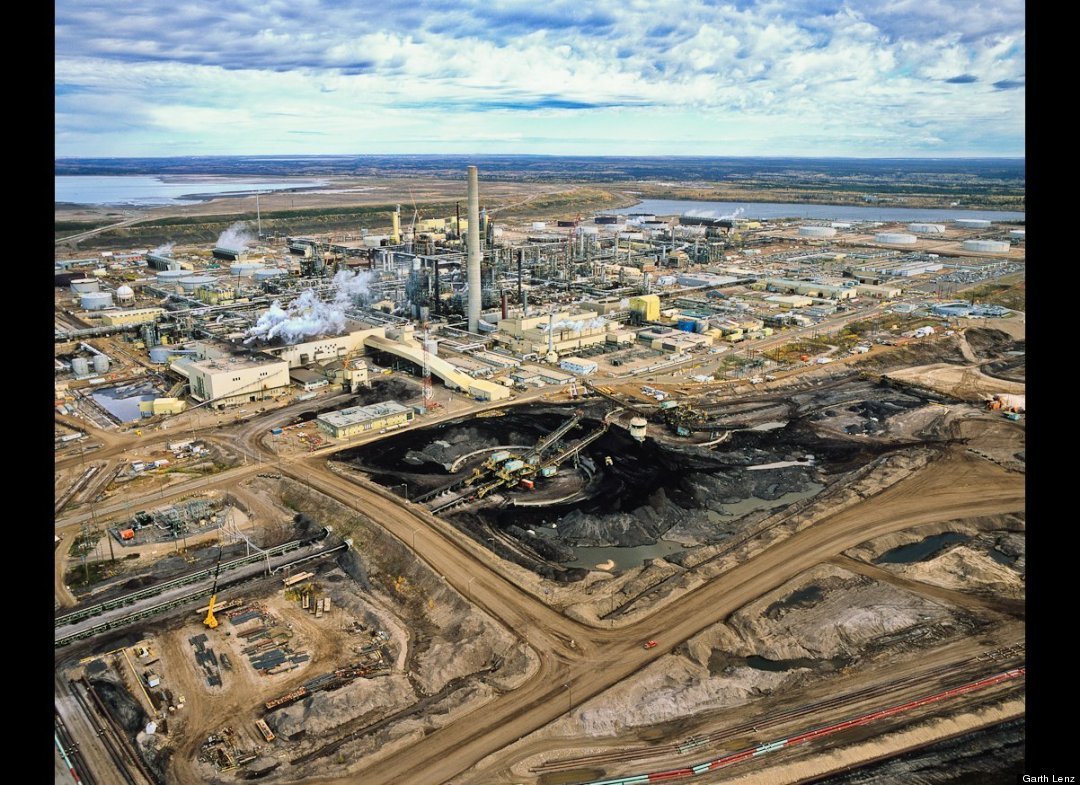
Feds, industry investing in innovation to clean up the oilsands


Government and industry continue to invest in research and development to reduce the environmental impacts of oilsands development, but it appears unlikely that the sector will adopt greener practices without tougher regulations.

The federal and Alberta governments and the oil industry are making multi-million dollar investments aimed at addressing the impact of oilsands development on land and water usage and carbon emissions, in some cases independently and other cases partnering on specific projects and initiatives.

Oil Sands: 4,000 Environmental Infractions, 40 Punishments

A new report out today finds that environmental infractions by companies in the Alberta oil sands are addressed with an enforcement action far less often than similar infractions reported to the United State's Environmental Protection Agency (EPA).

The report [pdf], authored by the environmental non-profit Global Forest Watch, looked at more than 15 years of data on recorded environmental mishaps by oil sand's companies, tracking the follow-up actions taken and the final verdict on fines.

Conservatives push to restrict temporary releases of federal prisoners

The Harper government says it is pushing forward with plans to place more restrictions on temporary releases of federal inmates, even as an internal Correctional Service of Canada briefing document highlights their benefits.

Inmates can be granted escorted and unescorted “temporary absences” for a variety of reasons: to perform community service, attend medical appointments or treatment programs, and visit with family members. They can last a few hours, a few days or even weeks.