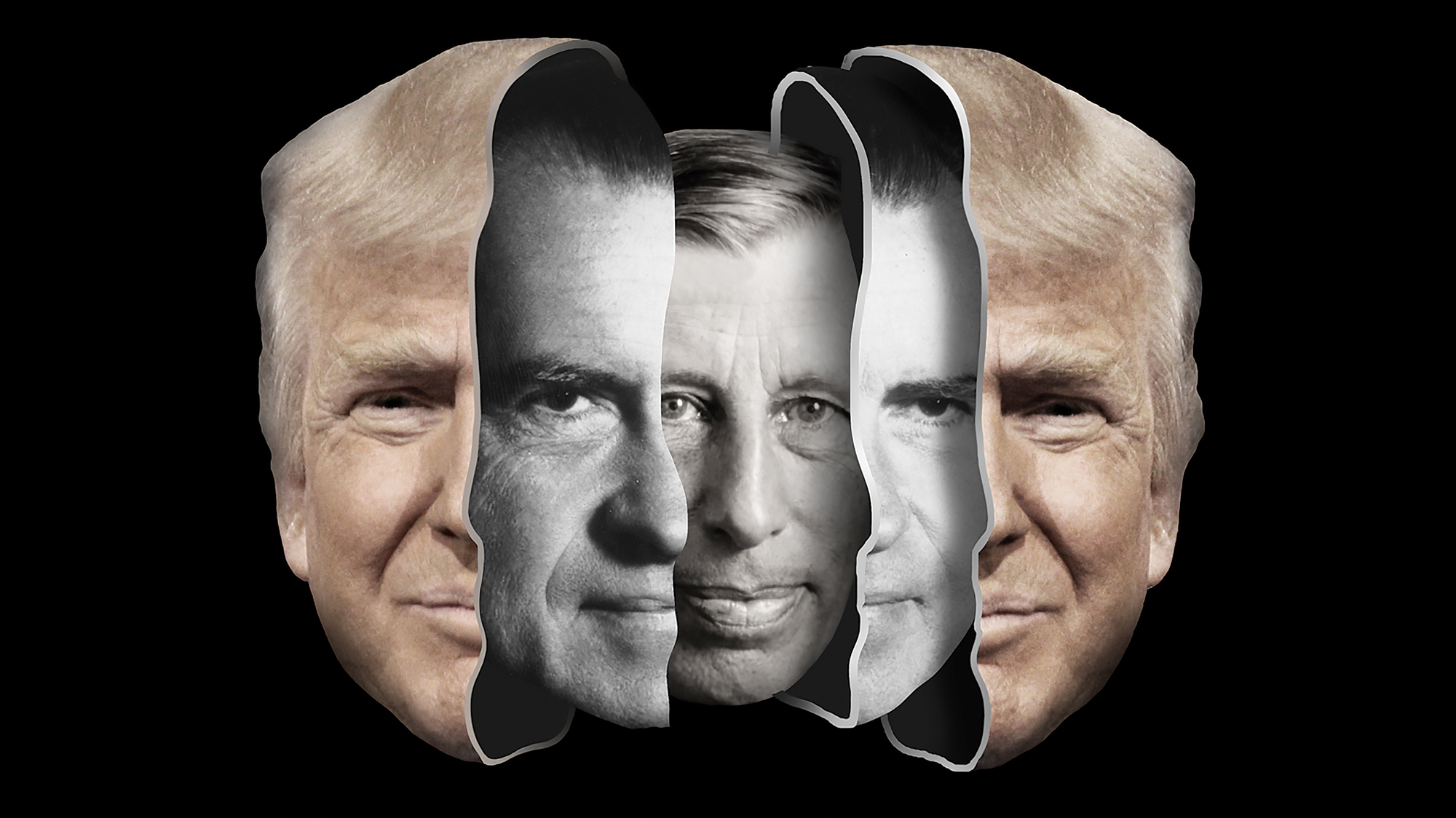
In the annals of presidential directives, few were more chilling than a document signed by President Dwight D. Eisenhower in April 1953. Crafted during the height of the Cold War, Executive Order 10450 declared that alongside Communism, “sexual perversion” by government officials was a threat to national security. The order became the trigger for a massive purge of the federal workforce. In the years that followed, thousands of government employees were investigated and fired for the “crime” of being gay.
Democracy Gone Astray
Democracy, being a human construct, needs to be thought of as directionality rather than an object. As such, to understand it requires not so much a description of existing structures and/or other related phenomena but a declaration of intentionality.
This blog aims at creating labeled lists of published infringements of such intentionality, of points in time where democracy strays from its intended directionality. In addition to outright infringements, this blog also collects important contemporary information and/or discussions that impact our socio-political landscape.
All the posts here were published in the electronic media – main-stream as well as fringe, and maintain links to the original texts.
[NOTE: Due to changes I haven't caught on time in the blogging software, all of the 'Original Article' links were nullified between September 11, 2012 and December 11, 2012. My apologies.]
Showing posts with label History. Show all posts
Sunday, September 17, 2023
In The Closet In The White House: The Tortured History Of The Gay Man Who Touched Off The Purge Of Gays In Government
In the annals of presidential directives, few were more chilling than a document signed by President Dwight D. Eisenhower in April 1953. Crafted during the height of the Cold War, Executive Order 10450 declared that alongside Communism, “sexual perversion” by government officials was a threat to national security. The order became the trigger for a massive purge of the federal workforce. In the years that followed, thousands of government employees were investigated and fired for the “crime” of being gay.
Friday, August 03, 2018
How a Young Army Officer Built America’s Empire of Paranoia From 85,000 Index Cards
Manila, 1901. The city is a steamy mix of grand Spanish colonial buildings mildewed from tropical humidity, the ramshackle dwellings of hundreds of thousands of Filipinos, and horse-drawn wagons rumbling through squares and gates with names like Plaza de Cervantes and Puerta de Isabel II. Hastily erected hotels, houses of prostitution, and gambling dens cater to a flood of newly arrived Americans: bureaucrats, missionaries, merchants, speculators—and soldiers. Despite its swift victory in the Spanish-American War three years earlier, the United States is now in the middle of its first protracted war in Asia. Filipino nationalists, delighted to be free at last from several centuries of Spanish rule, have discovered that the US troops with leggings tucked into their high boots whom they first hoped were liberators are in fact here to establish an American colony. The brutal conflict now underway will eventually leave more than 200,000 Filipinos dead.
Wednesday, August 01, 2018
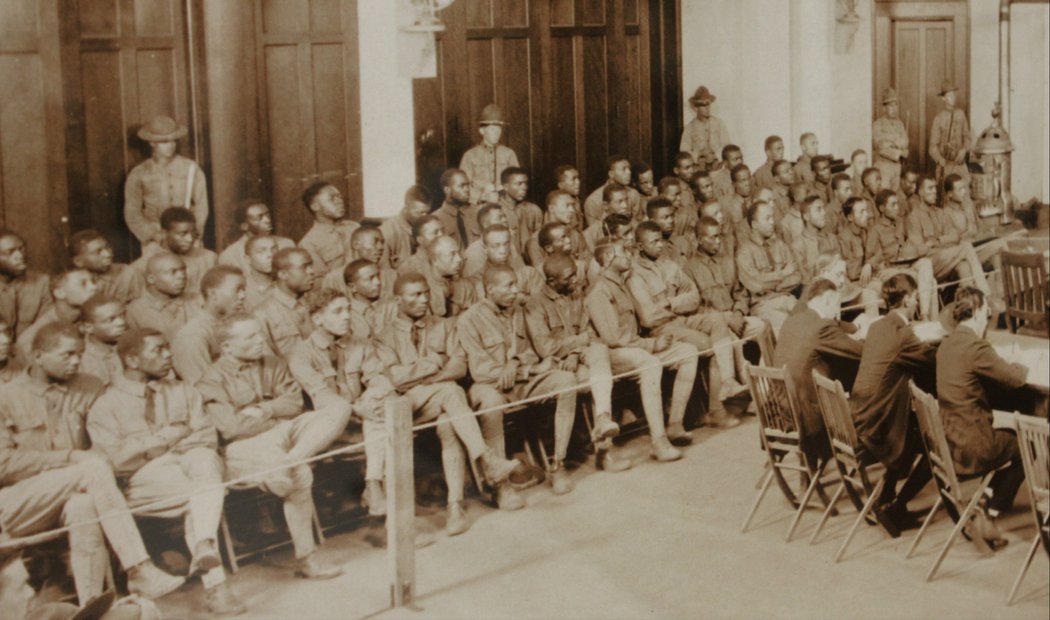
A Century Later, a Little-Known Mass Hanging of Black Soldiers Still Haunts Us
After Hurricane Harvey devastated Houston in September, recovery and clean-up workers discovered that vandals had smeared red paint over a historical marker at the one-time location of Camp Logan, recently rededicated to commemorate the 100th anniversary of the Houston “riot” of 1917.
The paint covered the segment of the inscription that explained the history of the Third Battalion of the 24th United States Infantry, a predominantly black unit assigned to guard the camp during its construction shortly after the United States entered World War I.
Saturday, July 28, 2018
Paleo Politics
Four years before World War I shattered the empires of Europe, the Encyclopaedia Britannica predicted an indefinite age of peace and commercial prosperity. Published at the high-water mark of imperial self-confidence, the entry on “civilization” was particularly optimistic. Thanks to technology and moral enlightenment, the writers judged, an increasingly connected world was hurtling toward the age of “cosmopolite man,” who would enjoy leisure and freedom in a global community of equals. “When this ideal is attained,” the Encyclopaedia promised, “mankind will again represent a single family, as it did in the day when our primeval ancestors first entered on the pathway of progress.”
Thursday, July 26, 2018
Why Putin Won’t Be Marking the Hundredth Anniversary of the Bolshevik Revolution
On November 7th, the dwindling tribe of Communist Party loyalists and nostalgists will commemorate the hundredth anniversary of the Bolshevik Revolution. Vladimir Putin, however, has made it clear that the centenary is not an occasion for state celebration. While the foreign press has published countless perspectives on Lenin and Trotsky, Soviet Communism, and the global influence of those revolutionary days, as far as the Kremlin is concerned, November 7th in Russia should be an ordinary working day. Why that’s so is at the very center of Putin’s political outlook and his view of the history of the Russian state.
Wednesday, July 25, 2018
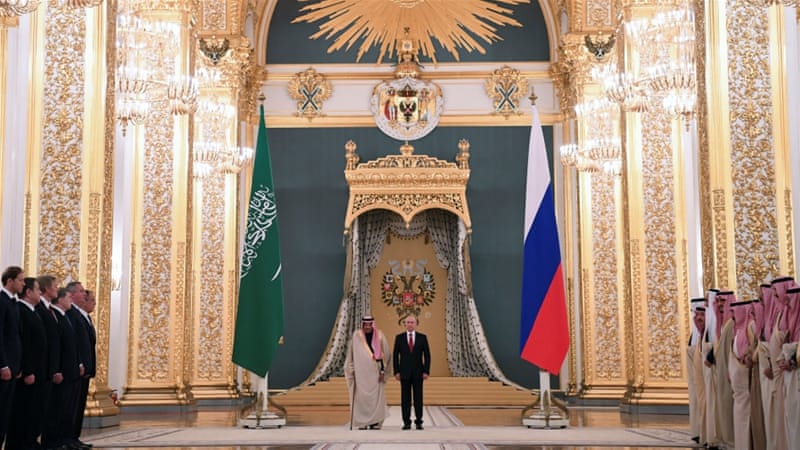
How Moscow lost Riyadh in 1938
Last week, Saudi King Salman was greeted in Moscow with a lot of pomp and media attention. The 81-year-old monarch arrived with a 1,500-strong delegation amid high expectations for major political and trade deals.
The first visit of a Saudi king to Russia was rich in diplomatic courtesies, but it lacked in substance. What came out of the three days of meetings was much more modest than expected.
Monday, July 23, 2018
When Nazis filled Madison Square Garden
Anxious to find precedents for the frightening and ultimately deadly white nationalist, “Unite the Right” rally in Charlottesville, some media outlets have likened the images of the recent mayhem in Virginia to the chilling ones of the German-American Bundrally that filled Madison Square Garden on February 20, 1939, with 22,000 hate-spewing American Nazis.
That rally, the largest such conclave in U.S. history, shocked Americans at the time. They had seen the press accounts and newsreel footage of the Nazis’ massive Nuremburg rallies; they had read about Kristallnacht, the murderous, two-day anti-Semitic pogrom of November 1938, which the Bund — the fast-growing, American version of the German Nazi party, which trumpeted the Nazi philosophy, but with a stars-and-stripes twist — had unabashedly endorsed.
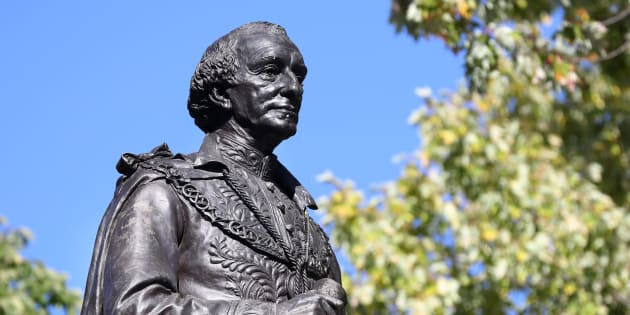
Liberal Government Must Face 'True History' Of Canada's Key Figures: Indigenous Activists
OTTAWA — The federal government is facing increased pressure from Indigenous advocates to confront how historical figures are celebrated in Canada following the passage of a motion by an Ontario teachers' union calling for the removal of Sir John A. Macdonald's name from elementary schools in the province.
A bigger conversation needs to unfold nationally about the role of historic figures in the "dark realities of colonialism", NDP MP and Indigenous affairs critic Romeo Saganash said Friday, adding it is the responsibility of Ottawa to begin this dialogue "in the spirit of reconciliation" with Indigenous Peoples.
Wednesday, March 01, 2017
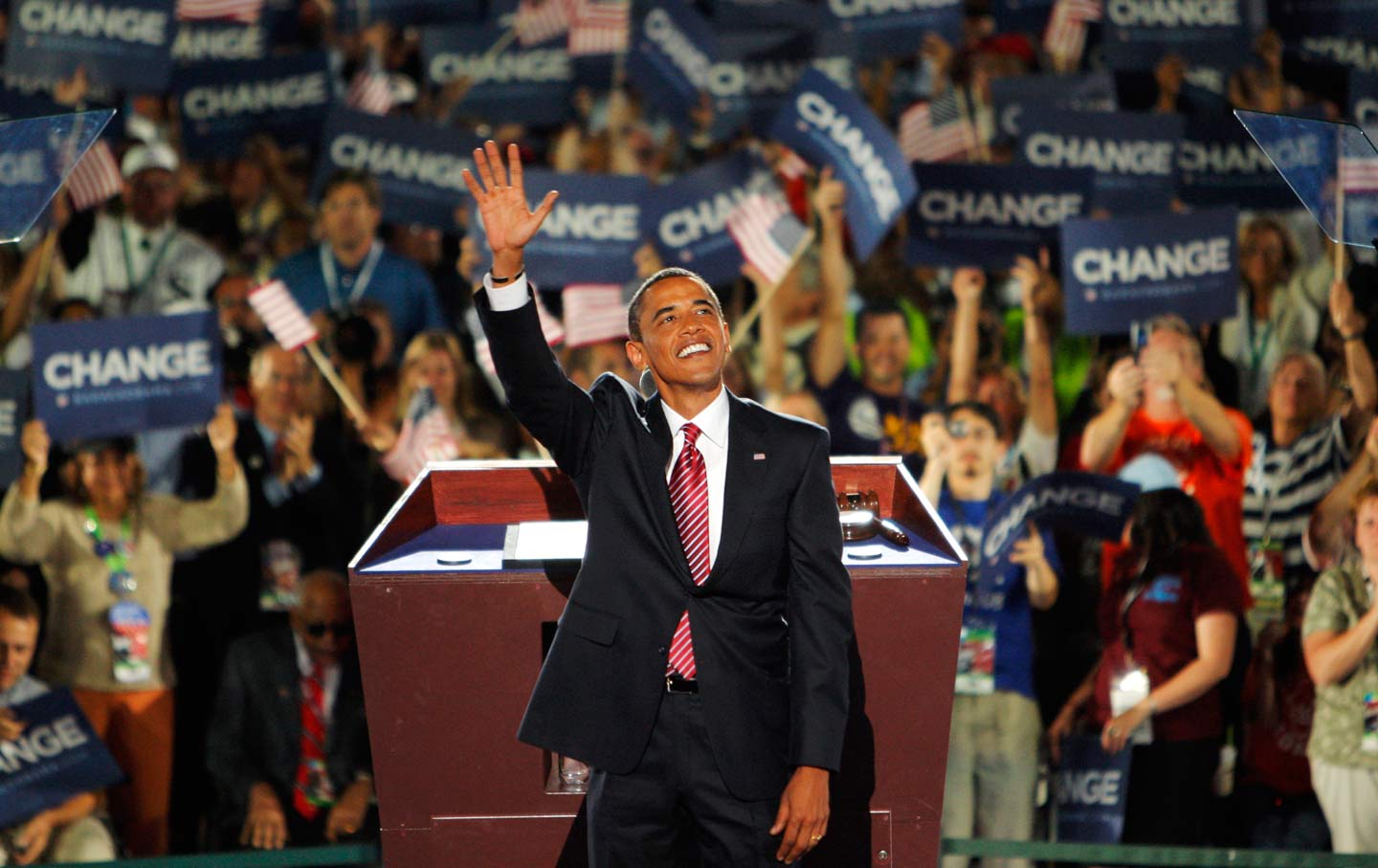
Barack Obama Radically Expanded Our Appreciation of African-American History
Among its other accomplishments, the presidency of Barack Obama—you do remember it?—featured an unmistakable expansion of public appreciation for African-American history. This was especially true as his time remaining in the White House dwindled away: From the opening of the Smithsonian’s Museum of African-American History and Culture to the designation of a site in South Carolina as the nation’s first national park devoted to Reconstruction, the Obama presidency ended with considerable emphasis on how the nation conceives of African-American history in public spaces. In many ways, and despite whatever uncertainties lie ahead, Obama’s attempts to memorialize more of the African-American experience enhanced the meaning of what it means to be an American.
Tuesday, December 27, 2016
How Will History Judge Barack Obama?
There are three different temporal perspectives from which to evaluate the presidency of Barack Obama. There’s the perspective of November 8, when it was widely anticipated that he would hand off the White House to his favored successor and thus cement his legacy. Then there’s the perspective of November 9, when the most shocking electoral upset in American history was accomplished by a man who is in every way—from ideology to temperament to skin color—a repudiation of our nation’s first black president. Lastly, there’s the perspective historians will take decades from now, as they assess Obama’s entire tenure in comparison with what came after it—so long as what comes after isn’t total nuclear annihilation. (I’m joking… mostly.) Obviously, it’s the last of these perspectives that will prove most useful. But sitting here in 2016, I don’t have the luxury of distance, and so I find myself torn between the first two.
Friday, February 12, 2016
Notion of Elite Guardian Class Dates Back to Founding of US
Noam Chomsky explores the possibilities for a better human society in What Kind of Creatures Are We?, a collection of lectures bringing together his areas of expertise from language and mind to society and politics. This book serves as both a concise summation of Chomsky's linguistic theories and a demonstration of how that work connects to his political philosophy. Order your copy by making a tax-deductible donation today!
In this excerpt from What Kind of Creatures Are We?, Noam Chomsky discusses the historical embedding of an elite "guardian class" in US society going back to the framers of the Constitution.
Thursday, February 11, 2016
Mass Incarceration Since 1492: Native American Encounters With Criminal Injustice
The recent right-wing militia occupation of federal land in Oregon once again reminds us that we actually live in what historian Roxanne Dunbar-Ortiz refers to as the US "settler colonial state." Amazingly, Ammon Bundy and his clan took over this land with the claim that they were the rightful owners. With typical settler arrogance, they neglected the historical truth - that the Indigenous people of the Northern Paiute nation were there long before a single imperialist ship set sail from Europe. As journalist Simon Moya-Smith has pointed out "for Native America being overlooked is nothing new. Our voices are seldom in the mainstream, our issues disregarded ... this country has yet to recognize our humanity."
Monday, October 19, 2015
Remember When America Doubted Capitalism?
- The Age of Acquiescence: The Life and Death of American Resistance to Organized Wealth and Power
- Steve Fraser
- Little, Brown (2015)
Monday, September 07, 2015
The Bloody Origin Of Labor Day
WASHINGTON -- Most people know Labor Day as an extra day off of work. Fewer know the holiday comes from a time when the government was offing workers.
It all started with a bad recession in the early 1890s that reduced demand for railway cars, prompting Chicago railway magnate George Pullman to lay off workers and reduce wages. Many of his workers went on strike. The sympathetic American Railway Union refused to handle Pullman cars, hampering commerce in many parts of the country.
Monday, May 18, 2015
Study Busts Narrative Of First Nations As Simple Hunter-Gatherers
VANCOUVER - The discovery of an expansive system of historic clam gardens along the Pacific Northwest coast is contributing to a growing body of work that's busting long-held beliefs about First Nations as heedless hunter-gatherers.
A team of researchers at Simon Fraser University has revealed that First Nations from Alaska to Washington state were marine farmers using sophisticated cultivation techniques to intensify clam production.
Wednesday, April 08, 2015
Education Of Residential Schools Should Be Mandatory: Commissioner
SASKATOON - A commissioner on the Truth and Reconciliation Commission wants mandatory education about residential schools for students across Canada.
Marie Wilson was in Saskatoon last week to speak about the legacy the commission will leave behind when it wraps up with closing events in Ottawa at the end of May.
Wilson says she hopes the commission will inspire jurisdictions across Canada to include residential school history as a required course to graduate high school.
Marie Wilson was in Saskatoon last week to speak about the legacy the commission will leave behind when it wraps up with closing events in Ottawa at the end of May.
Wilson says she hopes the commission will inspire jurisdictions across Canada to include residential school history as a required course to graduate high school.
Monday, February 09, 2015
Remembering the Watts Rebellion, Operation Chaos and the Infectious Logic of National Security
Fifty years ago, during the hot, dry days of early August, the city of Los Angeles erupted in flames in a weeklong riot leaving dozens dead, more than 3,000 arrested and $40 million in property damage. This landmark event came to be known as the Watts rebellion of 1965. This year also marks 40 years since the revelations of the Senate committee and Rockefeller Commission investigations of US intelligence covert activity against US dissidents throughout the 1960s and early 1970s. Both legendary events and their interrelationship have something important to teach us about the growth of the national security state (NSS) and the criminalization of US dissent.
Tuesday, November 25, 2014
On Remembering 'Democracy'
A couple in their nineties are both having problems remembering things. During a checkup, the doctor tells them that they're physically okay, but they might want to start writing things down to help them remember.
Later that night, while watching TV, the old man gets up from his chair.
'Want anything while I'm in the kitchen?' he asks.
'Will you get me a bowl of ice cream?'
'Sure.'
'Don't you think you should write it down so you can remember it?' she asks.
'No, I can remember it.'
'Well, I'd like some strawberries on top, too. Maybe you should write it down, so as not to forget it?'
He says, 'I can remember that. You want a bowl of ice-cream with strawberries.'
'I'd also like whipped cream. I'm certain you'll forget that, write it down?' she asks.
Irritated, he says, 'I don't need to write it down; I can remember it! Ice cream with strawberries and whipped cream - I got it, for goodness sake!'
Then he toddles into the kitchen. After about 20 minutes, the old man returns from the kitchen and hands his wife a plate of bacon and eggs. She stares at the plate for a moment.
'Where's my toast?'
Thursday, September 18, 2014
The true legacy of the Franklin expedition
Raw footage of the Franklin ship is blue and wan. Under floating motes lies the sunken span of spars and timbers that aspired in their heyday to signify Britain’s colonial glory. Today’s Canadian government grasps at credit for resuscitating that glory, yet fails to notice that everything about the new-found Franklin ship has become dead and somehow shameful, as has the old colonial idea of the Northwest Passage itself. The true emotional content of these new images is not triumph, but disgrace.
Saturday, March 29, 2014
Rwanda Genocide Anniversary: 20 Years Later, Flame Stirs Memories
NYARUBUYE, Rwanda (AP) — Rows of human skulls sit in glass cases near the red brick Catholic church here. Some are cracked in half; holes are punched in others. Hundreds of arm and leg bones lie nearby. To the left is a table of tools: rusty shovels, hoes, pipes, and a machete — the weapons of genocide.
Down the hill 10 miles (15 kilometers), thousands of Rwandans gathered under spittles of rain to watch the arrival of a small flame, symbolic fire traveling the country as Rwanda prepares to mark 20 years since ethnic Hutu extremists killed neighbors, friends and family during a three-month rampage of violence aimed at ethnic Tutsis and some moderate Hutus.
Subscribe to:
Posts (Atom)