After a hiatus from the Ukraine and Russia file for much of 2015, the editor of Canada's largest daily newspaper has opened the year 2016 with sharp words for Russia, notably the "lightning annexation of Crimea" and the "Moscow-backed separatist rebellion in eastern Ukraine" which Russia is said to have sprung on the world in early 2014. Olivia Ward pens anarticle in the January 10, 2016 edition of the Toronto Star loaded with grim predictions for Russia's economy in 2016 and of "swelling grassroots outrage" against the rule of President Vladimir Putin.
Democracy Gone Astray
Democracy, being a human construct, needs to be thought of as directionality rather than an object. As such, to understand it requires not so much a description of existing structures and/or other related phenomena but a declaration of intentionality.
This blog aims at creating labeled lists of published infringements of such intentionality, of points in time where democracy strays from its intended directionality. In addition to outright infringements, this blog also collects important contemporary information and/or discussions that impact our socio-political landscape.
All the posts here were published in the electronic media – main-stream as well as fringe, and maintain links to the original texts.
[NOTE: Due to changes I haven't caught on time in the blogging software, all of the 'Original Article' links were nullified between September 11, 2012 and December 11, 2012. My apologies.]
Tuesday, January 26, 2016
The Crackpot Alternative Legal System That Threatens To Escalate The Oregon Standoff
Events in Harney County, Oregon, seem to be taking a turn toward escalation.
Armed men have been occupying a wildlife refuge for two weeks by now, saying they’re taking a stand against the federal government’s management of public land. They’ve recently stepped up their acts of protest: Earlier this week, they used a federal bulldozer to tear down a fence dividing private ranchlands from the public’s terrain at one edge of the refuge, which represents a more direct flouting of the law than even the occupation itself.
3 Troubling Ways the Charter School Boom Is Like the Subprime Mortgage Crisis
Acting US Secretary of Education John King has called charter schools "good laboratories for innovation." It's that kind of language that's helped the number of public charters jump from 1,542 in 1999 to 6,723 in 2014—when more than 1 million students sat on charter school waiting lists, including a whopping 163,000 in New York City alone.
But, as four researchers argue in a recent study in the University of Richmond Law Review, charter schools could be on the same path that led to the subprime mortgage crisis.
Hillary Clinton doesn't trust you
Hillary Clinton's campaign has spent the past few days indulging its worst instincts. It blundered into a dumb attack on Bernie Sanders, but rather than back down it raised the stakes. The result has been a reminder, to liberals, of what they like about Sanders and mistrust about Clinton. But it's also been a missed opportunity for Clinton to make the case to Democratic primary voters that she should have been making all along.
The subject was Sanders's support for a single-payer health care system. The policy puts Clinton in a bind: It's popular with liberals but dangerous in a general election. Sanders's support for it is, to Clinton, everything wrong with his campaign in miniature — it's an idea that sounds good on the stump but really reveals a preference for ideological symbolism over the hard work of policy change.
Why cheap hydro was too good to be true
Nothing gets a rise out of ratepayers like rising electricity bills.
But here’s an inconveniently powerful truth about power rates: We may be suffering from hydro hysteria — and electricity amnesia.
Yes, prices are going up faster than in recent memory. True, the price of power remains a lightning rod for the party in power.
But here’s an inconveniently powerful truth about power rates: We may be suffering from hydro hysteria — and electricity amnesia.
Yes, prices are going up faster than in recent memory. True, the price of power remains a lightning rod for the party in power.
The greatest trick Obama ever pulled was convincing the world America isn't still at war
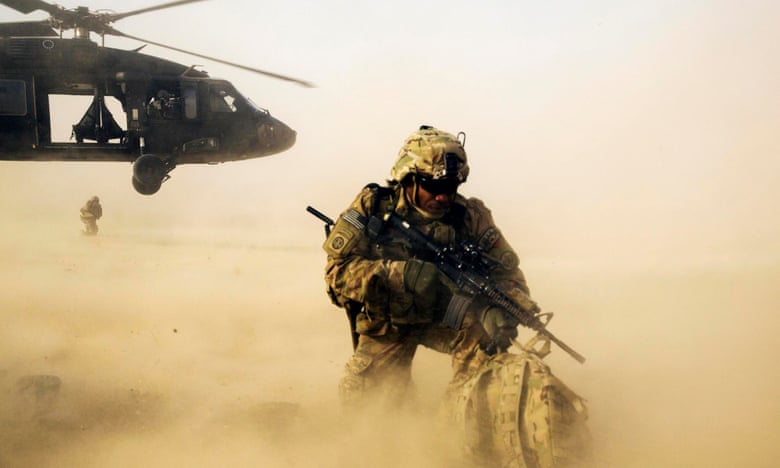
The holiday headlines blared without a hint of distrust: “End of War” and “Mission Ends” and “U.S. formally ends the war in Afghanistan”, as the US government and Nato celebrated the alleged end of the longest war in American history. Great news! Except, that is, when you read past the first paragraph: “the fighting is as intense as it has ever been since the U.S.-led invasion in 2001,” according to the Wall Street Journal. And about 10,000 troops will remain there for the foreseeable future (more than we had a year after the Afghan war started). Oh, and they’ll continue to engage in combat regularly. But other than that, yeah, the war is definitely over.
The troubling link between health care and intellectual property in the TPP
Problems? Oh, the Trans-Pacific Partnership has a few! Read about them all in the new seriesThe Trouble with the TPP.
The link between health care and the TPP's intellectual property chapter is easy to spot, but there are other chapters with implications for the issue.
The Trouble with the TPP series considers Chapter 8, which covers Technical Barriers to Trade (TBT). The chapter contains some surprising restrictions on the ability for national regulators to require the disclosure of certain information as part of the regulatory review process for pharmaceutical products and medical devices.
B.C. Supreme Court rules government failed to consult First Nations on Northern Gateway
"This is a huge victory that affirms the provincial government's duty to consult with and accommodate First Nations and to exercise its decision-making power on major pipeline projects," said Arnold Clifton, Chief Councillor of the Gitga'at First Nation in astatement.
In June 2010, the B.C. Liberals signed an "equivalency agreement" with the federal government, giving final say of the project's environmental assessment to the National Energy Board.
Trans-Pacific Partnership Can't Be Renegotiated, Canadians Must Pick 'Yes' Or 'No': Freeland
MONTREAL — A renegotiation of the Trans-Pacific Partnership trade deal is not possible even though serious concerns may be raised during public consultations, Canada's trade minister said Thursday.
"The negotiations are finished and for Canadians it's important to understand that it's a decision of yes or no," Chrystia Freeland told reporters Thursday after receiving varied feedback at a meeting at the University of Montreal.
What Kevin O’Leary doesn’t know about Alberta could fill a book he’d never read
In offering to give Alberta’s premier a million dollar investment in the oilpatch in return for her resignation, O’Leary declared both what he and his class stand for — and, more importantly, what they think of democracy.
Subscribe to:
Posts (Atom)
