Democracy Gone Astray

Democracy, being a human construct, needs to be thought of as directionality rather than an object. As such, to understand it requires not so much a description of existing structures and/or other related phenomena but a declaration of intentionality.
This blog aims at creating labeled lists of published infringements of such intentionality, of points in time where democracy strays from its intended directionality. In addition to outright infringements, this blog also collects important contemporary information and/or discussions that impact our socio-political landscape.

All the posts here were published in the electronic media – main-stream as well as fringe, and maintain links to the original texts.

[NOTE: Due to changes I haven't caught on time in the blogging software, all of the 'Original Article' links were nullified between September 11, 2012 and December 11, 2012. My apologies.]

Showing posts with label Bubble. Show all posts

Tuesday, January 26, 2016

3 Troubling Ways the Charter School Boom Is Like the Subprime Mortgage Crisis

Acting US Secretary of Education John King has called charter schools "good laboratories for innovation." It's that kind of language that's helped the number of public charters jump from 1,542 in 1999 to 6,723 in 2014—when more than 1 million students sat on charter school waiting lists, including a whopping 163,000 in New York City alone.

But, as four researchers argue in a recent study in the University of Richmond Law Review, charter schools could be on the same path that led to the subprime mortgage crisis.

Sunday, January 24, 2016

'Perfect Storm' Engulfing Canada's Economy Perfectly Predictable

Economists, an irrational tribe of short-sighted mathematicians, are now calling Canada's declining economic fortunes "a perfect storm."

It seems to be the only weather that complex market economies generate these days, or maybe such things are just another face of globalization.

In any case, economists now lament that low oil prices have upended the nation's trade balance: "Canada has posted trade deficits every month this year, and the cumulative 2015 total of $13.6 billion is a record, exceeding the next highest, in 2009, of $2.95 billion."

Tuesday, March 10, 2015

Why This Tech Bubble Is Worse Than the Tech Bubble of 2000

Ah the good old days. Stocks up $25, $50, $100 more in a single day. Day trading was all the rage. Anyone and everyone you talked to had a story about how they had made a ton of money on such and such a stock. In an hour. Stock trading millionaires were being minted by the week, if not sooner.

You couldn't go anywhere without people talking about the stock market. Everyone was in or new someone who was in. There were hundreds of companies that were coming public and could easily be bought and sold. You just pick a stock and buy it. Then you pray it goes up. Which most days it did.

Friday, February 06, 2015

Canada 2nd Only To Greece In Household Debt Growth, Risks Crisis: Study

  • Canada one of seven countries at risk
  • Housing downturn could mean 'downward spiral' for economy
  • Condo boom may be driving up debt
Canada is a world leader in an area it may not want to be — household debt.
A new study from the McKinsey Global Institute finds Canada has seen the second-highest increase in household debt, relative to income, among developed countries since the Great Recession.

Thursday, January 29, 2015

'Pay Off Debt' Searches Hit Record High As BoC Entices Canadians To Borrow More

The Bank of Canada last week unexpectedly lowered its key lending rate, in the hope of stimulating an economy sucker-punched by falling oil prices. The idea, of course, is to make it easier to borrow.

The banks seem to be following suit quickly, with reports already coming in of lowered mortgage rates. Some analysts are even forecasting some types of mortgages will be going for below 2 per cent soon. Clearly, the people at the top want Canadians to borrow more.

Friday, October 24, 2014

Does Canada Have An Auto-Loan Bubble? Moody's Suggests Yes

A major international ratings agency sees irrational exuberance in Canada for auto loans, and that could mean trouble for Canadian banks and consumers.

In a report issued Thursday, Moody’s Investor Service reported the value of car loans in Canada quadrupled in the space of six years, to $64 billion last year, from $16.2 billion in 2007.

That’s an annual debt growth rate of 20 per cent, more than double the rate for mortgages, credit cards and lines of credit, Moody’s noted.

Friday, October 17, 2014

Return of the Bitumen Bubble, sort of, rains on otherwise cheerful Prentice parade

Just when you think you're finding your way out of the woods, there's that damned Bitumen Bubble again.
This time, it's crude oil prices that are declining -- or, as they say in journalese, the official language of the Internet, "plummeting."
This is handy for conservatives once they're elected and want to cut the crap out of public services they promised to protect, but not so good in the lead-up to an election during the phase when conservative governments of all stripes go into a tax-and-spend-liberal-spree mode and shower dollars on electors.
The special problem facing newly selected Progressive Conservative Premier Jim Prentice out here on the western edge of the Great Aspen Parklands is that his principal opponent in the upcoming Oct. 27 mini-election, in which he hopes to get his own place in the Legislature and a couple more for his two unelected cabinet members, is another conservative party.

Saturday, August 30, 2014

Foreigners Are Taking Over Canadian Real Estate Definitely Maybe

The housing market is so inflated that the international community warns of a bubble ready to burst and locals fret that soaring prices have pushed the dream of home ownership forever out of reach.

Some weary house hunters have turned wary as reports circulate about an influx of wealthy foreign buyers, particularly from China, buying up the housing stock.

This isn’t Vancouver. Or Toronto. Or anywhere in Canada.

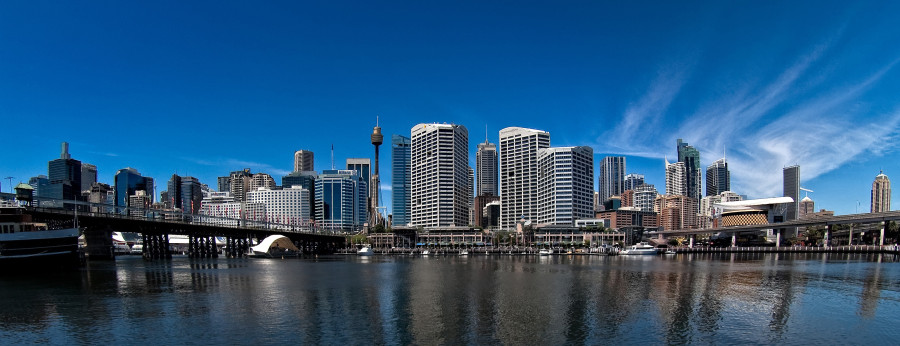
This is the scene in Sydney and cities across Australia where, similar to Canada, low interest rates have sparked a years-long rush into the market amid cries of overvaluation and deteriorating affordability.

Monday, December 02, 2013

Robert Shiller, Nobel-Winning Economist, Warns Of U.S. Stock Market Bubble

BERLIN, Dec 1 (Reuters) - An American who won this year's Nobel Prize for economics believes sharp rises in equity and property prices could lead to a dangerous financial bubble and may end badly, he told a German magazine.

Robert Shiller, who won the esteemed award with two other Americans for research into market prices and asset bubbles, pinpointed the U.S. stock market and Brazilian property market as areas of concern.