Democracy Gone Astray

Democracy, being a human construct, needs to be thought of as directionality rather than an object. As such, to understand it requires not so much a description of existing structures and/or other related phenomena but a declaration of intentionality.
This blog aims at creating labeled lists of published infringements of such intentionality, of points in time where democracy strays from its intended directionality. In addition to outright infringements, this blog also collects important contemporary information and/or discussions that impact our socio-political landscape.

All the posts here were published in the electronic media – main-stream as well as fringe, and maintain links to the original texts.

[NOTE: Due to changes I haven't caught on time in the blogging software, all of the 'Original Article' links were nullified between September 11, 2012 and December 11, 2012. My apologies.]

Tuesday, June 21, 2011

Proposed legislation offers lower wages than Canada Post’s last offer

In a rare move, the proposed back-to-work legislation to end the postal dispute sets out a wage settlement that is actually lower than Canada Post’s last offer.

“We’re really disappointed in the Conservative government’s position,” said Gayle Bossenberry, first national vice-president for the Canadian Union of Postal Workers. “The legislation is very restrictive.”

Labour Minister Lisa Raitt introduced the legislation on Tuesday, which outlines a wage settlement of 1.75 per cent in the first year, 1.5 per cent in the second year, and 2 per cent each in the final two years.

At the bargaining table, Canada Post has offered 1.9 per cent in each of the first three years, followed by 2 per cent in the final year.

The union, which represents 48,000 members, estimates the difference works out to about $875 for a full-time employee over the course of the four-year agreement.

While it may be rare to impose a wage deal, it’s not unheard of. In 1997, when the Liberal government ordered postal workers back to work after a two-week strike, it imposed a settlement that was less than Canada Post’s last offer, 5.15 per cent over three years instead of 5.25 per cent.

During question period, NDP Leader Jack Layton questioned the decision to impose wages, but Prime Minister Stephen Harper defended the move.

“The wage rates laid out in the legislation are the rates that this government agreed to with its other public service workers, and that is a fair settlement for Canada Post workers as well,” Harper said.

While the NDP has vowed to delay the legislation, Government House Leader Peter Van Loan told reporters that he expects the legislation will pass on Thursday or Friday, and then would go to the Senate. Mail service likely won’t resume until next week.

Full Article
Source: Toronto Star 

Greek politicians shaken by ‘permanent’ protests

ATHENS – At the heart of Greece’s angry protests against painful economic reforms are a diverse group of demonstrators camped in front of parliament, united in hatred for politicians they blame for pushing the country to ruin.

Although their anger, like that of many other Greeks, is visceral, the permanent protest is mostly peaceful, only erupting into violence last Wednesday when the Finance Ministry was firebombed during clashes with riot police.

Behind the protests is a belief that foreign powers are forcing Greeks to swallow medicine so bitter it could kill the patient and that fat cat politicians and millionaires have dodged pain and stuffed their wallets while Greece heads for catastrophe.

“Why should I pay? I haven’t done anything wrong. I can’t afford a yacht or a pool like they can,” said Panagiotis Karydas, 50, a car mechanic who has voted for both the main political parties in the past.

“If I owe ten euros to the tax office they come after me. Why don’t they go after politicians?” he asked in the Syntagma Square protest camp.

Greece could be the first sovereign default in the euro zone unless Prime Minister George Papandreou rams through more unpopular austerity in exchange for international aid.

The square in front of the shuttered parliament building is scene of a permanent protest, bedecked with banners and filled with small tents where demonstrators sleep.

They include students, some of Greece’s army of jobless, pensioners whose savings have evaporated, workers, professors, and economists from all sides of the political spectrum.

Every evening a crowd that starts with a few hundred and often swells to several thousand rhythmically pushes open hands towards parliament, a highly offensive gesture in Greece, and chants derogatory slogans comparing MPs to common criminals.

Full Article
Source: National Post 

Kelly McParland: NDP’s crusaders need some victims to rescue

It would be interesting to know how Jack Layton imagines the New Democratic Party when he’s lounging around Stornoway admiring what a lifetime on the public payroll has brought him.

The rhetoric was flying fast and free on the weekend, as the NDP leader and like-minded associates sought to nudge party members into recognizing that Canada has changed since 1961, when the party really was new. The economy has been altered fundamentally, and the workplace along with it. Canadians don’t earn money in 2011 the same way they did 50 years ago. “Hard-working Canadians” today aren’t the same people they were then.

Layton wanted to stop identifying the party as socialist in nature, recognizing that it sends voters scurrying in the opposite direction. It was a commendable idea, but ran up against the party’s Woodstock faction. If they want to keep pretending The Who is going to turn up in a field in upstate New York and belt out ‘My Generation’ one more time, no one’s going to persuade them otherwise.  So Layton will be forced to bide his time before trying to nudge them forward again.

Full Text
Source: National Post 

The Commons: Philosophical riddles

The Scene. Bob Rae called it deception. The government, he said, had promised during the election campaign to achieve necessary public service savings through employee attrition. Now, he noted, they were dismissing civil servants by the hundred.

“Why,” he asked, “did the government deceive the people of Canada before the election?”

Here the Prime Minister, like the Public Works Minister the day before, declined the opportunity to loudly champion his recent achievement in the pursuit of proudly held principles.

“Mr. Speaker, the Government of Canada employs hundreds of thousands of people,” he said. “When it is necessary to make adjustments to ensure that taxpayers’ dollars are well spent, we always make sure, wherever possible, that we do that through attrition or reassignment.”

It is in this case an odd quirk of the system —a philosophical riddle—that ensuring taxpayers’ dollars are well spent involves eliminating a department—Audit Services Canada—that was created for the expressed purpose of ensuring taxpayers’ dollars are well spent.

“In this case, we are cutting expenditures that are not necessary,” Mr. Harper assured. “They are duplicative, and will not affect the audit service of the Government of Canada.”

On this crisis of irony, the NDP’s Nycole Turmel next stood to wonder why the government was eliminating jobs at at time when it was explicitly committed to creating them and how an exercise in auditing public expenditures could involve eliminating 92 auditors. Summoning all the authority of his preposterously wordy title—”Parliamentary Secretary to the Minister of Public Works and Government Services, for Official Languages and for the Economic Development Agency for the Regions of Quebec”—Jacques Gourde informed the House that the government had been given a “clear” mandate to balance the federal books and that on that count it had gone about rooting out the “worst performing programs and priorities.”

And on that note we returned to the small matter of the G8 Legacy Fund.

It seems now that the RCMP are somehow to some extent involved. Or at least that three Mounties recently had a chat with Marlene Jennings, the former Liberal MP who wrote to the director of public prosecutions in April to suggest there might be something in these gazebos and public toilets worth investigating.

Perhaps something will come of this. Perhaps not. In the meantime, opposition MPs will be afforded the implied authority of the Royal Canadian Mounted Police to justify their concerns.

“Mr. Speaker, it has been two weeks since the Treasury Board president was taken down to the Auditor General’s principal’s office and he has been hiding under his desk since. We now know why,” Charlie Angus posited. “There is a criminal investigation into how $50 million was diverted into his riding.”

From his seat, Tony Clement shook his head, apparently disappointed with Mr. Angus’ characterization or tone.

“I suggest the RCMP read the Auditor General’s report, which lays out in excruciating detail how the three amigos, the mayor, the hotel manager and the minister, diverted money for these dubious pork-barrel projects,” Mr. Angus continued. “I would ask the missing member for Muskoka if it is not time to come clean in this House.”

Expressed in the hypothetical, this was not quite a question. But then there could be no reasonable expectation that Mr. Clement would stand and respond anyway.

“Mr. Speaker, another day and another public relations stunt from the opposition,” John Baird sighed instead. ”Let us look at what the Auditor General said in his report. I would remind you, Mr. Speaker, that the Auditor General is an independent officer of Parliament, mandated to report to this House. The report says, ‘…no evidence to suggest there was a deliberate attempt to mislead.’ It also says, ‘I am not aware of any specific law that was broken.’ “

On these words does the government now apparently wish to stand. If the RCMP ends up declining to pursue the matter, a portrait of Tony Clement might be hung beside the bike racks in South River with that inscription engraved underneath.

“Mr. Speaker, I would like to quote the man who has disappeared in this House,” Mr. Angus offered with his supplementary, “who said yesterday in committee that it was factually incorrect to say that money was diverted, while page 37 in the Auditor General’s report clearly contradicts him. If he wants to take that up with the cops, I am sure it is going to go very well for him.”

Mr. Clement was once more moved to shake his head.

“I would like to say to this House,” Mr. Angus continued, “If he gets away with this $50 million scheme, then start counting your spoons and silverware dear public, because they’ve just given this man the keys to the Treasury Board.”

Mr. Angus was quite demonstrative here and there were great groans from the government side. Amid all the noise though no question mark had actually been tabled.

“Mr. Speaker, I have listened with great interest to the comment by the member opposite,” Mr. Baird said upon standing. “I did not hear a question.”

Indeed. And so we have a minister who won’t entertain questions and an opposition member who is done posing them. Just in time for summer break we have reached stalemate.

Full Article
Source: Macleans 

RCMP to probe $50 million G8 legacy fund, after scathing auditor’s report

OTTAWA—The RCMP is looking into allegations that the Harper government misappropriated funds in order to lavish $50 million on a cabinet minister’s riding prior to last year’s G8 summit.

The probe comes on the heels of an auditor general’s report earlier this month, which concluded the government “did not clearly or transparently” explain how the money was going to be spent when it sought Parliament’s approval for a G8 legacy fund for Tony Clement’s riding.

The Mounties’ involvement was prompted by a complaint from former Liberal MP Marlene Jennings. She was interviewed for an hour last week by three RCMP officers.

“My sense is that they’re taking it very seriously,” Jennings said in an interview Tuesday. “My sense is that they’re looking at this to see if there are any elements of proof that there may have been wilful intention to mislead Parliament.”

Jennings, who was defeated in the May 2 election, first sought an investigation in the midst of the election campaign. Her complaint was prompted by an early draft of the auditor general’s report, which was leaked mid-campaign to The Canadian Press.

The early draft was much more blunt than the final version released on June 9. It concluded the government “misinformed” Parliament about the G8 legacy fund and suggested it may have acted illegally.

In an April 15 letter to the director of public prosecutions, Jennings said the government may have willfully violated two appropriations acts and the Financial Administration Act, which stipulate that the government must disclose how it intends to spend the money when it seeks parliamentary approval for funding.

Jennings said she never heard back from the public prosecutor’s office. But she did eventually receive a May 24 letter from the RCMP, advising her that “the matter is with ‘A’ Division Commercial Crime Section.”

The day after the final auditor general’s report was released, she received a call from Cpl. Ray Warner asking her to meet with him. She was interviewed by Warner and two other officers last Wednesday.

There was no immediate comment Tuesday from the RCMP. The issue revolves around the way in which the government won parliamentary approval to create the G8 legacy fund in 2009.

The government received approval for an $83-million border infrastructure fund which was supposed to relieve congestion at border crossings. It did not disclose that $50 million of that fund was to be devoted to infrastructure projects in Treasury Board President Tony Clement’s Parry Sound-Muskoka riding, 300 kilometres away from the border.

Full Article
Source: Toronto Star 

“Don’t Believe the Hype About U.S. Debt”: Sally Kohn Says Increasing the Debt Is a Good Idea

Vice President Joe Biden met with congressional negotiators last Thursday to discuss ways to curb the federal deficit and permit new borrowing after August 2, the day the U.S. government is expected to reach its $14.3 trillion borrowing limit. Democrats want to curb the federal deficit by pushing for new taxes and eliminating many tax loopholes, while Republicans have called for steep spending reductions but no new taxes.

To discuss the ongoing debate over how to curb the federal deficit, Democracy Now! recently spoke with Sally Kohn, author of a May 24 USA Today op-ed titled Don’t Believe the Hype About U.S. Debt.

SALLY KOHN: You know, this is the time when we should be worrying about other things than public spending. I mean, the fact of the matter is that corporations are sitting on record levels of capital. They’re not spending it. There’s new news out that, if anything, they’re not spending it on jobs; they’re spending it on new, you know, manufacturing equipment. So the problem is, in this situation, like it or not, government is the spender of last resort. And the irony with all this, when everybody says, “Well, government should be tightening its belt, so is everyone else,” you know, we let corporations — we actually encourage corporations in this country to borrow and carry debt ratios sometimes three, sometimes four, 14, 50 times higher than government.

Boeing, IBM, JPMorgan. JPMorgan has a debt-to-income ratio of 50 to one. The United States government? One to one. So, why is it that debt is good for private corporations, for successful private corporations, so they can invest in the future of their business, but not good for the government, especially at a time of anemic tax receipts, because we’ve cut taxes, among other things, and because the economy is sluggish? Why shouldn’t we use government to invest in the future of our nation and the future of our citizenry?

Video
Source: Democracy Now! 

Radioactive Tritium Has Leaked From Three-Quarters Of U.S. Nuclear Plants: AP Investigation

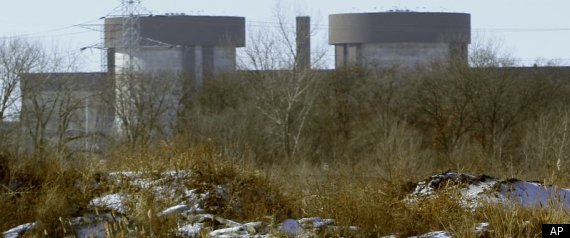
BRACEVILLE, Ill. -- Radioactive tritium has leaked from three-quarters of U.S. commercial nuclear power sites, often into groundwater from corroded, buried piping, an Associated Press investigation shows.

The number and severity of the leaks has been escalating, even as federal regulators extend the licenses of more and more reactors across the nation.

Tritium, which is a radioactive form of hydrogen, has leaked from at least 48 of 65 sites, according to U.S. Nuclear Regulatory Commission records reviewed as part of the AP's yearlong examination of safety issues at aging nuclear power plants. Leaks from at least 37 of those facilities contained concentrations exceeding the federal drinking water standard – sometimes at hundreds of times the limit.

While most leaks have been found within plant boundaries, some have migrated offsite. But none is known to have reached public water supplies.

At three sites – two in Illinois and one in Minnesota – leaks have contaminated drinking wells of nearby homes, the records show, but not at levels violating the drinking water standard. At a fourth site, in New Jersey, tritium has leaked into an aquifer and a discharge canal feeding picturesque Barnegat Bay off the Atlantic Ocean.

Full Article
Source: Huffington 

Labor Regulators To Propose New Rules Quickening Union Elections

WASHINGTON -- In a move that will surely provoke Republicans and business interests, the National Labor Relations Board announced Tuesday morning that it will propose significant new rules for the union election process, streamlining procedures and possibly making it easier for American workers to unionize.

The rules proposed by the NLRB will undergo a public-comment period, but if adopted, the amendments will define the amount of time parties can litigate before and after an election, allow for the electronic filing of election documents, defer litigation on voter eligibility until after an election and consolidate all post-election appeals into a single appeal.

Overall, the new rules could make it harder for employers to stall elections and easier for unions to organize new members. Right now, elections typically take place within two months of organizers having gathered a sufficient number of signatures from workers -- a generous amount of time, organizers argue, that employers can use to pressure workers not to unionize. The NLRB’s new rules would certainly shorten that period, though it’s hard to say by how much.

“One of the most important duties of the NLRB is conducting secret-ballot elections to determine whether employees want to be represented by a labor union,” said NLRB Chairman Wilma B. Liebman in a statement. “Resolving representation questions quickly, fairly, and accurately has been an overriding goal of American labor law for more than 75 years.”

Union officials were quick to praise the NLRB and its proposed rules. Richard Trumka, the president of the AFL-CIO, the largest union federation in the country, said in a statement that the changes would help fix a “broken, bureaucratic maze” that allows employers to stall the election process.

Full Article
Source: Huffington 

Oil Companies, Refiners Investigated For Possible Market Manipulation

This would help to explain those high gas prices.

Late Monday, federal regulators announced an investigation into whether oil companies and refiners have manipulated markets, raising oil prices to their benefit, according to a letter released by the Federal Trade Commission to the Senate yesterday and cited by The Hill.

The Federal Trade Commission plans to investigate why some oil refineries were shut down for maintenance, which can lead to higher oil prices, according to The Wall Street Journal. It is also investigating whether refiners engaged in other anti-competitive practices or provided misleading information to federal officials, the FTC letter said.

The FTC has authorized the use of compulsory process to demand records from oil refineries, according to McClatchy Newspapers. Under law, the FTC can impose penalties on companies that manipulate the price of oil, The Washington Post reported yesterday.

The news comes at a time of great prosperity for oil refiners. Profit margins of U.S. refiners have nearly doubled since the beginning of 2011, even though refiners have been using only 81.7 percent of their capacity: a seven percent reduction from the same period in 2010, according to yesterday's FTC letter.

Market manipulation, if real, would be making a bad situation only worse for consumers. U.S. oil prices have risen to nearly $115 per barrel this year, according to The Wall Street Journal. That's a 47 percent increase from oil prices last year, as the oil price in June of last year hovered around $78 per barrel, according to CNN.

Full Article
Source: Hiffington 

Walmart Case: Supreme Court Aids The Powerful

Thank the Supreme Court for one thing: In its appalling decision in the Walmart gender discrimination case handed down Monday, the justices supplied future historians with a brilliant symbol of how the United States has essentially become a giant gated community enjoyed by the powerful, with most of the citizenry living outside and struggling to nourish themselves.

Walmart is nothing if not a monument to the benefits of mass organization, an exemplar of all the good things that can be extracted by those who assemble themselves into a single large-scale entity. As the largest retailer on earth, the company is generally able to dictate the terms of trade with the thousands of merchants who keep the shelves of its stores stocked with cut-rate goods, tapping factories in China and middlemen traders in Latin America. Walmart has a habit of placing multiple orders with multiple factories for the same products, then forcing each to accept lower prices at the last minute or walk away with nothing.

By dint of its scale, it is able to capture the lowest prices for just about everything, from shipping to labor to contracting services. At its global procurement office in the southern China boomtown of Shenzhen, Walmart makes representatives from surrounding factories sit together in a bare-bones waiting room before they get a chance to negotiate with the retailer's agents. Should the reps balk at Walmart's price, they know that the buying agent can just step out into the waiting room and find someone else from another factory -- someone desperate enough to deliver for whatever the company is paying. This is the power of being not only huge but organized into one entity.

Strip away the myriad technicalities, and what the Supreme Court essentially decreed this week is that Walmart's employees -- or really any group of people who happen to work for a colossal corporation -- are not entitled to organize themselves similarly to enhance their power to pursue their own interests.

Full Article
Source: Huffington