Democracy Gone Astray

Democracy, being a human construct, needs to be thought of as directionality rather than an object. As such, to understand it requires not so much a description of existing structures and/or other related phenomena but a declaration of intentionality.
This blog aims at creating labeled lists of published infringements of such intentionality, of points in time where democracy strays from its intended directionality. In addition to outright infringements, this blog also collects important contemporary information and/or discussions that impact our socio-political landscape.

All the posts here were published in the electronic media – main-stream as well as fringe, and maintain links to the original texts.

[NOTE: Due to changes I haven't caught on time in the blogging software, all of the 'Original Article' links were nullified between September 11, 2012 and December 11, 2012. My apologies.]

Showing posts with label Debt Ceiling. Show all posts

Monday, August 31, 2015

A Debt Ceiling Showdown Between Republicans Comes Into Focus

At a certain point during the middle of the summer, Republican operatives began worrying that the party was flirting dangerously with self-immolation, though not for the reasons many suspected.

Yes, Donald Trump launched a presidential campaign by calling Mexican immigrants illegally crossing the border “rapists.” And yes, another Republican presidential candidate accused President Barack Obama of shepherding another Holocaust with his Iran nuclear deal. But those were viewed as rhetorical flourishes from the campaign trail – potentially damaging but not necessarily self-destructive.

Friday, October 25, 2013

The Far-Right Christian Movement Driving the Debt Default

If the U.S. breaches its debt ceiling this week, bringing with it the global financial panic economists predict, leaders of a little-known far-right movement called Christian Reconstructionism can claim partial responsibility. Their goal: to eradicate the U.S. government so that a theocratic Christian nation emerges to enforce biblical laws.

That's right -- laws out of the Book of Leviticus prohibiting adultery, homosexuality, and abortion, with penalties including death by stoning.

The key leader of this movement is Gary North, founder of the Institute for Christian Economics in Tyler, Texas. He's a long-time associate of Ron Paul, intellectual godfather of the Tea Party movement -- the very people responsible for Congressional deadlock over the government shutdown and debt ceiling debate.

Monday, October 07, 2013

No One Understands Strategy To Avoid Debt Ceiling Crisis, Sorry Y'all

Debt ceiling strategy! Everyone knows we need one, in order to prevent a huge, global economy-crippling default crisis. But no one seems to know, right now, what the hell is going on, or how catastrophe is to be averted. That includes me. So, here is a column about how no one knows what the hell is going on, or how catastrophe is going to be averted, including me. I'm telling you this right up front, so that you can just bail out now, and get on with your life.

Friday, October 04, 2013

Obama To Wall Street: You Should Be Scared

WASHINGTON -- A self-described "exasperated" President Barack Obama told Wall Street CEOs on Wednesday that they should not take for granted that the Republican-led House of Representatives will raise the nation's debt ceiling by Oct. 17.

"I think this time is different," the president said, when asked by CNBC's John Harwood whether the financial markets were right to assume that the upcoming conflict would ultimately get resolved in time. "I think they should be concerned."

FreedomWorks CEO Says Hard Right Should Stay The Course Past Debt Limit Deadline

WASHINGTON -- As Rep. Paul Ryan (R-Wis.) and congressional Republicans angle for a deal with President Barack Obama to resolve the government shutdown, the leader of one influential conservative group remains unreceptive to the idea of any grand bargain.

Matt Kibbe, the CEO of the conservative nonprofit FreedomWorks, said House Republicans should continue pushing to end or delay the president's health care reform law. Kibbe insisted that Obama could conceivably sign a bill that gutted, or at least delayed, his signature legislative accomplishment.

Tuesday, October 01, 2013

After the Shutdown: The Debt Ceiling

The U.S. markets had been closed for several hours when Congress, at midnight, let the government shut down, but, even so, they already reflected how things were going in Washington. Stocks were down, continuing a slow-motion slide that’s seen the S. & P. 500 drop on eight of the past nine days. It’s hardly been a momentous decline so far—the S. & P. has fallen about two and a half per cent from its all-time high, and is still up for the month—but it seems clear that markets are getting a little queasy about the shutdown.

The Only Way To Show Leadership In A Debt Ceiling Crisis Is To Refuse To Negotiate On The Debt Ceiling

The thing about the debt ceiling is that it's not in any way, shape, or form a "partisan" issue. There's no "position" to take on it. It is not a liberal or a conservative "idea." And raising the debt ceiling confers no privileges or advantages on anyone -- it doesn't advance any policy or philosophy, and it doesn't even permit new debt. Congress has passed laws and appropriated monies. Having done so, certain obligations must be met. Raising the debt ceiling says only, "We plan on honoring our obligations." Not raising the debt ceiling means you are saying, "We would like to cause the collapse of what is colloquially known as 'the economy.'"

Saturday, January 05, 2013

Debt Ceiling Crisis 2013: The Media Needs To Be Trained

One of the things that I hope to successfully convey as Congress proceeds from the pooch punt that averted that "fiscal cliff" (that Congress created so that they could heroically avert it) to the fiscal crisis moment slated for March of this year, it's that debt ceiling hostage takers are dangerous psychopaths. Yes, we can trace instances of Congresscritters shaking the chandeliers on the debt ceiling going back many presidential terms -- heck, there was once a senator from Illinois named Barack Obama who troubled the Bush administration over it. It was a dumb idea then, as it is now.

Friday, October 19, 2012

The Fiscal Cliff X-Factor: The Debt Ceiling

Ezra Klein has an important piece this morning, detailing what he believes the administration’s strategy is for dealing with the fiscal cliff after the election (assuming, of course that President Obama is gearing up for a second term, not a new presidential library).

In short, according to Klein, the White House believes it has major leverage heading into this showdown with Republicans. Since inaction means automatic spending cuts that slash the defense and non-defense budgets equally, but exempt Medicare, Medicaid and Social Security (Republicans don’t like this) and also the full expiration of the Bush tax cuts (Republicans really don’t like this), Obama will use that leverage to get a big bipartisan deal that not only executes his tax and spending preferences but much more. Writes Klein:

    The administration hopes this deal will include more than just deficit reduction. They also see it as a vehicle for infrastructure investment and tax reform. They think there’s some chance that parts of the American Jobs Act, like the hiring tax credits, could sneak through the door, too. There’s even talk of using it to address climate change, though everyone agrees that’s unlikely. Whatever ends up in the final deal, there’s little doubt that it will be a big deal, and it’s likely to come together fairly quickly in the first year. The White House—and the expiring tax and spending provisions—won’t give Republicans any other choice.

Saturday, August 13, 2011

How the Debt Limit Fight Could Give Bachmann a Boost in Ames

DES MOINES -- The lingering effect of the debt ceiling fight seems likely to be felt at the Ames straw poll Saturday, as anger over a nation perceived as living beyond its means suffused the comments of Iowans drawn to the Des Moines Register soapbox for presidential candidate speeches. But it came up, too, over and over in conversations with others around the fairgrounds, independents and Republicans alike, some of whom saw in President Obama's fiscal policies a continuation of the Bush-era profligacy they despised.

A frequently mentioned beneficiary of their sentiments? Michele Bachmann.

Jim Ritz, 69, said he was going to go to Ames to vote for Bachmann. "I just know whoever's following the line that we need to freeze our income and cut our spending is following my line," said the Des Moines resident, who was sitting on a bench after listening to former Minnesota governor Tim Pawlenty speak at the fair. "All along I said I don't care if we go into default, I'd like to see them live within their means....The sooner they get the budget balanced, the sooner they're going to get it upgraded. If I spend more than I take in, my budget wouldn't be in good shape either."

Monday, August 08, 2011

Credibility, Chutzpah and Debt

To understand the furor over the decision by Standard & Poor’s, the rating agency, to downgrade U.S. government debt, you have to hold in your mind two seemingly (but not actually) contradictory ideas. The first is that America is indeed no longer the stable, reliable country it once was. The second is that S.& P. itself has even lower credibility; it’s the last place anyone should turn for judgments about our nation’s prospects.

Let’s start with S.& P.’s lack of credibility. If there’s a single word that best describes the rating agency’s decision to downgrade America, it’s chutzpah — traditionally defined by the example of the young man who kills his parents, then pleads for mercy because he’s an orphan.

America’s large budget deficit is, after all, primarily the result of the economic slump that followed the 2008 financial crisis. And S.& P., along with its sister rating agencies, played a major role in causing that crisis, by giving AAA ratings to mortgage-backed assets that have since turned into toxic waste.

Wednesday, August 03, 2011

5 Ways the Debt Crisis Changed Washington

The stalemate is over, but the partisan clash over spending and borrowing has irrevocably shifted things in D.C. Here's how.

The debt crisis left in its circus-like wake five permanent truths.

1. A new precedent. Debt-ceiling increases are now tied to deficit reduction. With President Obama's signature, every future president until America's debt monster is tamed must come to Congress on bended knee and plead for the privilege of avoiding default. What had been an unhappy obligation of governance is now a lever to impose either spending cuts or tax increases in the pursuit of deficit reduction. A senior House Democrat on the Ways and Means Committee did not dispute this point. "We are bearing the burden of having to pass our own president's legislation." One side note: This episode also proves that the 14th Amendment's linkage to debt discussions is dead. Numerous House Democrats said off the floor on Monday that if there was ever a time to invoke the amendment and raise the debt ceiling, it was now. "I still hold out hope," said Rep. Sheila Jackson Lee (D-Texas). "It's very important." Lee conceded, though, that her hopes are probably dashed and the issue is settled.

2. Bipartisan entitlement protection lives on. For all the GOP fervor to rein in government spending, the agreement defers all decisions about entitlement spending to a so-called super committee with an internal architecture almost built for stalemate. If that happens, Republicans who now crow about changing the way Washington works will see the knife of across-the-board spending cuts exempt Social Security, Medicaid, unemployment insurance, veterans benefits, food stamps, and other antipoverty entitlements. Yes, the automatic cuts can hit Medicare, but it won't touch beneficiaries. The cost-cutting can only reduce payments to providers--a scheme that Congress has tried over and over only to be undone by successful lobbying from doctors and hospitals. This means that the deal repeats a futile process that Congress has tried and abandoned before--achieving deficit reduction on the backs of well-connected and influential doctors and hospitals.

3. Congress's back-loading of spending cuts lives on. A Democratic president and a tea party-inspired Republican Party will mutually agree to cut domestic discretionary spending (defined by budget authority) by $10 billion compared with 2011 budget totals. That's out of projected domestic discretionary spending of just more than $2 trillion for fiscal 2012 and 2013. The big cuts are all deferred to another Congress and a reelected Obama, or to a new Republican president. But the trajectories for defense and all other fundamental actions of day-to-day government--although weakened by the lack of inflation adjustments--will be tilted downward only slightly. Rep. Mike Kelly (R-Pa.) is one of the freshmen who came to Washington to shake things up, and he sees the spending cuts, lower by $24 billion than the House GOP budget, as defensible and even laudable. "The process is slow," he said. "I see that now. It takes time. I mean, my wife wants me to lose 50 pounds, but I can't do it by this weekend." House Appropriations Chairman Hal Rogers (R-Ky.) said the cutting will stick. If not, Congress could see a budget clash and a shutdown showdown at the end of the fiscal year on September 30. The back-loading of cuts goes a long way toward avoiding such a mess. When it comes to spending, the back-loader is still the machine of choice in Congress.

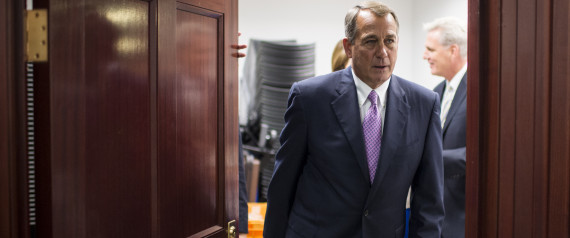
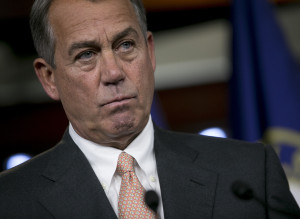
4. Speaker John Boehner wobbled but didn't fall. And he won't. Internally, the House GOP's sense is that the leadership pulled together and that Majority Leader Eric Cantor's movements out of the talks and against tax increases didn't undermine Boehner nearly as much as first thought. In the clutch, Boehner and Cantor marched side-by-side and delivered a final product--and they didn't ask for permission to pass it. On Sunday, Boehner scheduled his conference call to brief members for the same time that Obama was announcing the deal to the nation. The message: The deal is done. I'm not seeking your reaction as much as laying out the contents.

5. The first quarter of 2013 will be a doozy. Here's what is in store: Another debt-ceiling request will be due. Spending cuts under either the special committee's direction or across-the-board sequestration will begin to bite in big numbers at the Defense, Homeland Security and State departments, as well as in all discretionary government services. The budget deal calls for $917 billion in these cuts, but only a small fraction (see back-loading section above) will occur in the first two years. The country will begin to feel the consequences of pushing the rest of the cuts through eight remaining budget years of the deficit-reduction deal. Also, if the super committee imposes new taxes, they will probably take effect in this time frame. Even if the committee doesn't impose tax increases, all the Bush tax cuts are due to expire on January 1, 2013--forcing intervention to protect some or all of them. "It's going to be one festive first quarter of 2013," Rep. Robert Andrews (D-N.J.) said. Festive is one word. It might not be the one economists will use.

Origin
Source: the Atlantic 

Man, That Debt Ceiling Fight Sucked! Let's Do It Again!

On Monday, with a flick of his pen, President Obama signed the Budget Control Act of 2011, ending a contentious, months-long fight over the nation's debt ceiling, spending, and taxes that brought the nation to the brink of default and possibly economic catastrophe. You could almost hear the collective sigh of relief as the president turned the lopsided, GOP-friendly bill into the law of the land.

At least we won't have to go through that again—or so you might think.

Bzzt. Wrong. If you listen to Republicans, you'll know the debt ceiling fight was just the beginning.

Sen. Mitch McConnell (R-Ky.), in remarks on the Senate floor on Monday, described the Republican tactic of refusing to raise the debt ceiling in order to extract favorable concessions as "a new way of doing business in Washington." He went on: "One of the most important things about this legislation is the fact that never again will any president, from either party, be allowed to raise the debt ceiling without being held accountable for it by the American people and without having to engage in the kind of debate we've just come through."

Monday, August 01, 2011

Beyond A Fair And Balanced Deal

WASHINGTON -- By the traditional standards of Washington, the debt ceiling deal is a serviceable one. It ended a series of long nights and anguished speeches in the Capitol, the kind of theatrics legislators think makes them look hardworking and serious. The deal contains impressive numbers in the multiple trillions. And it has been framed by politicians and media alike in the standard, comforting left-right trope, which says that any deal attacked by the "wings" of each party must therefore be sensible. Consensus has been achieved, so the Beltway thinking goes. The messy process of American democracy has been reaffirmed once again, just when we thought we were drowning in an acid bath of acrimony.

But there is a problem: Washington's standards don't apply in the real world.

People who live in real-life America -- who live the daily grind of work (or the absence thereof), of fragile family finances, of Main Street storefronts and internet startups -- won't benefit much, if at all, from the deal and might well be hurt by it, according to an ideological range of economics experts surveyed by The Huffington Post. And that doesn't even count the unemployed who will stop getting federal benefits in 2012.

Debt Ceiling Deal: Almost No Spending Cuts Before 2014

WASHINGTON (AP) — The first phase of a deal to raise the government's borrowing limit would pose little threat to the economy in the short term because almost none of the spending cuts would occur before 2014.

Discretionary spending, which excludes Social Security, Medicare and Medicaid, would be cut by $21 billion in 2012 and $42 billion in 2013, according to an analysis by the Congressional Budget Office. That's a small fraction of the nation's $14 trillion economy.

Debt Ceiling Deal That Cuts Trillions, Creates 'Super Congress' Announced By Party Leaders

WASHINGTON -- Congressional leaders and President Obama on Sunday night announced they've cut a deal to avert a historic U.S. default, saying they have assembled a framework that cuts some spending immediately and uses a "super Congress" to slash more in the future.

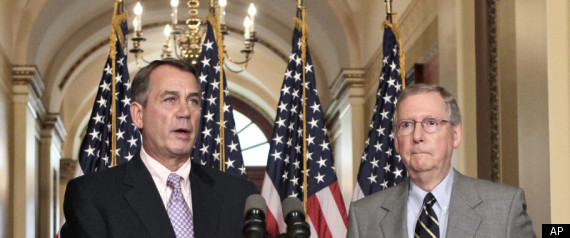
The deal calls for a first round of cuts that would total $917 billion over 10 years and allows the president to hike the debt cap -- now at $14.3 trillion -- by $900 billion, according to a presentation that House Speaker John Boehner (R-Ohio) made to his members. Democrats reported those first cuts at a figure closer to $1 trillion. It was unclear Sunday night why those two estimates varied.

The President Surrenders

A deal to raise the federal debt ceiling is in the works. If it goes through, many commentators will declare that disaster was avoided. But they will be wrong.       

For the deal itself, given the available information, is a disaster, and not just for President Obama and his party. It will damage an already depressed economy; it will probably make America’s long-run deficit problem worse, not better; and most important, by demonstrating that raw extortion works and carries no political cost, it will take America a long way down the road to banana-republic status.

Start with the economics. We currently have a deeply depressed economy. We will almost certainly continue to have a depressed economy all through next year. And we will probably have a depressed economy through 2013 as well, if not beyond.

The worst thing you can do in these circumstances is slash government spending, since that will depress the economy even further. Pay no attention to those who invoke the confidence fairy, claiming that tough action on the budget will reassure businesses and consumers, leading them to spend more. It doesn’t work that way, a fact confirmed by many studies of the historical record.

What we wish Obama had said

Does anyone else have a sick sense of déjà vu this morning?

After months of slow-motion capitulation, President Obama has cut an eleventh-hour deal with Republican leaders to raise the debt ceiling. After vowing to heed the public outcry for a balanced approach, he has instead consented to a plan that manages to run rough-shod over the poor and middle-class, coddles those who caused the recession, imperils the government’s two most popular entitlement programs, and virtually guarantees that our economy will continue to falter.

In other words, just another day at the office for our 44th president.

I have no doubt that Barack Obama wants to do right by the country, and that he genuinely believes giving in to every Republican demand (and then some) is his only play. But to me, the debt deal proves once and for all that Obama lacks the courage to lead effectively. The evidence resides not just in his policies, but in his words.

Congressional Progressives Slam Obama's Debt Deal

Both the U.S. House and the U.S. Senate will by voting over the next 36 hours on proposals to make radical cuts in federal programs -- cuts that some fear will ultimately threaten Medicare and other Democratic "legacy" programs -- in return for raising the nation's debt ceiling.

The Senate is likely, although not certain, to back the deal that was cut between the Obama White House and Republican leaders; Senate Majority Leader Harry Reid, D-Nevada, is already on board, as are key Republicans. The real test will come in the House, where Republican leaders are scrambling to keep Tea Party conservatives on board, and Democrats face the threat of a revolt by progressives (and perhaps more moderate members).

So far, barely a dozen House members -- most of them Republican leaders -- have endorsed the deal. Democratic National Committee chair Debbie Wasserman-Schultz, D-Florida, is one of the few Democrats who is on record backing it,

Inside the Debt Deal: Who Won, Who Lost

It started clean and ended messy.

When the debt-ceiling crisis began to capture the public's and Wall Street's bemused imagination in June, President Obama's Gallup approval rating was 50 percent, the highest of the year.

(PDF: GOP House's Summary of Debt Deal)

It's now at 40 percent, the lowest of his presidency, and a disturbing sign that dismay with America's "dysfunctional" government is taking a toll on more than Congress - mired since early spring with approval ratings in the mid-teens.