Democracy Gone Astray

Democracy, being a human construct, needs to be thought of as directionality rather than an object. As such, to understand it requires not so much a description of existing structures and/or other related phenomena but a declaration of intentionality.
This blog aims at creating labeled lists of published infringements of such intentionality, of points in time where democracy strays from its intended directionality. In addition to outright infringements, this blog also collects important contemporary information and/or discussions that impact our socio-political landscape.

All the posts here were published in the electronic media – main-stream as well as fringe, and maintain links to the original texts.

[NOTE: Due to changes I haven't caught on time in the blogging software, all of the 'Original Article' links were nullified between September 11, 2012 and December 11, 2012. My apologies.]

Sunday, July 10, 2011

John Boehner Rejects Obama's Grand Bargain On Debt Ceiling

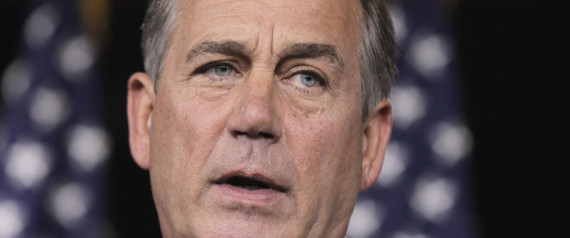
WASHINGTON -- House Speaker John Boehner is rejecting President Obama's offer to make historic cuts to the federal government and the social safety net, saying in a statement Saturday evening that he can not agree to the tax increases Democrats insisted on as part of the bargain.

Boehner made his decision after speaking with the president by phone on Saturday afternoon, a day ahead of a major White House meeting with Democratic and GOP leadership, a Republican source familiar with situation said.

Obama had proposed to Republicans a "grand bargain" that accomplished a host of individual things that are unpopular on their own, but that just might pass as a huge package jammed through Congress with default looming. Obama offered to put Social Security, Medicare and Medicaid cuts on the table in exchange for a tax hike of roughly $100 billion per year over 10 years. Meanwhile, government spending would be cut by roughly three times that amount. It's no small irony that the party's dogmatic opposition to tax increases is costing the GOP its best opportunity to roll back social programs it has long targeted.

Republicans are now banking on a smaller deficit reduction deal that would still make major cuts, somewhere in the range of $2 trillion.

"Despite good-faith efforts to find common ground, the White House will not pursue a bigger debt reduction agreement without tax hikes," Boehner said in a statement. "I believe the best approach may be to focus on producing a smaller measure, based on the cuts identified in the Biden-led negotiations, that still meets our call for spending reforms and cuts greater than the amount of any debt limit increase."

While taxes are being put forward as a major cause of the collapse of the grand bargain, a Republican familiar with the discussions said that the two parties couldn't come to an agreement on cuts to entitlements. "The White House would not agree with the core elements of tax reform proposed by the Speaker," said the official. "A gulf also remains between the Speaker and the White House on the issue of medium and long-term structural reforms."

When word leaked out this past week that Obama was proposing cuts to entitlements, Democrats in Congress and outside advocates kicked their opposition into high gear, making it clear that no bargain would win their support if it contained any cuts to Social Security or Medicare beneficiaries. That opposition may have broken the back of the bargain.

UPDATE: White House Communications Director Dan Pfeiffer issued the following statement:

"The President believes that solving our fiscal problems is an economic imperative. But in order to do that, we cannot ask the middle-class and seniors to bear all the burden of higher costs and budget cuts. We need a balanced approach that asks the very wealthiest and special interests to pay their fair share as well, and we believe the American people agree. "Both parties have made real progress thus far, and to back off now will not only fail to solve our fiscal challenge, it will confirm the cynicism people have about politics in Washington. The President believes that now is the moment to rise above that cynicism and show the American people that we can still do big things. And so tomorrow, he will make the case to congressional leaders that we must reject the politics of least resistance and take on this critical challenge."
Senator Harry Reid (D-Nev.) released the following statement late Saturday night:

I am disappointed that Republicans are unable to work with us to take a historic step forward that would have dramatically reduced our long-term deficit. We asked Republicans to consider a balanced approach that would have required shared sacrifice, but they would not. We still need to make sure we avert the economic catastrophe that would occur if we were to let America fail to pay its bills for the first time in our history, and I am confident that we will. Americans have a right to expect their leaders to rise above partisanship and do the right thing for our economy and the middle class.
Senator Chuck Schumer (D-N.Y.) released the following statement:

The President has called the Republicans' bluff by offering them exactly the type of grand bargain they said they wanted, only to have it rejected. Speaker Boehner had shown in the last week that, if it were up to him alone to decide, the nation would not be risking default to protect the wealthiest two percent of Americans. But in the end, neither the olive branch extended by the President nor the pragmatic streak shown by Speaker Boehner was enough to overcome the far right's obsession with defending tax breaks for millionaires and other special-interest tax loopholes. Some on the Republican side would like to confuse the issue by pretending it was tax hikes on the middle class that they were trying to prevent, but none were ever on the table. This decision to reject the President's offer means as much as a trillion-dollar gulf remains between the two sides on a debt limit deal, and Republicans should be put on notice that no matter how hard they try, their plan to end Medicare as we know it will never fill in that gap.
Origin
Source: Huffington  

CTV Journalist Kai Nagata has quit his job -- and he wants you to know why

Why I quit my job

By Kai Nagata

Until Thursday, I was CTV's Quebec City Bureau Chief, based at the National Assembly, mostly covering politics. It's a fascinating beat -- the most interesting provincial legislature in Canada, and the stories coming out of there lately have been huge. The near-implosion of the Parti Quebecois has kept the press gallery hopping well into summer. If you're not from Quebec, it's hard to explain the place the National Assembly holds in the popular imagination -- but suffice to say that within francophone journalistic circles it carries more prestige than Parliament Hill. I had the privilege to be working next to several of the sharpest reporters in the country.

The city is beautiful, ancient, and a great place to learn French. As master and commander of my own little outpost, I had significant editorial control over what I covered and how I treated it -- granted, within a recognizable TV news formula. My bosses trusted and encouraged me, my colleagues at the station in Montreal were supportive and fun to work with, and my closest collaborator, cameraman/editor Fred Bissonnette, quickly became a close friend.

I was a full-time employee making good money, with comprehensive benefits and retirement options (I was even lucky enough to be hired before Bell bought CTV and began clawing back some of those expensive perks.) It was what I would qualify as a "great job," especially for a 24-year old. Many of you told me how proud you were of my quick climb. But there was a growing gap between the reporter I played on TV, and the person I really am and want to become. I reached my breaking point suddenly, although when I look back now, the signposts were clear.

Not why I quit my job:

Let me pause for a minute and tell you the reasons for which I did not quit my job. I didn't quit my job because I had a falling out with anyone at CTV or the National Assembly or in my life outside work. And I didn't quit my job because it was too hard. It's true that the position demands responsibility. You have to know what's happening, what's important, and deploy your limited resources accordingly (namely, me and Fred). When I went to bed I turned email notifications off on my Blackberry, but I left the ringer on. After all, when you're the network's only reporter between Montreal and the Maritimes, they have to be able to reach you. But I would say, humbly, that I didn't just meet expectations -- I excelled. In everything I was asked to do, I performed consistently at a level above my experience. We made some good TV. So I didn't quit my job because I felt frustrated or that my career was peaking. I quit my job because the idea burrowed into my mind that, on the long list of things I could be doing, television news is not the best use of my short life. The ends no longer justified the means.

Of television news:

I'm trying to think of the reporters I know who would do their job as volunteers. The people who feel so strongly about the importance and social value of the evening news that, were they were offered somewhere to sleep, three meals a day, and free dry-cleaning -- they would do that for the rest of their days. I'm not saying those people don't exist, but such zeal is scarce. People do the job for all kinds of reasons. A few are raging narcissists. Many have kids to feed and mortgages to pay. Most believe they are fighting the good fight, if indirectly. In my case, I discovered it was something I was good at, I could see the potential to get better, and in the meantime, people were willing to trade me a lot of money to put the other things on hold. But even though I had the disposable income, I never bought a television. I was raised without one, and once I moved out on my own I decided I didn't want one in the house.

TV news is a curious medium. You don't always know whose interests are being served -- or ignored. Although bounded by certain federal regulations, most of what you see in a newscast is actually defined by an internal code -- an editorial tradition handed down from one generation to the next -- but the key is, it's self-enforced. Various industry associations hear complaints and can issue recommendations, or reward exemplary work with prizes. There are also watchdogs with varying degrees of clout. But these entities have no enforcement capacity. Underneath this lies the fact that information is a commodity, and private TV networks are supposed to make money. All stations, publicly funded or not, want to maintain or expand their viewership. This is what I'll call the elephant in the room.

Consider Fox News. What the Murdoch model demonstrated was that facts and truth could be replaced by ideology, with viewership and revenue going up. Simply put, you can tell less truth and make more money. When you have to balance the interests of your shareholders against the interests of the viewers you supposedly serve, the firewall between the boardroom and the newsroom becomes a very important bulwark indeed. CTV, in my experience, maintains high standards in factual accuracy. Its editorial staff is composed of fair-minded critical thinkers. But there is an underlying tension between "what the people want to see" and "the important stories we should be bringing to people." I remember as the latest takeover was all but finalized, Bellmedia executives came to talk about "growing eyeballs" in the "specialty channels." What they meant was, sports are profitable -- so as long they keep raking in cash, we can keep funding under-performing assets like our news division. (The same dynamic exists at the CBC, by the way.)

Certainly it would be a poor move, optics-wise, to make cuts in local news. For some reason job losses and factory closures in the media sector tend to generate a lot of coverage. But at every network, the bean counters are looking at a shrinking, aging audience (fixed incomes are harder to sell to advertisers) and there is intense pressure to keep the numbers up.

Human beings don't always like good nourishment. We seem to love white sugar, and unless we understand why we feel nauseated and disoriented after binging on sweets, we'll just keep going. People like low-nutrition TV, too. And that shapes the internal, self-regulated editorial culture of news.

Take newsroom aesthetics as an example. I admit felt a profound discomfort working in an industry that so casually sexualizes its workforce. Every hiring decision is scrutinized using a skewed, unspoken ratio of talent to attractiveness, where attractiveness often compensates for a glaring lack of other qualifications. The insecurity, self doubt, and body-image issues endured by otherwise confident, intelligent journalists would break your heart. And clearly there's a double standard, a split along gender lines. But in an environment where a lot of top executives are women, what I'm talking about applies to men as well. The idea has taken root that if the people reporting the news look like your family and neighbours, instead of Barbie and Ken, the station will lose viewers.

The problem with the CBC:

Aside from feeling sexually attracted to the people on screen, the target viewer, according to consultants, is also supposed to like easy stories that reinforce beliefs they already hold. This is where the public broadcaster is caught in a tough spot. CBC Television, post-Stursberg, is failing in two ways. Despite modest gains in certain markets, (and bigger gains for reality shows like Dragon's Den and Battle of the Blades) it's still largely failing to broadcast to the public. More damnably, the resulting strategy is now to compete with for-profit networks for the lowest hanging fruit. In this race to the bottom, the less time and money the CBC devotes to enterprise journalism, the less motivation there is for the private networks to maintain credibility by funding their own investigative teams. Even then, "consumer protection" content has largely replaced political accountability.

It's a vicious cycle, and it creates things like the Kate and Will show. Wall-to-wall, breaking-news coverage of a stage-managed, spoon-fed celebrity visit, justified by the couple's symbolic relationship to a former colony, codified in a document most Canadians have never read (and one province has never signed). On a weekend where there was real news happening in Bangkok, Misrata, Athens, Washington, and around the world, what we saw instead was a breathless gaggle of normally credible journalists, gushing in live hit after live hit about how the prince is young and his wife is pretty. And the public broadcaster led the charge.

Aside from being overrun by "Action News" prophets from Iowa, the CBC has another problem: the perception that it's somehow a haven for left-wing subversives. True or not, the CBC was worried enough about its pinko problem to commission an independent audit of its coverage, in which more consultants tried to quantify "left-wing bias" and, presumably using stopwatches, demonstrate that the CBC gives the Conservative government airtime commensurate with the proportion of seats it holds in the House of Commons. Or something like that.

Jon Stewart talks about a "right-wing narrative of victimization," and what it has accomplished in Canada is the near-paralysis of progressive voices in broadcasting. In the States, even Fox News anchor Chris Wallace admitted there is an adversarial struggle afoot -- that, in his view, networks like NBC have a "liberal" bias and Fox is there to tell "the other side of the story." Well, Canada now has its Fox News. Krista Erickson, Brian Lilley, and Ezra Levant each do a wonderful send-up of the TV anchor character. The stodgy, neutral, unbiased broadcaster trope is played for jokes before the Sun News team gleefully rips into its targets. But Canada has no Jon Stewart to unravel their ideology and act as a counterweight. Our satirists are toothless and boring, with the notable exception of Jean-René Dufort. And on the more serious side, we have no Keith Olbermann or Rachel Maddow. So I don't see any true debate within the media world itself, in the sense of a national, public clash of ideas. The Canadian right wing, if you want to call it that, has had five years to get the gloves off. With a majority Conservative government in power, they're putting on brass knuckles. Meanwhile the left is grasping about in a pair of potholders. The only explanation I can think of is they're too polite, or too scared. If it's the latter, I think it's clear enough why.

Coming out of the closet:

I have serious problems with the direction taken by Canadian policy and politics in the last five years. But as a reporter, I feel like I've been holding my breath. Every question I asked, every Tweet I posted, and even what I said to other journalists and friends had to go through a filter, where my own opinions and values were carefully strained out. Even then I'm not sure I was always successful, but I always knew at the CBC and subsequently at CTV that there were serious consequences for editorial. Within the terms of my employment at CTV, there was a clause in which the corporation (now Bellmedia) literally took ownership of my intellectual property output. If I invented a better mouse trap, they owned the patent. If I wrote a novel, they got a cut. Rhymes on the back of a napkin? Bellmedia is hip to the jive, yo. And if I ever said anything out of line with my position as an "objective" TV reporter, they had grounds to fire me. I had a sinking feeling when I first read that clause, but I signed because I was 23 and I wanted the job. Now I want my opinions back.

I'll say off the bat that my views don't completely mesh with any one political party. I'm not a partisan operative and I never was. Fiscally, I believe a government should be conservative. Caution seems like a good thing in stewarding the public purse. At the same time, I believe we should be taxed according to our capacity and that revenue invested, sometimes massively, in projects for the public good. Under those criteria, I see no sense in buying stealth fighters more than a decade after the Cold War, or building bigger prisons when crime rates are decreasing. If we have that kind of capital to spend, it should go on high-speed rail or renewable energy infrastructure.

On what we call the "social issues," I think a government ought to err on the side of keeping its mouth shut. If a woman needs to get an abortion or a gay couple wants to get married, one minister's opinion shouldn't be relevant. If a theatre festival wants to explore home-grown terrorism or an arm's-length agency criticizes a military ally, there better be a damn good justification for yanking their funding. And when science debunks ideology, reason should be allowed to prevail in determining public policy.

A caution: there are a number of small-c and big-C conservatives that I like a lot. My grandfather, for example. Or any number of federal staffers and MPs. But those blinded by tribal partisanship might not like what I have to say.

Right now, there's a war going on against science in Canada. In order to satisfy a small but powerful political base, the PMO is engaged in a not-so-clandestine operation to dismantle and silence the many credible opponents to the Harper doctrine. Why kill the census? Literally in order to make decisions in the dark, without the relevant data. Hence the prisons. Why de-fund scientific research? Because whole branches of the natural sciences are premised on things like evolution, a theory the minister responsible made it clear he doesn't understand -- and likely doesn't believe in. Why settle for weak platitudes on climate change? Because despite global scientific consensus, elements of the Conservative base don't believe human activity could warm the planet. Centuries of rational thought and academic tradition, dating back to the Renaissance, is being thrown out the window in favour of an ideology that doesn't reflect reality.

Meanwhile, we're wrapping up a real war, one that invites us to take stock of where we stand in the world ten years after it began. When I joined the infantry reserve, I asked about the possibility of volunteering for a peacekeeping mission (a practice this country invented). I was told by the warrant officer I spoke to that with all available resources tied up in Afghanistan, indefinitely, I could forget about wearing a blue beret.  One Conservative campaign ad told us Canada is a "courageous warrior," and yet we lost our seat at the UN Security Council. The Canada whose values I thought I was signing up to promote and defend is increasingly unrecognizable from an international vantage point.

We have withdrawn from humanitarian projects because aspects might offend Evangelists back home. We have clung so tightly to our U.S. allies overseas that we figure on lists of terrorism targets where we didn't before. We are deporting people to be tortured and closing our borders to the family members of foreign professionals. We have become, in Mr. Harper's characterization, an island. A sea of troubles lapping at our shores. In other words, we are closing the harbours when we most need to be building bridges.

On climate change, the conclusion I am forced to draw is that the current federal government has completely abdicated its responsibility. The message to my generation is: figure it out yourselves. The dogmatic refusal to accept that people have created this crisis and people must do what they can to avert it reminds me of the flat-earth crew. Except this time, we really are going to sail off the edge. We need to be recruiting international scientists, funding research, stimulating the green economy, legislating disincentives to fossil fuel use, and most importantly, reaching out and building alliances with the countries who are already taking a proactive stance. As an Arctic nation -- a country of inventors, diplomats, and negotiators, we should be taking the lead in brokering global accords that might save the world as we know it. Instead we are closing ourselves off, alienating our neighbours, and looking inward, to our past achievements. In the interests of short-term political gain, and medium-term profits for energy companies, Conservative politicians are abandoning my generation and any that hope to come after.

Meanwhile, the people who are supposed to be holding decision makers to account are instead broadcasting useless tripe, or worse, stories that actively distract from the massive projects we need to be tackling instead of watching TV.

Next steps:

What I need is to better myself spiritually, physically, and intellectually, so I can effect meaningful change in the world around me. I don't know yet where this impulse will take me, but I know I can't go back to working parallel to the real problems, hiding my opinions and yet somehow hoping that one viewer every night might piece together what I wanted to say. I thought if I paid my dues and worked my way up through the ranks, I could maybe reach a position of enough influence and credibility that I could say what I truly feel. I've realized there's no time to wait.

If storytelling turns out to be my true passion and the best use of my skills, then I'll continue down that path. If elder care, academia, agriculture, activism, art, education, Budo, or as-yet unforeseen pursuits turn out to make the flame burn brighter, I'll make the switch, or do them all. I'm willing to work with anyone of any religion or political stripe, if they're sincere about doing what it takes.

Right now I need to undertake a long-delayed journey of personal discovery. Having given away all the possessions that didn't fit into my truck, I've set out on the road again, heading West. I know I need to go home for a while. I need to surround myself with family and friends. I need to consult, meditate, and plan the next steps.

I'm broke, and yet I know I'm rich in love. I'm unemployed and homeless, but I've never been more free.

Everything is possible.

Origin
Source: Rabble.ca 
Saturday, July 09, 2011

Ford’s expenses report questioned in complaint

The former editor of a left-wing political website has filed a complaint with Toronto’s integrity commissioner in which she says Mayor Rob Ford’s first office expenses report may have violated city rules.

Jude MacDonald, a freelance writer and former editor-in-chief of Rabble.ca, says it “strains credibility” to believe that Ford’s office spent as little in the first quarter of 2011 as the proudly frugal mayor claimed: $1,718.46, less than the much smaller offices of 25 councillors and a miniscule portion of his $2 million limit. She believes it is “possible” that Ford paid additional costs with his own money without reporting having done so, a violation of council’s expenses policy.

The mayor and councillors are allowed to cover office expenses themselves rather than drawing from their taxpayer subsidies, but they must report even out-of-pocket expenditures in their official filings. The city’s auditor found in 2007 that Ford, then a councillor, had broken the rule by neglecting to report his personal spending.

The auditor said the rule exists for the sake of transparency, to ensure expenses are not being paid by third parties, and to ensure wealthy politicians are not quietly exceeding their spending limits.

“I can’t prove a negative. But it’s only with full disclosure that we will know,” MacDonald said. “Because the reporting I’m seeing online falls so short of the basic minimum, we can only look at his past practices.”

Ford’s spokesperson did not respond to a request for comment.

Origin
Source: Toronto Star 

White House Dismisses GOP Calls For Balanced Budget Amendment

WASHINGTON -- The White House on Friday resoundingly rejected a push by Republicans to amend the Constitution with a balanced budget amendment as part of ongoing deficit talks.

"This is not a constitutional issue," White House Press Secretary Jay Carney said during his daily briefing, in response to a question about whether President Barack Obama has ruled out the idea in his negotiations with congressional leaders on a potentially $4 trillion deficit reduction deal.

"The fact is that the balanced budget amendment would be, is basically an admission by Congress that they can't do anything, right?" Carney said. "And that's not true, as [evidenced by] these discussions that we're engaged in right now. And it should not be true. And it's a shame if people actually believe that. So no, we don't support it."

The bottom line is that Congress needs to come up with a solution to budget deficits and long-term debt, he said, not punt the issue to the Constitution.

Such an amendment "is not good for the economy; it doesn't answer the problem, and we need to act because we are capable to doing the work that the American people sent us here to do," Carney said.

Brendan Buck, a spokesman for House Speaker John Boehner (R-Ohio), defended the need for a constitutional amendment and maintained that it wouldn't be in place of making spending cuts, but in addition to them.

Full Article
Source: Huffington 

BP: Most Gulf Oil Spill Victims Should Not Get Any More Payouts

NEW ORLEANS — BP is arguing that most victims of last year's Gulf oil spill should not get any more payouts for future losses because the hardest-hit areas are recovering and the economy is growing.

The British oil company argues its case in a 29-page document made public Friday and filed with the Gulf Coast Claims Facility. The $20 billion fund is responsible for paying for damages from the spill.

The company says the fund should end payments for future losses to everyone, except in limited cases for oyster harvesters.

The company had already argued that fund administrator Ken Feinberg's formula for determining final payments artificially inflates future expected losses.

Origin
Source: Huffington  

Obama On Jobs Report: 'We Still Have A Long Way To Go'

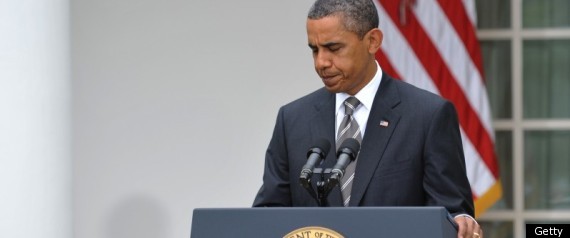
WASHINGTON (AP/The Huffington Post) -- President Barack Obama says the uncertainty over whether lawmakers will raise the nation's debt limit is keeping businesses from hiring.

Speaking in the Rose Garden, Obama says that once Congress reaches an agreement on the debt ceiling, businesses will have the confidence they need to add workers to their payrolls.

"Today's job report confirms what most Americans already know: We still have a long way to go and a lot of work to do to give people the security and opportunity that they deserve," Obama said.

The Labor Department said Friday that the economy added only 18,000 jobs last month, the fewest jobs in nine months. The unemployment rate ticked up slightly to 9.2 percent.

The reports come as Democrats and Republicans near an urgent deadline to increase the nation's borrowing power and prevent the U.S. from defaulting on its obligations.

"To put our economy on a stronger and sounder footing for the future, we've got to rein in our deficits and get the government to live within its means, while still making the investments that help put people to work right now and make us more competitive in the future," Obama said Friday.

Congressional Republicans used the dismal report to slam Obama's economic agenda.

"The situation that we face is pretty urgent, as a matter of fact I would describe it as dire," House Speaker John Boehner said at a news conference, emphasizing that "a debt limit increase that raises taxes or fails to make serious spending cuts won't pass the House."

He was backed up by Majority Leader Eric Cantor, who said that deficit reduction talks held by Vice President Joe Biden that Cantor abandoned had ended because Democrats were insisting on raising taxes.

"Now it just does not make sense for Americans to suffer under higher taxes in an economy like this," said Cantor, R-Va.

Obama has insisted that some revenue increases be included in a deficit-reduction plan.

Boehner, R-Ohio, also stressed the need to reach a deal before the government starts defaulting on its debt on Aug. 2.

"I frankly think it puts us in an awful lot of jeopardy and puts our economy in jeopardy, risking even more jobs. So I believe it is important that we come to an agreement," he said.

Full Article
Source: Huffington 

DCCC Chair Steve Israel Relays Fears Over Candidate Recruitment If Dems Buckle On Medicare

WASHINGTON -- Democratic Congressional Campaign Committee Chair Steve Israel warned lawmakers on Friday that he would have trouble recruiting candidates for office if the party caved on Medicare during the debt ceiling negotiations.

The comments came during a closed-door caucus meeting. Multiple sources confirmed the remarks, describing them as "impassioned."

"He said recruits would not consider running if Democrats did not stand up for Medicare," one attendee told The Huffington Post. "He added that national polling showed a seismic shift against House Republicans after the [Paul] Ryan budget because of Medicare."

Israel's warning adds yet another political element to a debt-ceiling debate that is entering its 11th hour. House Democrats were surprised to wake up Thursday morning to reports that the White House was putting both Medicare and Social Security on the negotiating table. Previously, Democrats had pushed to have entitlement reforms be considered on a separate track, if considered at all.

During the caucus meeting, the attendee emailed, "there was great frustration that the Obama administration was discussing cutting Medicare and Social Security (there was a little less emphasis on Medicaid). The general sense was that protecting Medicare and Social Security was a defining Democratic value, and that agreeing to cuts would be a gift to Republicans if not political suicide."

Israel, who as DCCC chair is charged with getting members elected, brought up the electoral implications. Democratic lawmakers have tried to draw a distinction between cuts to Medicare benefits and those that could be applied to health care suppliers. But officials -- including, presumably, Israel -- have worried that any changes to Medicare would dull the criticisms Democrats have levied against Republicans for attempting to turn Medicare into a voucher program.

Origin
Source: Huffington 

Driving While Immigrant

On June 17, Immigration and Customs Enforcement (ICE) announced a slate of reforms to its Secure Communities program that director John Morton said are about prioritizing its limited resources and “making sure we focus on those people it makes the most sense to remove.” In reality they amount to a political attempt to salvage Obama’s flagship immigration program, which despite a multimillion-dollar mandate to target “dangerous criminal aliens,” has been undermined by ICE’s own data, which show that the majority of those it deports have no criminal record or were charged with minor offenses like traffic tickets. Critics argue that the program has re-established racial profiling as a legitimate policing practice. If the 1990s catchphrase was “Driving While Black,” now it could be “Driving While Immigrant.”

Take the example of Salvador Licea. Last August he was returning to his construction job in McGregor, Texas, after a lunch break when a routine traffic stop turned into a check of his immigration status. A local police officer noticed Licea’s expired inspection sticker and pulled him over, then checked to see whether his driver’s license was also expired. It was. Recent changes in Texas law make it impossible for undocumented immigrants to renew their once valid licenses. So instead of getting a ticket, Licea was arrested and booked into a McLennan County jail that participates in Secure Communities. His fingerprints were automatically shared with federal immigration agents and he was marked eligible for deportation.

“What crime did I commit?” Licea asks. “I was just doing my thing, just trying to get to work.” He says he often felt nervous when he saw a police officer while driving, even when he had a valid license. “Is he going to stop me for breaking the law?” Licea says he would ask himself. “Or is he just going to stop me for the color of my skin?”

Mr. Licea’s charge was driving with an invalid license. He was among 80 percent of the 118 immigrants McLennan County has transferred into ICE custody since January 2010 who were noncriminals or accused of low-level traffic or misdemeanor offenses. This scenario has played out across the 1,417 jurisdictions that have enrolled in Secure Communities since it started in 2008 and report similar statistics. It has been cited by the three Democratic governors who backed out of the program this year—Pat Quinn of Illinois, Andrew Cuomo of New York and Deval Patrick of Massachusetts.

These governors wanted to opt out of Secure Communities—just like Arlington County, Virginia, which voted 5-0 to opt out last September—but have found themselves similarly powerless to block the controversial program. Instead, in an attempt to address state and local concerns, Morton says he will grant more discretionary powers to federal attorneys handling deportation cases. Special consideration will now be given to veterans, victims of domestic abuse, women who are pregnant or nursing and single parents like Licea, who is the sole provider for his two US-born daughters.

Full Article
Source: The Nation 

On the West's Moral Panic Over 'Multiculturalism'

On February 15, 2006, in Strasbourg the head of the European Commission, JosĂ© Manuel Barroso, delivered a stout defense of freedom of speech, democratic values and modernity on the continent. With the embers from heated exchanges over a Danish newspaper’s decision to publish cartoons of Muhammad still glowing, Barroso laid out the consequences of privileging sensitivity towards “others” over core values that define “us.” If Europe failed to defend its principles in the face of such an onslaught, he argued, “we are accepting fear in our society.… I understand that offended many people in the Muslim world but is it better to have a system in which some excesses are allowed or to be in some countries where they don’t even have the right to say this.… I defend the democratic system.”

On the very same day in the House of Commons the British government employed fear of terrorism to limit existing freedoms, expanding state power to make “glorification” of terrorism a criminal offense. Laying out the consequences of privileging freedom over security, then prime minister Tony Blair later explained that the law “Will allow us to deal with ‘those’ people and say: Look, we have free speech in this country, but don’t abuse it.” For certain groups the price for belonging and conditions for banishment have shifted dramatically in Western nations, particularly but by no means exclusively in Europe, in recent years. Citizenship is no longer enough. The clothes you wear, the language you speak, the way you worship, have all become grounds for dismissal or inclusion. These terms are not applied equally to all—they are not intended to be. The intention of this series of edicts (popular, political and judicial) is not to erase all differences but to act as a filter for certain people who are considered dangerously different.

To achieve this, certain groups and behaviors must first be pathologized so that they might then be more easily particularized. The pathologization has been made easier over the past decade by the escalation of terrorist acts or attempts in the US and Europe in the name of radical Islam. “Terror is first of all the terror of the next attack,” explains Arjun Appadurai in Fear of Small Numbers. “Terror…opens the possibility that anyone may be a soldier in disguise, a sleeper among us, waiting to strike at the heart of our social slumber.”

But in truth terrorism, and the wars and conflicts that exacerbate terrorism, sharpened this social pathologization and focused it on Muslims and Islam—but terrorism did not create it. The notion that the presence of certain groups represents an existential threat to a mythological national cohesion was present in Enoch Powell ’s infamous 1968 speech in which he prophesied violent consequences to non-white immigration in the UK: “As I look ahead, I am filled with foreboding; like the Roman, I seem to see ‘the River Tiber foaming with much blood.’” It was there in 1979 in Margaret Thatcher’s sympathy with Britons who feel they are being “swamped by an alien tide.” And it was front and center in Jacques Chirac ’s 1991 “Le bruit et l’odeur” speech. “How do you want a French worker who works with his wife, who earn together about 15,000 francs and who sees next to his council house a piled-up family with a father, three or four spouses and twenty children earning 50,000 francs via benefits naturally without working…If you add to that the noise and the smell, well, the French worker, he goes crazy.”

For these threats to gain popular traction, however, these “others” have to be distinguished in the popular mind from other “others.” So when black people attack other black people it is no longer crime but “black-on-black-crime;” if a young Muslim woman in killed over a romantic relationship it is not a murder but an “honor killing.” In a country like England that has been embroiled in virtually continuous terrorist conflict for the last forty years in Northern Ireland, the notion that there are “home-grown” Muslim bombers is supposed to represent not just a new demographic taking up armed struggle but an entirely new phenomenon. Even as the Catholic Church is embroiled in a global crisis over child sexual abuse and the Church of England is splintered in a row over gay priests, Islam and Muslims face particularly vehement demands to denounce homophobia.

The combined effect of these flawed distinctions and sweeping demonization is to unleash a series of moral panics. In 2009 in Switzerland, a national referendum banned the building of minarets in a country that has only four; in 2010, 70 per cent of voters in the state of Oklahoma support the banning of sharia law even though Muslims comprise less than 0.1 per cent of the population; in the Netherlands parliament seriously considered banning the burka–a garment believed to be worn by fewer than fifty women in the entire country. Disproportionate in scale and distorted in nature, these actions cannot be understood as a viable response to their named targets but rather as emblems of a broader, deeper disruption in national, racial and religious identities. At a time of diminishing national sovereignty, particularly in Europe, such campaigns help the national imagination cohere around a fixed identity even as the ability of the nation-state to actually govern itself wanes. It is a curious and paradoxical fact that as national boundaries in Europe have started to fade, the electoral appeal of nationalism has increased; fascism, and its fellow travelers, is once again a mainstream ideology in Europe, regularly polling between 5 and 15 per cent in most countries. Their success suggests that modernity, as it has been framed and presented, poses a challenge not only to Islam and that the demographic group finding it most difficult to integrate into modern society is a section of white society that feels abandoned and disoriented.

Full Article
Source: The Nation 

Factory Farms vs. Video Activists: Who Will Control What We See?

Iowa's attempt to ban undercover videographers from documenting animal cruelty is merely the latest battle in an ongoing all-out war.

Next time you drive through Iowa farm country, you may want to put away your camera. Earlier this year, the state proposed a new piece of legislation, House File 589, that would make it a crime to videotape, audio record, or in any way document a crop or animal facility without the prior consent of the owner. Anyone who produces, possesses, or distributes an unauthorized recording would face hefty fines, jail time, or both. The proposed law, an amendment to Iowa Code 717A, passed the Iowa House by a wide margin. It recently stalled in the Senate, but it will most likely be taken up again months from now in the state's next legislative session: as Iowa Representative Jim Lykam recently noted, "I'm sure that somebody will try to see if they can resurrect it." Most importantly, the underlying issue—industrial agriculture's fear that activists will continue to expose its practices—hasn't gone away.

Although HF 589 has been decried by animal welfare, food transparency, and civil rights groups, it has galvanized large-scale agricultural entities—from multinational corporations like Monsanto and DuPont to influential statewide organizations like the Iowa Poultry Association. The measure is a backlash against the undercover sting operations that constantly threaten factory farmers and the commodity crop growers who supply their feed. In recent years, activists have documented routine abuse and horrifying conditions at large farms in Iowa, Texas, Minnesota, California, Maine, Ohio, and elsewhere. Easily disseminated through the Internet, these startling and often graphic videos can result in independent audits, fines, and even criminal charges.

Iowa State Senator Matt McCoy, who has opposed HF 589, told me that recent legislative changes in California explain why Iowan producers feel so threatened. When 63 percent of Californians voted for Proposition 2 in 2008, they ensured a better future for their poultry: by 2015, all laying hens in California must have enough room to fully extend their limbs or wings without touching cage walls or one another. "The poultry industry doesn't want to see the same mandates in Iowa," McCoy said. "They see this as an offensive attack, and that they have to protect their industry." Considering that strong public support for Proposition 2 was garnered, in large part, by a media campaign that compared photos of animals in industrial farms with animals raised in less confining conditions, it's easy to see why large-scale operators think HF 589 might help diffuse growing public resistance to factory farming.

Iowa's proposed law is part of a broader move to silence the growing din of undercover factory farm videos. This year, legislatures in Florida and Minnesota also proposed anti-surveillance laws. The concerted nature of this campaign is evident in the legislation itself: HF 589 and its sister bill in Minnesota, SF 1118, use nearly identical language. Florida's proposal is terser in style but virtually the same in content. According to McCoy, all three bills began with Iowa's powerful agricultural interest groups—people like Don Peterson, an influential lobbyist for Iowa's Farm Bureau, who traveled on behalf of similar legislation elsewhere. "We've seen high-profile, visible lobbyists," he said, "and they've made efforts to work this in several states." The bills in Florida and Minnesota died without a vote, but McCoy feels the odds are better in Iowa, where the legislative push began, and where well-heeled lobbyists have strong government ties.

Full Article
Source: The Atlantic