
Monday, September 12, 2011
Is Your Gmail Account Killing the Planet?
Rick Perry's Jobs Strategy: Raiding Other States

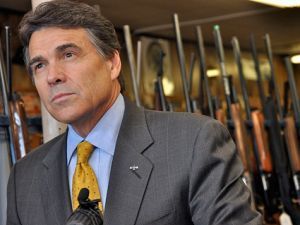
Rick Perry's campaign is publicizing a series of quotes from Meg Whitman intended to vouch for him as Mr. Job Creator. But her words, posted on his website and emailed to reporters, in fact paint him as Mr. Job Poacher, an economic marauder who raided other states for the greater glory of Texas and pursued a growth agenda that would be impossible to replicate on the national stage.
According to the Perry campaign, Whitman said last year: "Texas Governor Rick Perry says he comes on hunting trips to California. ... And I said, 'Really? What are you hunting out here?' He said, 'Companies.'"
Perry bragged to her about the "virtually zero percent corporate income tax" and "lightning speed" permitting process in Texas, she said. She praised the state's tort reforms and "ombudsmen for every industry." If she were launching eBay right now, Whitman says, "probably Texas" is where she'd do it.
That's all really great for Texas, but it's hard to see the benefit for anyplace else -- and even harder to see how it can be a model for the country at large.
Let's say that every state streamlined its permitting, added industry ombudsmen, lowered its corporate income tax rate and offered incentives to companies to expand or relocate.
Michigan still wouldn't have Texas assets like oil and gas reserves, a warm climate, NASA and huge military installations. It would still be saddled with the heartbreaking decline of its major city, Detroit. It would still be seeing an exodus of people and the consequent loss of teachers, firefighters, cops and other government workers needed to serve them -- just as Texas has gained public employees as its population has surged.
Furthermore, before we head down the road of "We are all Texans now," those outside the Lone Star State need to ask ourselves: do we really want the Texas model? The safety net there is seriously frayed. Texas may be No. 1 in job growth, but it's also No. 1 in people without health insurance (more than a quarter uninsured), No. 1 in high school dropouts (more than 20 percent don't have a diploma or GED) and the nation's No. 1 emitter of carbon pollution. It's among the top states in child poverty, teen pregnancy and low-paying jobs, as well.
But say Americans are so desperate for change that they are okay with risking a race to the bottom. The next question is how to turn Perry's zero-sum job strategy into one where America, not just Texas, wins. Where are states like Michigan and Nevada going to poach jobs from? Mexico? Ireland? China? You can't undercut their wages. And if the answer is to be smarter, how do you take away $4 billion from education -- as Perry just did in Texas -- and still make that happen?
Back in 1991, the New Hampshire economy was in such bad shape that competitors in its pivotal primary, including Bill Clinton and Paul Tsongas, issued full-blown plans to revive that one state's economy. Maybe Perry could start with job plans for a few of what you might call donor states. What would he do in Nevada, which already has zero corporate income taxes -- even lower than Texas? How about California, which is hamstrung by union clout and voter mandates that make it nearly impossible to fund the government?
On a national scale, will he concede that not all regulation is bad for an economy? Texas is living proof. In 1998, before Perry was governor, it began requiring a 20
Will his only proposal on health care be to let states do whatever they want with federal money? Besides "getting out of the way," does he see any federal role in reviving the economy?
A national economy can't grow by some states sucking jobs from others, based on which tax the least and let corporations off the hook on the widest range of societal responsibilities. Odd, then, that Perry's campaign would advertise him as being so skilled in this respect.
Origin
Source: the Atlantic
A Decade After 9/11, Police Departments Are Increasingly Militarized
 New York magazine reported some telling figures last month on how delayed-notice search warrants -- also known as "sneak-and-peek" warrants -- have been used in recent years. Though passed with the PATRIOT Act and justified as a much-needed weapon in the war on terrorism, the sneak-and-peek was used in a terror investigation just 15 times between 2006 and 2009. In drug investigations, however, it was used more than 1,600 times during the same period.
It's a familiar storyline. In the 10 years since the terror attacks of September 11, 2001, the government has claimed a number of new policing powers in the name of protecting the country from terrorism, often at the expense of civil liberties. But once claimed, those powers are overwhelmingly used in the war on drugs. Nowhere is this more clear than in the continuing militarization of America's police departments.
Paul Krugman 9/11 Blog Post Stokes Controversy
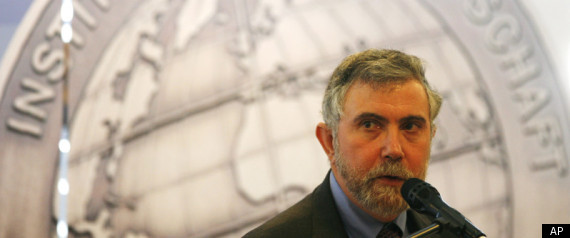 Paul Krugman drew conservative outrage on Sunday when he wrote that the anniversary of 9/11 had become a marker of "shame" for the U.S. (Scroll down for Krugman's new post on the subject.)
The New York Times columnist wrote a blog post called "The Years of Shame," in which he said that "what happened after 9/11" was "deeply shameful." Krugman castigated people like Rudy Giuliani and President Bush as "fake heroes" who exploited the attacks for their own personal, political or military gain. He also said that many in the media had "[lent] their support to the hijacking of the atrocity."
Krugman concluded, "the memory of 9/11 has been irrevocably poisoned; it has become an occasion for shame. And, in its heart, the nation knows it." He said he had turned off the comments on the post "for obvious reasons."
Jamie Dimon, CEO Of JPMorgan Chase, Calls International Bank Rules 'Anti-American'
 The United States should consider pulling out of the Basel group of global regulators, Jamie Dimon, chief executive of JPMorgan Chase, said in an interview with the Financial Times.
Dimon said he was supportive of forcing banks to have more capital but argued that moves to impose an additional charge on the largest global banks went too far, particularly for U.S. lenders.
He was quoted as describing new international bank capital rules as "anti-American".
"I'm very close to thinking the U.S. shouldn't be in Basel anymore. I would not have agreed to rules that are blatantly anti-American," he said in the interview.
"Our regulators should go there and say: 'If it's not in the interests of the U.S., we're not doing it'."
Ex-French President Jacques Chirac Faces Corruption Charges
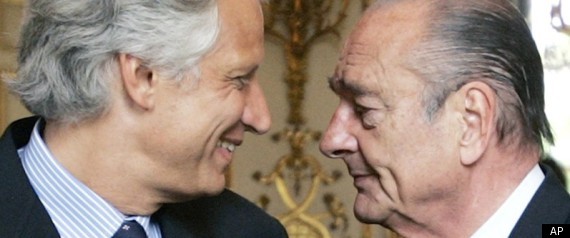 PARIS — Former French President Jacques Chirac and former Prime Minister Dominique de Villepin received an estimated $20 million in illegal cash from West African leaders, a lawyer who claimed to be the go-between said Monday.
Lawyer Robert Bourgi said he handed over suitcases filled with cash between 1995 and 2005, including $10 million from the leaders of Senegal, Burkina Faso, Ivory Coast, Gabon and Republic of Congo for Chirac's 2002 presidential campaign.
Both Villepin and Chirac's lawyers denounced the claims.
The explosive allegations come as Chirac is on trial for unconnected corruption charges related to his years as Paris mayor, and as the campaign for next year's French presidential elections is heating up. The claims revived uncomfortable questions about France's cozy relations with autocratic regimes in its former African colonies.
Alleged G20 conspirators ask for trial by judge and jury
Fifteen months after the tumultuous G20 summit in Toronto, the preliminary inquiry for 17 people accused of conspiring to disrupt it has begun in the city’s north end.
The hearing before Mr. Justice Gerald Lapkin of the Ontario Court of Justice will determine whether there is sufficient evidence to commit the 10 men and seven women to trial, and is scheduled to last about 11 weeks.
Amid tight security, the 17 defendants and a group of supporters filed into the big Finch Avenue West courtroom shortly before 10 a.m. Monday and took their seats along the west wall. All but one of the accused, who for now is representing himself, have lawyers.
After some procedural issues were dealt with, lead prosecutor Jason Miller began summarizing the Crown’s evidence, which was placed under the usual pre-trial publication ban.
Most of the 17 defendants are in their early 20s and are variously accused of conspiring to commit mischief, obstruct police, resist arrest and with counselling to assault police.
The hearing before Mr. Justice Gerald Lapkin of the Ontario Court of Justice will determine whether there is sufficient evidence to commit the 10 men and seven women to trial, and is scheduled to last about 11 weeks.
Amid tight security, the 17 defendants and a group of supporters filed into the big Finch Avenue West courtroom shortly before 10 a.m. Monday and took their seats along the west wall. All but one of the accused, who for now is representing himself, have lawyers.
After some procedural issues were dealt with, lead prosecutor Jason Miller began summarizing the Crown’s evidence, which was placed under the usual pre-trial publication ban.
Most of the 17 defendants are in their early 20s and are variously accused of conspiring to commit mischief, obstruct police, resist arrest and with counselling to assault police.
Rick Perry’s Juvie Record
 Mary Jane Martinez's son Jimmy entered the Texas criminal justice system in 2003 because he missed his school bus. He was charged with truancy and destruction of property (for throwing rocks) and sent to live in a county juvenile detention center for a sentence of six months. After five months, instead of being released, he was transferred to an academy 400 miles away, managed by the Texas Youth Commission, the agency that oversees detention and treatment centers across the state. Jimmy finally came home, four years after he was sent away, a period his mother now describes as a living hell. His best friend had been murdered, and Jimmy had been beaten and raped—both, Mrs. Martinez testifed, by TYC guards.
"It just made him worse," Martinez says of the treatment. "My son has PTSD now. He's schizo." Unable to find a job after getting out, he was arrested for burglary and landed in a prison facility eight hours away from his native San Antonio.
Martinez's story is hardly an outlier. For years, the Texas juvenile justice system was wracked by reports of rape, unsanitary conditions, and physical abuse. According to statistics submitted by the TYC in 2007, 83 percent of residents who requested counseling that year were ultimately diagnosed with post-traumatic stress disorder. At one youth facility in central Texas, the mistreatment and squalid conditions (feces on the walls and bed-sheets, steel bars blocking fire escapes) were so bad they left no choice but for the agency to shut it down entirely.
Harper’s single white males

He has wooed former Liberals into his caucus, sent New Democrat Gary Doer to Washington as Canada’s ambassador, and even put the occasional former Bloc Québécois member on the government payroll. No premier except Newfoundland’s now-retired Danny Williams has seen any political profit in antagonizing him. Harper drives his political opponents so crazy that it’s less frequently noticed how often he makes allies.
But the flip side of that coin is that his alliances rarely last. He hardly talks to former advisers like Tom Flanagan. He is on his fourth chief of staff, sixth communications director, and fifth foreign minister since he became Prime Minister. Jean Chrétien kept Eddie Goldenberg at his side for nearly 40 years. Paul Martin kept his 1990 Liberal leadership team around him until the day he retired. Harper’s team is like George Washington’s axe in the old joke, its blade replaced three times and its handle 26. All that remains is the ability to chop down opponents.
Ferris wheel pitchman says ‘only Rob Ford’ listened
 When Councillor Doug Ford introduced the notion of a waterfront Ferris wheel for the moribund Port Lands, one person in Toronto wasn’t a bit surprised.
John Kowal has talked to countless civic leaders about his money-making proposition for the city. The 77-year-old retired manufacturing engineer says he has been pitching a giant wheel modelled after the London Eye for seven years, but grew discouraged and threw away the papers with his calculations and business plan.
“I got a little tired of just holding onto it and not seeming to get anywhere. Eventually you get disillusioned,” he said.
Then he talked to Rob Ford.
Subscribe to:
Posts (Atom)