Democracy Gone Astray

Democracy, being a human construct, needs to be thought of as directionality rather than an object. As such, to understand it requires not so much a description of existing structures and/or other related phenomena but a declaration of intentionality.
This blog aims at creating labeled lists of published infringements of such intentionality, of points in time where democracy strays from its intended directionality. In addition to outright infringements, this blog also collects important contemporary information and/or discussions that impact our socio-political landscape.

All the posts here were published in the electronic media – main-stream as well as fringe, and maintain links to the original texts.

[NOTE: Due to changes I haven't caught on time in the blogging software, all of the 'Original Article' links were nullified between September 11, 2012 and December 11, 2012. My apologies.]

Thursday, September 22, 2011

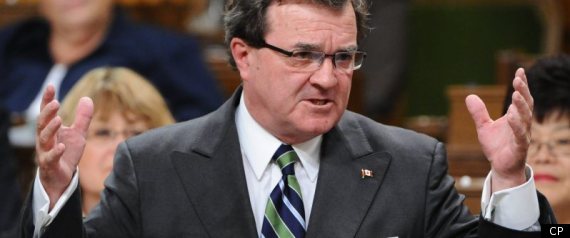
The Commons: The Finance Minister goes rogue

The Scene. Bob Rae was making fun—pointedly, but sarcastically, mocking the government’s decision to spend $20 million for advice on how to reduce spending. It was, if nothing else, a decent bit of amusement for a Wednesday afternoon.

“Mr. Speaker, a review of public accounts show that the government spending on professional and special services, including the use of consultants, has gone up from $7.24 billion to well over $10 billion, a cumulative increase of over $7 billion,” the Liberal leader informed the House. “I’d like to ask the minister of finance, what does he think the chances are that the $20-million consultants he’s just hired are going to come back and say, ‘You know what a good way is to save money, cut the use of consultants?’”

Here Mr. Rae returned to his seat and here the Finance Minister stood. And here—after some superfluous mocking of Mr. Rae’s time as premier of Ontario—are the altogether remarkable sentences that Jim Flaherty offered in response.

“Yes, we are having experts from outside look at government spending. Yes, we should. Government should not be the sole judge of the way it’s run. We need advice from the outside.”

Had he mispoken? Had he momentarily lost control of his mouth? Did he realize people could hear him saying these things?

Rob Ford fenced in... for now

Monday’s meeting of the mayor’s executive, the day the committee was supposed to rubber-stamp his austerity program, started out with the Fordists talking tough in the face of growing public and political opposition.

But by lunchtime, when Ford’s coterie of council supporters were herded into the big guy’s office for a photo opportunity meant to give the appearance of a united front and offer more brave words about staying the course, it was clear that it wouldn’t be business as usual at 100 Queen West.

After another all-nighter to hear from the city’s citizens on a raft of proposed cuts, the mayor’s henchmen blinked on Tuesday, taking some off the table and punting a whole bunch of others to staff for further consideration during upcoming budget deliberations. (See Sideshow At City Hall for details).

The decision to defer will buy Ford a little more time to do some arm-twisting and horse-trading on the cuts front. The Ford camp is banking, too, on having a PC premier in the Pink Palace come October 6, which would give the mayor more political leverage to muscle his cuts through. He could use his campaign promise to reduce council by half, to 22 councillors, as a stick if Hudak wins.

City’s two-tier taxi licence racist, tribunal hears

The city must abolish its two-tiered taxi licensing regime, which has resulted in racial discrimination against hundreds of immigrant cab drivers, the Ontario Human Rights Tribunal heard Wednesday.

But in a passionate rebuttal, the city denied any link between race and the supposedly “inferior” class of licence possessed by many immigrant cab drivers — a subject that has fuelled tensions between councillors and cab drivers in recent months as the city mulls systemic reforms.

The competing arguments Wednesday marked the final phase of a hearing into the complaint of Asafo Addai, a Ghanian cab driver who says he was subject to licensing discrimination because he is black.

“Until the city treats all taxi cab licence owners equally, racialized persons will continue to suffer from the economic disadvantage and social stigma that arise from the distinctions created by the two-tier taxicab licensing system,” his lawyers, Peter Rosenthal and Reni Chang, asserted in written closing submissions.

5 chemical threats to the Great Lakes

The Great Lakes have faced various threats for years, from industrial pollution to invasive species, but another challenge worries many researchers these days — the emerging chemical threat.

It’s not just pesticides, as scientists are finding worrying levels of pharmaceutically active compounds such as anti-inflammatories, antibiotics, anti-epileptics, and beta blockers in lake water. As well, hormones, pesticides and alkylphenols have been identified as threats.

These products and medicines flushed down toilets and dumped into sinks are not stopped at water treatment plants, which are not geared to deal with them.

A new report prepared for the International Joint Commission by two Windsor, Ont., researchers has outlined the threats the chemicals pose. The International Joint Commission was formed by the U.S. and Canadian governments to find solutions to problems in the Great Lakes Basin.

Democracy Now! Special Report from Troy Davis Execution: Did Georgia Kill an Innocent Man?

Troy Anthony Davis was killed by lethal injection by the state of Georgia at 11:08 p.m. EDT last night, despite widespread doubts about his guilt. The execution occurred shortly after the U.S. Supreme Court declined to stop the execution. Democracy Now! was the only news outlet to continuously broadcast live from the prison grounds last night, where hundreds of supporters Troy Davis held an all-day vigil in Jackson, Georgia. Today we hear the voices of Troy Davis’s sister Martina Correia, hip-hop artist Big Boi, NAACP President Benjamin Jealous, Ed DuBose of the Georgia chapter of the NAACP, two members of the Troy Davis legal team, and more. We also hear from journalist Jon Lewis, a witness to the execution: "[Davis] said to the family [of slain police officer Mark MacPhail] that he was sorry for their loss, but also said that he did not take their son, father, brother. He said to them to dig deeper into this case, to find out the truth... And then he said to the prison staff, the ones he said 'who are going to take my life,' he said to them, 'May God have mercy on your souls.' And his last words were to them: 'May God bless your souls.'"

Video
Source: Democracy Now! 

A problem for everyone

Work hard and you'll get ahead. That's been the mantra of folks who prefer their governments small and their success big.

But as two recent Conference Board of Canada reports show, that mantra is being cast into doubt. According to the voice of Canada's business establishment: "High inequality can diminish economic growth if it means that the country is not fully using the skills and capabilities of all its citizens or if it undermines social cohesion, leading to increased social tensions. . High inequality [also] raises a moral question about fairness and social justice."

Say the word "inequality," and many people automatically assume you're talking about the poor. But a mounting body of research shows that, left unchecked, a growing income gap affects the rich, the poor and everyone in between.

Economic growth used to be touted as the surest ticket to broad-based prosperity. But during the strongest period of economic growth in the past 30 years, between 1997 and 2007, a third of all income gains went to the richest 1% of Canadian tax filers.

Think that's normal? In the 1960s, the most recent comparable period of sustained growth, the richest 1% took only 8% of the gains from growth.

Child rapist to get less time than pot grower

Prime Minister Stephen Harper is getting tougher on pot growers than he is on rapists of children. Under the Tories' omnibus crime legislation tabled Tuesday, a person growing 201 pot plants in a rental unit would receive a longer mandatory sentence than someone who rapes a toddler or forces a five-year-old to have sex with an animal.

Producing six to 200 pot plants nets an automatic six-month sentence, with an extra three months if it's done in a rental or is deemed a public-safety hazard. Growing 201 to 500 plants brings a one-year sentence, or 1½ years if it's in a rental or poses a safety risk.

The omnibus legislation imposes one-year mandatory minimums for sexually assaulting a child, luring a child via the Internet or involving a child in bestiality. All three of these offences carry lighter automatic sentences than those for people running medium-sized grow-ops in rental property or on someone else's land.

A pedophile who gets a child to watch pornography with him, or a pervert exposing himself to kids at a playground, would receive a minimum 90-day sentence, half the term of a man convicted of growing six pot plants in his own home.

Troy Davis Executed: Controversially Convicted Inmate Maintains Innocence Until The End

JACKSON, Ga. -- Troy Davis, convicted of murdering an off-duty Savannah police officer more than 20 years ago, held fast to his claims of innocence even as he was finally executed by lethal injection on Wednesday night.

Strapped to a gurney and minutes from death, Davis stated that he had not carried a gun the night of the murder and did not shoot the officer, Mark MacPhail, in a fast food restaurant parking lot on an August night in 1989.

Speaking directly to MacPhail's brother and son, who witnessed the execution, Davis beseeched them to continue to examine the events that night. "All I can ask is that you look deep into this case so you can really find the truth," he said.

Davis then addressed prison officials preparing to inject him with a lethal mix of chemicals. "May God have mercy on your souls," he said.

Wednesday, September 21, 2011

Ottawa Budget Cuts: Flaherty Defends Hiring Cost-Cutting Consultants At $90,000 A Day

OTTAWA - The Harper government defended paying almost $90,000 a day to a big consulting firm for advice on how to save money, saying it can't do the job properly by itself.

"The fact is that we feel we need to have outside advice," Finance Minister Jim Flaherty said Tuesday.

"It isn't good, quite frankly, for a government to just look at itself. There's a lot of expertise in Canada on the subject of public-sector productivity, for example, and we look forward to having the advice of, in this case, Deloitte's."

The Canadian Press earlier reported that Deloitte Inc. was hired on Aug. 15 on a $19.8-million contract to advise the federal cabinet and senior officials on finding enough savings to balance the books by 2014.

The contract, which runs until March 31, is to advise "senior and elected officials on public- and private-sector best practices in improving productivity and achieving operational efficiencies." There's an option for a one-year extension.

Opposition MPs dismissed the government's justifications.

"They are spending $90,000 a day for an outside consultant to plan cuts — and that is their explanation," New Democrat Jean Crowder said in the House of Commons. "Canadians will not buy it.

"A day's pay for this consultant is more than a year's pay for front-line Service Canada workers. While Conservatives throw money away on high-priced consultants, they are forcing Canadians to accept cuts to the programs and services that they rely on."

On July 11, Public Works invited a group of 20 "pre-qualified" firms to bid on the contract, rather than use a fully open tendering process. Documents describing the work required were supplied directly to the invited bidders, rather than posted on a tendering website for anyone to see.

The Canadian Press obtained a copy of the so-called "statement of work" under the Access to Information Act.

Deloitte will advise the government on the strategic and operating review, a year-long exercise announced in the March 22 budget that will eventually trim $4 billion from $80 billion in annual program spending.

Tony Clement, Treasury Board president, has asked 67 departments, agencies and Crown corporations to submit two scenarios by Oct. 3, one with cuts of five per cent, another with cuts of 10 per cent.

A nine-person committee headed by Clement will then vet the proposals over the following three months and report their recommendations to the finance minister in mid-January. Flaherty will then include the final plan in his next budget, with the actual cuts slated to begin April 1.

Clement has said that transfer payments to individuals and the provinces will not be touched.

To date, the government has provided only minimal information about the timelines and process.

Industry Minister Christian Paradis on Monday called the Deloitte contract "normal."

"There will be major decisions to be taken and we need an expert from the private sector to do it properly," he said.

Deloitte has already provided training sessions for officials, as well as management tools to help the committee review the spending-cut proposals.

The contract also calls for advice on consolidating the government's far-flung data centres, a centrepiece of the current belt-tightening exercise.

The government has already paid PriceWaterhouseCoopers a $2.5-million fee for advice on how to reduce 308 data centres to about 20.

Deloitte must also provide an information specialist to advise on "disposing of information," and "co-ordinating Access to Information and Privacy Act requirements." The expert will also be "responsible for the efficient and systematic control of the creation, receipt, maintenance, use and disposition of records."

Other firms invited to bid on the $20-million contract included Ernst & Young, IBM Canada, Bell Canada and Accenture Inc.

Origin
Source: Huffington 

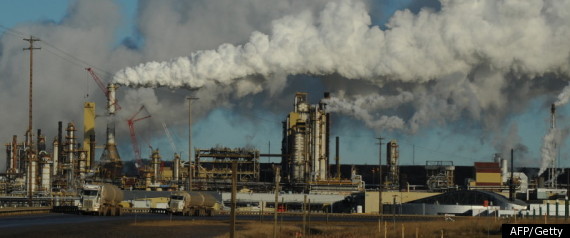
Keystone XL Pipeline Will Hollow Out Alberta's Refining Industry, Opponents Argue

"Americans will get the jobs, Canadians will get the pollution."

That's the talking point a union that represents workers in the Alberta oil sands is using to oppose the construction of the Keystone XL Pipeline, the $7-billion project Transcanada Corp. is planning to build to transfer bitumen -- raw oil sands product -- from Alberta to refineries in Texas.

The Communications, Energy and Paperworkers Union of Canada (CEP) has called a press conference for Thursday where they plan to lay out in detail why they oppose a massive expansion of their industry’s infrastructure.

"The pipeline will create environmental destruction, take potential upgrading and refining jobs away from Canadians, and put our country's energy security at risk," CEP President Dave Coles said in a statement.