Democracy Gone Astray

Democracy, being a human construct, needs to be thought of as directionality rather than an object. As such, to understand it requires not so much a description of existing structures and/or other related phenomena but a declaration of intentionality.
This blog aims at creating labeled lists of published infringements of such intentionality, of points in time where democracy strays from its intended directionality. In addition to outright infringements, this blog also collects important contemporary information and/or discussions that impact our socio-political landscape.

All the posts here were published in the electronic media – main-stream as well as fringe, and maintain links to the original texts.

[NOTE: Due to changes I haven't caught on time in the blogging software, all of the 'Original Article' links were nullified between September 11, 2012 and December 11, 2012. My apologies.]

Monday, October 17, 2011

Global Day of Rage: Hundreds of Thousands March Against Inequity, Big Banks, as Occupy Movement Grows

From Buenos Aires to Toronto, Kuala Lumpur to London, hundreds of thousands of people rallied on Saturday in a global day of action against corporate greed and budget cutbacks, demanding better living conditions and a more equitable distribution of wealth and resources. Protests reportedly took place in 1,500 cities, including 100 cities in the United States—all in solidarity with the Occupy Wall Street movement that launched one month ago in New York City. We go to Athens for a report from a protest at Syntagma Square against austerity measures and corporate greed, speak to an activist in Rome where 200,000 rallied, and go to Japan for a report on the Occupy Tokyo demonstration. We also air excerpts of a speech by Julian Assange of WikiLeaks at Occupy London Stock Exchange.

Video
Source: Democracy Now! 
Bank Of America Branch In California Reportedly Refuses To Allow Protesters To Close Accounts

Should people who are tired of paying extra fees be allowed to close their bank accounts in protest? One Bank of America official reportedly doesn't think so.

According to Addicting Info, two women involved with the Occupy Santa Cruz movement in California walked into a Bank of America branch earlier this week and attempted to close their bank accounts. In response, the bank manager threatened to lock the doors and call the police on them. Her reasoning? You can't be a customer and a protester at the same time, the manager said.

Central Coast News contacted Bank of America about the incident and received a response from the company:
Central Coast News has contacted Bank of America to get their side of the story. In an email Colleen Haggerty with Bank of America released this statement to Central Coast News. "It is our responsibility to ensure a safe environment for customers to conduct financial transactions. So, due to the disruptive nature of protests lately and the potential for safety or security issues, we do not allow protestors inside of our banking centers. If a customer who is participating in a protest wishes to conduct bank business, including close an account, we ask them to come back when they are not protesting or they may also conduct their bank business at a nearby branch away from protest activities." Haggerty also said that Bank of Ameica, "respect everyone's ability to exercise their first amendment rights, however we also have to balance safety and business needs for all customers."
According to Central Coast News, "The women said that they would return to Bank of America the next day, sans signs, and close their accounts taking their 'money away from the banking elite and into a local credit union.'"

Origin
Source: Huffington 

Middle-class homeownership dream may be slipping away

One thing most middle-class families have always had in common is a belief in the American dream: homeownership.

But the housing crash and Great Recession dashed that dream for many, and shook to its core the idea that homeownership is a defining element of the middle-class lifestyle.

For generations, the financial stability of middle-class families has been intertwined with the financial benefits of owning a home.

Homes have long served as an automatic savings plan - pay the mortgage every month and see the savings grow as equity. They have been a tax haven - the interest is deductible. And they have been a retirement plan for many - pay down a 30-year mortgage and retire free and clear, or sell the house and live off the accrued wealth.

The American dream of homeownership has been evolving since just after World War II, when the middle class started to grow and mortgages became more available. Families typically lived in homes and paid them off. But in the 1970s, as home values began to steadily climb, the dream evolved. Families sold their first homes, made a profit and moved up to nicer ones, sometimes time and again. Always, steady growth in home values helped pave the way to financial security.

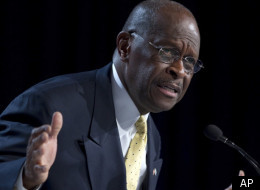
Herman Cain: 'I'm Not Familiar With The Neoconservative Movement'

WASHINGTON -- GOP presidential candidate Herman Cain raised more questions about his knowledge of foreign policy on Sunday, saying he doesn't know anything about the "neoconservative movement," which dominated the eight years of the Bush administration.

On "Meet the Press" Sunday morning, host David Gregory asked Cain who has shaped his views on foreign policy.

"I've looked at the writings of people like Amb. John Bolton," replied Cain. "I've looked at the writings of Dr. Henry Kissinger -- KT McFarland, someone I respect."

Bolton was one of the most hawkish figures of the Bush administration, serving as the U.S. ambassador to the United Nations. He repeatedly pushed for striking Iran, and in 1994, he famously said, "If the U.N. secretary building in New York lost 10 stories, it wouldn’t make a bit of difference."

Kisssinger served as Secretary of State and National Security Adviser under Presidents Richard Nixon and Gerald Ford. McFarland is a national security analyst with Fox News who has served in the Nixon, Ford and Reagan administrations.

Pizza Magnate Herman Cain Has Extensive Ties To Powerful Koch Group

IOWA CITY, Iowa — Republican presidential hopeful Herman Cain has cast himself as the outsider, the pizza magnate with real-world experience who will bring fresh ideas to the nation's capital. But Cain's economic ideas, support and organization have close ties to two billionaire brothers who bankroll right-leaning causes through their group Americans for Prosperity.

Cain's campaign manager and a number of aides have worked for Americans for Prosperity, or AFP, the advocacy group founded with support from billionaire brothers Charles and David Koch, which lobbies for lower taxes and less government regulation and spending. Cain credits a businessman who served on an AFP advisory board with helping devise his "9-9-9" plan to rewrite the nation's tax code. And his years of speaking at AFP events have given the businessman and radio host a network of loyal grassroots fans.

The once little-known businessman's political activities are getting fresh scrutiny these days since he soared to the top of some national polls.

His links to the Koch brothers could undercut his outsider, non-political image among people who detest politics as usual and candidates connected with the party machine.

Sunday, October 16, 2011

Occupy Toronto planning event for stock exchange opening

Occupy Toronto campers waking up after their first overnight stay say Sunday’s events will include more marches and planning for a big splash when Bay Street opens Monday.

Toronto’s St. James park is now tent city central for the Occupy Toronto movement. Some protesters were woken awake by the loud church bells at 8 a.m. as the camp stirred to activity to a nippy fall morning. In one corner, a guitarist sang as he strummed a tune, while other volunteers walked around with boxes laden with breakfast snacks.

“We need more toilet paper,” yelled out one of the overnight campers to the organizers prioritizing supplies.

Much of the noon-time general assembly will focus on logistics, said spokesperson Eric Wilson, a 26-year-old farmer from Peterborough, Ont.

Riots in Rome as Wall Street protests go global

ROME—Thousands of demonstrators took to the streets across the globe on Saturday to denounce bankers, politicians and businessmen for ruining the world’s economies, with violence breaking out in Rome as angry protesters torched cars and smashed bank windows.

Galvanized by the Occupy Wall Street movement, the protests began in New Zealand, touched parts of Asia, spread to Europe, and ultimately resumed at their starting point in New York.

The demonstrations by the disaffected coincided with the Group of 20 meeting in Paris, where finance ministers and central bankers from major economies were holding talks on the debt and deficit crises afflicting many Western countries.

While most rallies were small and barely held up traffic, the Rome event drew tens of thousands of people and snaked through the city centre for kilometres.

The 99 Percent Rise Up

How did Occupy Wall Street suddenly become Occupy Los Angeles? Occupy Cleveland? Occupy Janesville? Occupy Pocatello? How did a sleep-in beneath the skyscrapers of Lower Manhattan inspire kayakers clad as Robin Hood to paddle up the Chicago River under a banner reading, Wall St. Takes From the 99%. Gives to the Rich? And how did those giant cutouts of JPMorgan Chase CEO Jamie Dimon end up dancing with all those San Franciscans chanting, “Make banks pay”? Despite what Republican presidential candidate Herman Cain suggests, it was not some “orchestrated” attempt to deflect blame from the flawed policies of the Obama administration. It was not the media looking for a “left-wing Tea Party.” And it certainly was not a poll-tested, focus-grouped PR campaign that billionaire-funded front groups employ to gin up movements.

Occupy Wall Street started small, took a beating from the cops and struggled for weeks to get the attention of the political class, the media and even its own natural allies. The only thing going for this unlikely intervention has been the pitch-perfect resonance of its founding premises. The American people understood Occupy Wall Street, and began to embrace its promise, long before the mandarins who presume to chart our national discourse noticed that everything was changing. That’s because the generators of this movement—and it is a movement—have gotten three things right from the start:

The Treasury's Smart Plan to Get the Government Out of Home Financing

Once upon a time, when the housing market was thriving, investors loved mortgages. They didn't care if they were prime, subprime, privately financed, or government-backed -- their love seemed unconditional. Investors threw so much money at housing that a gigantic bubble inflated. But then, it popped. Investors got burned: the mortgages they trusted turned out to be poisonous. Billions of dollars in losses from toxic securities nearly killed the investors. So the relationship ended on very bad terms. Even now, most investors will only look at mortgage securities if they're disguised as Treasuries. But the Treasury reportedly has a pretty slick idea to get these estranged lovers together again.

How Do You Jumpstart a Dead Market

Right now, the government backs something like 90% of new mortgages. Back when the housing market was thriving, private label mortgage-backed securities -- those not backed by the government -- were responsible for funding roughly 40% of mortgage originations. Three years after the crisis, the private label market remains virtually dead.

Deconstructing Rick Perry's Energy and Jobs Plan

The centerpiece of Rick Perry's economic plan, released this morning, is a pledge to create 1.2 million energy jobs. Mitt Romney has already promised to create nearly 1.5 million energy jobs. Why do we keep hearing numbers in this ballpark? And are they plausible?
 
The figures appear to come largely from a study prepared by the consultants Wood Mackenzie and published last month by the American Petroleum Institute (API). (Perry explicitly footnotes it in his plan.) That study found that "U.S. policies which encourage the development of new and existing resources could, by 2030... support an additional 1.4 million jobs".  About 1.2 million of those are based on expansion of U.S. production by 6.0 million barrels per day of oil and 22.4 billion cubic feet of gas per day by 2030, along with approval of the Keystone XL pipeline. (The rest come from future U.S.-Canada pipelines). The study projects interim impacts of 700,000 new jobs by 2015 and 1.1 million by 2020.