Democracy Gone Astray

Democracy, being a human construct, needs to be thought of as directionality rather than an object. As such, to understand it requires not so much a description of existing structures and/or other related phenomena but a declaration of intentionality.
This blog aims at creating labeled lists of published infringements of such intentionality, of points in time where democracy strays from its intended directionality. In addition to outright infringements, this blog also collects important contemporary information and/or discussions that impact our socio-political landscape.

All the posts here were published in the electronic media – main-stream as well as fringe, and maintain links to the original texts.

[NOTE: Due to changes I haven't caught on time in the blogging software, all of the 'Original Article' links were nullified between September 11, 2012 and December 11, 2012. My apologies.]

Tuesday, November 15, 2011

Albany Club reception on Hill example of 'disturbing' informal lobbying that's growing under Harper's government: Angus

PARLIAMENT HILL—An exclusive reception Conservative Cabinet ministers and MPs are hosting on behalf of a high-end private club connected to the Conservative Party in Toronto is an example of “disturbing” informal lobbying that has grown under Prime Minister Stephen Harper’s government, says NDP MP Charlie Angus.

Mr. Angus (Timmins James Bay, Ont.) and Democracy Watch founding director Duff Conacher told The Hill Times on Tuesday the reception to be held Dec. 1, featuring invitations sent to all Conservative MPs and Senators through Parliament’s internal email service, contradicts accountability promises Mr. Harper (Calgary Southwest, Alta.) made when he first won power an a clean-up-government platform in 2006.

“I think the problem is we’re seeing a whole new kind of lobbying going under the radar, where people know people, people happen to be there,” Mr. Angus told The Hill Times.

“They’re not technically lobbying, but when you have ministers drumming up support for a private [club], that private club has key lobbyists on the board, if we didn’t ask questions, would those lobbyists have all shown up in the course of meeting all these new prospective members who are Conservative Cabinet ministers and MPs? Most probably, because it makes sense,” he said.
Majority Of New Yorkers Say Occupy Wall Street Has A Right To Stay In The Park: Poll

When New York mayor Michael Bloomberg had Zuccotti Park cleared of protesters Monday night, he did so against the wishes of most New Yorkers.

A poll released Tuesday from the Siena College Research Institute found that while many New York State voters believe the Occupy Wall Street movement lacks a clear message, a majority of them also think the protesters should be allowed to stay in public parks around the clock.

The survey, conducted only days before police officers evacuated Zuccotti Park on Mayor Bloomberg's orders early Tuesday morning, is the latest in a series of public opinion polls finding broad tolerance for Occupy Wall Street protesters who began camping out in lower Manhattan two months ago to demonstrate against income inequality, corporate influence in government and other topics.

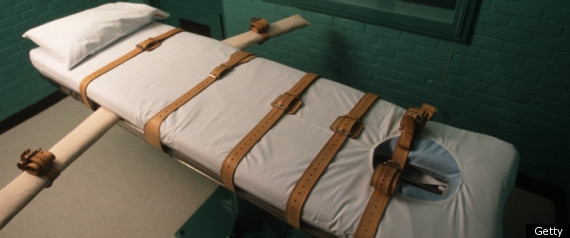
Racial Pattern Found In Harris County, Texas Death Penalty Sentencing: Report

The connection between race and capital punishment has been a hot topic this year, and it's likely to remain one after a new study found a shocking pattern in the way one Texas county sentences people to die.

Of the last 13 men that have been sentenced to death in Harris County, 12 of them are black, according to an analysis of prison and prosecution records by the Houston Chronicle. The discovery has prompted some local lawyers to ask for an investigation and calls for more debate around the administration of capital punishment.

"The more the defendant looks like you the harder it is to kill him — human nature being what it is," said Robert Murrow, one of the county's capital defense attorneys. "It's something we have to be thinking about. It's an issue we never should get too far out of the front of our consciousness."

The role of race in death penalty sentencing became a major issue in the county when the U.S. Supreme Court halted the execution of Duane Buck, after reviewing the testimony of a psychologist who said during the trial that black people were more likely to commit violence. Buck's appeal of his pending execution was rejected last week. Although the inmate's supporters pleaded with Harris County District Attorney Patricia Lykos, she told The Chronicle she has not yet made a decision.

Paramilitary Policing From Seattle to Occupy Wall Street

They came from all over, tens of thousands of demonstrators from around the world, protesting the economic and moral pitfalls of globalization. Our mission as members of the Seattle Police Department? To safeguard people and property—in that order. Things went well the first day. We were praised for our friendliness and restraint—though some politicians were apoplectic at our refusal to make mass arrests for the actions of a few.

Then came day two. Early in the morning, large contingents of demonstrators began to converge at a key downtown intersection. They sat down and refused to budge. Their numbers grew. A labor march would soon add additional thousands to the mix.

“We have to clear the intersection,” said the field commander. “We have to clear the intersection,” the operations commander agreed, from his bunker in the Public Safety Building. Standing alone on the edge of the crowd, I, the chief of police, said to myself, “We have to clear the intersection.”

Why?

Because of all the what-ifs. What if a fire breaks out in the Sheraton across the street? What if a woman goes into labor on the seventeenth floor of the hotel? What if a heart patient goes into cardiac arrest in the high-rise on the corner? What if there’s a stabbing, a shooting, a serious-injury traffic accident? How would an aid car, fire engine or police cruiser get through that sea of people? The cop in me supported the decision to clear the intersection. But the chief in me should have vetoed it. And he certainly should have forbidden the indiscriminate use of tear gas to accomplish it, no matter how many warnings we barked through the bullhorn.

Union challenges Clement to sharpen budget axe in public

The Conservative government should not be making deficit-reducing cuts to departmental budgets behind closed doors, Canada’s largest public-sector union says.

“What we’re saying is be open now,” Public Service Alliance of Canada president John Gordon said, “and they haven’t been so far.”

The government has hired consulting firm Deloitte Inc. at a cost of $19.8-million until March 31 – about $90,000 a day – to advise cabinet ministers and senior officials on how to erase the deficit.

At the same time, managers have been offered cash incentives to make deep dents in the amount their departments spend. And departments have been told to come up with a slate of cuts worth 5 per cent and 10 per cent of their budgets – so the government can choose between the two options.

Mr. Gordon said he does not know how many departments have complied with that order to date. But all of the cost-savings proposals are being deliberated, in private, by a committee of cabinet ministers with the help of Deloitte, he said.

Washington could scrap its F-35 jet purchase

The U.S. government is threatening to cancel its F-35 Joint Strike Fighter program unless Congress approves a credible deficit reduction plan, a move that would risk derailing Canada’s plans to purchase 65 of the next-generation stealth jets.

U.S. Defence Secretary Leon Panetta includes the F-35 program in a detailed list of items that could be on the chopping block should a so-called “super committee” fail to deliver on a plan to find $1.2-trillion-in savings over the next 10 years.

The bi-partisan committee – officially called the Joint Select Committee on Deficit Reduction (JSCDR) – must reach a deal by next Wednesday. Should they fail, across the board cuts to government spending, described as “sequestration,” would kick in almost immediately.

In letters to Senators John McCain and Lindsey Graham, Mr. Panetta outlines what these cuts could look like.

“If the JSCDR fails to meet its targets and sequestration is triggered, [Department of Defence] would face huge cuts in its budgets,” Mr. Panetta writes in a letter dated Nov. 14.

Gun registry’s demise could fuel firearms trafficking, memo warns

Scrapping the requirement to register rifles and shotguns could fuel illegal firearms trafficking across the Canadian border, an internal federal memo warns.

It says the move would weaken import controls by eliminating a requirement for border officials to verify firearms coming into the country.

“Such a loophole could facilitate unregistered prohibited and restricted firearm trafficking into and through Canada,” says the declassified memo, originally marked secret.

The memo was released under the Access to Information Act to the National Firearms Association and posted along with hundreds of other pages on the organization's website.

It was prepared by Mark Potter, a senior Public Safety Department official, for an assistant deputy minister as Parliament was debating a private member's bill to kill the registry. That bill was narrowly defeated in the House of Commons last year.

Police bust NY 'Occupy' protest in nighttime sweep

NEW YORK (AP) — Hundreds of police officers in riot gear raided the Occupy Wall Street encampment in New York City in the pre-dawn darkness Tuesday, evicted hundreds of demonstrators and demolished the tent city that was the epicenter of a movement protesting what participants call corporate greed and economic inequality.

The police action began around 1 a.m. and lasted several hours as officers with batons and plastic shields pushed the protesters from their base at Zuccotti Park. Police Commissioner Ray Kelly said around 200 people were arrested, including dozens who tried to resist the eviction by linking arms in a tight circle at the center of the park. A member of the City Council was among those arrested during the sweep.

Tents, sleeping bags and equipment were carted away, and by 4:30 a.m., the park was empty. It wasn't clear what would happen next to the demonstration, though the new enforcement of rules banning tents, sleeping bags or tarps would effectively end an encampment that started in mid-September.

"At the end of the day, if this movement is only tied to Liberty Plaza, we are going to lose. We're going to lose," said Sandra Nurse, one of the organizers, referring to the park by the nickname the demonstrators have given it. "Right now the most important thing is coming together as a body and just reaffirm why we're here in the first place."

Clement, Raitt may be contravening Conflict of Interest Act by hosting Albany Club on Hill, say opposition MPs

PARLIAMENT HILL—Treasury Board President Tony Clement and Labour Minister Lisa Raitt may be contravening the Conflict of Interest Act and a conduct code for MPs because of their role in a private Parliament Hill reception for an exclusive Conservative-connected Toronto club that includes four federal lobbyists on its board of directors, a federal lobbying watchdog and opposition MPs say.

Ms. Raitt (Halton, Ont.), two prominent Conservative Senators and two high-profile Conservative MPs are hosting the Dec. 1 reception in the Centre Block for directors of the high-end Albany Club, founded by members of the Conservative Party in 1882, who want to promote the club and drum up memberships among Tory Senators and MPs by featuring Mr. Clement (Parry Sound-Musoka, Ont.) as the “special guest” for the elite gathering.

But Duff Conacher, founding director of Democracy Watch, and Liberal and NDP MPs told The Hill Times Monday that the presence of registered federal lobbyists on the Albany Club’s board, including two who are registered to lobby cabinet’s Treasury Board or its public-service Secretariat, and several who are registered to lobby the Conservative MPs and Senators who will be entertained at the reception, puts Mr. Clement and the MPs and Senators who organized the gathering in a position that could conflict with provisions of the Conflict of Interest Act and conduct rules for MPs.

Is Harper putting dairy and poultry protection on the table in trade talks?

Stephen Harper may want to join the most important free-trade talks of the decade, but to do so he must be prepared to open up Canada’s sheltered and politically powerful dairy and poultry sectors to more foreign competition.

Canada has previously been reluctant to pay this price of admission for the Trans-Pacific Partnership talks, led by the United States. But as signs grow that this broad multicountry deal could eclipse NAFTA in importance, Ottawa feels compelled to sign on.

Trade experts say there may be a middle path for Canada.

The protectionist tariffs shielding dairy and poultry products from foreign rivals, for instance, are so high – from 150 per cent to nearly 300 per cent – that Ottawa could afford to trim them sufficiently to abide by a deal without destroying these protected sectors. Or it could offer limited duty-free access.