Democracy Gone Astray

Democracy, being a human construct, needs to be thought of as directionality rather than an object. As such, to understand it requires not so much a description of existing structures and/or other related phenomena but a declaration of intentionality.
This blog aims at creating labeled lists of published infringements of such intentionality, of points in time where democracy strays from its intended directionality. In addition to outright infringements, this blog also collects important contemporary information and/or discussions that impact our socio-political landscape.

All the posts here were published in the electronic media – main-stream as well as fringe, and maintain links to the original texts.

[NOTE: Due to changes I haven't caught on time in the blogging software, all of the 'Original Article' links were nullified between September 11, 2012 and December 11, 2012. My apologies.]

Showing posts with label Asbestos. Show all posts

Tuesday, September 11, 2012

Support to Jeffrey Mine: Asbestosis, myopia and unreason

Quebec's Liberal government announced last June a $58-million loan to Mine Jeffrey Inc. for the revival of its chrysotile asbestos extraction project. This loan was conditional on the financial involvement of up to $25 million in the project of Balcorp Ltd., a Montreal-based international trade company with associated offices in India. The population of Asbestos received the announcement with great enthusiasm: twice, in 2008 and in 2009, the mine had temporarily ceased its operations, leading to the layoff of about 300 workers.

However, no one seems to really attack these long periods of recurrent unemployment head-on. As soon as the mine restarts, people tend to forget the underlying problem and they no longer speak about it. But yet, this is one of the biggest drawbacks of the mining industry: its phases of recession due to its reliance on foreign markets. Less affected by the high variability of the prices in the metals sector, the asbestos industry has had to cope instead with a permanent decline since the 1970s, a consequence of the continual decrease of the demand for this material, which causes a constant fall of production.

Wednesday, July 18, 2012

Quebec and Canada keep deadly asbestos industry alive

Mesothelioma is a nasty cancer that affects the lining around a person's lungs. It can also damage membranes around the abdomen, heart, and testicles. The prognosis for those who have it is poor. It causes close to 90,000 preventable deaths a year. More than 90 per cent of cases are attributed to asbestos exposure.

Asbestos is made up of tiny fibres that can be inhaled, penetrating the lungs. Because they are mineral-based, they can't be broken down by the body's natural defences, so they cause inflammation. The fibres also remain in the lining around the lungs, and over time - often 20 to 30 years or more - may cause mesothelioma or other diseases.

Tuesday, July 17, 2012

Public money should not prop up asbestos mining

Canada's mining industry is globally competitive, and has long succeeded without much in the way of government subsidies. It even thrived in the last recession by responding to market demand. Yet instead of letting markets drive mining investment in Quebec, the provincial government is bailing out the asbestos industry using taxpayer money -- and this for a product that is harmful to human health.

In recent years, market demand for chrysotile asbestos produced in Canada shrunk dramatically which lead to a halt of chrysotile mining. But instead of letting mines stay closed, taxpayer funds will reopen an unprofitable chrysotile mine.

Tuesday, July 03, 2012

Asbestos mine loan gives Charest ‘good reason to be ashamed’

The announcement was described as a national embarrassment, the crass political manoeuvre of a desperate Quebec government trying to hold on to a Liberal seat at the cost of public health.

Critics lined up with speed and in number on the long weekend to blast Premier Jean Charest for green-lighting a $58-million loan to Canada’s last asbestos mine late on the Friday of the unofficial start of summer vacation season.

Saturday, June 30, 2012

Canada’s troubled asbestos industry gets a $58-million lifeline

ASBESTOS, QUE.—Canada’s beleaguered asbestos industry, which has been a target of activists who link its product to cancer, has been given a $58-million lease on life by the Quebec government.

While the industry has appeared on the brink of collapse, Friday’s long-rumoured provincial loan will cover more than two-thirds of the cost of renovating and reopening the Jeffrey Mine in Asbestos, Que. — a move that could keep production going for another 20 years.

Tuesday, June 26, 2012

Feds admitted dangers of asbestos while fighting 'hazardous' label: documents

OTTAWA — The federal government acknowledged years ago that the dangers of chrysotile asbestos warranted limits on its export — but still fought against international restrictions over the past decade — internal records show.

The memorandum to Environment Minister Peter Kent, obtained by Postmedia News under access to information, states the scientific panel for the UN's Rotterdam Convention was on solid ground in 2002 when it first proposed the listing of chrysotile asbestos, a known carcinogen mined in Quebec, as a hazardous material on Annex III of the convention.

Saturday, March 10, 2012

Seems even Harper and Charest can't save Canada’s deadly asbestos exports

Despite Stephen Harper and Jean Charest, it appears increasingly likely Canada will export no more Quebec-mined asbestos to countries like India and Indonesia, where it could bring misery and death to those who come in contact with it. Almost all those affected would be very poor workers and their families. But to the bitter end, the two leaders have been determined to preserve Canada’s shameful record of knowingly exporting a carcinogen.

In the face of denunciations of asbestos exports by virtually all health authorities, the Prime Minister made it a point during last year’s election campaign to visit the riding held by Christian Paradis, home to one of Canada’s two last remaining asbestos mines. Both mines are now closed, but Mr. Paradis wants them re-opened. He has long been a proponent of asbestos exports, dismissing out of hand all the proven health risks as well as all the Canadians who have died hideous, prolonged deaths from exposure to the substance.

Mr. Harper has since promoted Mr. Paradis to be Industry Minister. And last June, a month after forming his majority government, he chose to celebrate St. Jean Baptiste Day in his young minister’s riding – and in the town of Thetford Mines itself, the actual home of the asbestos mine Mr. Paradis wants to see re-opened.

Tuesday, February 14, 2012

Canada Asbestos Industry Undeterred By Criminal Convictions In Italy

MONTREAL - Canada's asbestos industry said it had nothing to fear Monday after two men were criminally convicted in more than 2,000 asbestos-related deaths in Italy.

Construction-firm executives Jean-Louise de Cartier of Belgium and Stephan Schmidheiny of Switzerland were each handed 16-year prison sentences for negligence following a trial that officials called historic.

A representative for Canada's controversial asbestos sector said he doesn't think similar criminal charges could ever be laid against industry players here.

"I personally believe that there is no possibility," said Guy Versailles, a spokesman for Montreal asbestos salesman Baljit Chadha and Quebec's Jeffrey Mine.

Versailles said if it were possible, such charges likely would already have been filed against people in a highly scrutinized industry that has lost many civil lawsuits for past unsafe practices of the 1950s, '60s and '70s.

"The victims and the lawyers have been so persistent on this — for decades — milking the industry dry that anything they could do and anything governments could do would have been done," he said Monday following the verdict in Italy.

"I think it's as simple as that."

Sunday, February 12, 2012

Opposition to asbestos reaches 'critical mass'

If you were a private investor looking to sink some money into a promising venture, the expansion of an asbestos mine in Quebec may not sound like a great bet these days.

Quebec’s asbestos industry has been taking a heavy pounding of late, with two damning documentaries airing on CBC and Radio-Canada, renewed calls from politicians in Quebec City and Ottawa to outlaw the cancer-causing mineral, and a review launched into some industry-funded research at McGill this week.

On Friday, the opposition Québec Solidaire called on the provincial and federal governments to stop financing the asbestos industry and to ban export of the mineral.

Parti Québécois mining critic Martine Ouellette told Canadian Press she wants a parliamentary commission to look at the issue.

The calls are partly in response to a documentary aired on Radio-Canada Thursday evening “that reveals the true face of a lobby that in the past has had no scruples at all about manipulating the facts to the detriment of human health to defend its financial interests,” according to the Québec Solidaire statement.

Monday, November 21, 2011

Asbestos Cracks Conservative Party Unity: Harper Government Position On Export Causes Internal Rift

A growing number of Conservative MPs are questioning their government's position on the export of asbestos, with a group of them independently summoning industry experts to a meeting on Parliament Hill last week.

Solid caucus discipline has been one of Stephen Harper's political achievements over six years in power. While open revolt over asbestos hasn't erupted, clear faultlines over government resistance to having the substance listed as hazardous internationally suggest the prime minister may be forced to deal with a rare case of internal dissent.

The first public cracks in the Conservative party line came on Nov. 1, when five Tory MPs broke ranks and abstained from an NDP vote that would have banned asbestos exports.

That was followed last Monday with a private Parliament Hill meeting that saw about a dozen Conservative parliamentarians ask some pointed questions of the Chrysotile Institute and industry scientists over several hours.

Sunday, September 25, 2011

Canada Asbestos Industry Strikes Back At Critics To Salvage Reputation

MONTREAL - A prominent asbestos merchant is headed to Parliament Hill as part of a broader counter-offensive to salvage the reputation of his beleaguered industry.

Baljit Chadha is fighting back this week after Canada's asbestos sector has absorbed a public-relations pummelling, both here and abroad, in recent months.
The public-relations battle comes at a critical time.

The Quebec government is considering whether to help Chadha save one of Canada's last two asbestos mines, in the town of Asbestos, with an Oct. 1 deadline looming on a decision.

Chadha is now determined to dispel what he describes as myths about the contentious mineral, which he argues has been unfairly vilified by a highly organized "anti-asbestos lobby."

Wednesday, August 24, 2011

Tories’ asbestos policy ‘unethical and shameful’ say Canadian doctors

ST. JOHN’S—The Canadian Medical Association condemned the Conservative government for blocking asbestos from being listed as a hazardous substance around the world earlier this summer.

“I think this sends a strong message to the federal government that their unethical and shameful behaviour will not be tolerated by the physicians of Canada,” Dr. Barry Turchen of Abbotsford, B.C. told the annual gathering of the national body representing about 75,000 doctors on Wednesday.

Canada opposed the inclusion of chrysotile asbestos in a United Nations treaty last June that would have forced exporters to warn importing countries of health hazards.

The Rotterdam Convention, which operates by consensus, would have also given recipient countries the freedom to refuse to allow the product to enter their borders if they did not believe they could handle it safely.

Sunday, August 14, 2011

Tories tussle with widow over use of party logo in asbestos ad campaign

The federal Conservative party has sent a threatening email to the widow of an asbestos victim in the latest chapter of Canada's debate over the hazardous mineral.

A top Tory official is warning the woman to stop using the party logo in an online ad campaign against the controversial industry — a campaign she started after her husband died of an asbestos-related cancer.

Michaela Keyserlingk, whose husband Robert died in 2009 of mesothelioma, has been running an online banner since the spring that reads, “Canada is the only western country that still exports deadly asbestos!”

Tuesday, June 28, 2011

Tim Harper: Asbestos hypocrisy sticking to PM

It takes a special kind of resilience to get knocked down, get up, dust yourself off and declare that you are winning.

But that was Kathleen Ruff's position, communicated forcefully and frenetically, from the West Coast on Tuesday.

Ruff continues her battle over Canadian asbestos exports, even as Prime Minister Stephen Harper again confounds the world.

Last week, in Geneva, Harper's government refused to put chrysotile asbestos on a United Nations list of hazardous exports.

It was the third time Canada has stepped in to prevent placing asbestos on a list of exports that would have to include warnings of health hazards to recipient countries.

Those countries could then refuse the asbestos imports if they believed they were unable to handle the product safely on their soil.

The cost of protecting Quebec mining jobs has been high.

We are alone in the world, an international pariah.

The Canadian position on asbestos exports has been condemned by virtually every health advocacy, environmental, medical and labour organization in this country.

We have been ridiculed, scorned, shamed, accused of hypocrisy — even called merchants of death.

We have been pilloried in the world's most prominent medical journals.

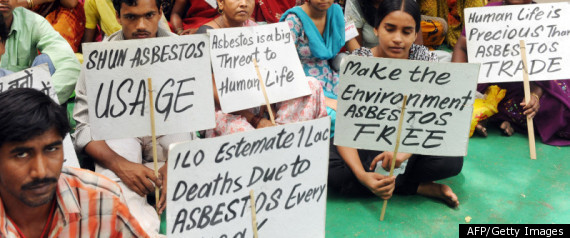
Protesters have brought their concerns from Asia to Quebec, and our embassies have been picketed by those who say we are exporting death.

Prominent journalists — including the Star's Jennifer Wells and the CBC's Mellissa Fung — have travelled to India to chronicle in detail the toxic export from Quebec.

The World Health Organization says as many as 107,000 people die each year from asbestos-related illness.

The Harper cabinet has hidden, shrugged and delivered zombie-like message track answers on the matter, ducking behind the word chrysotile.

Harper has defiantly maintained that chrysotile, one of the fibres comprising asbestos, is much less dangerous than the other asbestos fibre, which Canada does not export.

Still, this stubborn resistance to common sense and scientific evidence remains a mystery.

This time, the Canadian position is sparking a much louder backlash in this country.

“Harper has been outed from the asbestos closet,” says Ruff, a senior human rights adviser to the Rideau Institute.

“For years, he only spoke of how much he loved and adored asbestos when he was in that riding. As long as an issue remains hidden, you're dead. But now it is out there.''

Indeed, Ruff says the asbestos export question is one of democracy.

If Harper cannot be budged from his position, she maintains, Canadians are nothing but serfs in a dysfunctional democracy.

Full Article
Source: Toronto Star 

Friday, June 24, 2011

Harper parties in asbestos central as Canada blocks dangerous-goods listing

OTTAWA - The prime minister celebrated St-Jean-Baptiste in the heart of the asbestos industry as Canada's delegation to an international summit drew ire by keeping the carcinogen off a hazardous-chemicals list.

Stephen Harper's Conservative government steadfastly refused to let asbestos be added to a United Nations treaty called the Rotterdam Convention.

On Friday, Canada was joined by Ukraine, Kazakhstan, Kyrgyzstan and Vietnam in blocking the move. Countries must now wait two years for another crack at getting asbestos on the list.

"The conference did not reach consensus on listing chrysotile," UN Environment Program spokesman Michael Stanley-Jones said in an email.

"It annexed the draft decision to the meeting report for consideration at COP6 in 2013."

A pesticide called Endosulfan, which is banned in many countries but still used in others, was added to the list, he added.

Listing asbestos on Annex III of the convention would force exporters such as Canada to warn recipient countries of any health hazards. Those countries could then refuse asbestos imports if they didn't think they could handle the product safely.

When inhaled, asbestos fibres can scar the lungs and lead to a rare form of lung cancer, mesothelioma, for which there is no known cure.

Canada has twice before played a lead role in blocking the inclusion of asbestos under the Rotterdam Convention, which operates by consensus, and the country did so again at this week's summit.

When other asbestos-exporting countries changed their minds and dropped their opposition to the listing, Canada alone came out against the move.

The earth negotiations bulletin published by the International Institute for Sustainable Development reports other countries were "dumbstruck" by Canada's reasons for blocking the listing.

Full Article
Source: Winnepeg Free Press 

Thursday, June 23, 2011

MPs slam Tories for blocking asbestos listing

Opposition MPs slammed the Harper government Thursday over Canada's opposition to putting chrysotile asbestos on an international list of hazardous chemicals.

The opposition side of the House of Commons lined up several MPs to demand why Canada refuses to let the chemical be listed in the Rotterdam Convention's Annex III.

The listing would allow countries like India, where companies import the lung cancer-causing material for construction, to deny it entry if officials don't think they can properly handle it.

"Asbestos is the greatest industrial killer the world has ever known. More people die from asbestos than all industrial causes combined, yet Canada continues to be one of the largest producers and exporters in the world. We are exporting human misery on a monumental scale," said NDP MP Pat Martin. "Our position is morally and ethically reprehensible."

Liberal MP Marc Garneau says despite Industry Minister Christian Paradis' insistence that asbestos can be used safely, he should know that's not the case in developing countries.

"This minister knows full well that it's very difficult to use chrysotile in the proper working conditions. The procedures, the training, the complex equipment to use it in a safe way so that fibres aren't accidentally breathed in," Garneau said.

"He cannot assure us that this is not being used improperly in countries that import it, Third World countries ... This is willful blindness."

But Paradis returned to the response he and Natural Resources Minister Joe Oliver have been offering since the Rotterdam Convention meetings started in Geneva, Switzerland, earlier this week.

"We know that recent studies show that chrysotile can be used in a safe and controlled manner," Paradis said. "This is risk management, so we know that chrysotile can be used safely in a controlled environment."

Full Article
Source: CBC news 

Canada opposes labelling asbestos as hazardous

Canada told the world Wednesday it opposes placing limits on the export of chrysotile asbestos — a “bombshell” expected to derail international efforts to list the mineral as hazardous.

The head of the Canadian delegation at a United Nations summit in Geneva made the statement late Wednesday after a consensus was emerging to label the known carcinogen mined in Quebec as hazardous.

If chrysotile asbestos is listed on Annex III of the United Nations’ Rotterdam Convention, “Prior Informed Consent” would be required before countries could export the mineral. After being informed of the hazards, developing countries that import asbestos could refuse to accept the potentially cancer-causing material if they believe they could not handle it safely.

Until Wednesday’s declaration, the Canadian delegation had remained silent — fuelling speculation from anti-asbestos campaigners that Canada was letting a handful of other countries do its “dirty work.”

The stunning development — confirmed by the UN Environment Program and characterized by the Montreal-based Chrysotile Institute as a“bombshell” — appeared to contradict statements made by Natural Resources Minister Joe Oliver just a day earlier, when he told reporters in Ottawa that the question of Canada’s position was “moot” because four other countries — Vietnam, Kazakhstan, Kyrgyzstan and Ukraine — had already spoken up against the listing.

Under convention protocol, unless consensus among countries is achieved, chrysotile asbestos remains off Annex III. The UN meeting ends Friday.

When pressed by reporters about the possibility of a consensus emerging in the face of Canada’s silence, Oliver also suggested Tuesday that the federal government would accept the listing. “If they want it to be listed, then it will be listed,” he said.

Full Article
Source: National Post 

Wednesday, June 15, 2011

Chrysotile Asbestos: Harper Government Defends Carcinogen Despite Rotterdam Pressure

THE CANADIAN PRESS - OTTAWA - The Conservative government continues to claim that Canada's chrysotile asbestos can be used safely "under controlled conditions."

But with a major international conference in Geneva less than a week away, the government is refusing to say what position Canada will take when its global partners ask that the known carcinogen be included on a list of hazardous chemicals.

Canada has twice played a lead role in blocking the inclusion of asbestos under the Rotterdam Convention, which operates by consensus.

Christian Paradis, currently Canada's minister of Industry, boasted about Canada's blocking role to La Tribune newspaper in Sherbrooke in November 2009.

"We have shown our support for the position of safe use of chrysotile by opposing twice the inclusion of chrysotile under the Rotterdam Convention," he told the newspaper, "and be assured that as long as the Conservative government of Stephen Harper is in power, that's how it will be."

Despite effectively banning asbestos domestically -- and spending tens of millions of dollars to have it removed from public buildings, including Parliament -- Canada is one of the world's main exporters.

Full Article
Source: Huffington 

Tuesday, June 14, 2011

Asbestos Advice From Health Canada Rejected By Government

CBC -- The Canadian government rejected advice from Health Canada that asbestos be added to a global list of hazardous materials in 2006, CBC News has learned.

According to documents obtained under Access to Information, a senior Health Canada bureaucrat wrote that the agency believed that chrysotile -- a form of asbestos that has been linked to cancer -- should be added to a UN treaty known as the Rotterdam Convention.

"[Health Canada's] preferred position would be to list -- as this is consistent with controlled use -- i.e. let people know about the substance so they have the information they need, through prior informed consent, to ensure they handle and use the substance correctly," wrote Paul Glover then director general of Health Canada's safe environments program, in 2006.

The 2006 Rotterdam Convention comprises a list of hazardous substances that require countries to disclose any restrictions imposed for health or environmental reasons by exporting countries. Importing countries would then decide whether to import the substance, ban it, or restrict it, something known as prior informed consent.

More than 50 countries ban the use of asbestos. But Canada, one of the leading exporters of the material, lobbied to keep asbestos off the Rotterdam list with the support of purchasing countries such as Iran and Zimbabwe. Ultimately, chrysotile asbestos did not make the list and remains off it.

Canada exports $90 million of asbestos, all of it from Quebec, every year.

While Glover noted in his email that Health Canada cannot say that chrysotile is safe, he said the agency does feel "there is science and evidence to support that chrysotile is less dangerous than other forms of asbestos."

Full Article
Source: Huffington