Duke Energy plans to file a general rate case application with state regulators on June 1 that will include a request to raise its customers’ rates to cover the coal basin costs.
Democracy Gone Astray
Democracy, being a human construct, needs to be thought of as directionality rather than an object. As such, to understand it requires not so much a description of existing structures and/or other related phenomena but a declaration of intentionality.
This blog aims at creating labeled lists of published infringements of such intentionality, of points in time where democracy strays from its intended directionality. In addition to outright infringements, this blog also collects important contemporary information and/or discussions that impact our socio-political landscape.
All the posts here were published in the electronic media – main-stream as well as fringe, and maintain links to the original texts.
[NOTE: Due to changes I haven't caught on time in the blogging software, all of the 'Original Article' links were nullified between September 11, 2012 and December 11, 2012. My apologies.]
Showing posts with label Socializing Cost - Privatizing Profit. Show all posts
Tuesday, July 04, 2017
Duke Energy wants to push coal basin cleanup costs onto its customers
Duke Energy plans to file a general rate case application with state regulators on June 1 that will include a request to raise its customers’ rates to cover the coal basin costs.
Friday, June 23, 2017
Who’s Paying for the Clean Up of the Worst Mining Spill in Canadian History?
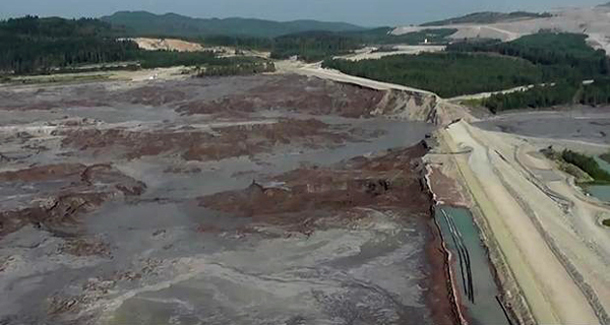
British Columbian taxpayers will be on the hook for $40 million to clean up the worst mining spill in Canadian history and the company responsible has once again escaped criminal charges after a private prosecution was dismissed this week.
In August 2014 the 40-metre-high tailings dam at the Mount Polley mine near Williams Lake collapsed, sending 25-million cubic metres of contaminated sludge and mine waste sweeping into lakes and rivers — but no charges have been laid and no fines have been levied against Imperial Metals, the parent company of Mount Polley Mining Corp.
Friday, April 22, 2016
Alberta Private Schools Should Not Be Funded By Taxpayers: Poll
Albertans are fed up with seeing public money fund private schools, especially after the historic deficit unveiled in the province's latest budget, according to a recent poll.
A Mainstreet Research poll released Monday suggests nearly two-thirds of Albertans don't want to see taxpayer money supporting private schools.
Saturday, June 27, 2015
EPA Report Puts a Staggering Price Tag on Climate Inaction
The findings come as part of an attempt by the Environmental Protection Agency to quantify the human and economic benefits of cutting emissions in an effort to reduce global warming. The report is the latest piece of President Obama's recent climate push and provides a tool that he hopes to use in negotiations at the UN climate talks in Paris later this year.
Saturday, September 13, 2014
'Poison pill' privatisation contracts could cost £300m-£400m to cancel
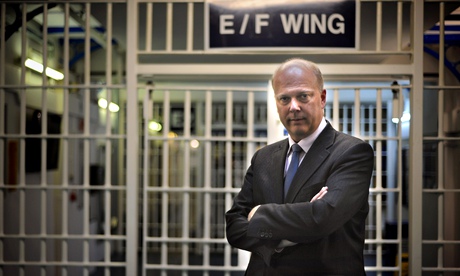
Taxpayers will face a £300m-£400m penalty if controversial probation privatisation contracts are cancelled after next May's general election under an "unprecedented" clause that guarantees bidders their expected profits over the 10-year life of the contract.
Labour is already committed to unpicking the justice ministry contracts to outsource probation services but will not now be able to do so without incurring the multimillion pound bill because of "poison pill" clauses written in by Chris Grayling's department.
Wednesday, August 27, 2014
Grrr. Wildlife falls prey to our insatiable need for natural resources
Despite suspected ongoing impact to animals where the Mount Polley Mine breached several weeks ago, professional wildlife response teams can't get in to assess the area.
It is believed that chemicals still in the environment from the spill -- which released millions of cubic metres of potentially toxic waste into central B.C. waterways -- could impact millions of birds, among other animals in the area.
The dangers of deregulation extend beyond mining disasters
The Mount Polley Mine disaster has raised important questions about the risks and costs of deregulation of the mining industry in B.C. I spoke about this issue recently on CBC Vancouver's Early Edition and CBC Kamloops' Daybreak (if you missed it, there's audiohere, starts around 1:00:48).
As a citizen and as a public interest researcher at CCPA, I am very concerned that Canada's environmental protection regulations have been weakened both provincially and federally over the last 10 - 15 years and that budget cuts have meant fewer inspectors on the ground to monitor and enforce the regulations that remain.
Monday, August 25, 2014
Mount Polley, a tragedy foreseen
B.C.'s economy – already facing what seems like the perfect economic storm of stagnant job growth, an acute skills shortage and the recent Supreme Court of Canada decision on First Nation land title claims – can now add one more low pressure system into that mix: the Mount Polley Mine disaster.
In its wake to date: government announced delays to Imperial Metals' Red Chris Mine and the suspension of the environmental assessment of the Morrison open-pit mine project northeast of Smithers. For the mining sector – who had wanted environmental assessments and mine approvals reduced from upwards of ten years to as little as three – Mount Polley threw a big wet dish rag on that one as well.
Imperial Metals Mount Polley disaster could cost $500 million, but bonds only a fraction of this amount
Analysts say cleanup costs for Imperial Metals' Mount Polley tailings disaster could cost anywhere from $50 million to $500 million, but the security bonds available today to help cover that are now a fraction of that.
Documents from the Ministry of Energy and Mines on July 25, 2013 suggest that Mount Polley Mining Corporation (owned by Imperial Metals) was expected to pay security bonds of $38 million by 2023, and that it had deposited $14.5 million as of March 2014.
Saturday, May 17, 2014
Let's Talk Dirty about Water
Round up the children and send them to their rooms to play something mindlessly destructive on their PlayStation screens. I am about to use language scandalous to the ears of the typical socially-conscious Canadian. I am about to use the M-word. Also the C-word.
We're talking here about water. The sine qua non of life. The sacramental symbol of every religion. The blue stuff spattered about the national map and identity. The pride and perennial hair-trigger of Canadian nationalism.
Sunday, March 09, 2014
Alberta Regulator Quietly Halts Steam Bitumen Mining Near Fort Mac
The Alberta energy regulator has suspended the fastest-growing source of bitumen production around Fort McMurray due to concerns about fracturing the region’s cap rock.
Last January, the regulator quietly issued a bulletin announcing the freeze on development in the Wabiskaw-McMurray deposit of the Athabasca Oil Sands Area while it completes “a thorough technical review of the factors that affect reservoir containment of steam-assisted gravity drainage (SAGD) projects.”
Sunday, February 02, 2014
Columbia River Chemical Spill Came From Smelter, Teck Resources Confirms
TRAIL, B.C. - Teck Resources (TSX:TCK.B) is confirming that its smelter in Trail has spilled up to 25,000 litres of a chemical solution into the Columbia River.
Spokesman Richard Deane says the solution likely contained sodium hydroxide which the plant uses to de-mineralize feed water for the smelter's boilers.
Great Barrier Reef Sediment Dump Approved For One Of World's Most Fragile Ecosystems
SYDNEY (AP) — The government agency that oversees Australia's Great Barrier Reef on Friday approved a plan to dump vast swathes of sediment on the reef as part of a major coal port expansion — a decision that environmentalists say will endanger one of the world's most fragile ecosystems.
The federal government in December approved the expansion of the Abbot Point coal port in northern Queensland, which requires a massive dredging operation to make way for ships entering and exiting the port. About 3 million cubic meters (106 million cubic feet) of dredged mud will be dumped within the marine park under the plan.
Thursday, January 30, 2014
Peace River Oilsands Odours Hearings To Start
PEACE RIVER, Alta. - Hearings are scheduled to begin this week on odours blamed on oilsands operations that have driven northern Alberta families off their land and at least one of the affected farmers hopes it will all wind up with tougher rules against bad smells.
"The best result possible is that they make some regulations to get companies to capture their vapours," said Alain Labrecque, who's had to leave the farm his father pioneered over pungent smells that he says are destroying the health of his wife and children.
Monday, December 30, 2013
Scientists Find 7,300-Mile Mercury Contamination ‘Bullseye’ Around Canadian Tar Sands
Just one week after Al Jazeera discovered that regulatory responsibility for Alberta, Canada’s controversial tar sands would be handed over to a fossil-fuel funded corporation, federal scientists have found that the area’s viscous petroleum deposits are surrounded by a nearly 7,500-square-mile ring of mercury.
Canadian government scientists have found that levels of mercury — a potent neurotoxin which has been found to cause severe birth defects and brain damage — around the region’s vast tar sand operations are up to 16 times higher than regular levels for the region. The findings, presented by Environment Canada researcher Jane Kirk at an international toxicology conference, showed that the 7,500 miles contaminated are “currently impacted by airborne Hg (mercury) emissions originating from oilsands developments.”
Tuesday, December 24, 2013
Peace River Families Fed Up With Baytex Energy Oil Fumes
EDMONTON - An Alberta family that says it was forced to leave its home due to intolerable smells from a nearby heavy oil producer has turned to the courts to try to get the sickening odours to stop.
"It's necessary to try and bring the venting of these emissions to an end as quickly as possible," said Alain Labrecque, who is asking a Peace River court for an eight-month injunction to shut down 46 wells owned by Calgary-based Baytex Energy (TSX:BTE).
Monday, December 23, 2013
U.S. sticks it to transit users while gifting drivers a tax cut
WASHINGTON – Just when you thought the United States was beginning to lose its obsession with the automobile – what with climate change and 24-hour traffic jams – it comes up with something totally counter-intuitive: It increases the tax benefit for people who drive to work while reducing it for people who take public transit.
For decades, commuters who take their cars have been able to write off a portion of their monthly parking expenses on their income tax forms. Millions of Americans avail themselves of this tax benefit to help offset the cost of their daily commute to work.
Wednesday, December 18, 2013
U.S. Is Making A Lot Less Off Drilling On Public Lands Than It Should Be
WASHINGTON –- The federal government isn't doing enough to ensure it collects a "fair return" for the oil and gas that companies produce from public lands, in part due to policies on revenues for onshore drilling that are nearly a century old, according to a critical report on the Department of the Interior released Tuesday.
The Government Accountability Office, the federal government's internal watchdog, dinged the Interior Department for a continued lack of clear, updated procedures on the collection of royalties on oil and gas that come from public lands. Tuesday's report comes after previous GAO research found that the U.S. government has one of the lowest return rates for federal leases, and that Interior had not updated its assessment of the policy in 25 years.
Tuesday, December 17, 2013
Oilsands Tailings Ponds Released Into Rivers? Industry, Governments Discuss
EDMONTON - Oilsands producers are talking with the federal and Alberta governments about conditions under which water from the industry's tailings ponds could be released into the environment.
Officials say releases would only involve treated water and wouldn't happen until the end of a mine's life.
Environmentalists are watching the discussions closely and warn that quality standards for released tailings water should be high.
Officials say releases would only involve treated water and wouldn't happen until the end of a mine's life.
Environmentalists are watching the discussions closely and warn that quality standards for released tailings water should be high.
Tuesday, November 12, 2013
Buyout packages allegedly silence Albertans struck with industry-related cancer
Locals living close to oil and gas projects in what is known as Alberta’s Industrial Heartland are not surprised that a recent study found that chemicals in the air cause blood-related cancers.
“There’s many people that have been diagnosed with cancer. Many of them have left. Some of them have died,” said Anne Brown, who lives in the Riverside Park subdivision, near Fort Saskatchewan, one of four counties part of the Industrial Heartland.
Subscribe to:
Posts (Atom)